
Buying Guides
Shipping Industrial UPS Batteries: What Buyers Should Check Before Ordering
Same UPS, two battery chemistries, two different freight outcomes. The UN number decides your documents, your mode, and your landed cost—plus the RFQ line that fixes it.
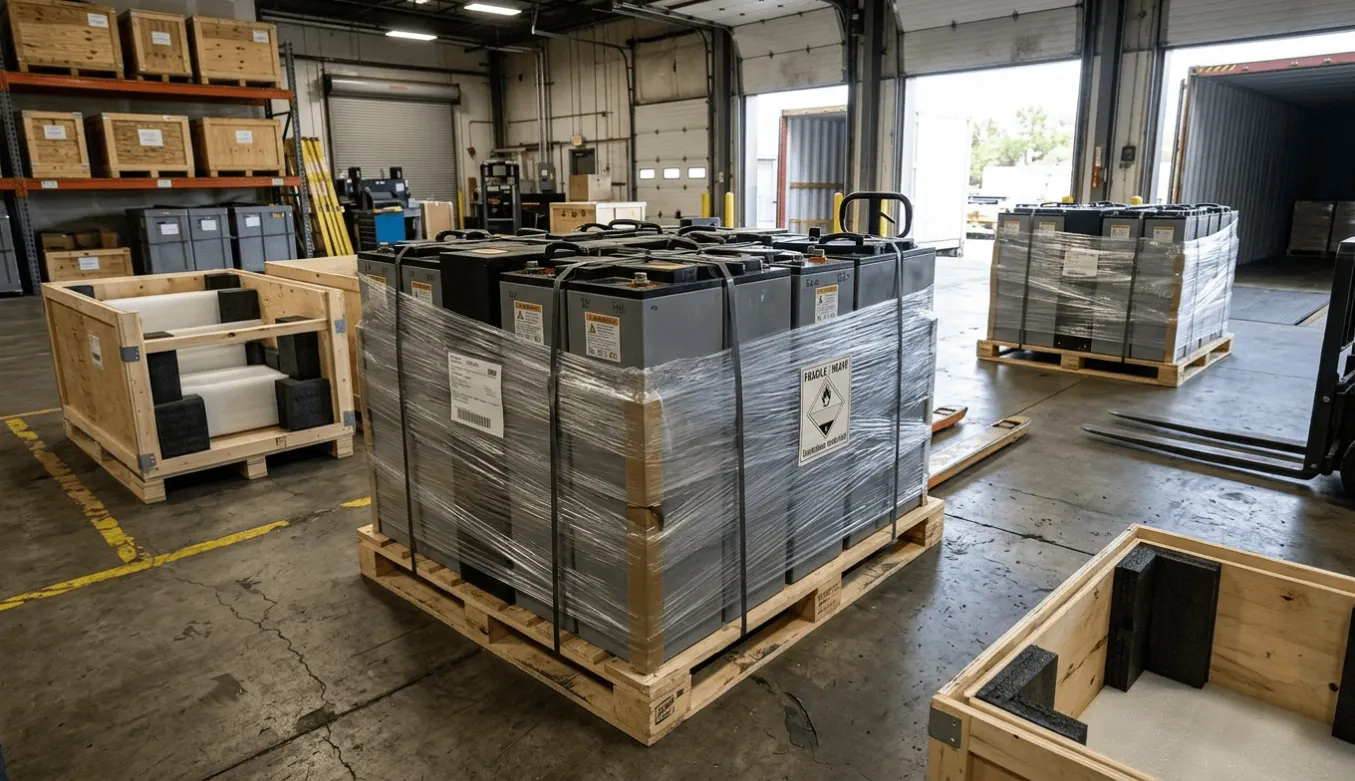
Two suppliers quote a 10 kVA industrial UPS with the same backup time. One offers a lithium-ion battery system, while the other uses VRLA batteries. Both appear to meet the electrical requirements, and the cheaper quotation looks like an easy choice.
Then the freight forwarder asks for the battery model, UN classification, and shipping documents. Suddenly, the original freight estimate no longer applies.
This is a purchasing problem that can be avoided, but it requires looking beyond the UPS datasheet. Battery chemistry affects much more than backup performance. It can influence the shipping classification, available transport routes, documentation, and ultimately the cost of getting the system to its destination.
For buyers importing industrial UPS equipment from China, the real question is whether the quotation covers a configuration that can actually be delivered as planned.
The Same UPS Rating Does Not Mean the Same Shipment
When selecting an industrial UPS, most buyers begin with load capacity, input and output voltage, runtime, and operating conditions. These specifications establish whether the equipment will work, but they don't tell the full story about how it will travel.
A supplier may offer a compact lithium-ion system with a relatively light battery bank. Another may propose a larger VRLA installation that meets the same backup requirement.
Both may be technically suitable, but their shipping costs can differ considerably.
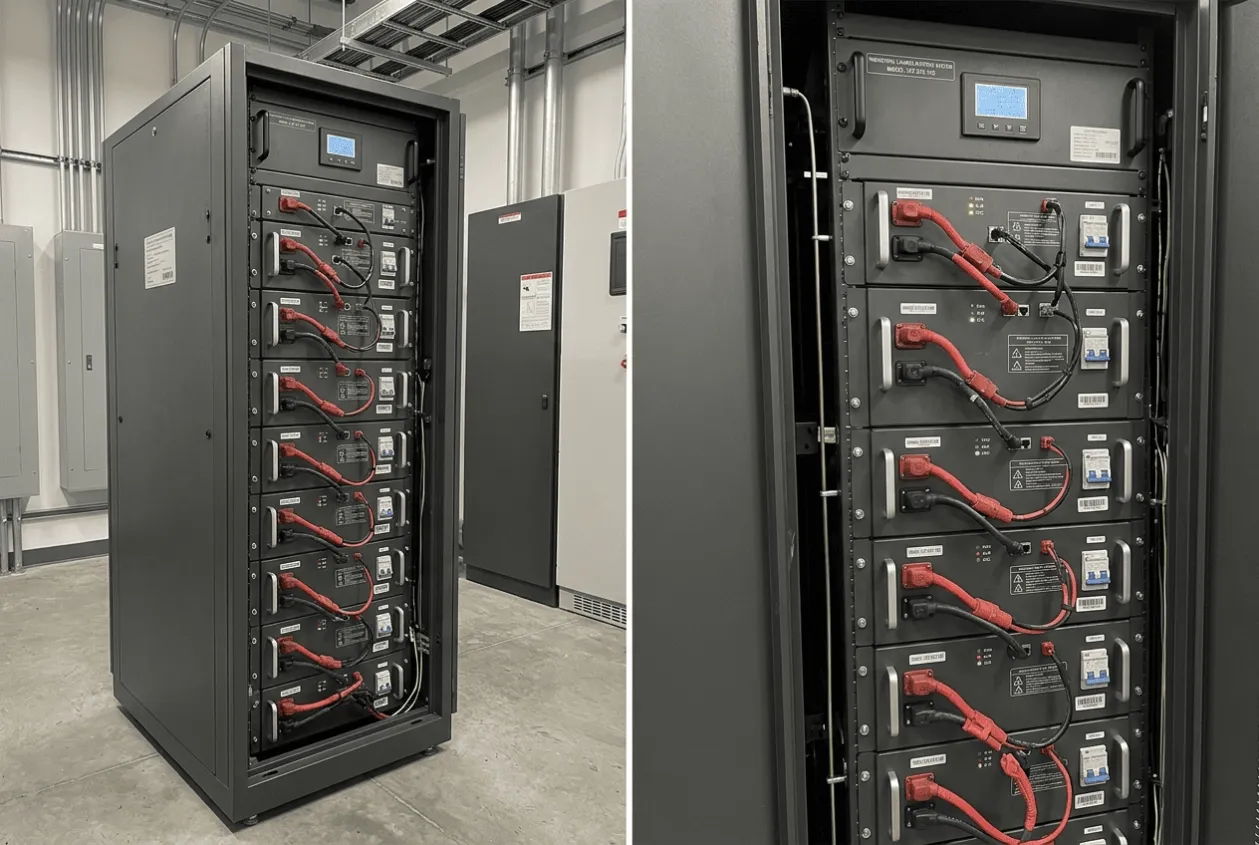
Figure 1—Industrial lithium UPS battery cabinet. Show the battery modules, cabinet structure, and model identification where visible.
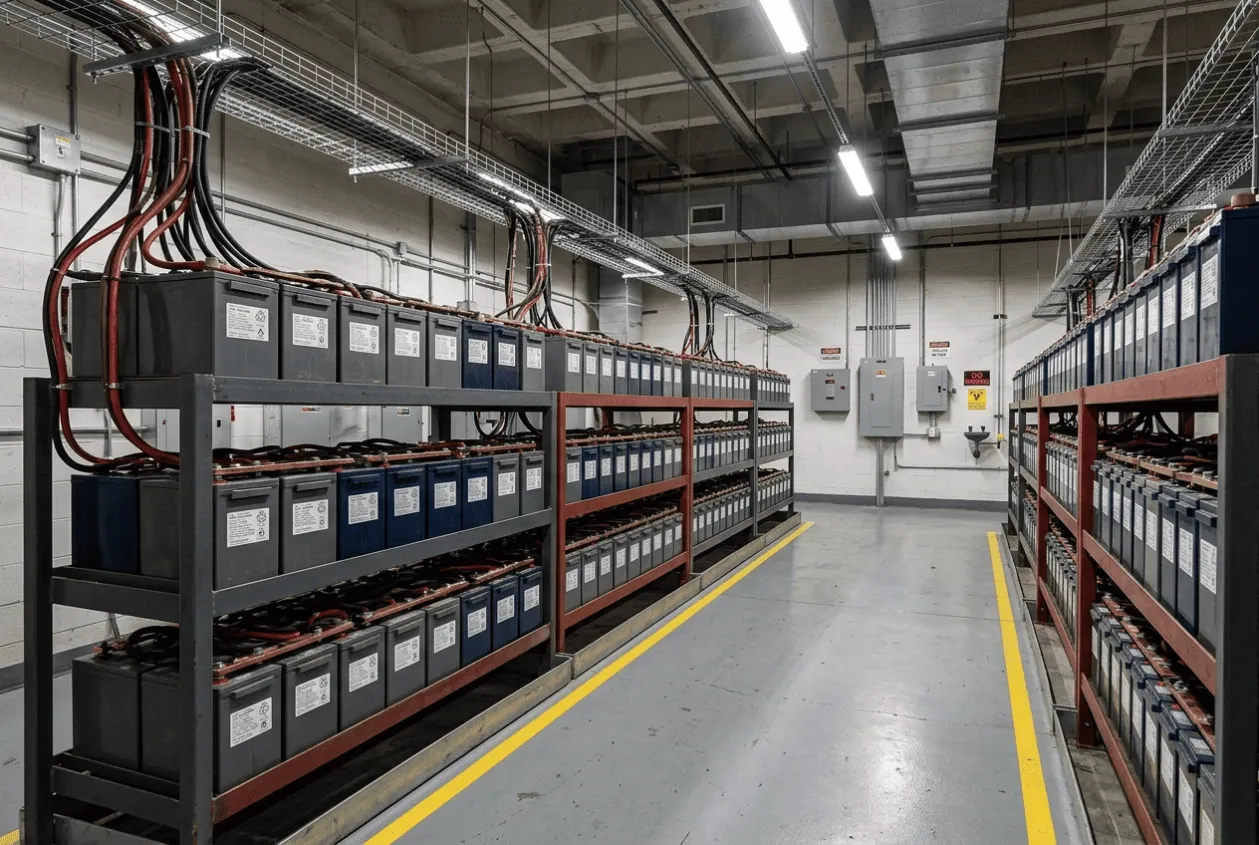
Figure 2 — Industrial VRLA battery installation. Show the battery arrangement and physical space required.
The images help explain why comparing UPS power ratings alone is insufficient. What matters for transportation is the actual battery configuration and how it will be packaged.
Purchasing factor | Lithium-ion UPS | VRLA UPS |
|---|---|---|
Typical physical characteristics | Often lighter and more compact for comparable stored energy | Often heavier and requires more space |
Transport classification | Depends on battery and equipment configuration | May qualify for non-spillable transport provisions |
Key supporting evidence | Applicable UN38.3 test summary and classification details | SDS and evidence supporting non-spillable status |
Airfreight considerations | Specific restrictions on charge level, packing, and aircraft type may apply. | Potentially simpler if exemption conditions are met |
Purchasing implication | Confirm classification before relying on freight estimates. | Check actual shipment weight and exemption conditions. |
Lithium is not automatically more expensive to transport, and VRLA is not automatically easier in every situation. A lighter lithium system may reduce some freight costs, while its dangerous-goods requirements may add others.
The sensible comparison uses the same delivery destination and transport assumptions rather than treating equipment price as the final purchasing cost.
Why Battery Classification Matters More Than the Label on the Cabinet
Buyers often encounter the classifications UN3480 and UN3481 when discussing lithium UPS shipments.
UN3480 generally applies to standalone lithium-ion batteries. UN3481 applies to qualifying batteries packed with or contained in equipment. For air transport, the related packing instructions include PI965, PI966, and PI967.
A UPS introduces an important complication: it should not automatically be classified as equipment containing batteries merely because the batteries sit inside an enclosure.
IATA's 2026 Battery Guidance The document specifically discusses UPS classification. Where the product primarily functions as a battery supplying electrical power, it may need to be treated as a battery for shipping purposes. Equipment incorporating substantial power-management functions may qualify for an equipment-based classification, depending on its construction.
The distinction is especially relevant when a supplier offers a UPS cabinet with separate external battery modules.
Shipping arrangement | Potential classification | What the buyer needs to verify |
|---|---|---|
Standalone lithium-ion battery modules | UN3480 / PI965 | Battery rating, packaging, charge level, and airfreight restrictions |
Lithium batteries packed with qualifying equipment | UN3481 / PI966 | Whether the arrangement meets the packed-with-equipment criteria |
Lithium batteries contained in qualifying equipment | UN3481 / PI967 | Whether the complete product meets the equipment classification |
Qualifying non-spillable lead-acid batteries | UN2800, with possible applicable relief | Non-spillable evidence and conditions for the transport exemption |
These are classification starting points, not an automatic decision chart. The actual consignment must be assessed against the applicable regulations.
If the supplier quotes an entire UPS system without identifying how its batteries will travel, the buyer should clarify that arrangement before accepting the freight estimate.
A Battery Can Pass Factory Testing and Still Need Preparation for Airfreight
Suppose an industrial customer urgently needs a replacement UPS before a planned maintenance shutdown. The equipment is manufactured, tested, and ready for collection.
Unfortunately, the battery has been fully charged for testing, while the selected airfreight arrangement requires a reduced state of charge.
This is where an apparently minor logistics detail can interfere with the delivery plan.
Under the 2026 IATA requirements, standalone lithium-ion batteries transported under PI965 are generally subject to a 30% state-of-charge limit unless the necessary approvals apply. Batteries packed with equipment under PI966 also face mandatory reduced-charge requirements, including specified Section II batteries above 2.7 Wh.
PI967 is different. For lithium-ion batteries contained in qualifying equipment, IATA recommends reduced charge levels but does not impose the same general mandatory 30% requirement.
The distinction matters because a supplier should not apply one shipping rule indiscriminately to every UPS configuration.
For a time-sensitive project, I would ask the supplier and forwarder to agree on the transport classification before the final factory test. If the shipment requires battery discharge afterward, the preparation time should be included in the schedule.
The customer may also need to account for charging and commissioning after arrival. A UPS delivered at a reduced battery charge cannot necessarily provide its full specified backup duration immediately.
This is not a reason to avoid lithium batteries. It is a reason to treat freight preparation as part of the delivery process rather than an activity that begins when the equipment leaves the factory.
What a Buyer Can Actually Verify on a UN38.3 Document
Many suppliers will provide a collection of certificates when asked about battery compliance. The challenge is determining whether those documents relate to the specific battery being purchased.
For lithium batteries, UN38.3 testing addresses the safety of battery designs under defined transport-related conditions. The applicable test summary provides traceability, but it is not enough for a document simply to have “UN38.3” printed across the top.
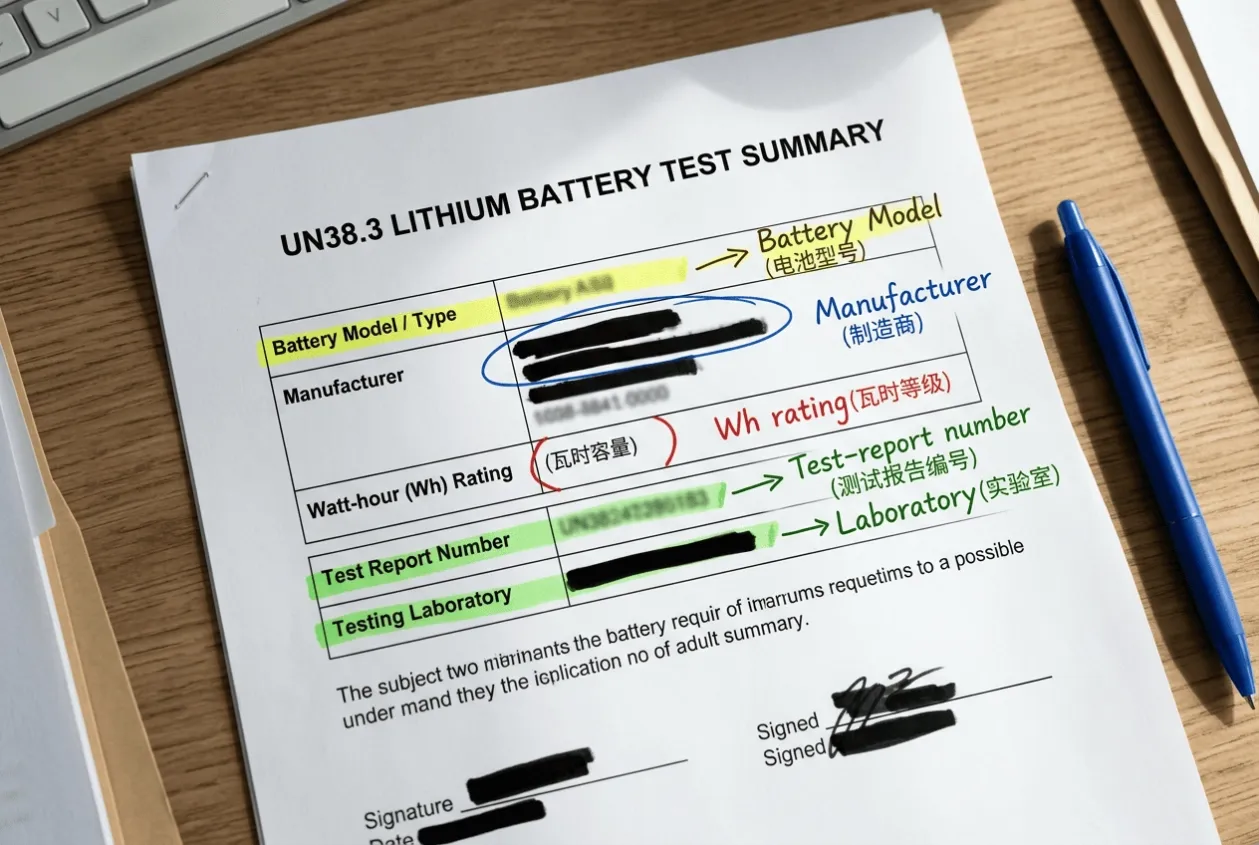
Figure 3 — Annotated UN38.3 test-summary example. Highlight the battery model, manufacturer, Wh rating, test report number, and laboratory. Use a redacted or illustrative document rather than a fabricated certificate.
A buyer reviewing the summary should compare the battery model and identifying information with the supplier's quotation. The test summary should also include the required manufacturer and laboratory details, report number, test date, and results, with references to assembled-battery testing where applicable.
A common point requiring clarification is the difference between a cell and a completed battery pack.
If the supplier quotes a finished battery module but provides only a cell-level test document, the buyer should ask how the applicable assembled-battery requirements are satisfied. A cell test is not automatically sufficient evidence for every pack made using that cell.
The summary generally does not need to be physically included with every shipment, but the responsible parties must make the applicable information available as required.
The document review becomes particularly important if the manufacturer substitutes another battery model during production. Electrical compatibility does not automatically establish identical transport documentation.
The Cheapest Equipment Quote May Not Have the Lowest Delivered Cost
Consider two quotations for an industrial UPS intended for a US factory.
Supplier A offers a lithium configuration at a lower EXW price. Supplier B offers a VRLA system at a higher equipment price but includes ocean freight under CIF terms.
The buyer cannot determine the cheaper delivered option by comparing those two headline numbers.
The quotations cover different scopes, and they may omit different expenses. Specialized packaging, dangerous-goods handling, carrier surcharges, destination charges, and customs-related costs can all affect the final comparison.
A better approach is to obtain pricing to the same agreed delivery point, with the battery configuration and intended transport mode identified.
There is another factor that buyers sometimes underestimate: shipment timing.
A supplier may offer an attractive UPS price with a production schedule that looks acceptable, but the proposed battery configuration may have limited airfreight options. If delivery is urgent, a lower equipment price loses much of its advantage when the available transport route does not meet the installation deadline.
This is why I would involve a qualified forwarder while comparing serious quotations rather than waiting until the purchase order has been completed.
An early freight estimate can remain provisional, but its assumptions should be visible. If the battery model or shipping arrangement later changes, the estimate needs to be reviewed.
Making the Purchase Order Clear Without Overcomplicating It
Buyers do not need to turn every UPS purchase order into a dangerous-goods manual.
What matters is ensuring that the product being manufactured is the same configuration used to plan the delivery.
For an RFQ, the following request is usually more valuable than a general statement asking the supplier to comply with international shipping regulations:
Please identify the battery manufacturer, model, chemistry, rated voltage, capacity in Wh and the number of battery modules included in your quotation. Confirm whether the batteries will ship separately, packed with the UPS or installed in the equipment, and provide the proposed transport classification with the applicable supporting documents for freight review.
This gives the supplier something specific to answer and enables the forwarder to assess the proposed consignment.
For VRLA batteries, the supplier should also be able to support any claimed non-spillable transport relief. For lithium batteries, the relevant UN38.3 information must be available and traceable to the supplied configuration.
If the supplier cannot provide final shipment documents during preliminary pricing, that does not necessarily invalidate the quotation. The important issue is agreeing when the missing information must be resolved and avoiding irreversible purchasing commitments based on unsupported freight assumptions.
A More Reliable Way to Source Industrial UPS Equipment
At UniRegal, we support industrial automation and power-related sourcing through our supplier network in China. For UPS projects, our role includes helping buyers clarify the equipment configuration, component requirements and documentation needed for procurement and shipping coordination.
We do not act as a dangerous-goods certification authority, and final shipment classification and carrier acceptance remain the responsibility of the appropriate qualified parties.
What we can help buyers address earlier is the gap between an electrically acceptable UPS quotation and a complete purchasing specification.
If you are comparing industrial UPS options, you can contact UniRegal with your required load, backup time, destination and preferred delivery schedule. We can help clarify the battery and sourcing requirements before the supplier's quotation becomes a purchasing commitment.
When the battery configuration is understood from the beginning, buyers are in a much better position to compare actual delivered costs, negotiate realistic schedules and avoid expensive surprises during shipment.