
Oct 12, 2026Buying Guides
MCC Panel Buying Guide: How to Source a Motor Control Center Without the Common Pitfalls
MCC panel sourcing becomes safer when buyers confirm fixed vs. drawout design, UL 845 or IEC 61439, bus rating, enclosure, communication protocol, and motor list before comparing quotes.
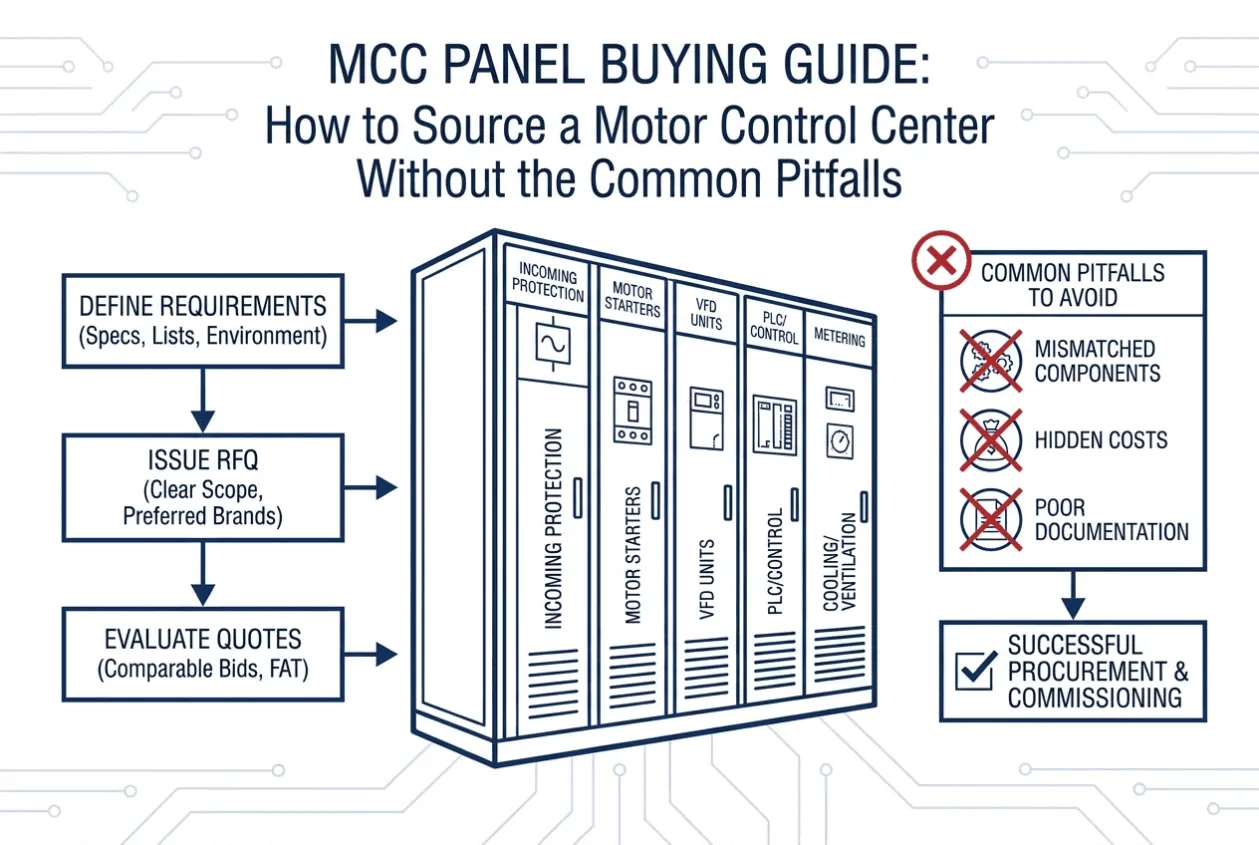
MCC Panel Buying Guide: How to Source a Motor Control Center Without the Common Pitfalls
Three suppliers quoted the same motor list.
The prices differed by 35%.
None of them were quoting the same MCC.
That is one of the most common problems I see when buyers request an MCC (Motor Control Center) panel quotation. A motor list is useful, but it does not tell the supplier whether the project needs fixed or drawout units, UL 845, or IEC 61439 compliance, busbar headroom, enclosure protection, spare capacity, or communication with the plant PLC.
So the buyer thinks they are comparing the MCC panel price. In reality, they may be comparing three different assumptions.
A motor control center is not just a large cabinet with starters and drives. It concentrates motor power, protection, busbars, communication, maintenance access, and future expansion into one assembly. If the MCC panel specification is too loose, the first price may look attractive, but the real cost appears later through downtime, audit issues, spare part problems, or redesign.
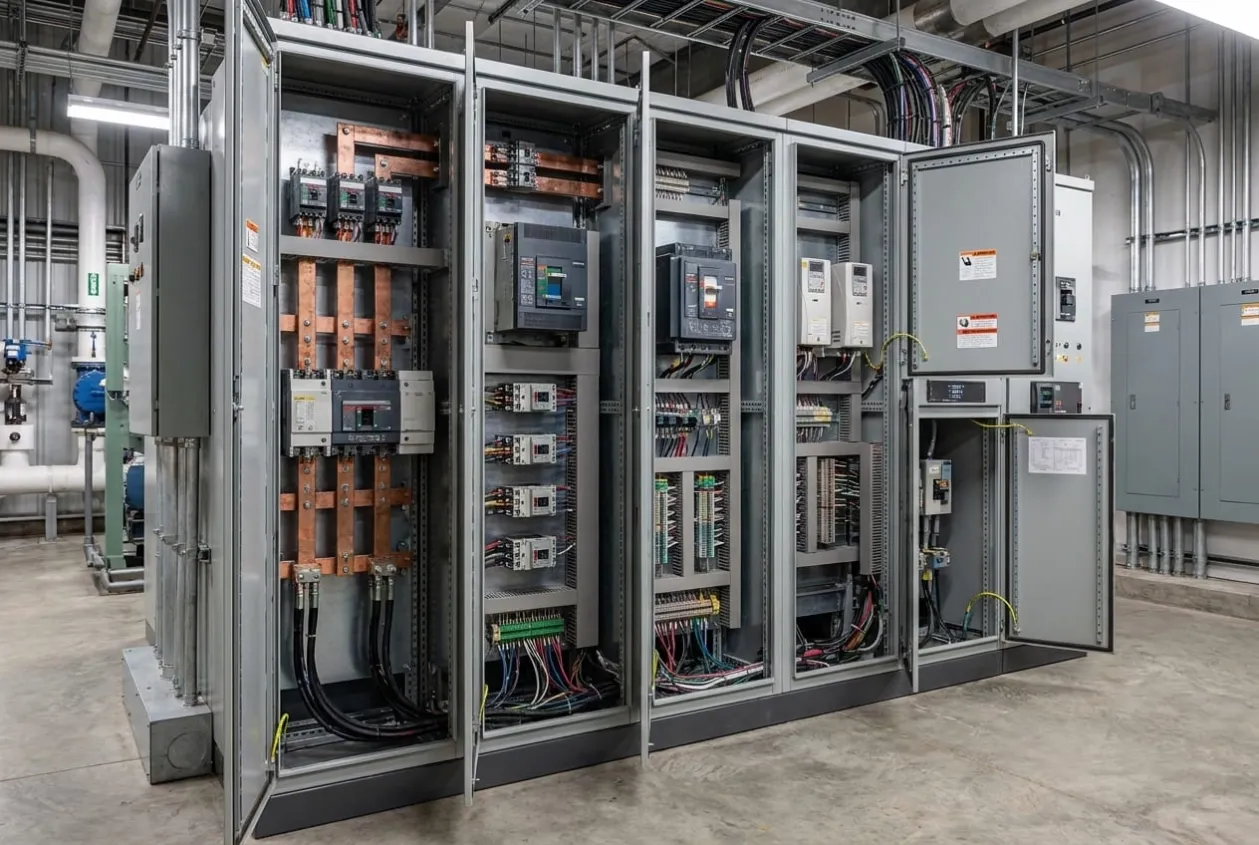
The short answer: before requesting an MCC quote, buyers should confirm fixed vs. drawout design, UL 845 or IEC 61439 compliance, bus rating, short-circuit withstand, enclosure rating, communication protocol, and motor list.
What You Are Really Buying
When you source an industrial MCC panel, you are not only buying a metal enclosure. You are buying how the plant will start, protect, maintain, and expand a group of motors.
A good MCC gives the buyer one service point, standardized spares, clearer wiring, and easier maintenance. A poorly specified MCC gives the buyer arguments: the standard is wrong, the bus is too small, the enclosure does not match the site, or the communication protocol does not match the PLC.
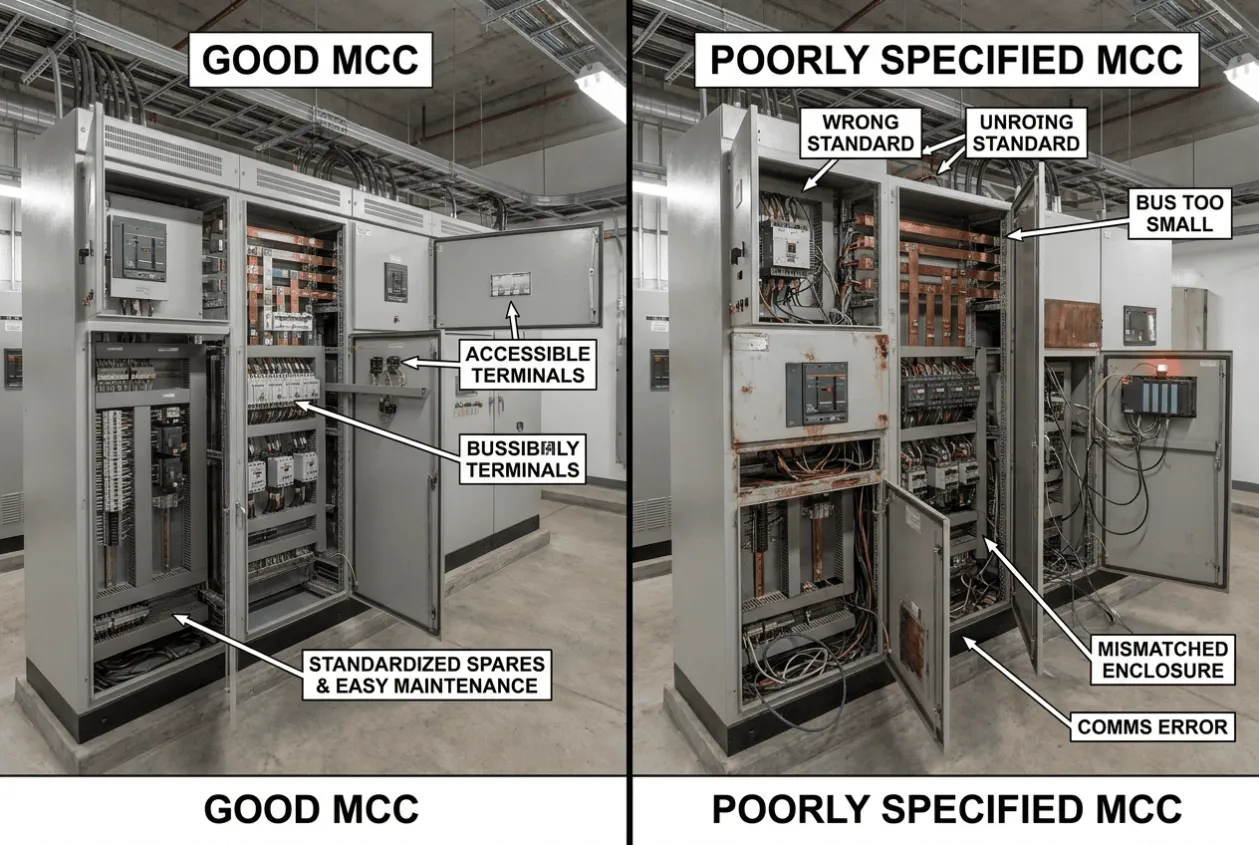
That is why I prefer to review an MCC quotation from the buyer’s side first. I ask what risk the buyer is trying to reduce, not only what parts are listed inside.
Why Fixed or Drawout Changes the Price
Fixed MCC units usually cost less. Each starter or feeder is wired in place, so service may require more shutdown planning. Drawout or withdrawable units cost more, but a failed unit can be removed and replaced more quickly.
The buyer question is simple: if one motor starter fails, can the plant afford the downtime?
MCC Type | Buyer Sees | What the Buyer Is Really Deciding |
|---|---|---|
Fixed | Lower initial price | More shutdown planning during service |
Drawout | Higher initial cost | Faster replacement and easier maintenance |
Mixed design | Balanced cost | Critical and non-critical loads must be separated. |
For non-critical motors, fixed units may be reasonable. For pumps, fans, compressors, production lines, or any motor where failure stops the process, drawout is often easier to justify. It is not about buying the fancy option. It is about buying the maintenance method your plant can live with.
Why the Correct Standard Matters Before Audit
One common sourcing mistake is treating an MCC like a normal control panel.
UL 508A applies to industrial control panels. For North American MCC projects, buyers should discuss UL 845. For international low-voltage assemblies, IEC 61439-1 and IEC 61439-2 are commonly used references.
This matters because an MCC is tested as an assembly with busbars, feeders, sections, and motor control units. It is not simply a bigger control panel.
If a motor control center manufacturer says “UL available,” I would ask which standard, which workshop, and whether the certificate applies to the actual MCC being quoted. A certificate problem after price approval can become a schedule problem very quickly.
Why Bus Rating Can Change Your MCC Price
The busbar is easy for buyers to overlook because it is not the part they see first in a front-door photo. But it decides whether the MCC can support today’s motors and tomorrow’s expansion.
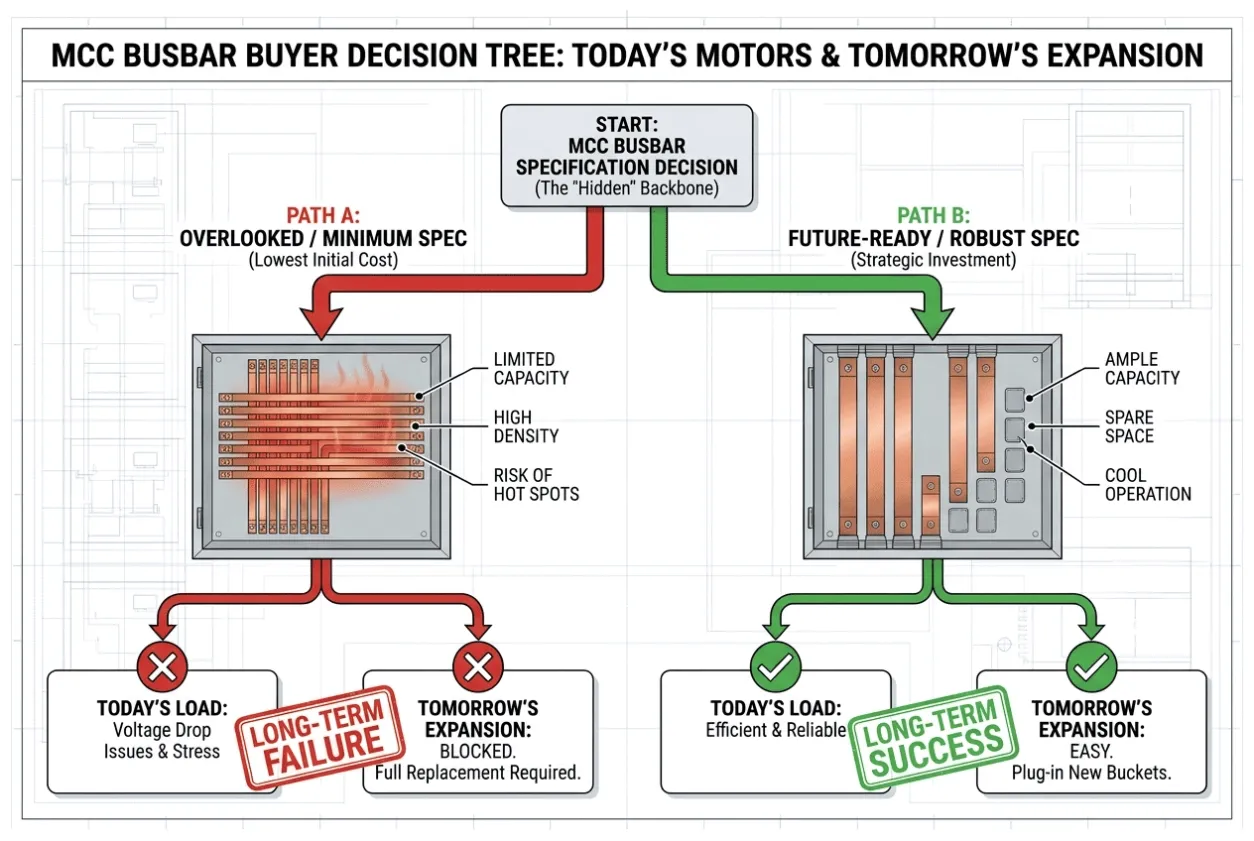
Common bus ratings may include 600 A, 800 A, 1200 A, 1600 A, or 2000 A, depending on the project. Buyers should also confirm the short-circuit withstand against the available site fault current and upstream protection.
This is where a low MCC panel price can be misleading. One supplier may size the bus only for today’s load. Another may include expansion headroom and a higher withstand rating. Both may look acceptable on paper, but they are not offering the same future.
A bus sized too tightly is a future upgrade already waiting to happen.
Why the Enclosure Should Follow the Worst Site Condition
An MCC in a clean electrical room has a very different life from one near dust, humidity, chemicals, outdoor rain, or washdown.
Site Condition | Typical Direction |
|---|---|
Clean the dry indoor room. | NEMA 1 / IP20 |
Dusty indoor plant | NEMA 12 / IP54 |
Outdoor rain exposure | NEMA 3R / IP24 |
Corrosive or washdown duty | NEMA 4X / IP66–IP69K |
I usually ask buyers to specify the worst condition the MCC may see, not the best condition on the layout drawing. A dry-room MCC that later ends up near a corrosive process area becomes a very expensive lesson.
The enclosure is not decoration. It decides how long the MCC can survive in the real plant.
Why Communication Should Be Decided Before You Order
Modern MCCs are often connected to PLC or SCADA systems. The communication protocol should be decided before the order, not during commissioning.
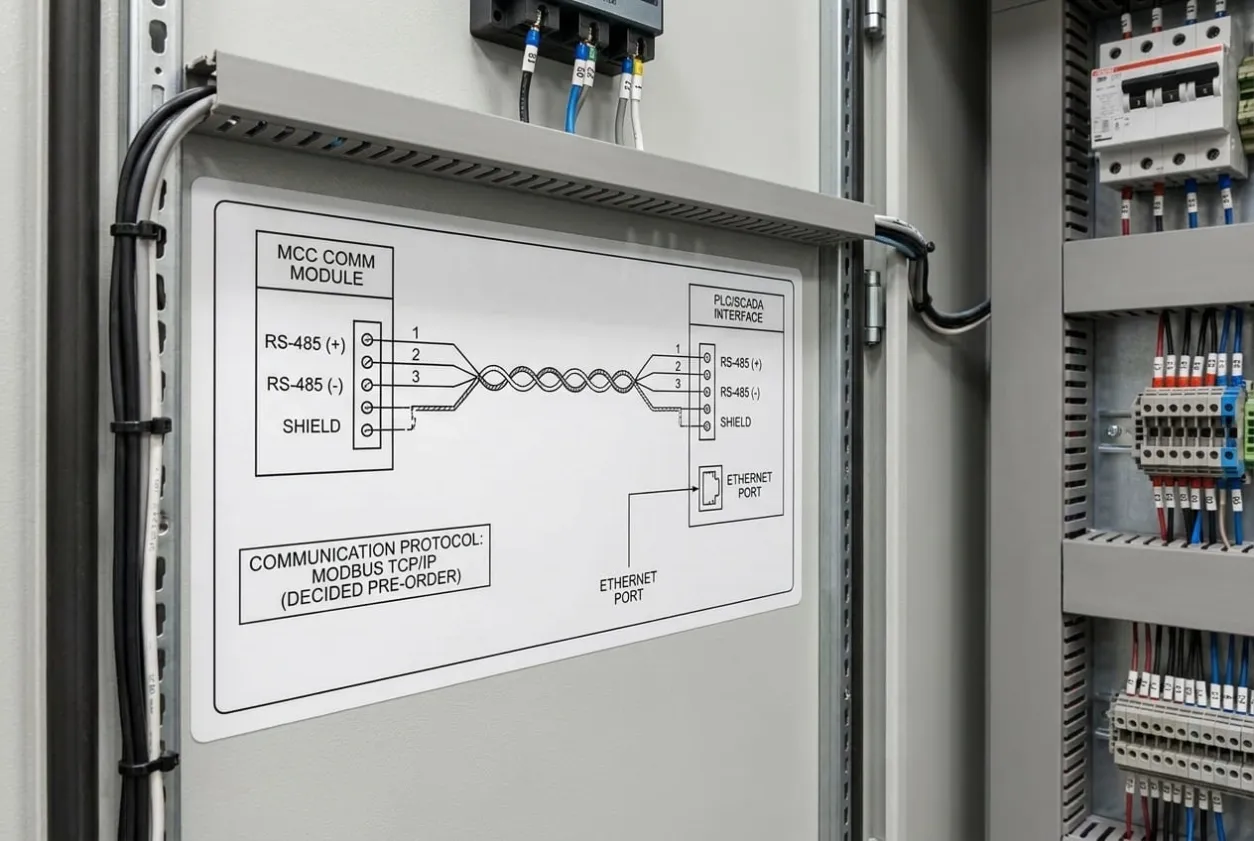
Modbus RTU or Modbus TCP is common and cost-effective. Profibus DP may appear in legacy European lines. EtherNet/IP is often requested on Rockwell or Allen-Bradley sites.
If the protocol is decided after award, the buyer may pay for gateways, reprogramming, extra testing, and site delays. That is not a small setting change. It is a scope change wearing a small hat.
What Makes Me Nervous
Three phrases make me slow down during an MCC supplier review.
- “UL panel” makes me ask whether the supplier means UL 508A or UL 845.
- “Enough bus capacity” makes me ask whether future expansion and fault current were actually checked.
- “Communication can be added later” makes me ask who will pay for the gateway, programming, and commissioning time.
None of these phrases are automatically wrong. They are just not complete enough for a purchasing decision.
MCC RFQ Checklist for Buyers
Before asking an MCC panel supplier for a final price, send these points:
What You Send | Why It Matters |
|---|---|
Motor list | Sets unit count, starter size, and load scope |
Start method | Confirms DOL, soft starter, VFD, fixed, or drawout |
Supply voltage and phase | Drives feeder and protection design |
Required standard | Confirms UL 845, IEC 61439, or project specification |
Site environment | Decides enclosure rating and material |
Communication protocol | Prevents late PLC or SCADA integration changes |
Maintenance requirement | Helps decide on fixed, drawout, or mixed design |
If these points are missing, suppliers may still quote quickly. The problem is that every supplier may be quoting a different MCC. A supplier should not win because they guessed less scope.
For MCC projects: complete wired and tested panels start from 1 unit and run 35 to 40 days; customer-supplied breakers and drives are accepted.
Empty enclosures start from 5 units and run 15 to 20 days. FAT records and photographs, and an as-built wiring diagram, ship with the panel.
We build to the standard your destination market requires—IP ratings such as IP65 (IEC 60529) are tested ratings, not certificates.
What to send for a control panel quote. If you are supplying your own components, start here: Customer-supplied components.
How We Usually Source MCC Projects
As a Foshan sourcing partner, UniRegal helps buyers consolidate the enclosure, bus system, starters, VFDs, FAT, communication requirements, and documentation into one sourcing package. For North American projects, UL-required orders are routed to suitable UL-listed workshops, with certificate details checked before shipment.
Send the motor list, required standard, site environment, communication protocol, and maintenance expectation. We can return a sized MCC proposal with bus rating, enclosure direction, compliance path, and lead time.
FAQ
Is UL 845 the same as UL 508A?
No. UL 845 is for motor control centers. UL 508A applies to industrial control panels. MCCs need the correct assembly standard because busbar and sectionalizing requirements are different.
Should I choose fixed or drawout MCC units?
Choose fixed for lower-cost, non-critical loads. Choose drawout when maintenance speed matters or when one failed motor unit could stop an important process.
How do I know the MCC bus is large enough?
Size the bus for the current load plus planned expansion, then confirm short-circuit withstand against available site fault current and upstream protection.
Which enclosure rating should I choose?
Match the rating to the worst site condition. Clean indoor rooms may use NEMA 1 or IP20. Dusty, outdoor, corrosive, or washdown areas need higher protection.
Which communication protocol should I specify?
Use the protocol your plant already supports, such as Modbus, Profibus DP, or EtherNet/IP. Decide this before placing the order.
Talk to Our Team About Your MCC
Send the checklist points above, and we will review your MCC scope before quoting. You can also review UL Listed Control Panels from China, Industrial UPS Buying Guide, Motor & VFD Control Panel Spec Checklist, or Browse Solutions.
About the Author
This guide is written by the application team at UniRegal, a Foshan-based sourcing partner for control panels, electrical enclosures, MCCs, and industrial UPS systems.
An MCC becomes expensive when the buyer approves a quotation before the standard, bus rating, enclosure, maintenance method, and communication scope are clear.
Shortlisting vendors? See what a build-to-print MCC panel supplier delivers: MOQ from 5 units, 15-20 day build, full documentation pack. Or request an MCC quotation with your single-line diagram.