
How to Specify an HVAC Control Panel: Nameplate Limits, SCCR, and the BAS Point List (2026 Buyer's Guide)
HVAC panel quotes often omit the two numbers that decide acceptance: the nameplate overcurrent ceiling and the panel's SCCR. Here is what to freeze in the RFQ.
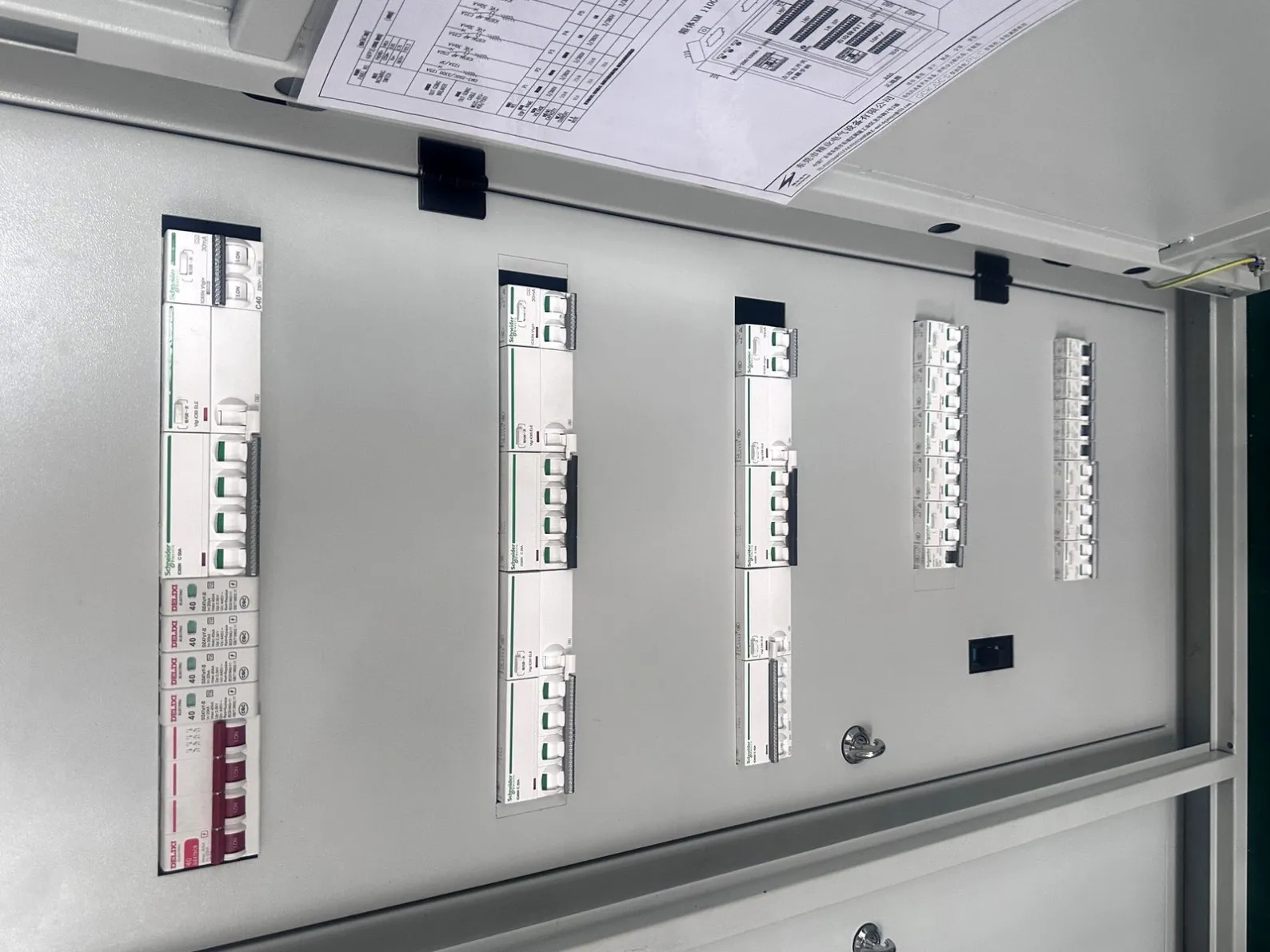
A rooftop air-handling unit arrived with its control panel already wired: a 63 A feeder breaker, a starter for the supply fan, and a drawing set that matched the bill of materials exactly. The compressor nameplate on the unit read "Maximum Fuse Size 50 A." The inspector would not energise it. Nothing in the panel was wired incorrectly. The breaker was simply larger than the equipment nameplate allows, and in a NEC jurisdiction that is not a design preference. It is a refusal to connect.
That failure had nothing to do with HVAC engineering. It came from how the panel was specified. We source and build panels to a buyer's written specification; we do not design the sequence, program the building automation system, or commission the plant. That division is why the three documents below have to be fixed before anyone asks for a price.
The transferable judgment is this: an HVAC panel is not approved by the motor it starts. It is approved by two numbers that must bracket the same protective device — a ceiling from the equipment nameplate and a floor from the panel's short-circuit rating — plus a third document, the point list, that decides whether the panel can be handed to the controls contractor at all. A quote that lists motors and prices but omits all three has not specified a panel. It has specified a box with parts in it.
The ceiling: the equipment nameplate outranks the motor schedule
NEC 440.4(B) requires the maker of combination-load equipment to mark the nameplate with the maximum rating of the branch-circuit short-circuit and ground-fault protective device. NEC 110.3(B) then requires listed equipment to be installed per that listing. Together they turn the nameplate number into a hard upper bound — not advice, and not negotiable at the receiving dock.
NEC 440.22(A) explains where the number comes from. For a single hermetic motor-compressor, the protective device is generally limited to 175% of the compressor's rated-load current; if that value will not carry the starting current, the next standard size may be used but may not exceed 225%. The manufacturer performs that calculation and prints the result. A buyer who recalculates it from a motor schedule — or lets a supplier pick "the usual size" — is substituting a guess for a marked value.
The practical consequence is easy to miss. Send the nameplate, not the kW figure. A photo showing MCA and MOCP (or its IEC equivalent) belongs in the RFQ package alongside the one-line diagram. Where the unit and the panel come from different suppliers, the nameplate is the only document both parties can be held to. That is why we ask for the load side in writing before a control panel build service is quoted — the equipment-to-panel boundary is where most disputes start.
The floor: SCCR is a property of the assembly, not of the main breaker
The second number runs in the opposite direction. NEC 409.110 requires an industrial control panel to be marked with a short-circuit current rating, and NEC 409.22(A) prohibits installing it where the available fault current at the point of connection exceeds that rating. The rating therefore has to clear the site, not the drawing.
UL 508A Supplement SB gives the accepted calculation method. SB4.2 establishes each power-circuit component's SCCR from its marking or manufacturer data, or applies the Supplement's default values where a component is unmarked. SB4.3 accounts for current-limiting devices upstream. SB4.4 takes the lower of the lowest resulting component rating and the lowest interrupting rating in the panel — unless a tested combination is documented. The weakest link wins; a larger main disconnect does not raise the number.
This is why "5 kA standard" is not a specification. A variable-frequency drive commonly carries a modest rating on its own and a much higher one only when paired with a named fuse class or breaker as a tested combination. If the panel is installed close to a service transformer, the available fault current can be many times a default value — an illustrative rooftop retrofit near a 2,500 kVA service is a very different proposition from the same panel at the end of a long feeder. Ask for the available fault current with the date it was calculated, then ask which documented combination achieves the required rating. A supplier who cannot name the combination has not performed SB4.4.
The third document: somebody has to own the point list
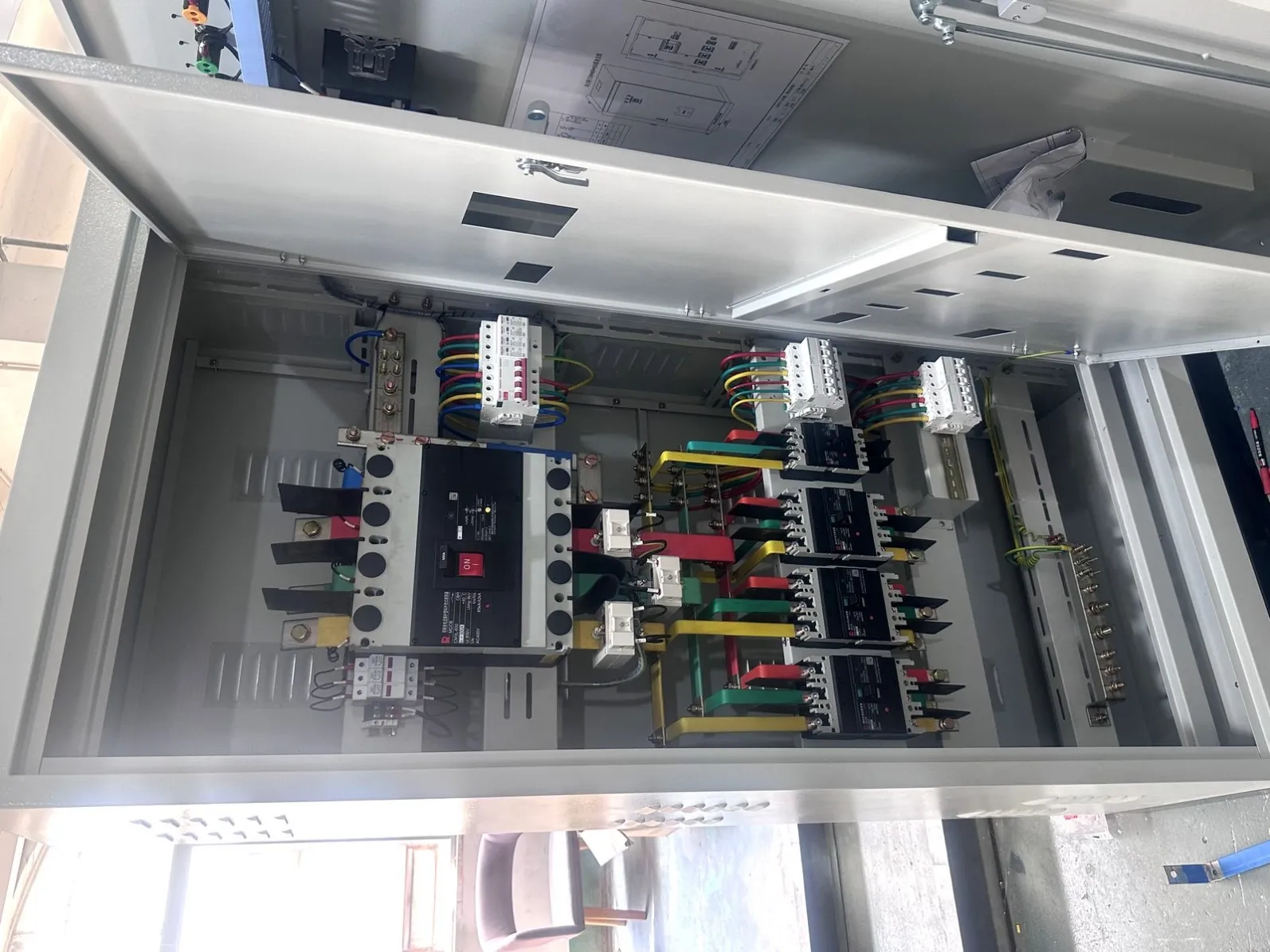
A communication protocol is not an interface. "BACnet included" or "Modbus TCP gateway" describes a port; it does not describe which signals cross it. The point list names every signal, its direction, scaling, alarm priority and object identifier. If it is left until handover, the controls contractor assumes the panel supplier mapped it and the panel supplier assumes the controls contractor did.
The integration mechanics are covered separately in our guide to integrating HVAC automation panels into a modern BMS. For the purchase decision the point is narrower: the point list must be a controlled attachment to the order, with a revision number, not a sentence in an email. Once it is controlled, a change to a supply-fan status signal has an owner and a cost. Before that, it is a change order nobody expected. This is the same discipline we apply to thermal calculations in an enclosure thermal load sizing review — the document is the deliverable, not the conversation about it.
Making quotes comparable: paste this into the RFQ
Every line below removes one guess. Send the same text to every supplier and the responses become comparable for the first time.
Line 2 is the one most often left blank. It is also the one that determines whether the panel can legally be installed. We have written about how to witness a factory acceptance test remotely because the same principle applies there: a document you can inspect is worth more than a assurance you cannot verify.
Two clauses for the purchase order
Once a supplier is selected, convert the RFQ lines into obligations. These are drafted as neutral contract language and can be used as-is.
At receiving: add three lines to your checklist
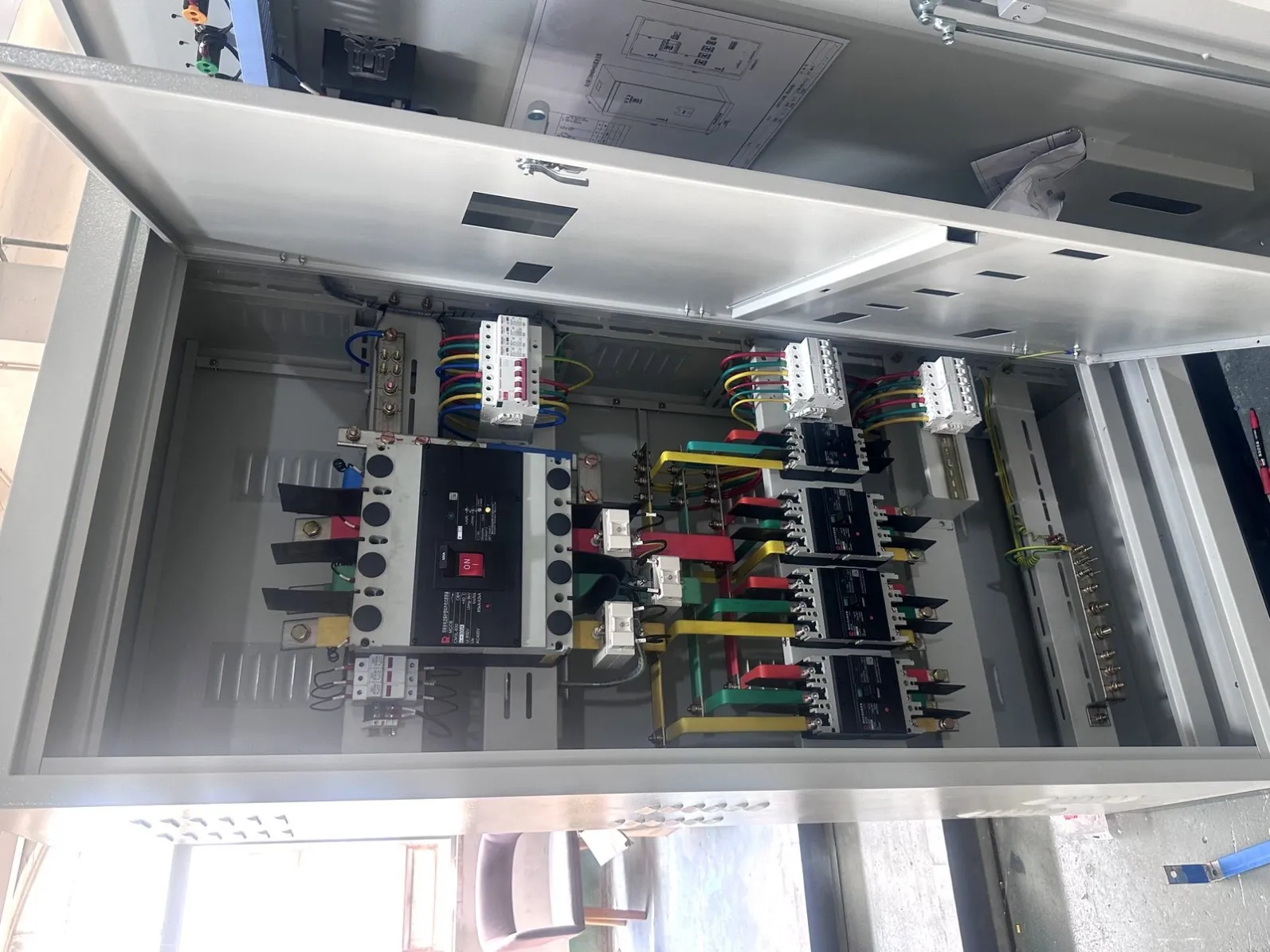
A receiving inspection does not need to repeat the factory test. It needs to confirm that the documents travelled with the panel and that the physical protection matches them.
Check | What to look for | Accept / reject criterion |
|---|---|---|
Protective device vs nameplate | Breaker or fuse rating in the panel; nameplate MOCP on the HVAC unit | Reject if device rating exceeds the nameplate maximum |
SCCR marking vs site fault data | Marking on panel label; calculation sheet in document pack | Reject if marking is absent or below the supplied available fault current |
Point list revision | Revision on delivered list vs revision on PO | Reject on mismatch; require written revision before energising |
Enclosure Type | Label and construction vs indoor/outdoor and exposure declared in RFQ | Reject if lower than the declared environment |
Document pack | As-built drawings, component schedule, calculation sheet | Hold energisation until complete |
The same logic is used in our arrival acceptance and rejection guide for panels generally; HVAC adds the nameplate comparison as a fifth dimension.
The point that survives all of this is not a checklist. It is a way of reading any rotating-equipment panel: find the ceiling the equipment sets, find the floor the assembly must clear, and find the document that decides who owns the signals between them. If a quote cannot answer all three, price is not the comparison you are making.
FAQ
Does NEC 440.22 allow us to increase the breaker if the compressor will not start? The manufacturer already applies that allowance when printing the maximum protective device rating on the nameplate. If starting remains a problem, the correct response is to consult the equipment manufacturer, not to enlarge the device in the panel. Changing it without the manufacturer's instruction puts the installation outside 110.3(B).
We are shipping to IEC countries. Does the NEC nameplate rule still matter? The NEC applies where the panel is installed. For IEC destinations the equivalent discipline is to freeze the manufacturer's stated protection and fault-withstand data in the specification. The underlying judgment — equipment sets a ceiling, the assembly sets a floor — is the same even though the clause numbers change.
Is a 5 kA SCCR automatically unacceptable? Not by itself. It is acceptable only where the available fault current at the installation point is at or below 5 kA. Obtain the site figure before accepting any default rating, because the panel is marked for the site, not for the catalogue.
Can we add the BAS gateway after the panel arrives? Physically often yes, contractually no. Adding a gateway changes the point list and usually the documentation revision. Treat it as a controlled change, or the handover will fail even if the wiring is sound.
Who signs off the point list — the mechanical contractor or the controls contractor? Whoever owns the BAS sequence should sign, with the panel supplier confirming that the physical I/O exists. What matters is that exactly one party owns the document and that its revision is on the purchase order.
Do we need a separate enclosure Type for a rooftop panel? Outdoor exposure requires a Type selected against rain, dust and any corrosive or washdown condition, referenced to NEMA 250. The RFQ should state the actual exposure rather than a preferred Type, so the selection can be checked against the site.
Related guides
- Electrical enclosure supplier: China sourcing guide — the cluster reference for enclosure selection and supplier qualification.
- Integrating HVAC automation control panels into a modern BMS — the integration side of the handoff discussed above.
- Electrical enclosure thermal load sizing — how cooling demand is calculated before the enclosure is chosen.
- Control panel arrival acceptance and rejection guide — the general receiving procedure this HVAC checklist extends.
- How to witness FAT remotely — verifying documented tests before shipment.
- Custom control panel build service — scope, documentation and how we work from a frozen specification.
Talk to us
Send the equipment nameplate, the site fault figure and your point list — we will tell you which parts of the specification are missing before you commit to a build. WhatsApp: wa.me/8613535080546?text=RFQ%20hvac-control-panel-specification-guide%20%E2%80%94%20nameplate%2C%20fault%20current%2C%20point%20list. Email: info@uniregal.com. Or use the contact form. Upload Drawing → Engineering Review: submit your requirements.
We are a sourcing partner and panel build service, not one of the equipment manufacturers named above.
Produced with AI-assisted drafting and reviewed by the Uni Regal team before publication.