
Oct 6, 2026Buying Guides
Inside the Enclosure: The Accessories That Decide Whether Your Panel Survives
Small control panel accessories—rails, glands, ferrules, grounding, and labels—often decide whether expensive components survive vibration, moisture, faults, and maintenance.
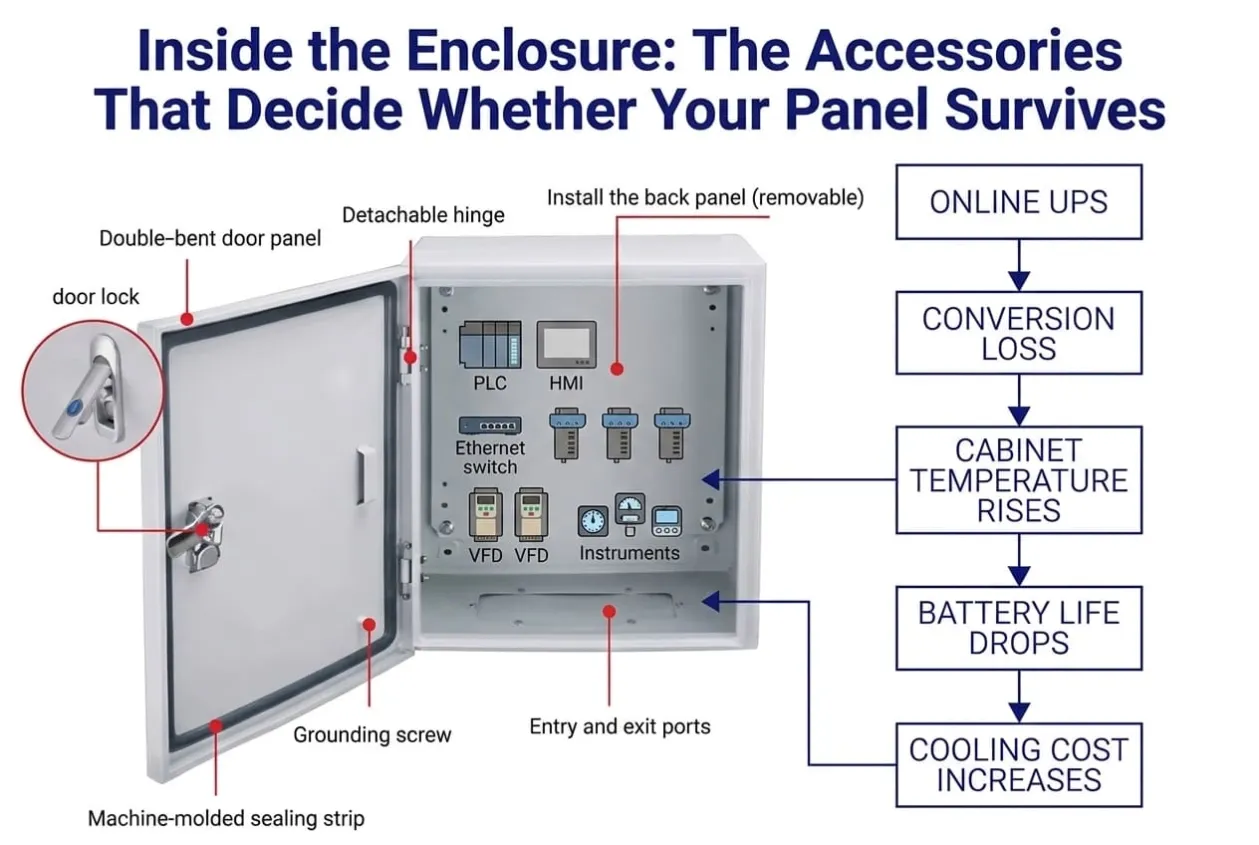
Control Panel Accessories: The $5 Parts That Decide Whether a $5,000 Panel Survives
A buyer once asked me why one enclosure quotation was nearly 20% higher when both panels looked almost identical from the outside.
Same stainless steel enclosure. Same IP rating. Same overall size.
Then we opened the internal accessory list, and the difference became much easier to understand. One supplier had specified solid DIN rail, proper end stops, IP-rated cable glands, ferrules, a bonded ground bar, wire duct, and door bonding straps. The cheaper quotation only said “standard accessories.”
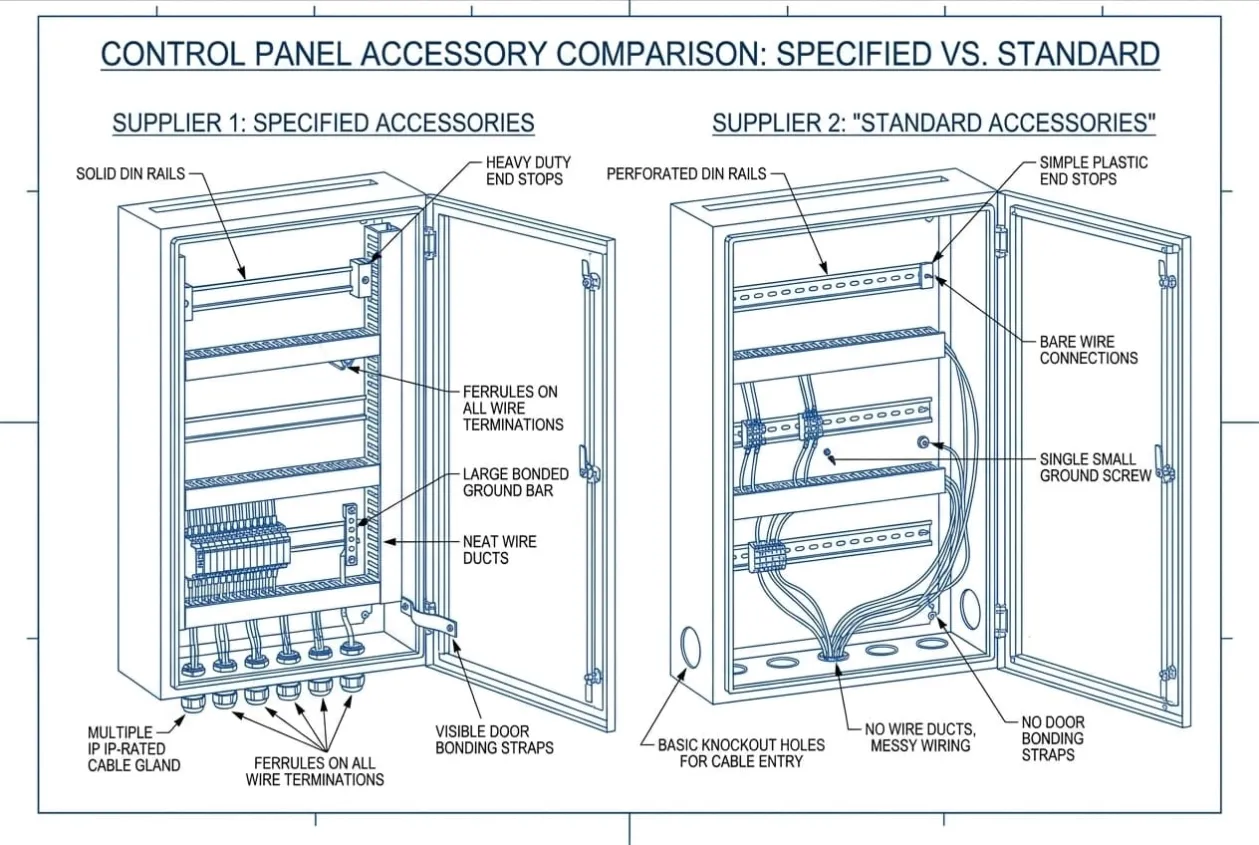
That word always makes me nervous.
The panel was going onto a skid-mounted system with regular vibration. A few months after startup, the operator did not describe it as an electrical problem. He simply said, “Sometimes it runs. Sometimes it just has a bad day.”
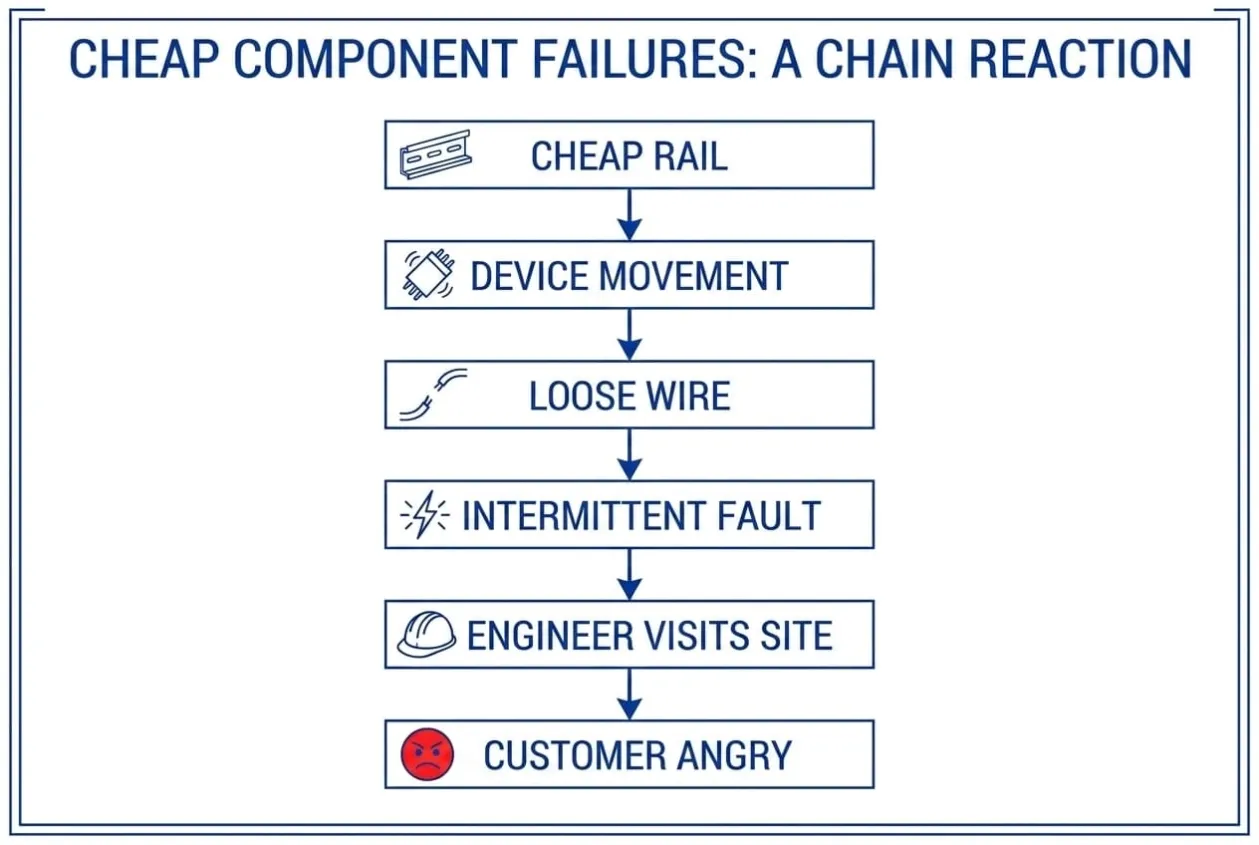
Nobody could reproduce the fault during a quick inspection. It appeared once every few weeks, usually after the machine had been vibrating for several hours. The PLC looked healthy, the drive history was not very helpful, and the wiring seemed normal until someone found that a heavy device had shifted slightly on a weak rail.
The panel did not fail because of the expensive components. It failed where someone saved a few dollars on the parts holding them in place. Large failures often begin with very small purchasing decisions.
The Real Question Is Not “What Accessories Are Included?”
The better question is, “Which failure is each accessory supposed to prevent?”
Once you look at accessories that way, the discussion becomes much more practical. DIN rail and end stops prevent devices from moving. Cable glands protect the enclosure rating at the holes we create ourselves. Ferrules, terminals, and wire ducts decide whether the wiring remains tight and serviceable. Ground bars and bonding straps help keep noise and fault currents from turning into mystery problems.
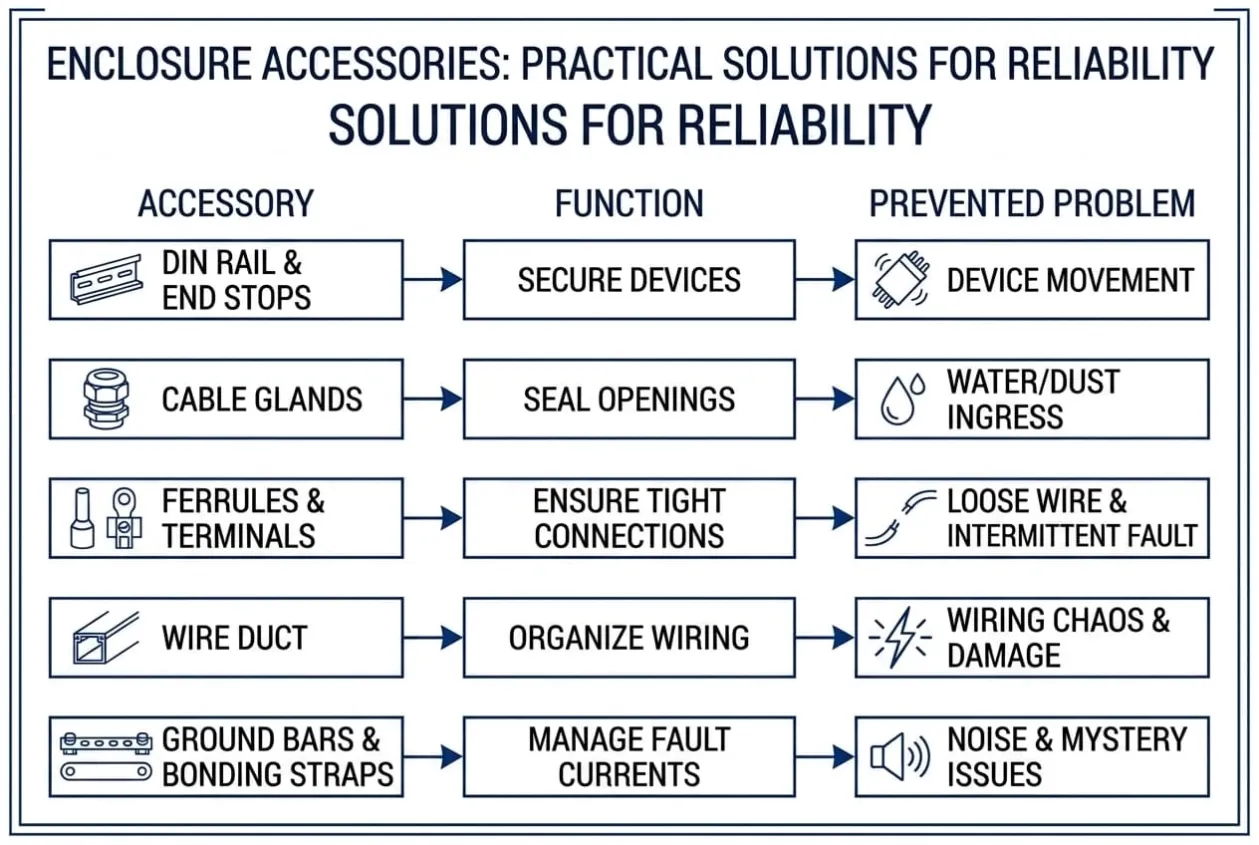
Most buyers spend hours choosing the PLC. Very few spend five minutes choosing the parts that protect it.
That is the part I try to slow down during quotation review.
Failure 1: The Device Moves
Mounting accessories matter most when the panel is installed on skids, compressors, pumps, mobile equipment, marine systems, or any machine that vibrates. A normal TS35 DIN rail may be fine for small breakers and relays in a clean indoor cabinet, but heavier devices need better support.
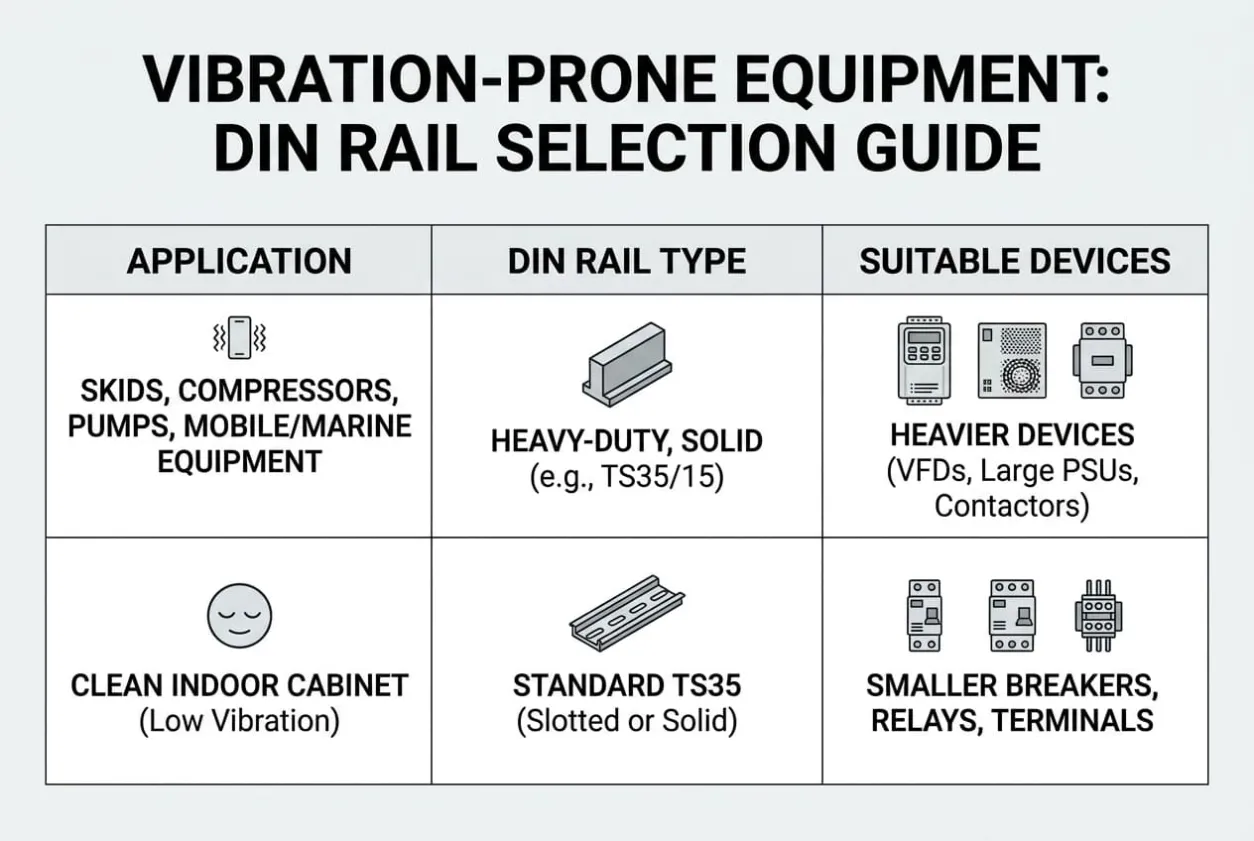
If a component weighs several kilograms, I prefer to see a back plate, stronger rail, proper spacing, and end stops that actually prevent movement. This is not overengineering. It is basic mechanical common sense inside an electrical cabinet.
If the panel travels, shakes, or sits near rotating equipment, the mounting system should be specified, not assumed.
Failure 2: Water Enters Through the “Small” Hole
A buyer may approve an IP66 or NEMA 4X enclosure and still receive a weak installation if the cable glands are wrong. The enclosure rating is only meaningful if the cable entry points are treated with the same seriousness as the cabinet body.
I have seen outdoor cabinets where the box itself was well made, but the gland selection looked like an afterthought. Wrong thread, poor sealing, weak strain relief, and messy cable entry can turn a good enclosure into a slow leak. In washdown, wastewater, coastal, or dusty sites, cable glands should be specified by thread type, sealing level, material, and cable size range.
Water rarely enters through the door. It usually finds the holes we made ourselves.
That is why I pay more attention to cable entry than many buyers expect.
Failure 3: The Panel Has Grounding Ghosts
Grounding accessories do not photograph well, which may be why some quotations treat them casually. A proper ground bar, bonding straps, shield clamps, and clean termination points can prevent a lot of strange commissioning problems.
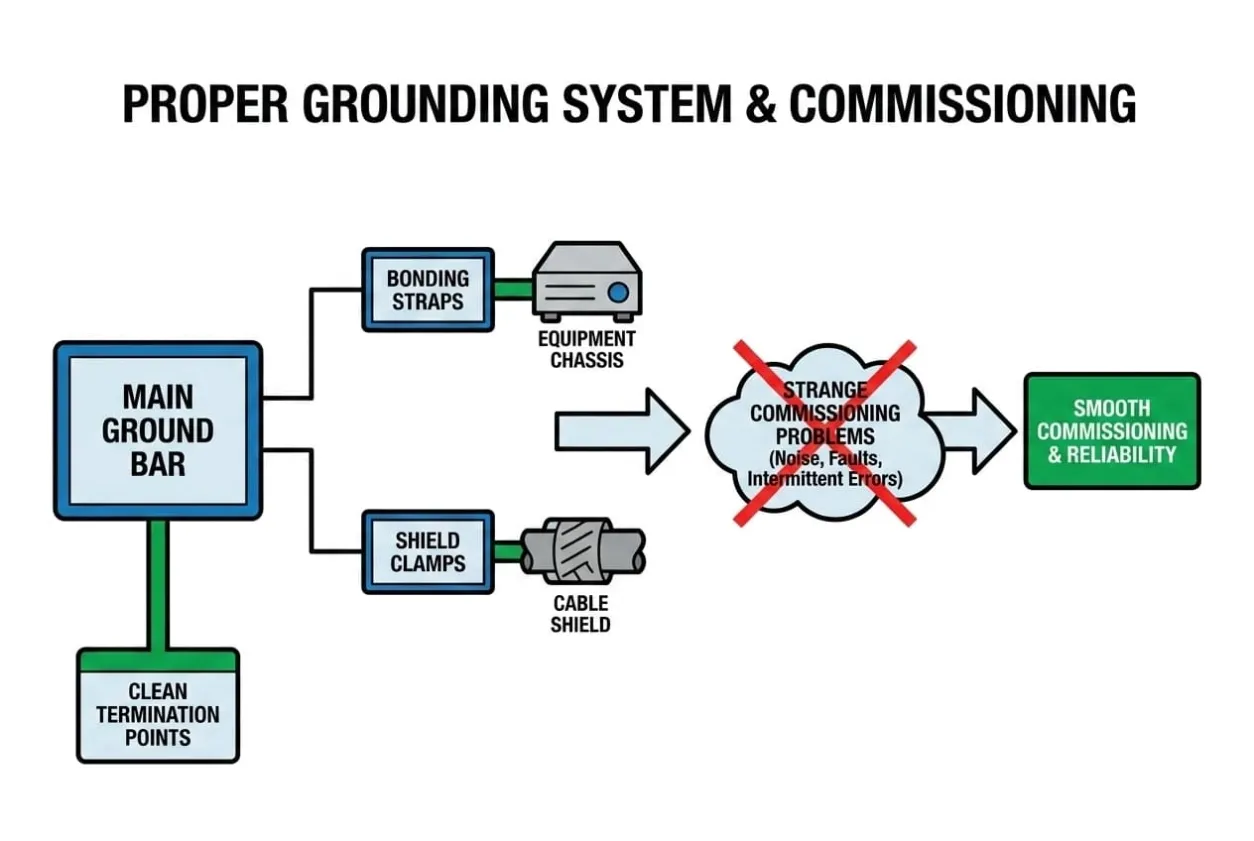
Grounding faults are frustrating because they rarely introduce themselves politely. They pretend to be sensor faults first. Then communication faults. Then VFD faults. The grounding issue quietly watches everyone replace the wrong component before anyone checks the bonding.
In one review, the expensive equipment was blamed first because it was visible and easy to question. The real issue was a poor bonding path through a painted door hinge with no strap. Once the door was bonded properly and shields were terminated cleanly, the “mystery” became much less mysterious.
Failure 4: Wiring Becomes Unserviceable
Wire duct, ferrules, labels, terminal blocks, and spare terminal space are not glamorous, but they decide whether the panel can be maintained after delivery. A neat panel is not only about appearance. It reduces troubleshooting time.
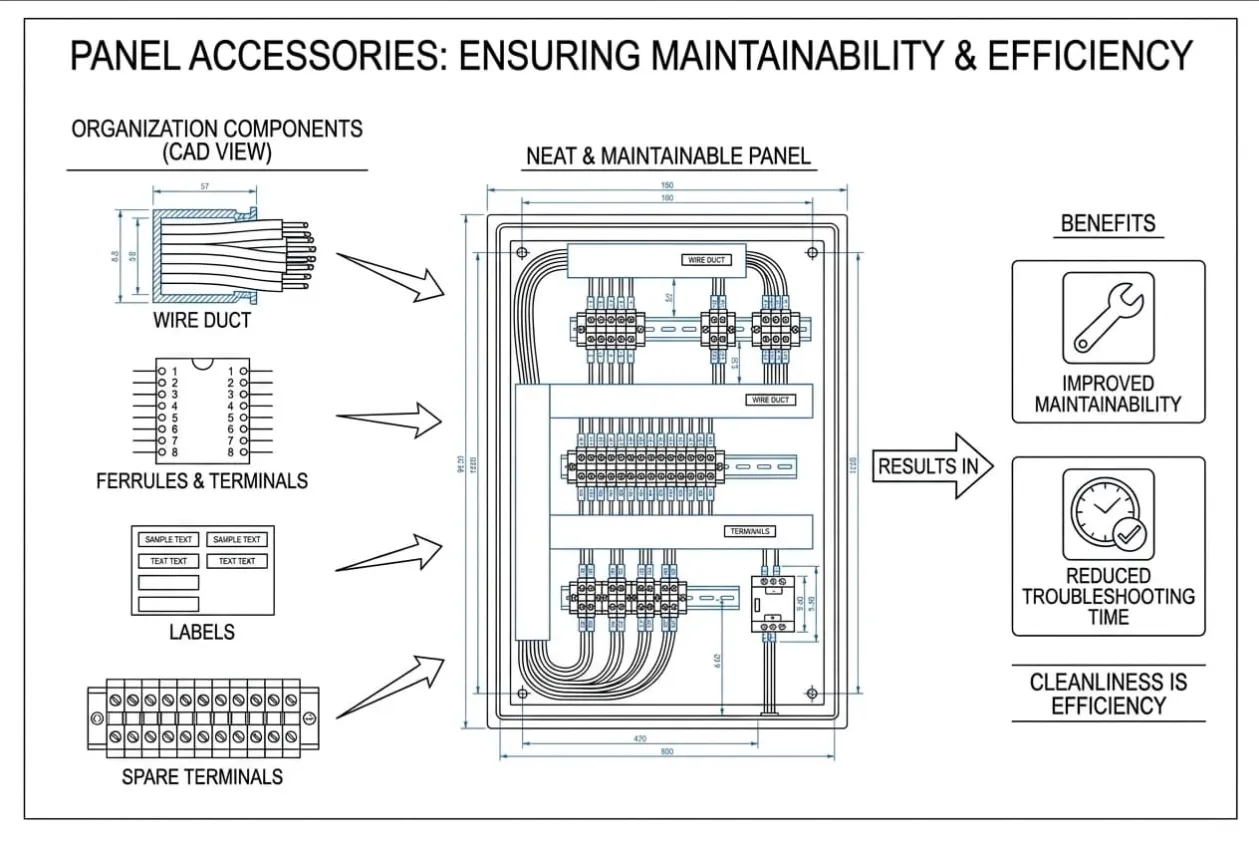
Ferrules are a good example. They cost very little, but they prevent stranded conductors from being crushed unevenly under terminals. Wire labels are the same. Nobody gets excited about them during purchasing, but the technician opening the panel at 2 a.m. will care a lot more than the buyer did during procurement.
I usually tell buyers that wiring accessories are where a panel reveals the builder’s attitude. If the internal wiring looks like it was built only to pass shipment, maintenance will eventually pay the bill.
Which Accessories Matter Most?
Panel Situation | Accessories I Check First | Why It Matters |
|---|---|---|
Indoor PLC panel | Ferrules, terminal blocks, wire duct | Keeps wiring reliable and serviceable |
Outdoor cabinet | Cable glands, grounding, heater provision | Protects against water entry and condensation |
Skid-mounted panel | Solid rail, end stops, back plate | Prevents vibration-related movement |
Wastewater site | Glands, bonding, corrosion-resistant hardware | Moisture and gas exposure are unforgiving. |
Marine or mobile system | Mounting, grounding, locks, strain relief | Movement and corrosion attack together |
VFD control panel | EMC glands, grounding, shield termination | Reduces noise and random signal problems |
Temperature control is also an accessory decision, but that deserves its own discussion. For this review, I simply want buyers to remember that fans, filters, heaters, thermostats, and humidistats should be selected for the site, not thrown into the cabinet at the end.
Buyer Review Before Approval
Mounting
□ DIN rail type specified
□ End stops included
□ Back plate used for heavy devices
□ Vibration condition reviewed
Cable Entry
□ Gland thread matches site standard
□ Gland rating matches the enclosure application
□ Cable size range confirmed
□ Strain relief considered
Grounding and Bonding
□ Ground bar bonded to enclosure body
□ Door bonding straps included
□ Shield termination method defined
□ Painted hinges not relied on as bonding paths
Wiring and Serviceability
□ Ferrules required on stranded conductors
□ Wire labels match the schematic
□ Wire duct included
□ Spare terminals reserved for future service
This review does not make the quotation harder. It makes the hidden assumptions easier to see.
FAQ
Do small enclosure accessories really affect panel life?
Yes. Many field problems begin with mounting, wiring, cable entry, grounding, or condensation control rather than the PLC or VFD itself.
Should I accept “standard accessories included”?
Only if the supplier’s standard is documented. Otherwise, write the accessory requirements into the RFQ so there is no room for quiet downgrades.
Are ferrules really necessary?
For industrial control panels, I strongly prefer them on stranded conductors. They improve termination quality and reduce the chance of loose or messy wiring later.
What is the most overlooked accessory?
Cable glands and bonding straps are often overlooked. One protects the enclosure rating at the entry point, and the other helps prevent grounding-related faults.
What should I ask UniRegal to check?
Send the application, enclosure location, vibration condition, cable entry requirement, grounding expectations, and internal layout needs. We can help review whether the accessory package matches the site, not just the cabinet drawing.
Final Thought
Accessories do not control the quotation headline, but they often control the panel lifespan.
Expensive components usually do not die on their own. Small accessories quietly decide whether they get the chance to live a full life.
Related guides
Get a buildable quote.
Tell us what goes inside the box—device list, environment, and any vibration or washdown requirements—and we will source the rated accessories and bundle them into a buildable panel spec. Submit your requirements, and we will return a quote with the internal fit-out called out, not buried.
Need help specifying or sourcing this for your project? Request a quote - we reply within 1-2 working days with a technical review.