
Oct 6, 2026Buying Guides
Control Panel Cost Drivers: What Actually Moves the Price (and How Buyers Can Control It)
A quote review guide showing why three control panel prices can differ for the same drawing, and how enclosure scope, components, certification, FAT, and assumptions change cost.
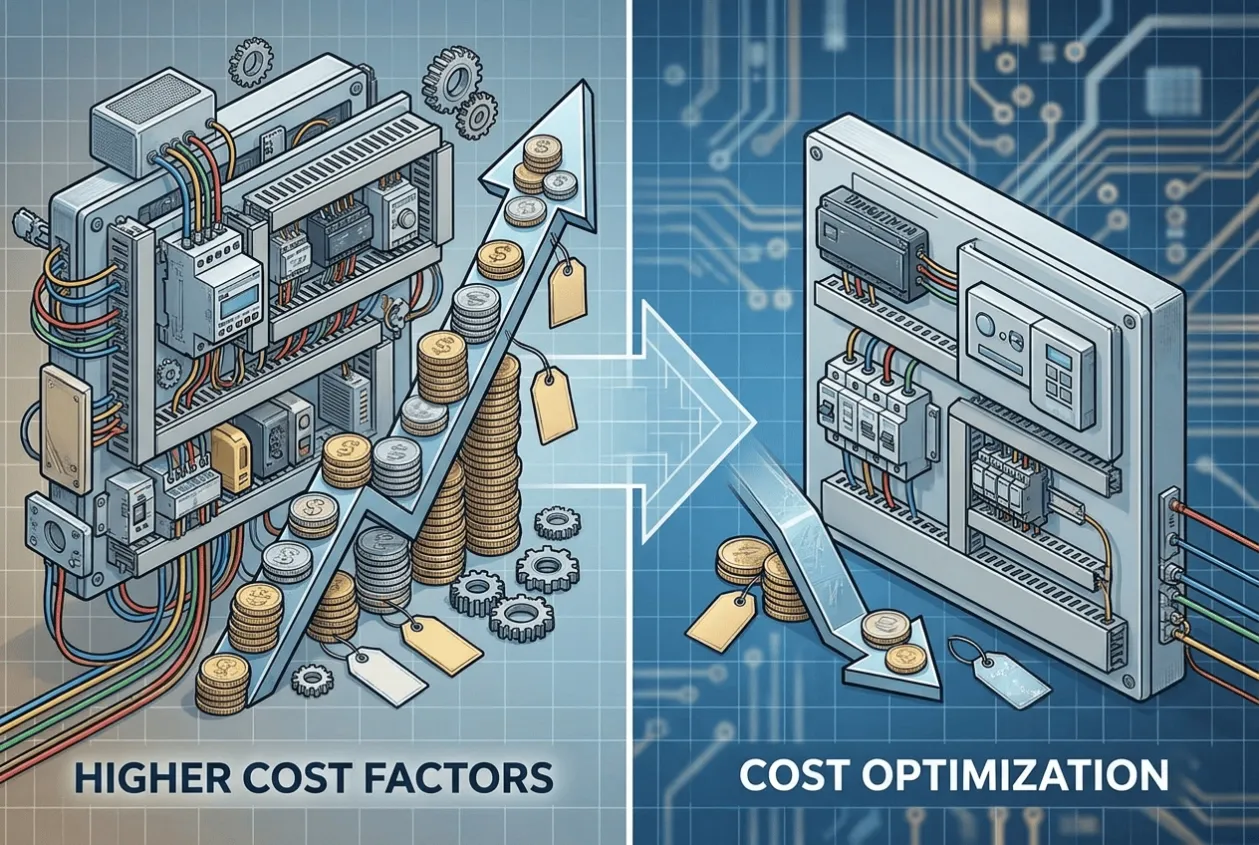
Three Quotes. One Drawing. Three Completely Different Control Panels.
A Quote Review for Buyers Before Comparing Price
The buyer pointed at the highest quotation first.
“This one is impossible.”
I agreed for about five minutes.
Then we compared the quotations line by line.
The lowest quote used painted carbon steel. The middle quote allowed 304 stainless steel. The highest quote included named-brand PLC components, FAT, drawings, labeling, and documentation.
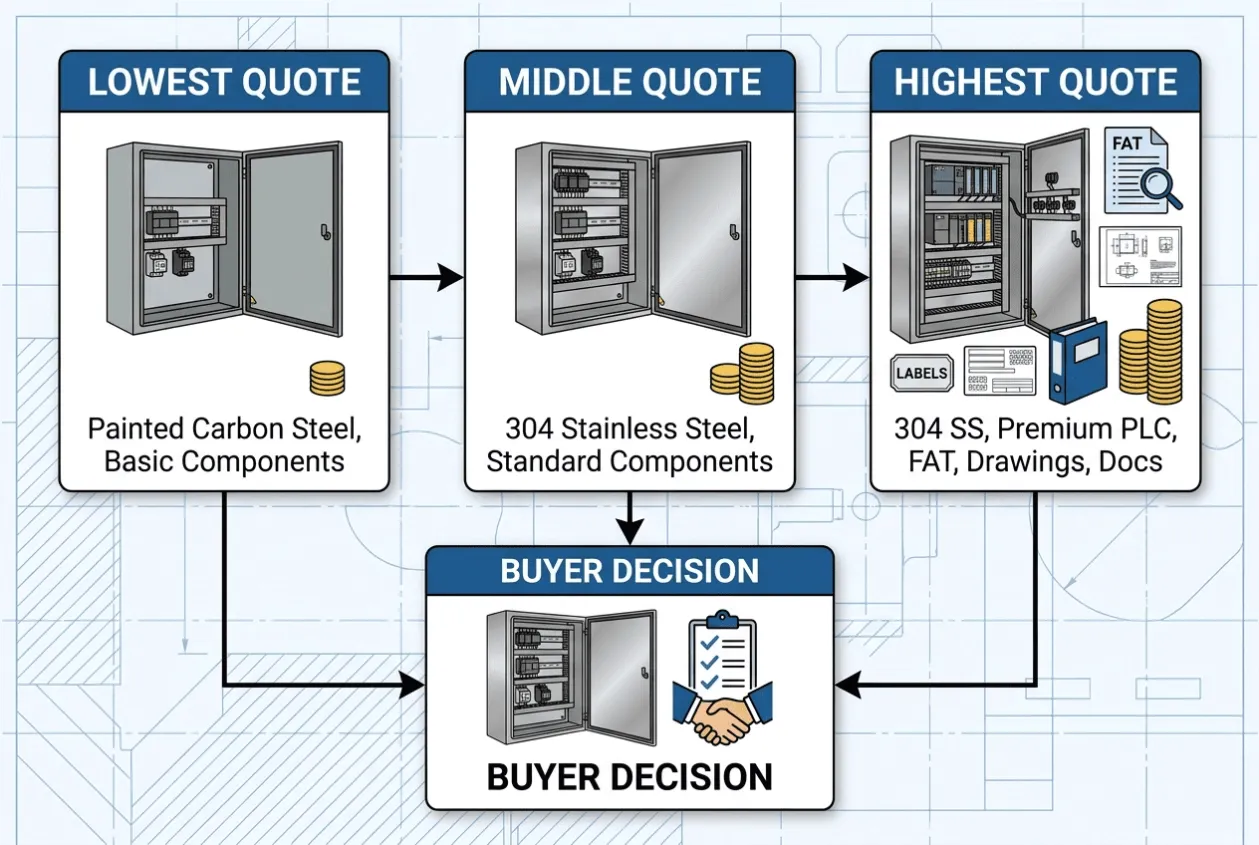
The drawing was the same.
The panel was not.
That is why I no longer compare control panel prices first. I compare assumptions.
A control panel price is not one number. It is a stack of assumptions.
The First Thing I Checked: The Enclosure
The first difference was the enclosure. One supplier assumed carbon steel. Another quoted stainless steel. The third is quoted stainless steel with a higher IP rating.
That single assumption explained a surprising part of the price gap.
Carbon steel may be perfectly fine for a clean indoor panel. 304 stainless makes sense for outdoor or washdown use. 316 stainless should be reviewed for coastal, chemical, or high-chloride environments.
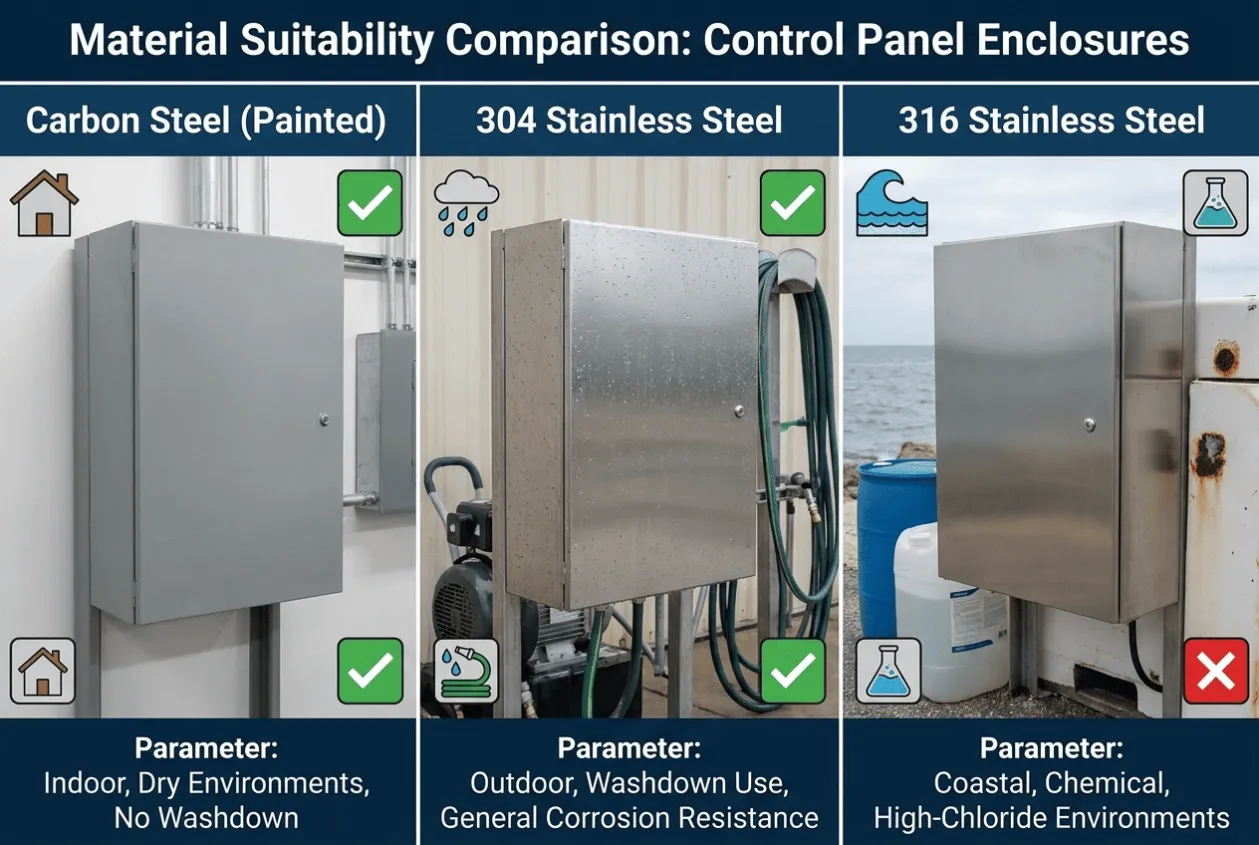
The buyer did not need the “strongest” enclosure. He needed the correct enclosure for the site.
The Next Surprise: Component Brands
The second difference was inside the cabinet.
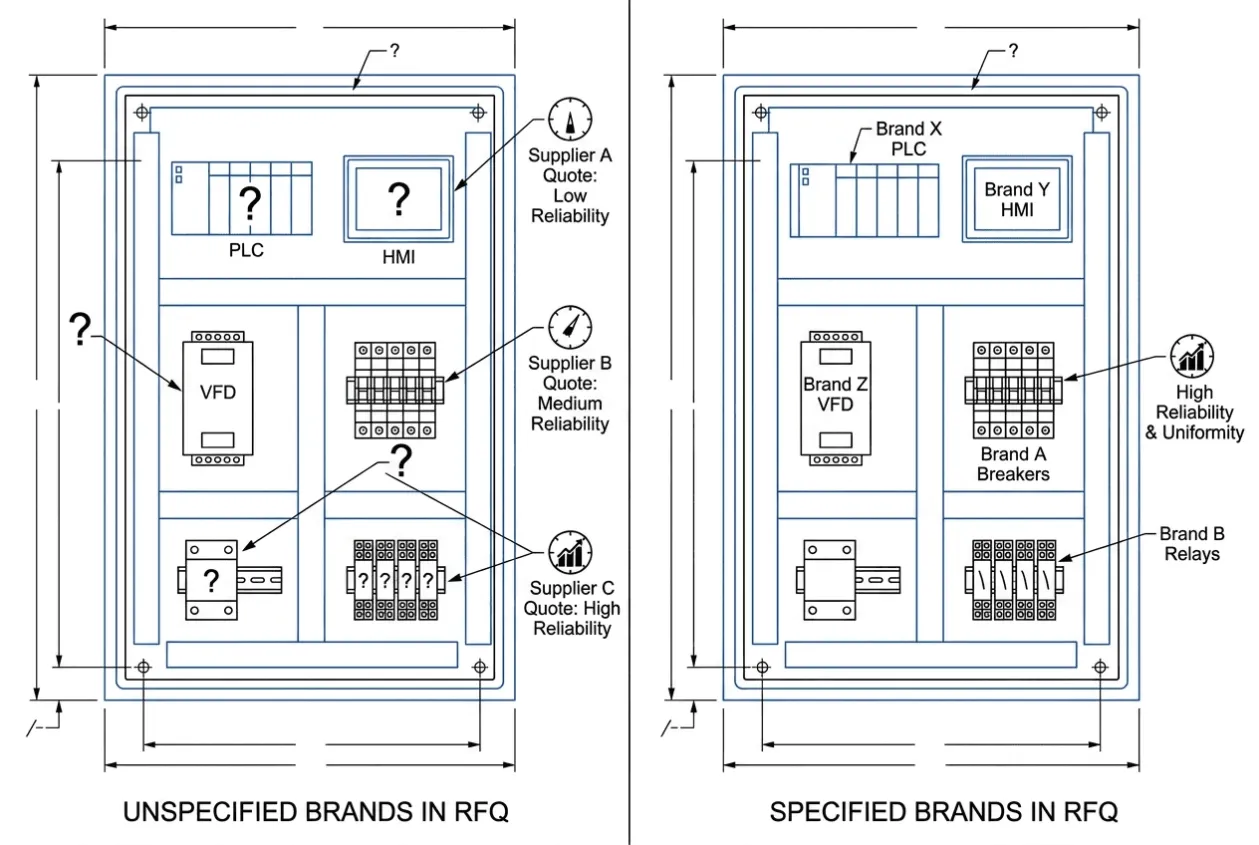
One quote left the PLC and breakers open. Another used mid-range components. The highest quote used specified international brands.
When every supplier chooses a different PLC, buyers are no longer comparing quotations.
They are comparing different philosophies.
A cheaper quote may simply be using cheaper parts. That is not always wrong, but it must be visible. If the RFQ does not name acceptable PLC, HMI, VFD, breaker, and relay brands, every supplier will quote a different reliability level.
Then we looked at certification.
The third difference was certification. One supplier did not include it. One said “can support if required.” One included the required documentation and compliance scope in the price.
Certification is one of the few things that becomes more expensive the later you mention it.
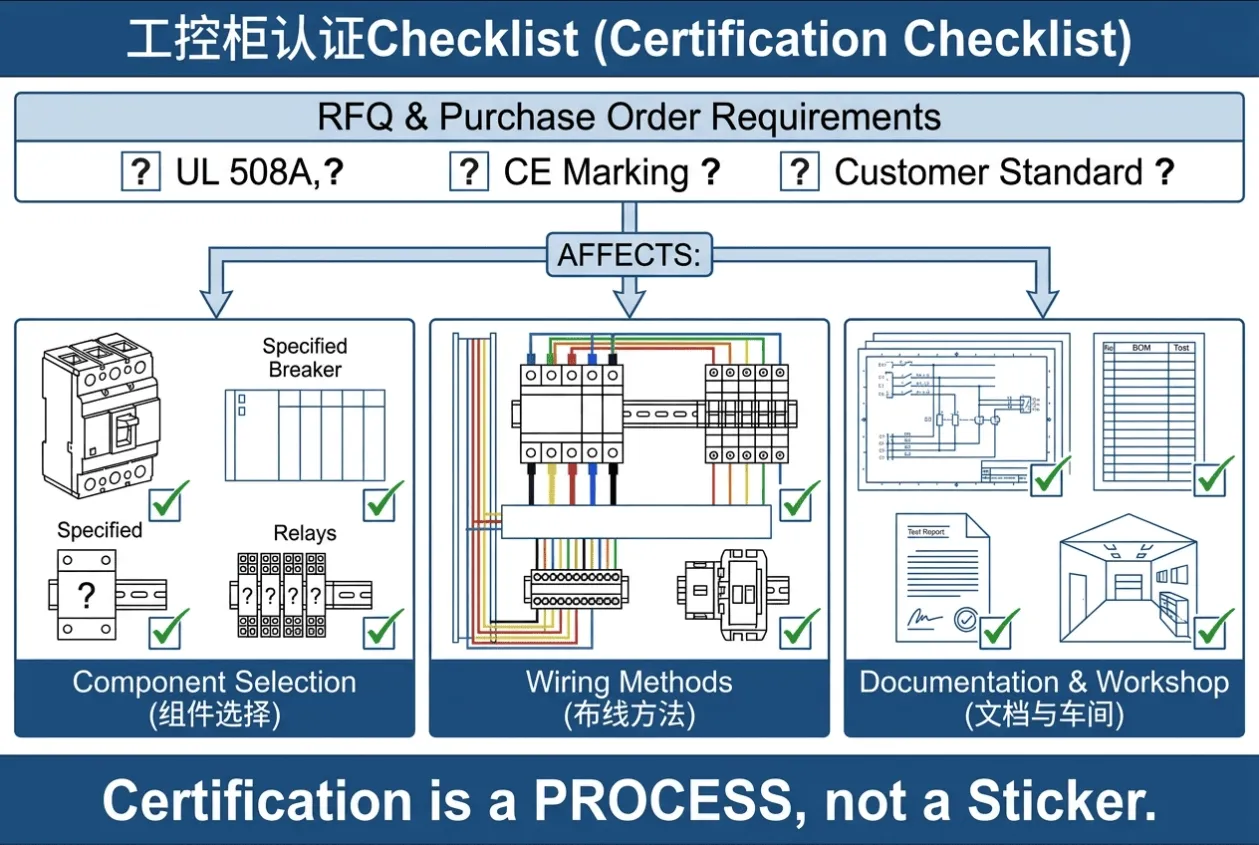
If the project needs UL 508A, CE, or a customer-specific standard, it should appear in the RFQ and purchase order. Certification is not a sticker added at the end. It affects components, wiring, documentation, and sometimes the workshop itself.
The Final Difference Was FAT
The last difference was testing.
The lowest quote included a basic power-on check. The highest quote included wire labels, terminal schedule review, FAT, inspection photos, and test records.
Workshop hours are cheaper than site hours.
For PLC, VFD, pump, process, or communication panels, FAT reduces the chance of finding mistakes during commissioning. A panel that is cheaper because it was not tested may become expensive the first time it refuses to start on site.
What I Check Before I Say a Quote Is Expensive
Quote Item | What I Check | Why It Changes Price |
|---|---|---|
Enclosure | Material, size, IP/NEMA rating | Sheet metal, sealing, corrosion protection |
Components | PLC, HMI, VFD, breakers, relays | Brand and availability change BOM cost. |
Certification | UL, CE, project standard | Documentation and construction requirements |
Wiring | Labeling, terminal schedule, drawings | Labor and serviceability |
FAT | Test scope and records | Reduces commissioning risk |
Lead time | Normal or urgent delivery | Rush sourcing costs more. |
By the time we finished reviewing those three quotations, the buyer was not asking who was cheapest anymore.
He was asking which quotation actually matched the project.
That is the better question.
What Buyers Can Control Before Asking for Price
Buyers cannot control every material cost, component shortage, or supplier labor rate. But they can control the clarity of the RFQ.
Before requesting a price, define the enclosure material, cabinet size, IP/NEMA rating, component brands, certification requirement, FAT scope, quantity, and delivery target. If alternatives are acceptable, say so clearly.
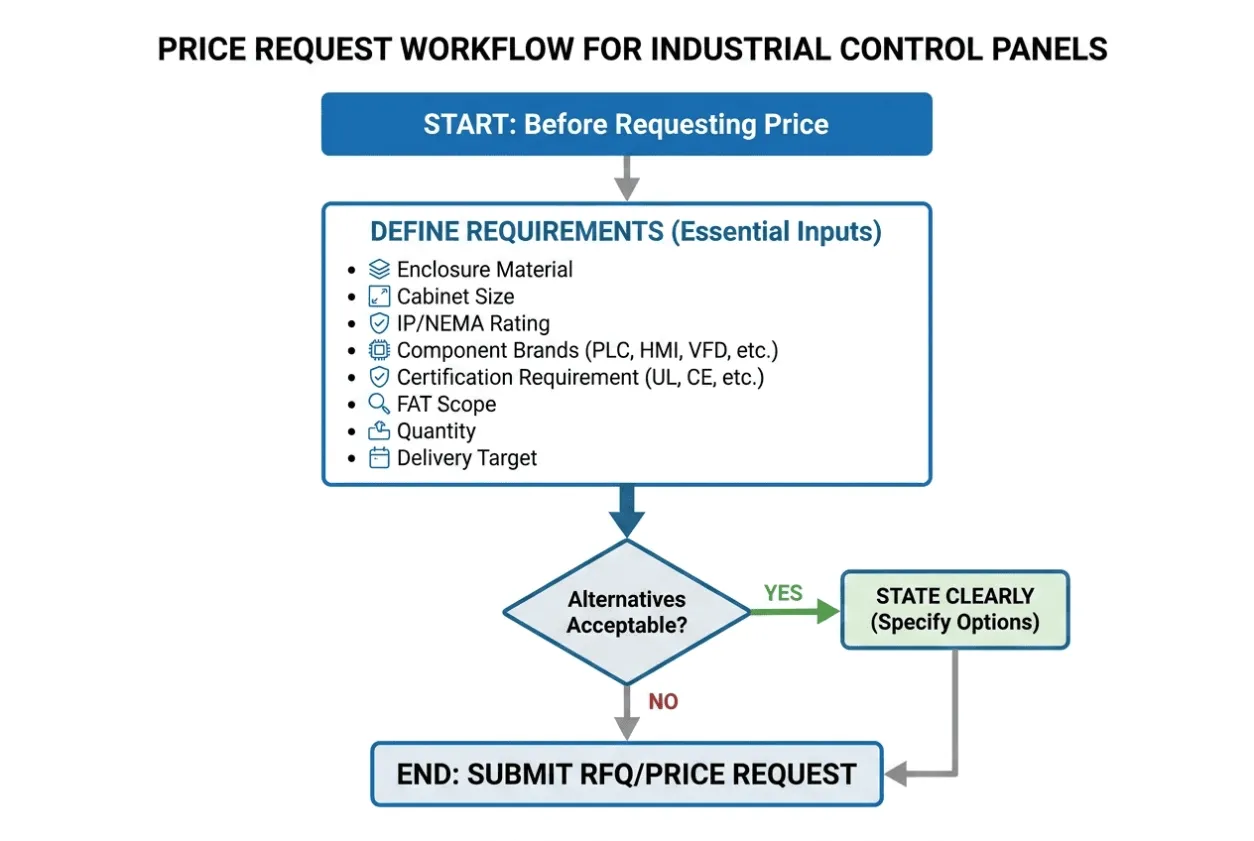
For example:
“Quote Siemens PLC as standard, and provide Mitsubishi as an approved alternative.”
That one sentence can prevent a messy price comparison later.
FAQ
Why did three suppliers quote three different prices for the same drawing?
Because the drawing did not define every cost driver. Suppliers may assume different materials, component brands, certification scopes, FAT requirements, wiring details, and delivery conditions.
Is the cheapest control panel quote always risky?
Not always. It may be correct if the scope is clear and the project is simple. It becomes risky when the low price comes from missing items or unclear assumptions.
Should I name component brands in the RFQ?
Yes. At least name acceptable brands and approved alternatives. This helps suppliers quote the same quality level.
Does FAT really affect control panel cost?
Yes, because it requires labor and time. But for panels with PLCs, VFDs, interlocks, or communication, FAT can prevent much higher site costs later.
Before You Request a Quote
Before requesting a control panel quotation, send UniRegal the drawing, component list, enclosure material, IP/NEMA rating, certification requirement, FAT scope, quantity, delivery target, and accepted component brands.
At UniRegal, we review the quotation scope before we review the price. That helps buyers compare real panel costs instead of comparing different assumptions.
After enough quotations, I no longer ask first:
“Which supplier is cheaper?”
I ask, "Are they quoting the same control panel?”
Related guides
What to send your supplier
Bring the drawing and the checklist above, and submit your requirements. As a Foshan sourcing partner, we consolidate enclosure, components, and testing through vetted workshops, name the brands you accept, confirm the rating per panel, and quote with a typical 15-day enclosure lead time.
Need help specifying or sourcing this for your project? Request a quote - we reply within 1-2 working days with a technical review.