
Oct 22, 2026Buying Guides
Bus Duct vs Cable: A Buyer's Guide to Industrial Busway (2026)
Insulated busway vs cable compared — current ratings, installation speed, voltage drop, cost drivers, and what to send suppliers for an accurate industrial bus
Quick Answer
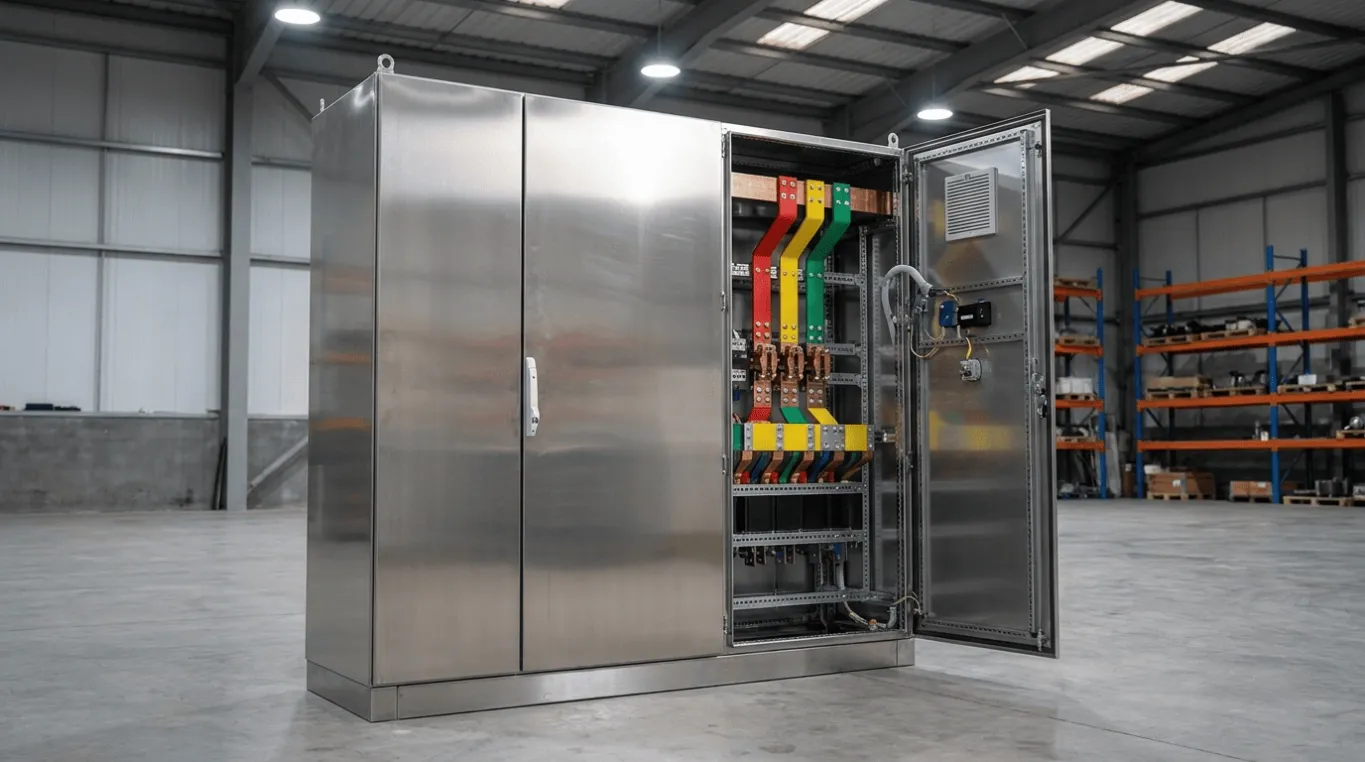
Busway (bus duct) beats cable for high-current, permanent power distribution where installation speed, voltage-drop control, and future expansion matter. Cable wins when runs are short, currents are moderate, or the route changes frequently. For most industrial plants above 400 A, busway is the lower-total-cost option over a 15-year life.
Buyer Decision: Before you quote, confirm three numbers — design current, fault level, and route length. Those three numbers drive ampacity, bracing, and voltage-drop calculations.
What is busway / bus duct?
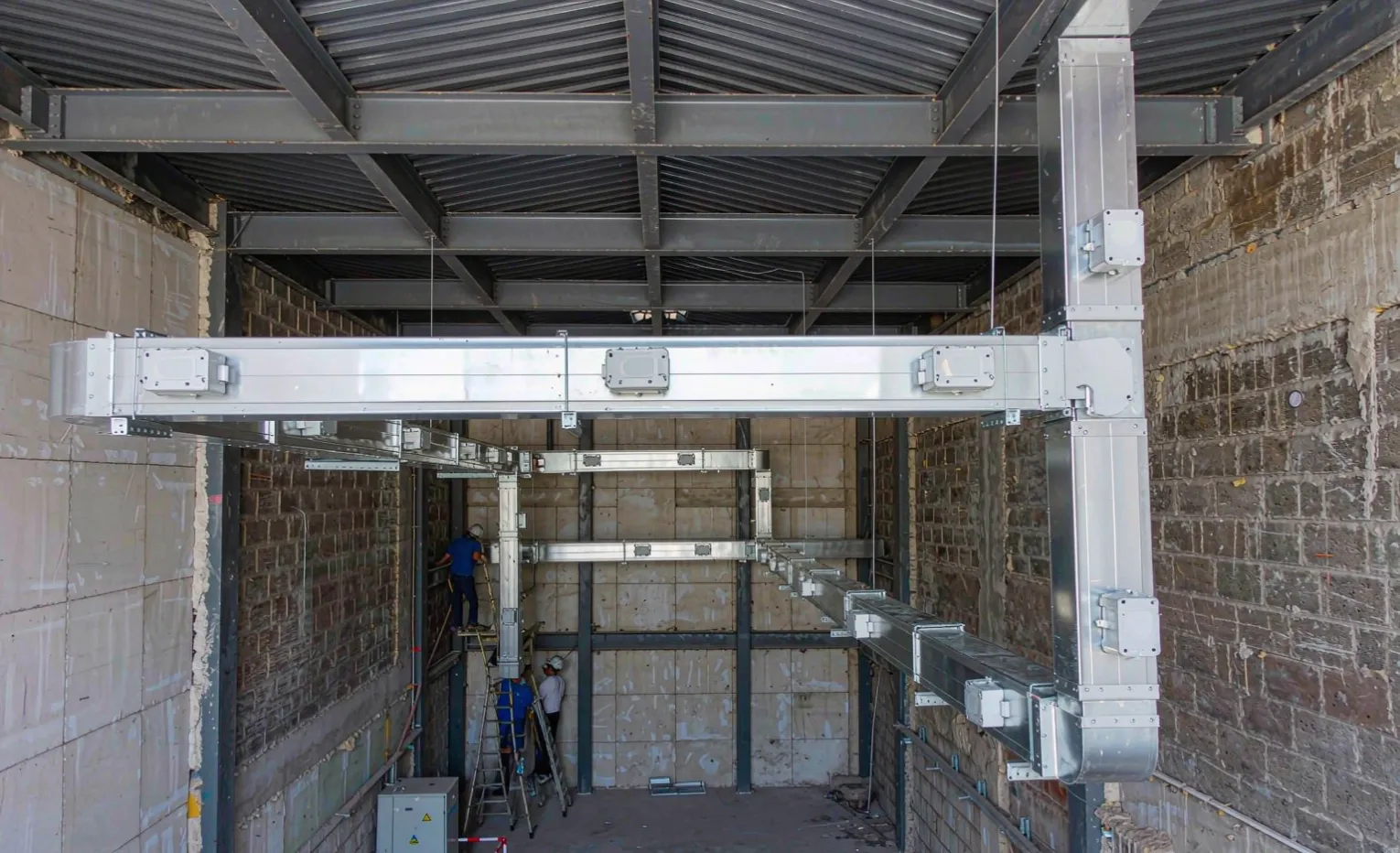
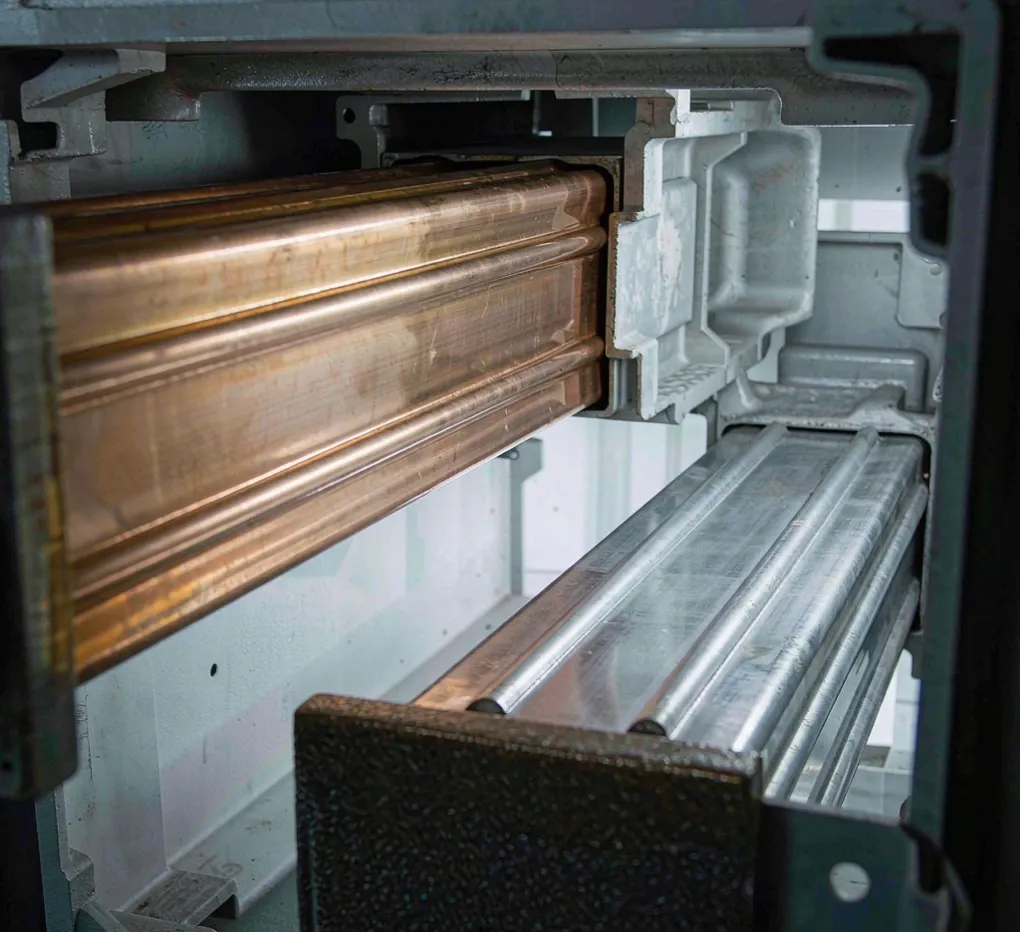
Busway is a prefabricated electrical distribution system. Conductors — usually copper or aluminum busbars — are enclosed in a metal housing with insulated supports. Sections bolt or plug together along the power route, replacing large runs of cable and conduit.
Common types:
- Sandwich busway: Compact, high-density, good for indoor vertical and horizontal runs.
- Ventilated busway: Air-cooled, used for higher current ratings and longer runs.
- Non-segregated phase bus: Typical in switchgear-to-transformer connections.
- Segregated phase bus: Each phase in a separate compartment; higher fault withstand.
- Isolated phase bus (IPB): Each phase isolated, used in generators and large substations.
When busway makes sense
Busway is the better choice when:
- Current is high (typically > 400 A per run).
- The route is long or vertical (shafts, mezzanines).
- You need clean expansion points for future loads.
- Installation labor is expensive or the schedule is tight.
- Voltage drop must be tightly controlled.
- The environment benefits from a sealed, protected conductor system.
Cable is the better choice when:
- Current is below 200 A.
- Routes are short and likely to change.
- You need field flexibility for branch circuits.
- Initial capital cost is the only decision driver.
Current rating and conductor material
Current range | Common conductor | Typical enclosure | Notes |
|---|---|---|---|
100–400 A | Copper or aluminum | Sandwich, IP54 | Competitive with cable in this range. |
400–1,600 A | Copper preferred | Sandwich or ventilated | Aluminum saves cost; copper saves space and loss. |
1,600–5,000 A | Copper or aluminum | Ventilated or segregated | Engineering review essential; temperature rise and fault bracing drive design. |
> 5,000 A | Copper, often silver-plated | Segregated or isolated phase | Utility and heavy industrial applications. |
Engineering Note: Aluminum busway costs less upfront but has higher resistive losses. Over 10–15 years, the energy-cost difference can offset the copper premium, especially on continuously loaded runs.

Voltage drop: the hidden cost
Busway has lower reactance than cable in conduit, so voltage drop is usually better for the same ampacity. But do not assume — calculate it. Suppliers need:
- Load current and power factor.
- Route length and number of bends.
- Ambient temperature and installation method.
- Allowable voltage-drop limit (often 2–3% for feeders).
A 1% improvement in voltage drop on a 1,000 A run can save thousands in conductor upsizing later.
Fault level and bracing
Busway must withstand the mechanical forces generated by a short-circuit current. Key specs:
- Short-circuit withstand rating: kA for 1 second (or 3 seconds).
- Peak withstand current: The maximum mechanical peak the housing and supports can handle.
- Bracing: Spacing of bus supports determines how much force the assembly can survive.
If your site fault level is 50 kA, busway rated for 50 kA is non-negotiable. Underrated busway can deform or fail catastrophically during a fault.
IP rating and environment
Environment | Minimum IP | Notes |
|---|---|---|
Clean indoor electrical room | IP31 | Basic touch and dust protection. |
Industrial plant floor | IP54 | Dust and occasional water spray. |
Outdoor or washdown | IP65/IP66 | Sealed gaskets at joints; check drain and breather design. |
Corrosive / chemical | IP66 + special coating or stainless housing | Material selection is as important as IP. |
Cost drivers
- Conductor material: Copper vs. aluminum, and current density.
- Enclosure type: Sandwich is cheaper per amp than ventilated; segregated is more expensive.
- Fittings: Elbows, tees, flanges, expansion joints, and tap-off boxes add cost quickly.
- Installation: Busway installs faster than cable/conduit, but rigging and alignment labor still matter.
- Certification: IEC 61439-6, UL 857, GB 7251.6 — each adds test and documentation cost.
- Accessories: Tap-off boxes, circuit breakers, meters, and surge protection.
Installation speed: busway vs. cable
A typical 1,000 A feeder:
- Cable route: Pull cable, install conduit/tray, terminate at both ends, test insulation and continuity. Labor-intensive, especially on vertical runs.
- Busway route: Hang supports, bolt sections, install tap-off boxes, torque joints, test. Faster on straight, long runs; more planning required at bends.
For a 50-meter run, busway often cuts installation time by 30–50% and produces a cleaner, more maintainable result.
What to send for a quote
- Single-line diagram showing source, load, and tap-off points.
- Design current and fault level for each section.
- Route layout with dimensions, elevations, and obstacles.
- Voltage-drop limit and ambient conditions.
- IP/NEMA rating and environmental notes (humidity, dust, chemicals).
- Tap-off requirements: Number, rating, and protection type for each box.
- Quantity and delivery schedule: First article or full production run.
Decision table: busway or cable?
Scenario | Recommended | Why |
|---|---|---|
1,000 A feeder, 60 m | Busway | Lower install labor, better voltage drop, expandable. |
200 A motor branch, 20 m | Cable | Lower material cost, flexible routing. |
Vertical shaft, 800 A | Busway | Cable pulling and support is expensive and risky. |
Temporary power, changing layout | Cable | Busway is not designed for frequent reconfiguration. |
Clean room / data center | Busway | Neater, easier to add tap-offs, better airflow. |
Outdoor substation | Segregated or IP65 busway | Weather and fault containment. |
Standards and type tests you should request
Busway standards are not decorative — they define temperature-rise limits, short-circuit withstand, and safety clearances. Ask the supplier for:
- IEC 61439-6 type-test report: Covers temperature-rise, short-circuit, dielectric, and mechanical properties for low-voltage busway. The IEC standards are maintained by IEC.
- UL 857 listing: Required for busway installed in the United States and Canada. Verify listings through UL Product iQ.
- GB 7251.6 report: The Chinese national standard aligned with IEC 61439-6.
- IP test report: Verifies dust and water ingress protection for the claimed rating.
- Temperature-rise test data: Proves the assembly does not exceed insulation limits at rated current.
If a supplier cannot produce these reports for the exact ampacity and configuration you need, treat it as a significant risk signal.
Commissioning and maintenance
After installation, busway requires a focused commissioning sequence:
- Visual inspection: Check housing damage, gasket integrity, and alignment of sections.
- Torque verification: Re-torque every bolted joint to the supplier's specification. Mark torqued bolts with paint pen.
- Insulation resistance test: Megger phase-to-phase and phase-to-ground before energizing.
- Contact resistance test: Measure joint resistance; compare to supplier baseline.
- Thermal scan: After 30 days at load, use an infrared camera to look for hot joints.
For maintenance, schedule an annual re-torque and thermal scan on high-current runs. Tap-off boxes with breakers should follow the breaker maker's inspection cycle.
Safety: lockout/tagout and arc flash
Busway is energized equipment. Any work near it requires:
- Lockout/tagout of upstream breakers.
- Arc-flash hazard analysis with appropriate PPE.
- Qualified electrical personnel for installation and commissioning.
- Clear labeling of tap-off boxes and end-feed locations.
Do not treat busway as "just a pipe for power." A fault in a 1,000 A busway can release enormous energy in milliseconds.
Selecting tap-off box protection
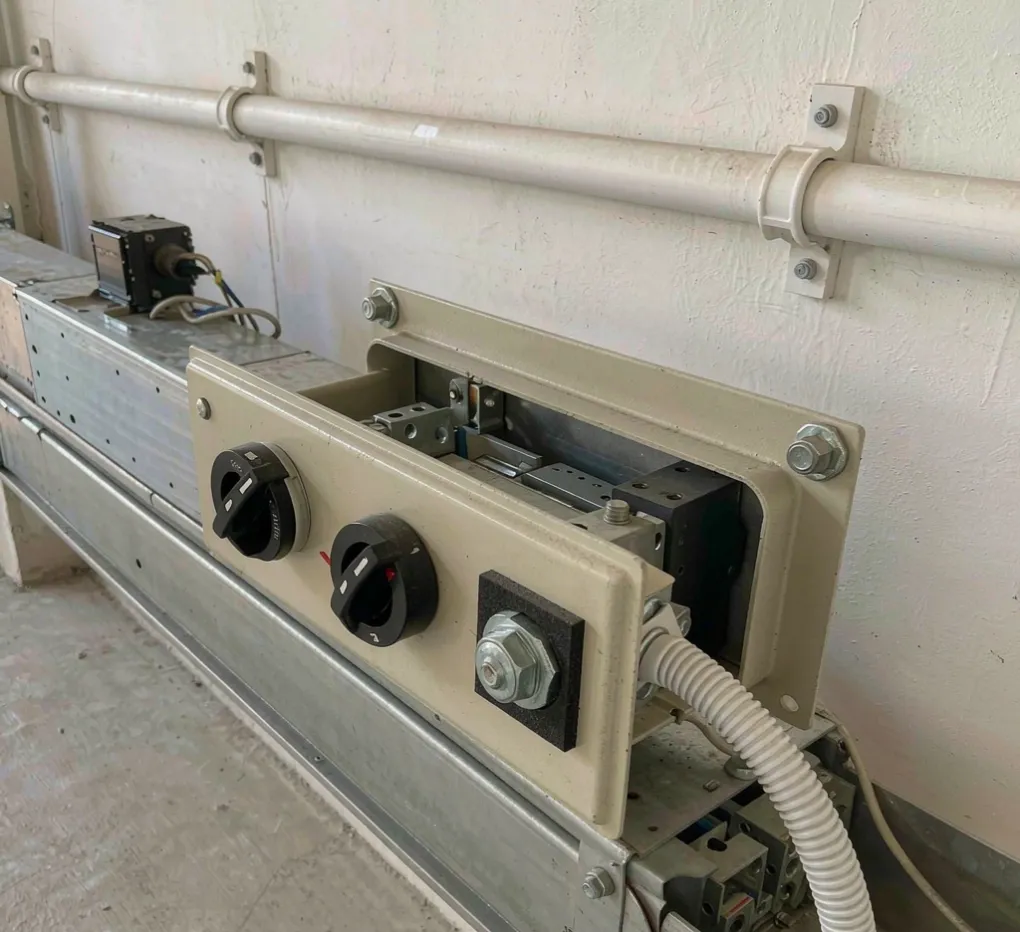
Tap-off boxes are where busway becomes useful, but they are also a common failure point if underspecified. Each box needs protection matched to the downstream load:
- Fusible switch: Simple, low cost, good fault current interruption. Fuses must be stocked as spares.
- Molded-case circuit breaker (MCCB): Resettable after a trip; easier for operations teams. Specify frame size, trip rating, and breaking capacity.
- Switch-disconnector: No built-in overcurrent protection; used where downstream protection already exists.
- Metered tap-off: Adds ammeter, voltmeter, or energy meter for monitoring branch loads.
The tap-off rating must coordinate with the busway's rated current and the upstream breaker. A 1,000 A busway can feed a 100 A tap-off, but the box and protection must be rated for the busway's fault level, not just the load current.
Lifecycle cost: busway vs. cable over 15 years
Capital cost is only the first chapter. A 1,000 A feeder comparison over 15 years typically shows:
Cost item | Cable and conduit | Busway |
|---|---|---|
Initial material | Lower | Higher |
Installation labor | Higher | Lower |
Voltage-drop energy loss | Higher | Lower |
Adding future tap-offs | Expensive rerouting | Plug-in box, often under a day |
Maintenance access | Conduit and tray work | Direct access at joints and boxes |
Footprint | Larger tray/conduit footprint | Compact, wall or ceiling mounted |
For continuously loaded feeders, the energy-loss savings alone can repay the busway premium within 5–8 years. For lightly loaded or short runs, cable remains the economical choice. The crossover point usually appears when the run exceeds about 30 meters and the load current stays above 60% of the busway rating for most operating hours. Request a 15-year total-cost estimate from each bidder to make the comparison explicit.
Common mistakes buyers make
- Ignoring joint torque. Loose joints overheat. Specify torque values and inspection procedure.
- Mixing copper and aluminum without transition fittings. Galvanic corrosion causes high-resistance joints.
- Forgetting expansion joints. Long runs expand and contract; rigid spans crack supports.
- Undersizing tap-off boxes. Future loads often exceed the original tap-off rating.
- Not asking for type-test reports. IEC 61439-6 requires verified temperature-rise and short-circuit data.
Frequently asked questions
What is the difference between bus duct and busway? They are often used interchangeably. "Bus duct" traditionally refers to the enclosed conductor assembly; "busway" is the modern prefabricated system including sections, fittings, and tap-off boxes.
Is aluminum busway reliable? Yes, if joints are properly made and inspected. Aluminum requires careful preparation and anti-oxidant compound at connections. Copper is more forgiving but more expensive.
What standards apply to busway? IEC 61439-6 is the international standard for busway. UL 857 covers busway in North America. China uses GB 7251.6. Always specify the market standard your project requires.
How do I control voltage drop in a long busway run? Upsize the conductor, reduce the number of tap-offs, or use a higher copper-content section. Provide the supplier with load profile, route length, and allowable drop.
Can busway be used outdoors? Yes, with IP65/IP66 or NEMA 4X-rated sections. Verify gasket material (EPDM or silicone), drainage, and UV stability of any external coatings.
What is a tap-off box? A tap-off box is a connection point along the busway run where you branch power to a motor, panel, or distribution board. It can be fusible, breaker-protected, or plain.
Engineering takeaway
Busway is not just a cable replacement — it is a distribution system. The buying decision rests on current, fault level, route length, and installation environment. Get those four inputs right, add a route drawing and a clear standard, and the supplier can deliver a system that installs faster and runs cooler than an equivalent cable run. Skimp on the inputs and you will pay in change orders and site rework. Treat busway procurement as system engineering, not commodity purchasing, and the 15-year cost advantage becomes clear.
Related guides
Get a busway quote
Send your single-line diagram, current rating, route length, and IP requirement. We'll review feasibility and match the project to a qualified busway supplier.
Need help specifying or sourcing this for your project? Request a quote - we reply within 1-2 working days with a technical review.