
Control Panels
Top 10 MCC panel manufacturers in the world
Top 10 MCC panel manufacturers compared on NEMA vs IEC ranges, voltage and service coverage — plus what to send for a real MCC quotation.
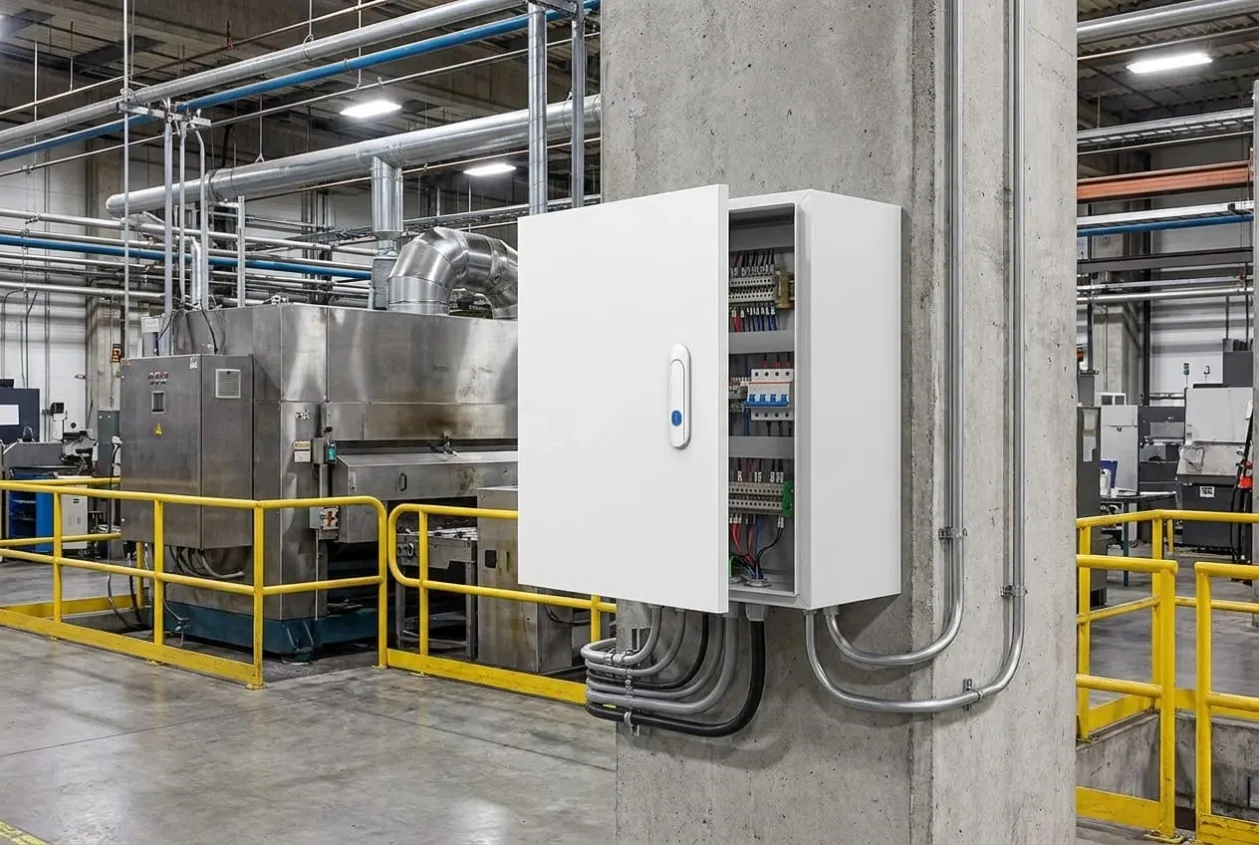
Motor Control Centers (MCCs) play a crucial role in industrial operations, ensuring efficient and centralized management of motor control components. Choosing the right MCC panel manufacturer is vital for ensuring safety, reliability, and meeting industry standards. Below, we provide a comprehensive guide to the top MCC panel manufacturers, along with key factors to consider when selecting a supplier. If You Are Comparing MCC Suppliers, Compare the Delivery Terms
Most manufacturer lists compare brand strength, product range and global coverage. But for a real project, the delivery terms decide whether a supplier is practical: can they build one section first, document the FAT, accept customer-supplied components, and provide the as-built wiring diagram you need for handover?
Our position is narrower and easier to test. We build and integrate MCC panels to your I/O list. Complete, wired and tested panels start from one unit and run 35 to 40 days; empty enclosures start from five units and run 15 to 20 days. FAT records, photographs and as-built wiring diagrams ship with the panel, and we build to the standard your destination market requires.
If you are preparing a quote package, use this checklist: /resources/what-to-send-for-a-control-panel-quote . Send your I/O list, enclosure environment and target date to info@uniregal.com, and we will return the quoted scope and assumptions in plain terms.
Quick Comparison Table
Rank | Company Name | Country | Key Products |
|---|---|---|---|
1 | Germany | Motor Control Center | |
2 | France | Motor Control Center | |
3 | Ireland | Motor Control Center | |
4 | Switzerland | Motor Control Center | |
5 | USA | Motor Control Center | |
6 | USA | Motor Control Center | |
7 | Japan | Motor Control Center | |
8 | Brazil | Motor Control Center | |
9 | South Korea | Motor Control Center | |
10 | Fuji Electric | Japan | Motor Control Center |
What to Consider When Looking for Manufacturers?
When selecting an MCC panel manufacturer, it’s important to evaluate various factors to ensure your requirements are met:
- Compliance with Standards: Verify that the manufacturer adheres to industry standards, such as NEMA or IEC, depending on your region.
- Customization Options: Assess whether the manufacturer can customize panels to meet specific operational needs.
- Technology and Innovation: Look for advanced features like smart MCCs, remote monitoring, and energy efficiency.
- Safety Features: Ensure the panels include safety mechanisms to protect equipment and personnel.
- Industry Expertise: Choose a manufacturer with a proven track record in your specific industry.
How to Verify a Reliable Supplier?
Identifying a dependable supplier involves thorough research and verification. Here are some steps to follow:
- Check Certifications: Ensure the manufacturer holds relevant certifications for quality and safety standards, such as ISO9000.
- Customer Reviews and Testimonials: Look for feedback from other buyers to gauge reliability and product performance.
- After-Sales Support: Confirm the availability of technical support and maintenance services post-purchase.
- Site Visit: If possible, visit the manufacturer’s facility to assess production capabilities and quality control processes.
- Warranty and Guarantees: Verify the warranty terms to ensure long-term reliability.
Top MCC Panel Manufacturers (The Expert Recommendations)
Below is a detailed list of the top MCC panel manufacturers, ranked based on their expertise, product offerings, and global reputation.
1. Siemens
Siemens, a global technology leader, offers the Tiastar™ smart MCCs, which integrate intelligent devices for motor control and power monitoring. These solutions are known for their innovation and reliability across industries.
- Country: Germany
- Website: www.siemens.com
- Main product: Motor Control Center
2. Schneider Electric
Schneider Electric provides energy and automation solutions, including the Square D™ Model 6 MCC, designed for centralized motor control and energy efficiency.
- Country: France
- Website: www.se.com
- Main product: Motor Control Center
3. Eaton
Eaton delivers intelligent MCCs built to NEMAstandards, ensuring safety, reliability, and quality for industrial applications.
- Country: Ireland
- Website: www.eaton.com
- Main product: Motor Control Center
4. ABB
ABB offers low and medium voltage MCCs for demanding applications in industries such as mining, utilities, and oil and gas.
- Country: Switzerland
- Website: global.abb
- Main product: Motor Control Center
5. Rockwell Automation
Rockwell Automation provides the CENTERLINE® Motor Control Centers, which are engineered to handle the demands of complex industrial operations.
- Country: USA
- Website: www.rockwellautomation.com
- Main product: Motor Control Center
6. General Electric
General Electric delivers the 7700 Series MCCs, designed to house various devices like PLCs, motor starters, and AC drives for versatile applications.
- Country: USA
- Website: www.ge.com
- Main product: Motor Control Center
7. Mitsubishi Electric
Mitsubishi Electric offers B-MCC and D-MCC panels, known for their durability and ease of maintenance across industrial environments.
- Country: Japan
- Website: www.mitsubishielectric.com
- Main product: Motor Control Center
8. WEG
WEG designs low voltage MCCs with a focus on user-friendly assembly, installation, and maintenance for diverse market needs.
- Country: Brazil
- Website: www.weg.net
- Main product: Motor Control Center
9. LS Electric
LS Electric provides modular and type-tested MCCs, such as the SOLUTION 2000, designed for modern electrical and automation systems.
- Country: South Korea
- Website: www.lselectric.co.kr
- Main product: Motor Control Center
10. Fuji Electric
Fuji Electric provides MCCs and power distribution switchgear, known for compact design and reliability across Japanese and Southeast Asian markets.
- Country: Japan
- Website: www.fujielectric.com
- Main product: Motor Control Center
Beyond the Top 10: Uni Regal Co., Ltd (Sourcing & Integration Option)
Uni Regal is not an OEM manufacturer - it is a Foshan-based sourcing and integration partner. For buyers who need multi-brand MCCs built to their I/O list, UniRegal consolidates enclosures, breakers and drives from multiple suppliers into one build, with FAT records and as-built wiring diagrams. Complete panels start from one unit and run 35 to 40 days; empty enclosures start from five units and run 15 to 20 days.
- Country: China
- Website: uniregal.com
- Main productMulti-brand MCC assembly, empty enclosures, component sourcing
NEMA or IEC: the first decision that narrows your shortlist
Before comparing company names, settle one question: which standard does the site follow? It decides which of the vendors above can actually quote, how the starters are built, and where spare parts come from years later.
NEMA-style MCCs are the norm in North America and in plants built to US practice. They are described by NEMA ICS 18, usually run at 600 V or below, favour drawout starter buckets, and are specified with a short-circuit current rating for the whole assembly.
IEC-style MCCs dominate Europe, most of Asia, the Middle East and Africa. They are built to IEC 61439-2, commonly at 400 V or 690 V, and are described by form of separation — Form 2, 3 or 4 — rather than by drawout buckets.
The product lines listed above split along roughly the same line. The North American-style ranges are the NEMA-built intelligent MCCs from Eaton, Rockwell CENTERLINE, the GE 7700 Series and the Schneider Square D Model 6. Siemens appears on the NEMA side with Tiastar and also supplies IEC-type assemblies. The ABB low and medium voltage MCCs, Mitsubishi B-MCC and D-MCC, WEG low voltage MCCs, LS Electric SOLUTION 2000 and Fuji Electric switchgear sit on the IEC side.
This is a commercial decision as much as a technical one. An IEC MCC installed in a plant that keeps NEMA spares — or the reverse — creates a spare-parts problem that outlives the project.
How to shortlist these manufacturers for one project
A ranking by brand size does not tell you who can build your MCC. Four filters do.
Where the plant is, and where spares will come from
For a plant in North America, a NEMA range with local stock is usually the safer answer. For a plant in Southeast Asia or the Gulf, an IEC range with regional support tends to be faster to service. Ask which manufacturer has a service partner inside your country, and confirm it before you commit.
Low voltage or medium voltage
Most motor control centers are low voltage. If your motors run above 1 kV the field narrows sharply: only some of the ranges above cover medium voltage, and lead times lengthen with it. Confirm the voltage class before anything else.
Do you need an intelligent MCC?
If the MCC has to report motor current, trip status or energy data to a PLC or SCADA system, the communication layer becomes part of the specification rather than an accessory. Some ranges ship with intelligent devices for motor control and power monitoring as standard; others treat it as an option. Decide before the RFQ, because adding a communication layer to a wired MCC later is expensive.
How much of the design is already yours?
If you already hold a single-line diagram and a starter schedule, you need a builder, not a designer. If you only have a motor list, you need engineering support as well — and not every large OEM will take that on for a small project.
What to send when you ask for an MCC quotation
Most slow MCC quotations are slow because the enquiry package is incomplete, not because the vendor is busy. The list we ask for is set out here: what to send for a control panel quote.
For a motor control center specifically, six items decide both the price and the lead time:
1. Single-line diagram — incoming supply, bus rating, protection and outgoing feeder arrangement.
2. Starter schedule — one line per motor: rated kW, full load current, and starting method (direct-on-line, star-delta, soft starter or VFD).
3. Fault level — available short-circuit current at the point of supply, so the assembly rating is calculated rather than assumed.
4. Supply and environment — voltage, frequency, phase count, indoor or outdoor, and the IP or NEMA enclosure rating required.
5. Spare provision — how many spare starter ways and how much empty space you want for motors added later.
6. Certification and destination — the standard your inspector will ask for, and the delivery country.
A quotation prepared without the starter schedule is a guess. Two vendors guessing differently produce two prices that cannot honestly be compared.
Five specification checks that prevent MCC rework
1. Drawout or fixed starters
Drawout buckets let one starter be removed and replaced while the rest of the MCC stays live. They cost more and take more space. Fixed starters are cheaper and more compact but require the section to be isolated for service. The trade-off is covered in detail in our comparison of drawout vs fixed MCC starters.
2. Short-circuit rating calculated, not assumed
The short-circuit current rating of the assembly has to be calculated from the actual device combination and the available fault level. A panel built to an assumed rating is one of the most common reasons an inspection fails on site.
3. Spare ways and physical space
Motors get added. Specifying spare starter ways at design stage costs far less than adding a section afterwards, and it is the cheapest form of future-proofing available in an MCC.
4. Communication protocol named in the specification
If the MCC talks to a PLC or SCADA system, name the protocol — Modbus, Profibus or EtherNet/IP — in the RFQ. Leaving the choice to the vendor produces an MCC that runs but cannot be integrated.
5. Cable entry and termination
Top entry or bottom entry, gland plate arrangement, and whether power and control cables share a compartment. These are drawing decisions; finding out at installation means modifying a finished panel.
When a global manufacturer is not the right answer
The ten companies above build excellent standard MCCs, and for a large plant with a clean specification they are usually the right call. They are less well suited to three situations we see repeatedly.
First, mixed-brand projects. If the specification calls for Siemens protection with ABB drives, or a Mitsubishi PLC with Schneider breakers, a single OEM will usually decline or push a substitution.
Second, small and modified builds. A four-motor MCC, a retrofit section, or an extension to an MCC that is no longer in the catalogue is rarely attractive to a large OEM order book, and minimum order values and lead times reflect that.
Third, projects where the design is still moving. Large OEMs quote against a frozen specification. If the starter schedule is still changing, you need someone who will build to your drawings instead.
That gap is where we work. Uni Regal is not an OEM manufacturer — it is a Foshan-based sourcing and integration partner. We build and integrate MCCs to your I/O list and starter schedule, including mixed-brand layouts. Complete, wired and tested panels start from one unit and run 35 to 40 days; empty enclosures start from five units and run 15 to 20 days. FAT records, photographs and as-built wiring diagrams ship with the panel. See the MCC panel supplier scope for what that covers.
Conclusion
Choosing the right MCC panel manufacturer is critical for ensuring operational efficiency, safety, and reliability in industrial applications. By evaluating industry expertise, compliance standards, and product offerings, you’ll be able to make an informed decision. Explore the top manufacturers listed above to find the best fit for your specific needs. For more information, reach out directly to these trusted companies.
Frequently asked questions
Which company makes the best MCC panels?
There is no single answer, because "best" depends on the standard your plant follows and where the plant is. For a NEMA plant in North America the North American ranges are the practical shortlist. For an IEC plant in Asia or the Gulf the European and Asian ranges are easier both to buy and to service. The comparison above lists what each range is known for.
What is the difference between a NEMA MCC and an IEC MCC?
A NEMA MCC is described by NEMA ICS 18, is usually rated at 600 V or below, and commonly uses drawout starter buckets with a short-circuit rating for the assembly. An IEC MCC is built to IEC 61439-2, commonly at 400 V or 690 V, and is described by form of separation — Form 2, 3 or 4. The standard your site already follows should decide which one you buy.
How long does an MCC take to deliver?
Standard catalogue MCCs from large manufacturers are quoted in weeks to a few months depending on configuration and order book. A custom MCC built to your own drawings takes longer, because the design has to be reviewed and approved before production starts. For the builds we do: complete, wired and tested panels run 35 to 40 days from drawing approval, and empty enclosures run 15 to 20 days.
Can I get an MCC built to my own single-line diagram and starter schedule?
Yes — and for retrofit or mixed-brand projects it is often the only practical route. Send the single-line diagram, the starter schedule and the available fault level. Any quotation prepared without those three is a guess.
Do I need drawout starters or fixed starters?
Choose drawout where the process cannot be stopped for maintenance and a starter must be replaced with the rest of the MCC live. Choose fixed where the section can be isolated for service and budget or space is tight. The full trade-off is set out here: drawout vs fixed MCC starters.
How much does an MCC panel cost?
It depends on the number of starter ways, the bus rating, drawout or fixed construction, the fault level the assembly must withstand, the enclosure rating and the certification required. Rather than compare a headline price, send the same starter schedule to two vendors and ask them to quote the same scope — the difference is usually in what one of them left out. Our breakdown of what actually moves the price covers this in more detail.
- Related guides: MCC panels & motor control centers | Custom control panels.
Sourcing MCC panels for a project? We consolidate enclosures, breakers and drives from multiple Foshan suppliers into one build - single-point accountability. Complete panels run 35 to 40 days; empty enclosures 15 to 20 days. Talk to our team about your project.
Planning an MCC project? Compare our MCC panel supplier scope — build-to-print or custom design, FAT before shipment, complete panels from 1 unit (empty enclosures from 5) — or request an MCC panel quotation with your bus rating and starter schedule.
Beyond the List: Getting Your Own Panels Built
Rankings tell you who is large; they do not tell you who will build to your drawing. Uni Regal works as a sourcing and integration partner: panels are built to your drawings and I/O list, with scope, assumptions and lead times written into every quotation — the parts of a supplier decision a top-10 table cannot answer.
If you are comparing suppliers for motor control centers, send your documents by WhatsApp — message us on WhatsApp — or email info@uniregal.com, or use the contact form. Reply within one business day; complete panels from 1 unit (35–40 days), empty enclosures from 5 units (~15 days), components in 3–5 days.