
Oct 2, 2026Buying Guides
Best Automation Control Panel Manufacturers
A practical guide to choosing automation control panel manufacturers by project fit, PLC platform, enclosure needs, FAT, documentation, and long-term maintenance risk
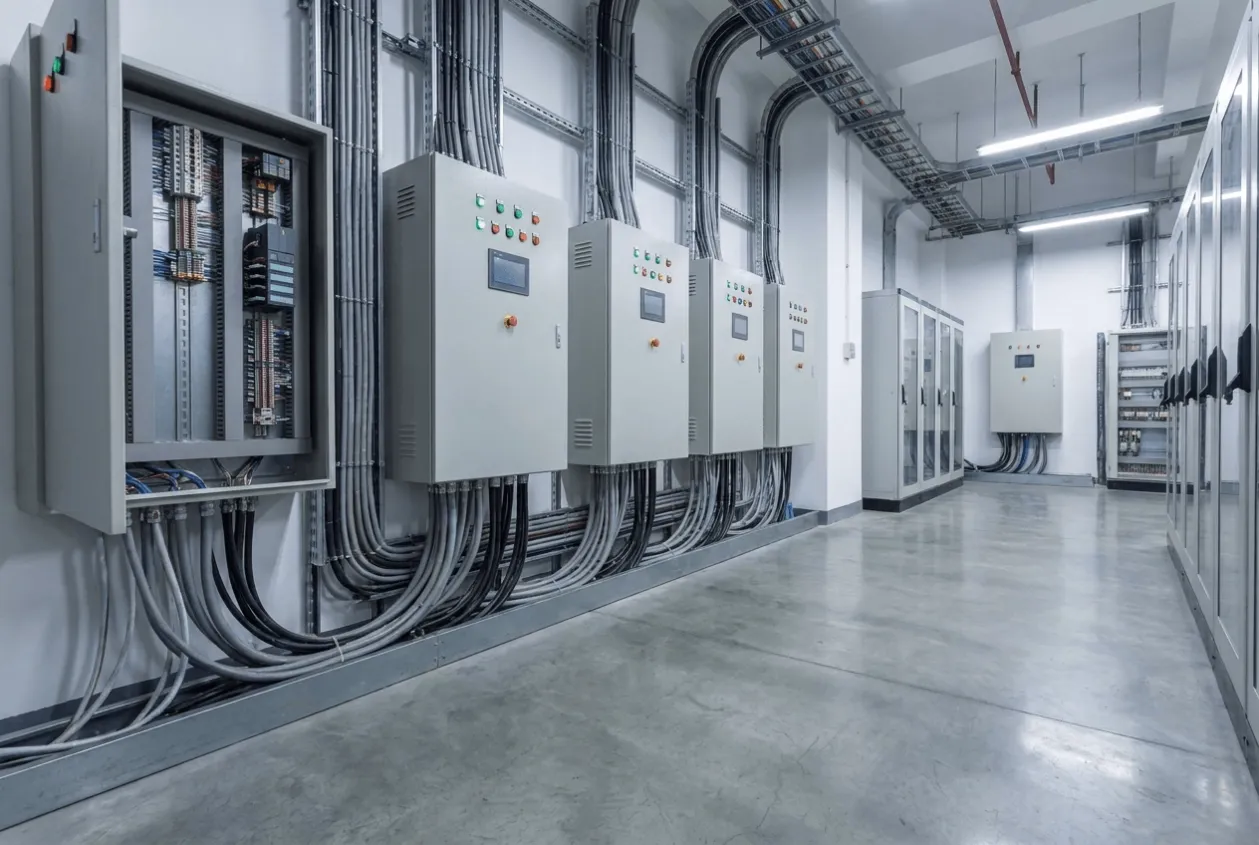
Best Automation Control Panel Manufacturers: A Practical Buying Guide for Industrial Buyers
Quick Answer
The best automation control panel manufacturers are the suppliers that help your machine or process start smoothly, run reliably, and remain easy to service after delivery. For most industrial buyers, the main manufacturers and supplier types worth comparing are Siemens, Rockwell Automation, Schneider Electric, Mitsubishi Electric, and UniRegal.
But this is not a simple “biggest brand wins” decision.
Choose Siemens when your plant or customer already uses Siemens automation architecture. Choose Rockwell when the project is going into a North American factory that expects Allen-Bradley. Choose Schneider when power distribution and automation control must work together. Choose Mitsubishi for compact machine automation and OEM equipment. Choose UniRegal when your project needs a custom automation control panel with mixed-brand components, enclosure flexibility, and practical engineering communication.
From a buyer’s point of view, the best supplier is not only the one that can assemble a cabinet. It is the one that reduces risk in wiring, labeling, PLC integration, HMI operation, VFD layout, FAT preparation, documentation, and future maintenance.
Buying Tip A control panel is usually judged twice: once during quotation and again during commissioning. The first judgment is about price. The second one is about whether the wiring, labels, drawings, layout, and testing actually help the project start without unnecessary delays.
Why This Guide Can Be Trusted
I look at automation control panels from the same angle many industrial buyers face in real projects: the panel must be technically correct, commercially reasonable, and serviceable after installation.
From RFQ reviews, one pattern appears again and again. Many buyers compare component brands and cabinet prices, but they do not compare how each supplier handles drawings, wire labels, heat, expansion space, terminal numbering, wire labeling, FAT, and revision changes. These details do not look important when the quotation is fresh. They become important when the machine is waiting for commissioning or when a technician needs to trace one signal on site.
This guide is written to solve one clear search intent: how to choose the best automation control panel manufacturer for a real industrial project.
If you are still defining your technical scope, you may also want to review UniRegal’s Solutions, browse related Cases, or read more technical Guides before sending an RFQ.
For external technical references, buyers may also review UL 508A industrial control panel information, NFPA 79 for industrial machinery, IEC 60204-1 for electrical equipment of machines, and NEMA 250 enclosure types. These references are useful when discussing panel construction, machinery wiring, safety, and enclosure protection with suppliers.
What Defines the Best Automation Control Panel Manufacturer?
The best automation control panel manufacturer is not defined only by the logo on the PLC or the brand of circuit breakers inside the cabinet. A good supplier should reduce project risk in five practical areas.
1. Electrical Design Discipline
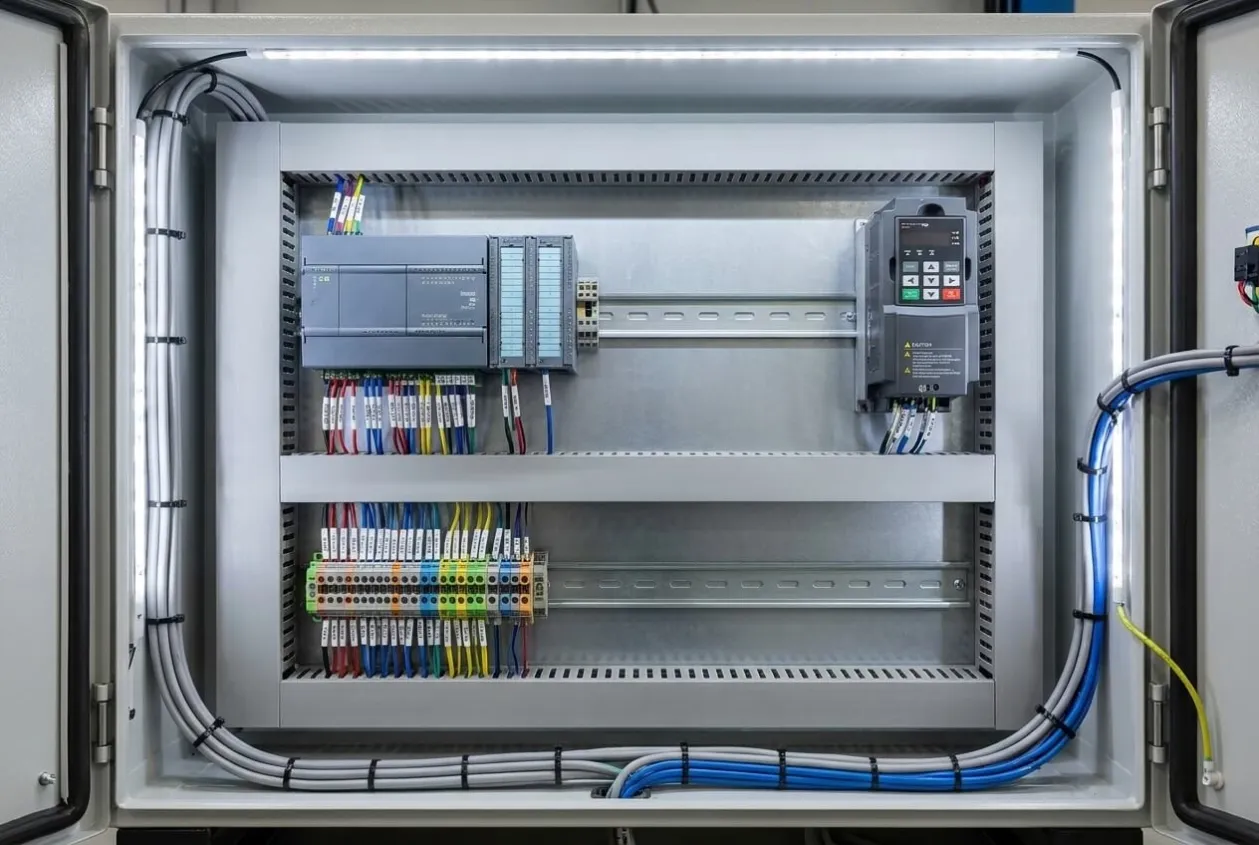
A reliable panel should separate power, control, signal, safety, and communication wiring clearly. This affects troubleshooting, electrical noise, field installation, future modification, and inspection quality.
A supplier with good design discipline will not only ask what components you want. They will ask what the panel controls, where it will be installed, how it will be maintained, and whether the layout leaves enough space for real work.
2. Wiring and Labeling Clarity
Clear wire numbers, terminal labels, device tags, and drawing references make commissioning faster. When labeling is weak, even a simple field fault can take too long to identify.
This is where many buyers feel the difference between a basic panel assembler and a serious automation control panel manufacturer.
3. PLC, HMI, Drive, Relay, and Network Integration
Modern automation panels often include PLCs, HMIs, VFDs, relays, power supplies, remote I/O, Ethernet switches, safety devices, and industrial communication hardware such as EtherNet/IP, PROFINET, or Modbus.
The supplier should understand how these parts work as a system, not only how to mount them on a backplate.
4. Enclosure Sizing and Heat Management
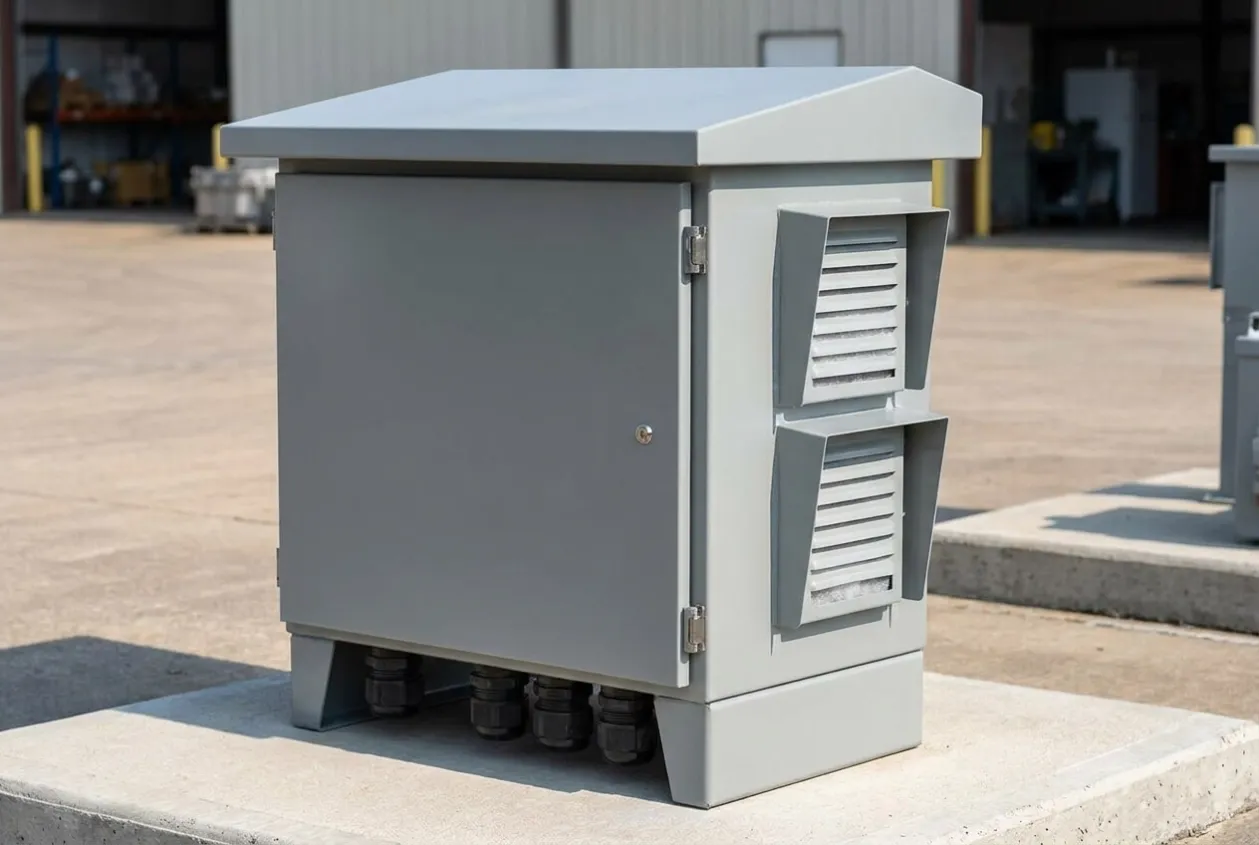
A smaller cabinet may reduce initial cost, but it can make wiring crowded, heat dissipation harder to manage, and future maintenance more difficult. For VFD panels, water treatment control panels, or an outdoor electrical enclosure, enclosure selection is not a minor detail.
Buyers should also clarify whether the project needs a NEMA enclosure rating, an IP rating, stainless steel construction, ventilation, cooling fans, heaters, or sun/rain protection.
5. Stable Documentation and FAT Workflow
A serious supplier should control the BOM, electrical schematics, panel layout, terminal drawings, wire numbers, revision records, and FAT checklist from quotation to shipment.
When these items are weak, the buyer may not feel the problem immediately. The cost usually appears later during installation, troubleshooting, or repeat orders.
Engineering Note A neat cabinet is not only about appearance. It shows whether the supplier understands the technician who will open the door later, under pressure, with limited time, trying to make the system run again.
Decision Matrix: Which Automation Control Panel Manufacturer Fits Your Project?
Manufacturer | Choose When | Be Careful When | Best Project Fit | Buyer Priority |
|---|---|---|---|---|
Siemens | Your plant or customer already uses Siemens architecture | The project is cost-sensitive or requires another PLC ecosystem | Plant automation, process systems, export projects | System integration and documentation |
Rockwell Automation | The end user requires Allen-Bradley or the project goes to North America | Component cost or lead time is a major constraint | U.S. factories, OEM machines, production lines | Platform familiarity and local support |
Schneider Electric | Power distribution and automation must work together | The panel builder is strong in electrical work but weak in PLC integration | Pumping, utility, energy, facility automation | Power-control integration |
Mitsubishi Electric | The project is compact machine automation or OEM equipment | The end user prefers Siemens or Rockwell | Packaging, assembly, compact machines | Space efficiency and machine control |
UniRegal | The project needs custom enclosure design, mixed brands, or flexible manufacturing | The buyer only wants a commodity cabinet with no engineering discussion | Custom panels, OEM machines, water treatment, pump systems | Project fit, communication, flexibility |
When Should Buyers Choose Each Manufacturer?
This is often the fastest way to make the shortlist useful.
Project Situation | Better Shortlist | Why |
|---|---|---|
Your customer already uses Siemens PLCs and expects Siemens documentation style | Siemens-focused suppliers | Easier platform alignment and maintenance acceptance |
Your machine will be shipped to a U.S. factory using Allen-Bradley | Rockwell-focused suppliers | Better end-user familiarity and local service logic |
Your project combines power distribution, motor protection, and PLC control | Schneider-based suppliers | Stronger power-control integration |
Your OEM machine needs compact PLC, HMI, servo, and drive integration | Mitsubishi-focused suppliers | Practical fit for compact machine automation |
Your project needs outdoor enclosure, mixed components, special layout, or export coordination | UniRegal | Better flexibility for custom automation control panels |
Your RFQ has many site-specific details and no fixed standard cabinet | UniRegal or qualified custom panel builders | Engineering communication matters more than catalog selection |
Your biggest risk is future maintenance | Supplier with strong documentation and FAT workflow | Clear drawings and labels reduce long-term service cost |
Experienced buyers do not ask only which manufacturer is famous. They ask which supplier removes the most risk from this specific application.
Engineering Flowchart: How to Choose the Right Automation Control Panel Manufacturer
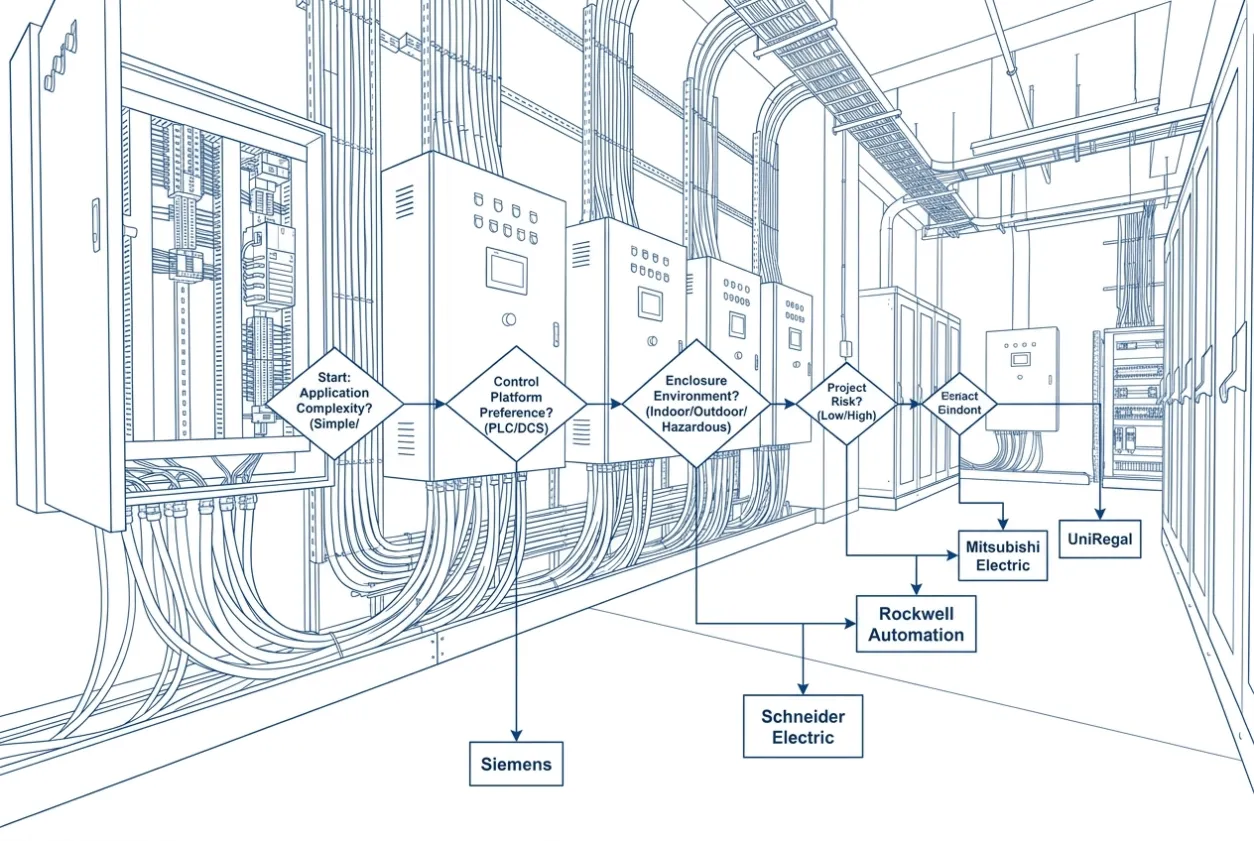
Top Automation Control Panel Manufacturers to Compare
1. Siemens
Overview
Choose Siemens when the project already belongs to a Siemens automation environment. This usually means Siemens PLCs, HMIs, drives, remote I/O, or plant-level control systems are already specified by the customer or site.
Buyers usually specify Siemens because it fits structured industrial automation projects where documentation, standardization, and system integration matter. Siemens can be a strong choice for process systems, utilities, export machinery, and factories that already maintain Siemens platforms.
Siemens may not be the best choice if the end user expects Allen-Bradley, if the project is highly cost-sensitive, or if local support for Siemens components is weak in the target market.
Best For
- Plant-wide automation systems
- Process and utility applications
- Siemens PLC and HMI projects
- Export-oriented industrial equipment
- Projects requiring structured documentation
Buyer Check
Before choosing a Siemens-based supplier, ask how the panel design connects to the real process. A good supplier should explain the I/O structure, terminal layout, network arrangement, FAT scope, and future service plan.
From project reviews, the risk is rarely “Can they use Siemens?” The real risk is whether the panel builder understands how Siemens architecture will be installed, tested, and maintained on the actual site.
Ask these questions before approval:
- Can the supplier provide clear electrical drawings and terminal plans?
- Can the FAT checklist reflect the actual process sequence?
- Are Siemens components available within the project schedule?
- Can the final customer maintain the Siemens platform locally?
- Will future modifications be easy to document and control?
2. Rockwell Automation
Overview
Choose Rockwell when the end user requires Allen-Bradley or when the control panel will be used in a North American factory where maintenance teams already understand Rockwell architecture.
Buyers usually specify Rockwell because platform familiarity matters. When the plant already uses Allen-Bradley PLCs, PanelView HMIs, and PowerFlex drives, choosing Rockwell can make training, troubleshooting, and spare parts management easier.
Rockwell may not be the best choice if the project is extremely price-sensitive, if component lead time is uncertain, or if the final site has limited Allen-Bradley support.
Best For
- North American manufacturing plants
- Allen-Bradley PLC-based control systems
- OEM machines shipped to U.S. factories
- Production lines and retrofit upgrades
- Projects where local maintenance familiarity matters
Buyer Check
Do not choose a Rockwell-based supplier only because they can buy Allen-Bradley parts. Check whether they can keep terminal numbering, wire labeling, panel layout, and drawing revisions consistent, especially for repeated OEM builds.
One mistake we repeatedly see is that buyers approve the PLC brand early but check lead time too late. For Rockwell-heavy panels, critical components should be confirmed before the project schedule becomes tight.
Ask these questions before approval:
- Are key Allen-Bradley components available within the required lead time?
- Can the supplier maintain wiring consistency across repeat builds?
- Does the panel layout leave enough space for field service?
- Can the documentation support the end user’s maintenance team?
- Is UL 508A required for this project, and who is responsible for compliance?
Procurement Advice When the end user specifies Allen-Bradley, the buyer still needs to evaluate the panel builder. The brand solves platform acceptance, but the panel builder decides wiring quality, documentation clarity, FAT discipline, and delivery risk.
3. Schneider Electric
Overview
Choose Schneider when your project needs power distribution and automation control to work closely together. Schneider is often practical for panels involving PLC control, motor protection, breakers, contactors, relays, drives, power supplies, and energy-related applications.
Buyers usually specify Schneider when they want a balanced electrical and automation ecosystem. This can be useful for pump control panels, utility systems, facility automation, water-related projects, and industrial control cabinets where power protection matters as much as PLC control.
Schneider may not be the best choice if the selected panel builder is strong in electrical distribution but weak in automation integration. The brand is broad, but the supplier’s actual capability still needs to be checked.
Best For
- Power and control integration
- Pumping and utility systems
- Energy management applications
- Industrial facilities using Schneider components
- Projects combining protection devices and PLC control
Buyer Check
Ask whether the supplier has built similar automation panels before, not only Schneider-based electrical cabinets. The key is whether they understand the full scope: protection, control logic, field wiring, enclosure rating, FAT, and future service.
For buyers comparing pump control panels, utility panels, or outdoor control enclosures, UniRegal’s Solutions and Guides can help define the RFQ more clearly before supplier comparison.
Ask these questions before approval:
- Is the supplier stronger in electrical distribution or automation integration?
- Can they coordinate protection devices, PLC logic, and field wiring clearly?
- Does the enclosure design match the installation environment?
- Are spare parts and substitutes controlled in the BOM?
- Does the FAT include more than a basic power-on test?
4. Mitsubishi Electric
Overview
Choose Mitsubishi when the project is machine-focused, compact, and automation-driven. Mitsubishi is often a good fit for OEM machinery, packaging equipment, assembly systems, compact PLC panels, HMI control, servo applications, and drive integration.
Buyers usually specify Mitsubishi because it offers practical machine automation capability without making the system unnecessarily complicated. In compact machines, this balance can be valuable.
Mitsubishi may not be the best choice if the final customer requires Rockwell or Siemens, or if spare parts and support are limited in the target market.
Best For
- OEM machine automation
- Packaging and assembly equipment
- Compact automation control panels
- PLC, HMI, servo, and drive integration
- Equipment with limited enclosure space
Buyer Check
Before choosing Mitsubishi, confirm whether the end user accepts the platform. A technically good choice can still become a commercial problem if the customer’s maintenance team is not familiar with it.
From OEM projects, one lesson is clear: a control panel is built for both the machine and the people who will maintain the machine. Platform acceptance matters more than many new buyers expect.
Ask these questions before approval:
- Will the final customer accept Mitsubishi as the control platform?
- Are Mitsubishi PLC, HMI, servo, and drive parts easy to source locally?
- Is the cabinet compact but still serviceable?
- Is there enough space for future I/O or machine options?
- Can the supplier keep the same wiring standard across repeated machines?
Common Mistake New buyers often compare PLC platforms mainly by hardware price. Experienced buyers also compare training time, spare-parts familiarity, programming support, and whether the end user will approve the platform after installation.
5. UniRegal
Overview
Choose UniRegal when the project does not fit neatly into a standard cabinet. This includes custom automation control panels, mixed-brand component layouts, outdoor enclosures, stainless steel panels, water treatment control panels, pump control panels, process skids, OEM machine panels, and MCC interface projects.
Buyers usually consider UniRegal when they need more than assembly. They need someone to discuss enclosure selection, BOM coordination, PLC/HMI/VFD integration, wiring layout, FAT expectations, and manufacturing follow-up.
UniRegal may not be the best choice if the buyer only needs a very simple commodity cabinet with no customization, no engineering discussion, and price as the only decision factor.
Best For
- Custom automation control panels
- Mixed-brand industrial automation projects
- Outdoor or project-specific enclosure requirements
- OEM and project-based builds
- Water treatment and pumping systems
- Buyers needing closer engineering communication
Buyer Check
When evaluating UniRegal, check whether the project needs flexibility. If your panel requires a special enclosure, mixed brands, customer-approved components, export coordination, or detailed FAT communication, a custom panel manufacturer may reduce more risk than a standard supplier.
The most useful RFQs usually include drawings, BOM, installation environment, preferred component brands, wiring requirements, and delivery expectations. A bare component list is often not enough for a serious custom automation control panel.
Ask these questions before approval:
- Does the project need mixed-brand integration?
- Is the enclosure standard, outdoor, stainless steel, or project-specific?
- Are drawings, BOM, wire numbers, labels, and FAT documents included?
- Can the supplier identify risks before production starts?
- Will the panel be easy to inspect, ship, install, and service?
From Our Experience
From our experience, many automation control panel problems do not begin with the PLC brand. They begin earlier, usually in the RFQ stage.
A buyer may send a component list without explaining the machine duty, installation environment, cooling requirement, cable entry direction, preferred label format, or future expansion plan. The supplier then quotes what is visible, not what the project really needs. Later, during assembly or commissioning, everyone realizes the enclosure is too tight, the wiring route is not ideal, or the FAT checklist does not match the actual machine sequence.
This is why we encourage buyers to share the project context, not only the parts list. A good control panel manufacturer can often catch layout, heat, substitution, and maintenance risks before the first wire is cut.
Quote Comparison: What Buyers Should Look Beyond Price
Many control panel quotations look similar on the surface, but they may include very different levels of engineering work.
Quote Item | Low-Risk Supplier | Higher-Risk Supplier |
|---|---|---|
Schematics | Clear, updated, matched to panel | Basic or incomplete |
BOM | Brand, model, quantity, alternatives controlled | Vague or frequently changed |
Labeling | Wire, terminal, device labels clearly defined | Labeling left to workshop habit |
Enclosure | Sized for heat, wiring, and service | Sized mainly to reduce cost |
FAT | Checklist based on application | Simple power-on check |
Communication | Risks raised before production | Problems appear after shipment |
Future Support | Revision and spare-part logic considered | Little support after delivery |
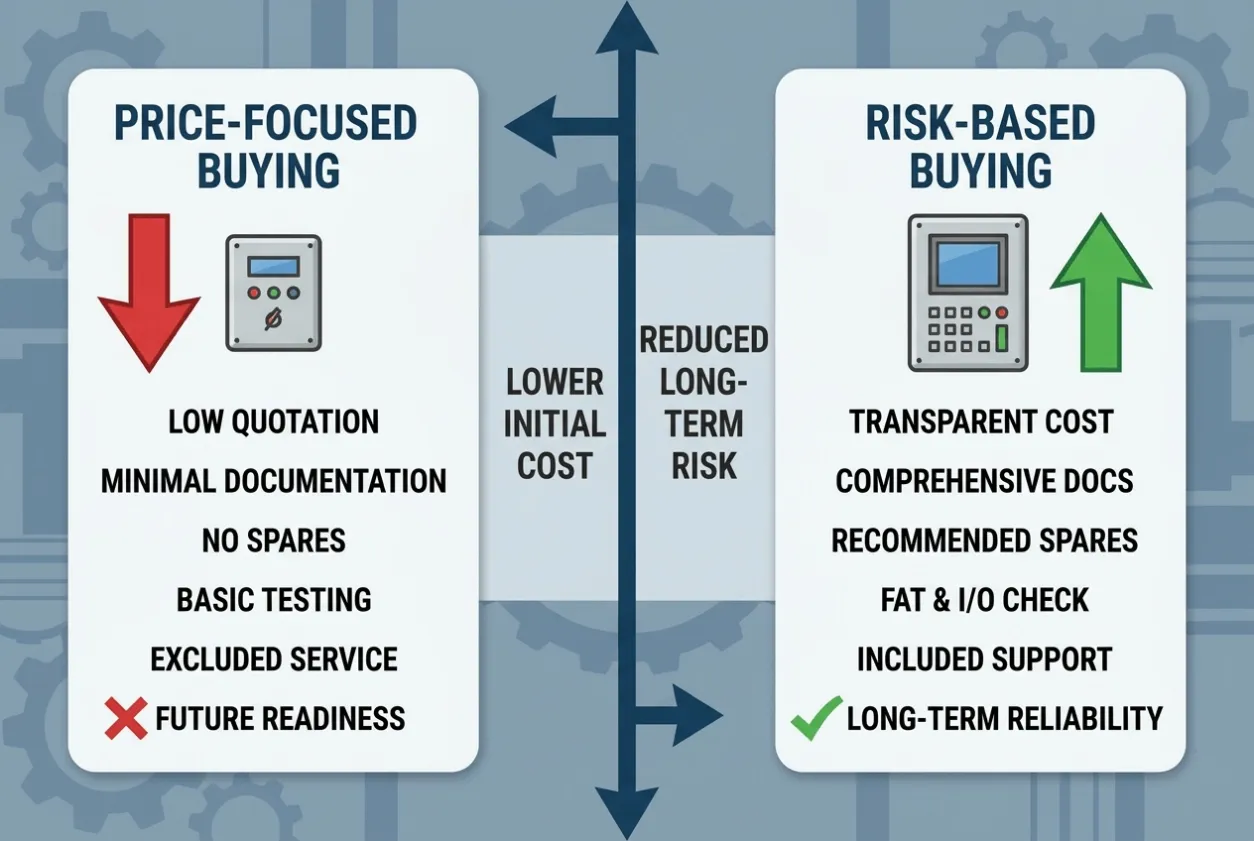
Why It Matters A low quotation often removes something the buyer will need later. The cost does not disappear. It usually returns during commissioning, troubleshooting, site modification, or rework.
Buyer Checklist Before Sending an RFQ
Before requesting a quotation for an automation control panel, prepare the information that helps suppliers quote accurately.
Application
- What machine or process will the panel control?
- Is it for OEM equipment, pumping, water treatment, process skid, packaging, or plant automation?
- Is it a one-off build or a repeated project?
- Will the machine or system be exported?
Electrical Scope
- Incoming voltage and phase
- Motor loads and branch protection
- VFD, servo, contactor, relay, or MCC interface requirements
- Safety circuits and emergency stop logic
- Field device connection requirements
Automation Scope
- Preferred PLC and HMI brand
- Communication protocol, such as EtherNet/IP, Profinet, or Modbus
- Remote I/O, network hardware, and field device requirements
- Whether the PLC program is provided or included in the supplier scope
Enclosure and Environment
- Indoor or outdoor installation
- Washdown, dust, corrosion, humidity, or heat exposure
- NEMA or IP rating requirement
- Material preference, such as painted steel or stainless steel
- Cooling or ventilation requirements
Documentation and FAT
- Schematics and panel layout drawings
- Wire numbers and terminal plans
- FAT checklist and inspection expectations
- Revision control for future repeat orders
If you are still unsure how to prepare the RFQ, start with UniRegal’s Guides or share your basic project information through Solutions for a more practical discussion.
Common Mistakes When Choosing Automation Control Panel Manufacturers
Mistake 1: Choosing by Component Brand Only
Good components do not automatically create a good panel. The cabinet still needs proper layout, wiring, grounding, labeling, heat planning, and documentation.
Mistake 2: Underestimating Commissioning Time
A poorly documented panel may pass workshop inspection but slow down site startup. If engineers cannot quickly trace signals or understand the terminal plan, commissioning becomes expensive.
Mistake 3: Making the Enclosure Too Small
A smaller cabinet may reduce initial cost, but it can create heat problems, crowded wiring, difficult maintenance, and no room for future expansion.
Mistake 4: Ignoring End-User Platform Preference
The technically suitable PLC brand may still be the wrong choice if the end user’s maintenance team cannot support it easily.
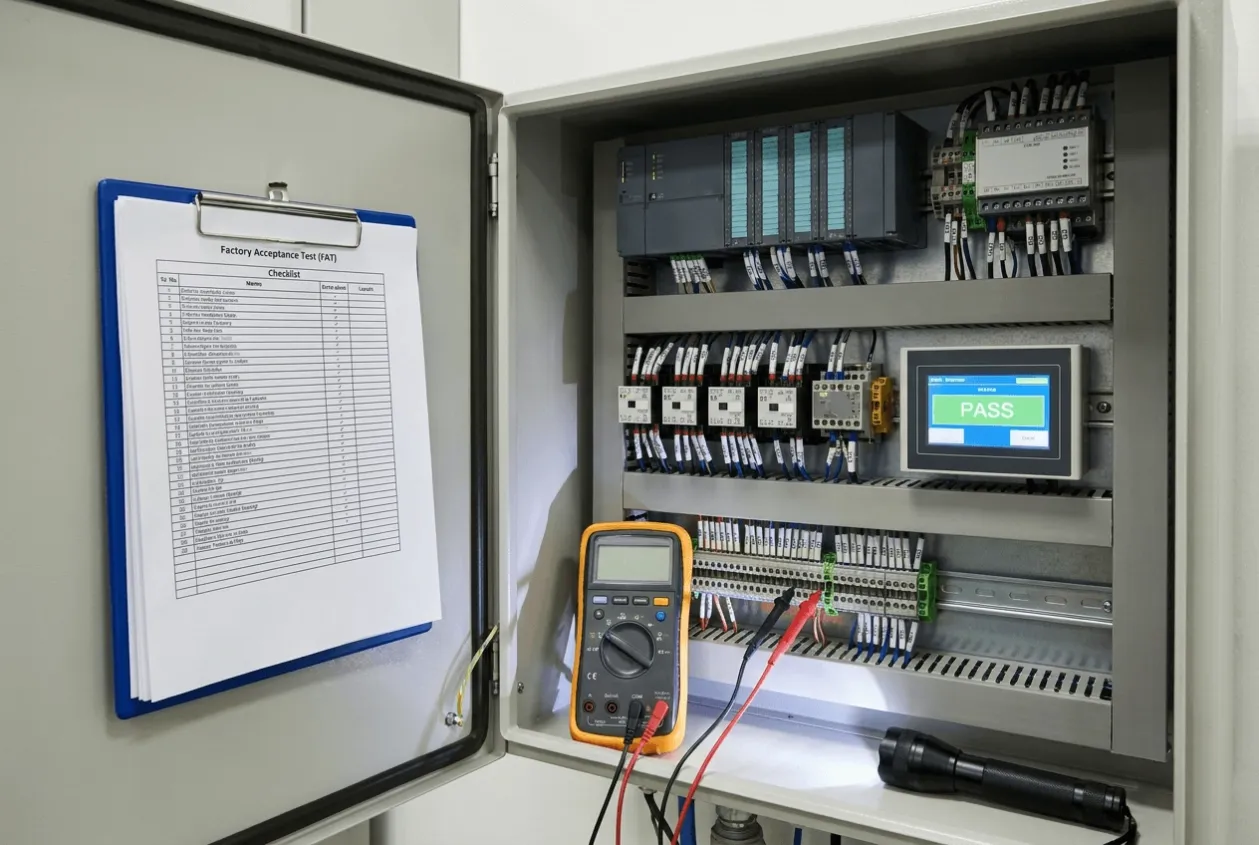
Mistake 5: Treating FAT as a Formality
FAT should verify wiring, labels, I/O, communication, protection devices, alarms, and customer-specific requirements. A basic power-on test is not enough for most automation projects.
Frequently Asked Questions
Who are the best automation control panel manufacturers?
Commonly compared automation control panel manufacturers and supplier ecosystems include Siemens, Rockwell Automation, Schneider Electric, Mitsubishi Electric, and UniRegal. The best choice depends on control platform, application type, enclosure environment, documentation needs, testing scope, and support expectations.
How do I choose the best automation control panel manufacturer?
Start by defining your application, control platform, enclosure environment, documentation requirements, FAT scope, delivery schedule, and maintenance expectations. Then compare suppliers by project fit, not only price.
What should be included in an automation control panel RFQ?
A good RFQ should include application description, voltage, load list, preferred PLC and HMI brand, communication requirements, enclosure rating, documentation expectations, FAT requirements, and delivery schedule.
Is a custom automation control panel better than a standard panel?
A custom automation control panel is better when the project involves mixed brands, special enclosure requirements, outdoor installation, unusual control logic, or future expansion needs. A standard panel may be enough for simple and repeatable applications.
Why is FAT important for automation control panels?
FAT helps verify wiring, labels, I/O, communication, protection devices, control interfaces, and project-specific requirements before shipment. It reduces the chance of discovering problems during commissioning.
Should buyers choose a global automation brand or a custom panel manufacturer?
A global automation brand is often better when the platform is already specified and local maintenance teams expect that ecosystem. A custom panel manufacturer is often better when the project needs enclosure flexibility, mixed-brand integration, special documentation, or project-specific manufacturing coordination.
Final Recommendation
The best automation control panel manufacturers are the ones that reduce project friction after delivery.
Siemens is a strong choice when the project is already built around Siemens architecture. Rockwell Automation is practical when Allen-Bradley is required, especially for North American factories. Schneider Electric fits projects where power distribution and control integration are both important. Mitsubishi Electric is suitable for compact machine automation and OEM equipment. UniRegal is a practical choice when the buyer needs a custom automation control panel with enclosure flexibility, mixed-brand integration, and closer engineering communication.
Before choosing a supplier, ask four questions:
- Does this supplier help us make a better purchasing decision?
- Can they explain the engineering reason behind their proposal?
- Do they show real project experience, not only product knowledge?
- Do we know the next action after reviewing their quote?
If the answer is yes, the supplier is worth serious consideration.
Need Help Choosing or Building a Custom Automation Control Panel?
If you are planning an OEM machine, pump control system, water treatment project, process skid, outdoor enclosure, or custom industrial automation panel, UniRegal can help you review the project before production starts.
Send us your BOM, drawings, preferred PLC brand, enclosure requirements, operating environment, communication needs, and delivery target. We can help you evaluate panel layout, component selection, enclosure suitability, documentation scope, FAT expectations, and manufacturing feasibility before the first wire is cut.
If you are still researching, start with our Solutions, browse similar Cases, or read more practical Guides.
A better automation control panel starts with a better buying decision.
Beyond the brand list: a sourcing partner that consolidates enclosure, components, wiring and FAT in one scope. Explore our custom automation control panels and custom automation PLC control panels — or send drawings for a build quote.