Jul 14, 2026PLC & Automation Systems
Why Does My VFD Overheat Even When the Motor Load Looks Normal?
A VFD can overheat at normal load when poor airflow, high cabinet temperature, weak cooling, or incorrect settings reduce its thermal margin. Check the heat path before replacing the drive.
Engineering Question
Why does my VFD overheat even when the motor current and mechanical load appear normal?
Quick Answer
A VFD can overheat even when the motor load is normal because output current is only one part of the thermal picture. High cabinet temperature, restricted airflow, a dirty filter, a weak cooling fan, excessive carrier frequency, or frequent acceleration cycles can all raise the drive temperature beyond its safe operating range. Before I recommend replacing the VFD, I first check whether the installation allows the drive to release heat properly.
Quick Diagnosis Checklist
- Measure the cabinet temperature during production.
- Check whether air passes through the VFD heat sink.
- Inspect the cabinet filter and cooling fan.
- Confirm that the VFD fan is operating normally.
- Review the carrier frequency setting.
- Check the actual acceleration and deceleration cycle.
- Confirm the required temperature and altitude derating.
Why This Happens
When a customer tells me that the motor is not overloaded but the VFD is still overheating, I do not assume that the drive is defective. I first separate the motor load from the thermal condition of the drive because they describe two different problems.
A motor overload usually means the machine is demanding more torque or current than the motor and drive can comfortably provide. A VFD thermal overload means the drive is producing heat faster than the installation can remove it. The motor current may look normal in the second case, which is why the problem is often misunderstood.
Check Point | Motor Overload | VFD Thermal Overload |
|---|---|---|
Motor current | Usually high | May remain normal |
Main concern | Mechanical or electrical load | Heat removal |
First inspection | Motor and machine | Cabinet, airflow, fan, and heat sink |
Typical correction | Reduce load or review sizing | Improve cooling or apply derating |
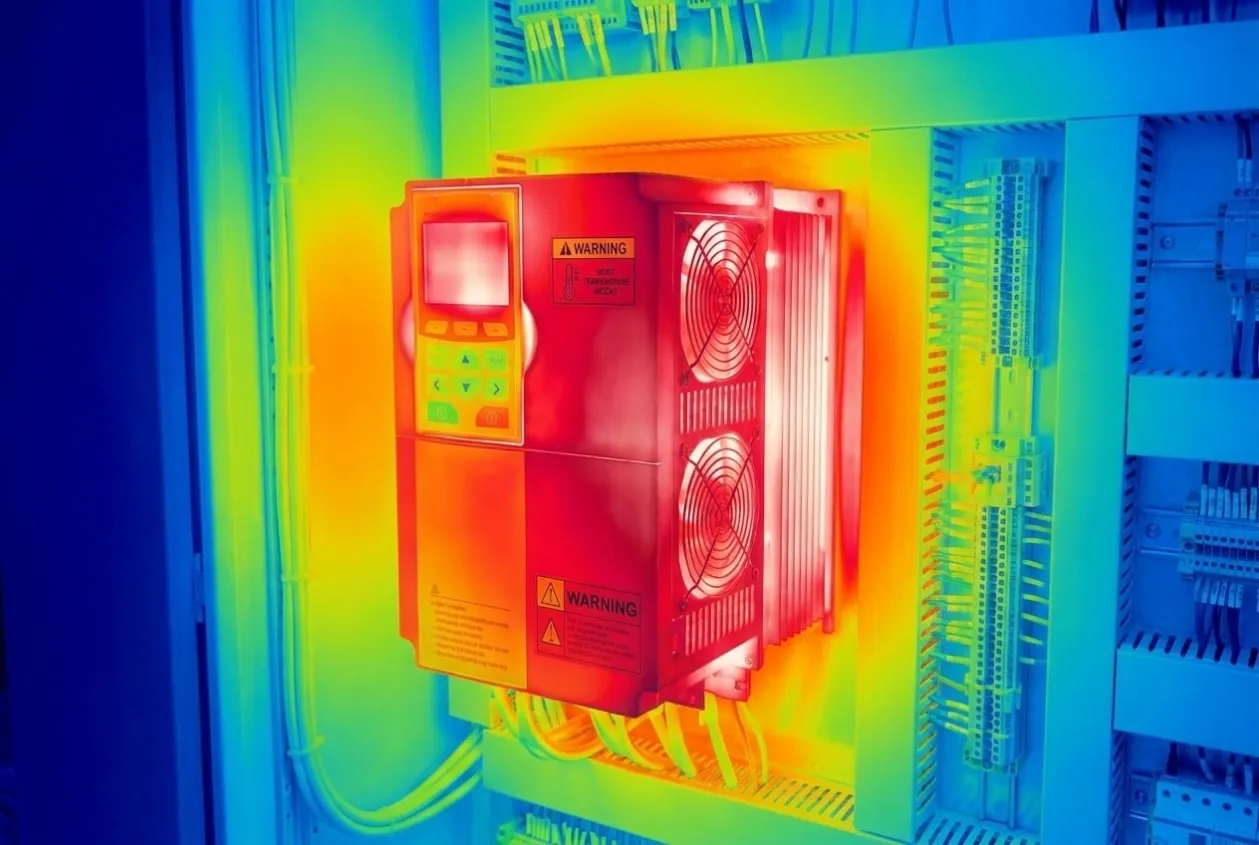
A VFD creates heat whenever its internal power devices switch current to control the motor. That heat has to travel through the heat sink and into the surrounding air. When the cabinet is already hot or the airflow is restricted, the VFD loses the temperature margin it needs to operate reliably.
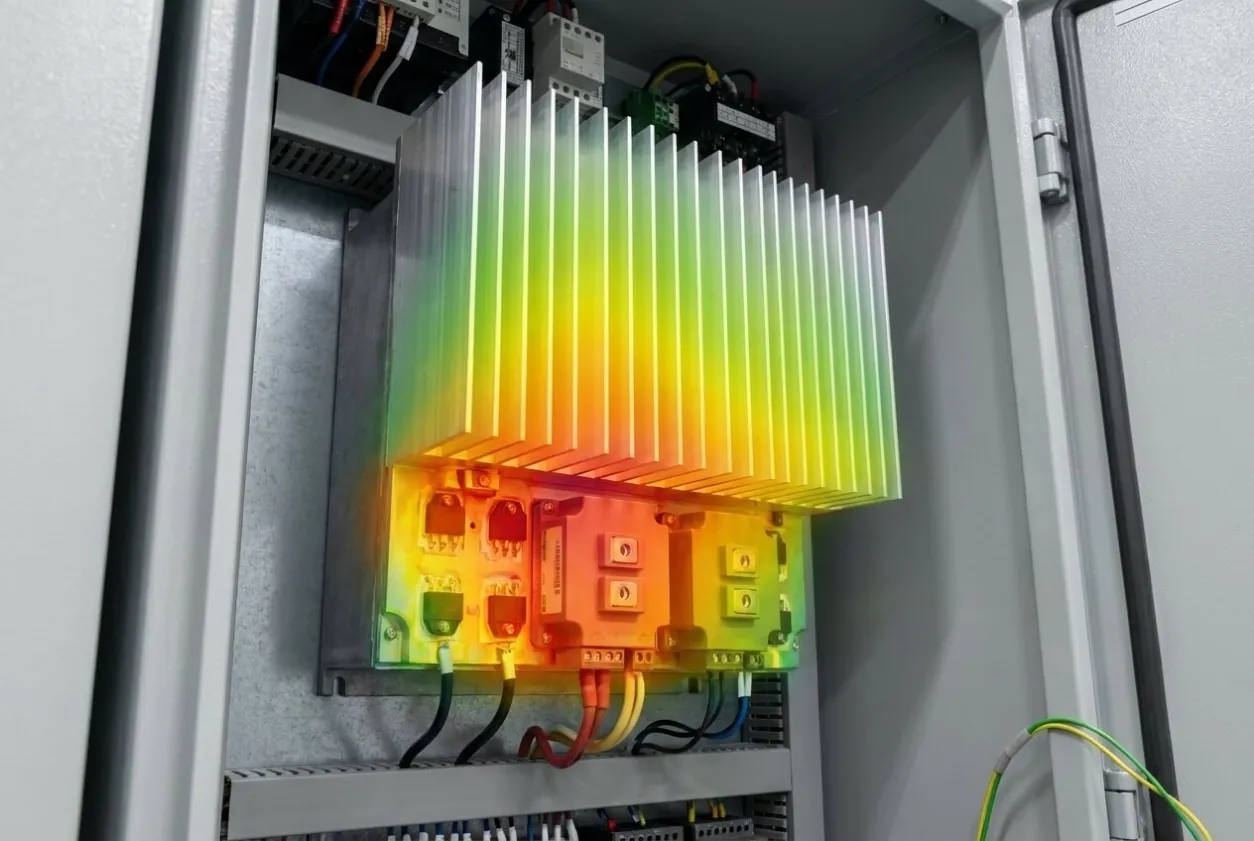
This is why I usually inspect the control cabinet[^4] before discussing a larger drive. I compare the actual installation with the manufacturer's ambient temperature derating guide[^1], mounting clearance requirements[^2], and VFD installation manual[^3].
Engineering TipIf the motor current is normal but the heat-sink temperature continues to rise, check the cabinet temperature, airflow path, filter condition, and cooling fan before changing the VFD size. A larger drive may tolerate the heat for longer, but it will not correct a poor thermal design.
Carrier frequency also deserves attention. A higher carrier frequency can reduce audible motor noise, but it usually increases switching losses inside the drive. In a cool cabinet with enough airflow, the additional heat may be manageable. In a hot enclosure with little temperature margin, the same setting may lead to repeated overtemperature alarms.
I therefore review the manufacturer's carrier frequency derating chart[⁵] before changing this parameter[⁶]. A quieter motor is useful, but not when the trade-off is an unreliable production line. Higher carrier frequency[⁷] increases switching losses inside the VFD, which is why manufacturers often specify output current derating at higher switching frequencies.
Real Project Example
I once reviewed a packaging line where three VFDs were installed in the same control cabinet. One drive tripped almost every afternoon, even though the motor current remained close to 60 percent of the drive rating.
The timing was the first detail that interested me. The machine ran normally in the morning, but the problem appeared after the workshop had been operating for several hours. By that point, the surrounding temperature had increased, and the cabinet had also absorbed heat from nearby equipment.
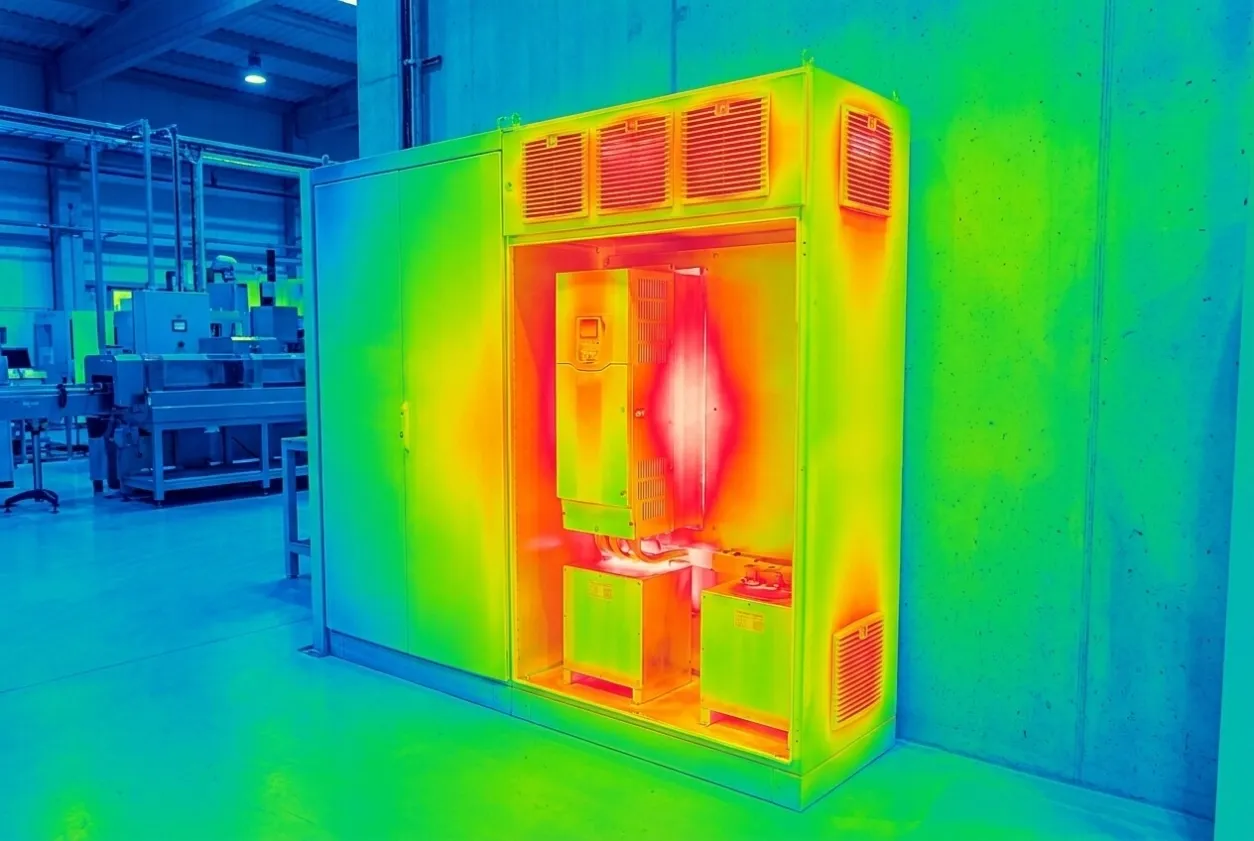
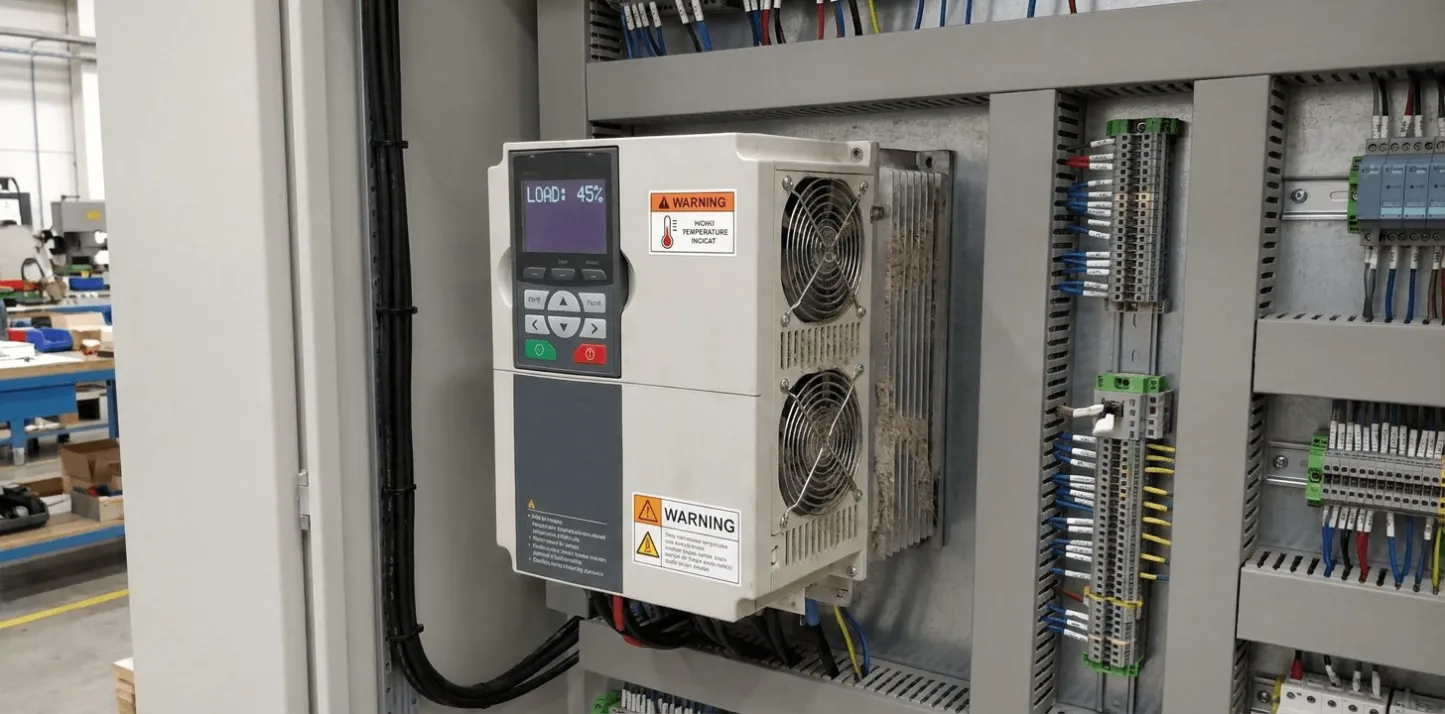
The cabinet fan was still running, so the maintenance team assumed the ventilation was working. However, the inlet filter was heavily blocked by dust, and very little air was reaching the VFD heat sink. The fan created noise and movement near the cabinet door, but it was not producing useful airflow through the drive.
The team had already considered replacing the VFD with a larger model. Before they did that, I asked them to record the cabinet temperature, VFD heat-sink temperature, filter condition, fan direction, and number of acceleration cycles during production.
After the filter was cleaned, the airflow path was corrected, and unnecessary start-stop cycles were reduced, the overheating stopped. The original VFD remained in service, which was a better result than replacing a healthy drive and leaving the real problem untouched.
Engineering Tip
Do not evaluate a VFD only by its output current. The temperature around the drive often tells a more useful story.
For an initial review, I compare three measurements:
Measurement Point | What It Helps Me Understand |
|---|---|
Workshop temperature | The actual ambient condition around the cabinet |
Cabinet internal temperature | Whether the enclosure is trapping heat |
VFD heatsink temperature | Whether the drive is removing its own heat effectively |
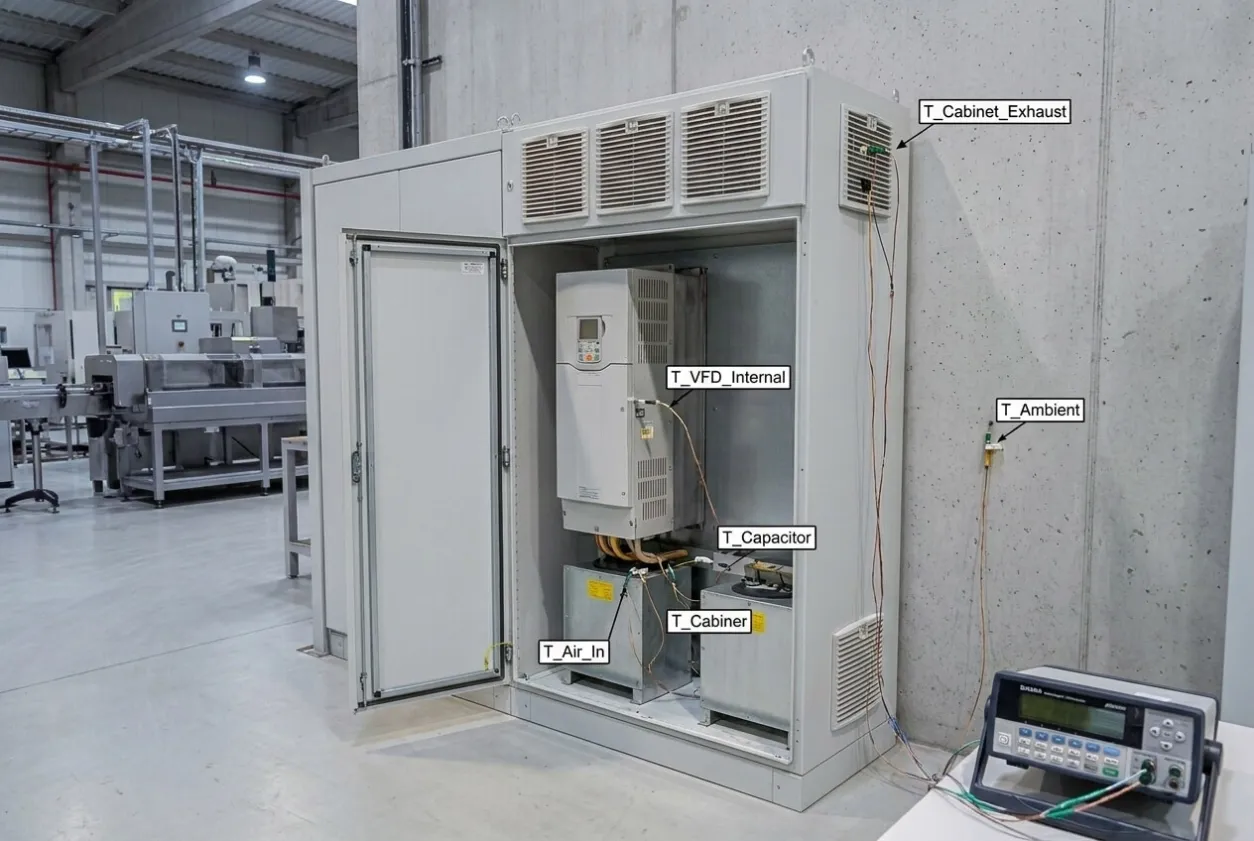
If the workshop, cabinet, and heat-sink temperatures all rise together, the problem is usually related to the environment or enclosure cooling. If the cabinet temperature remains acceptable but the heat sink becomes hot very quickly, I look more closely at the VFD fan, blocked heatsink fins, carrier frequency, and operating cycle.
Temperature should also be recorded against time. Many overheating faults appear random only because nobody compares the alarm time with the production cycle and surrounding temperature. Once those values are written down, the pattern is often much easier to see.
Common Mistake
The most common mistake is assuming that normal motor current proves the VFD is thermally safe. It does not, because a drive can operate within its current rating while still being exposed to poor cooling conditions.
Another common mistake is replacing the VFD before measuring the cabinet environment. I understand why this happens because production teams are under pressure to restore the machine quickly. However, when the enclosure is the real cause, the replacement drive may develop the same problem.
Symptom | Common Misdiagnosis | Possible Actual Cause |
|---|---|---|
Motor current is normal | The VFD cannot be overheating | Restricted airflow |
Heat-sink temperature is high | The VFD is undersized | Dirty filter or weak cooling fan |
Trips happen in the afternoon | The fault is random | Rising workshop and cabinet temperature |
Trips follow frequent speed changes | The motor is overloaded | Acceleration and deceleration stress |
A replacement drive also becomes hot | The product quality is poor | Cabinet cooling was never corrected |
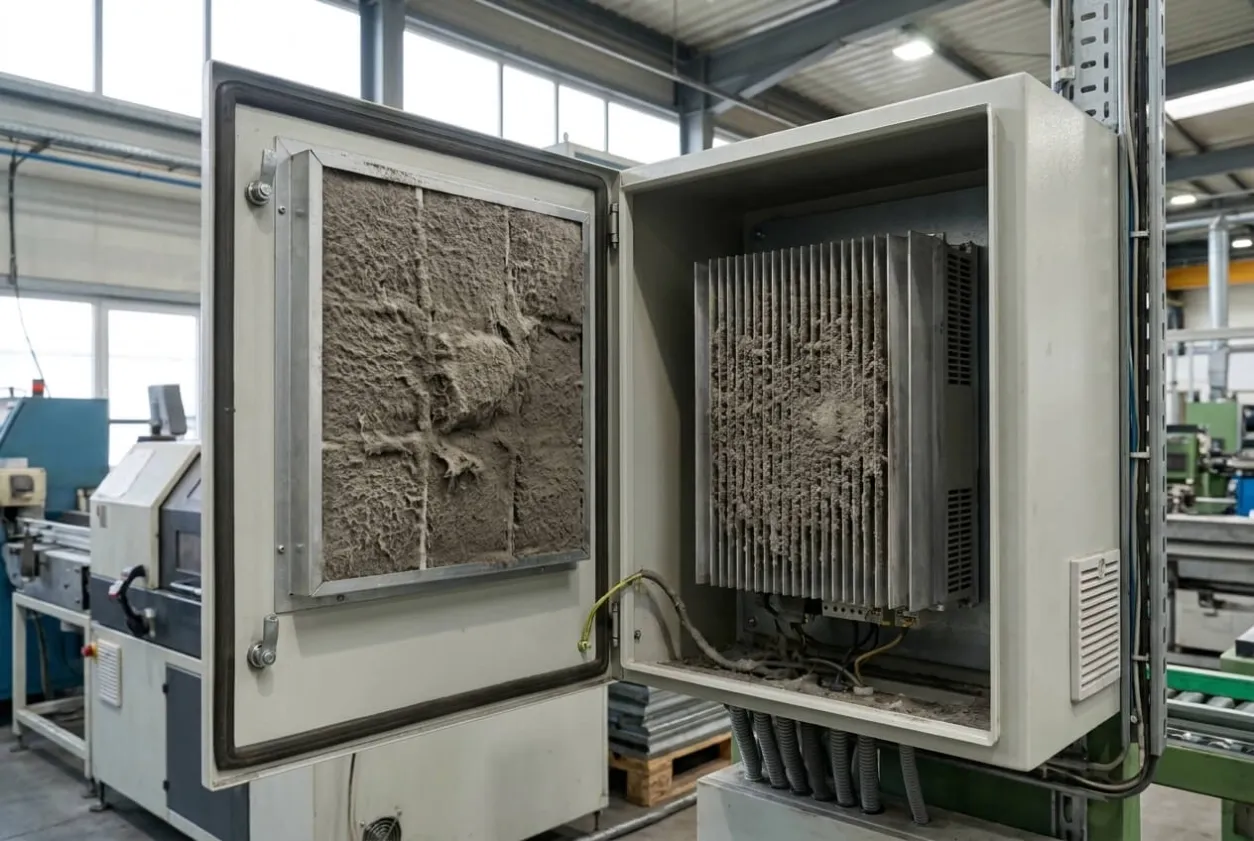
I also pay attention to cabinets that have been modified over time. A cooling design that was suitable for one VFD may no longer be adequate after additional drives, power supplies, or braking resistors have been installed. The cabinet may still look orderly, but its original thermal calculation is no longer valid.
Natalie's Quick Check
When I review this type of problem, I begin with the alarm history and the time when the fault occurs. I then ask qualified electrical personnel to inspect the installation under controlled conditions and in accordance with the required electrical safety procedures.
My practical check normally includes the following items:
- Confirm that the alarm is related to drive temperature.
- Compare the motor current with the VFD rated current.
- Measure the cabinet temperature during actual production.
- Check the ambient temperature at the hottest time of day.
- Inspect the VFD fan, cabinet fan, filter, and heat sink.
- Confirm the airflow direction through the enclosure.
- Check the mounting clearance above and below the VFD.
- Review the carrier frequency setting.
- Review the number of starts, stops, and speed changes.
- Confirm the manufacturer’s temperature and altitude derating requirements.
Electrical measurements inside an energized cabinet should only be performed by qualified personnel using the appropriate isolation, protective equipment, and site safety procedures.
If This Was My Project
If this were my project, I would not replace the VFD first. I would begin by confirming whether the cabinet temperature rises during production and whether air is actually moving through the VFD heat sink.
I would then inspect the fan and filter condition[⁸], review the carrier frequency[⁹], and compare the real operating cycle with the drive's overload[¹0] and duty-cycle specifications[¹1]. This usually gives a clearer answer than looking at a single steady-state current value.
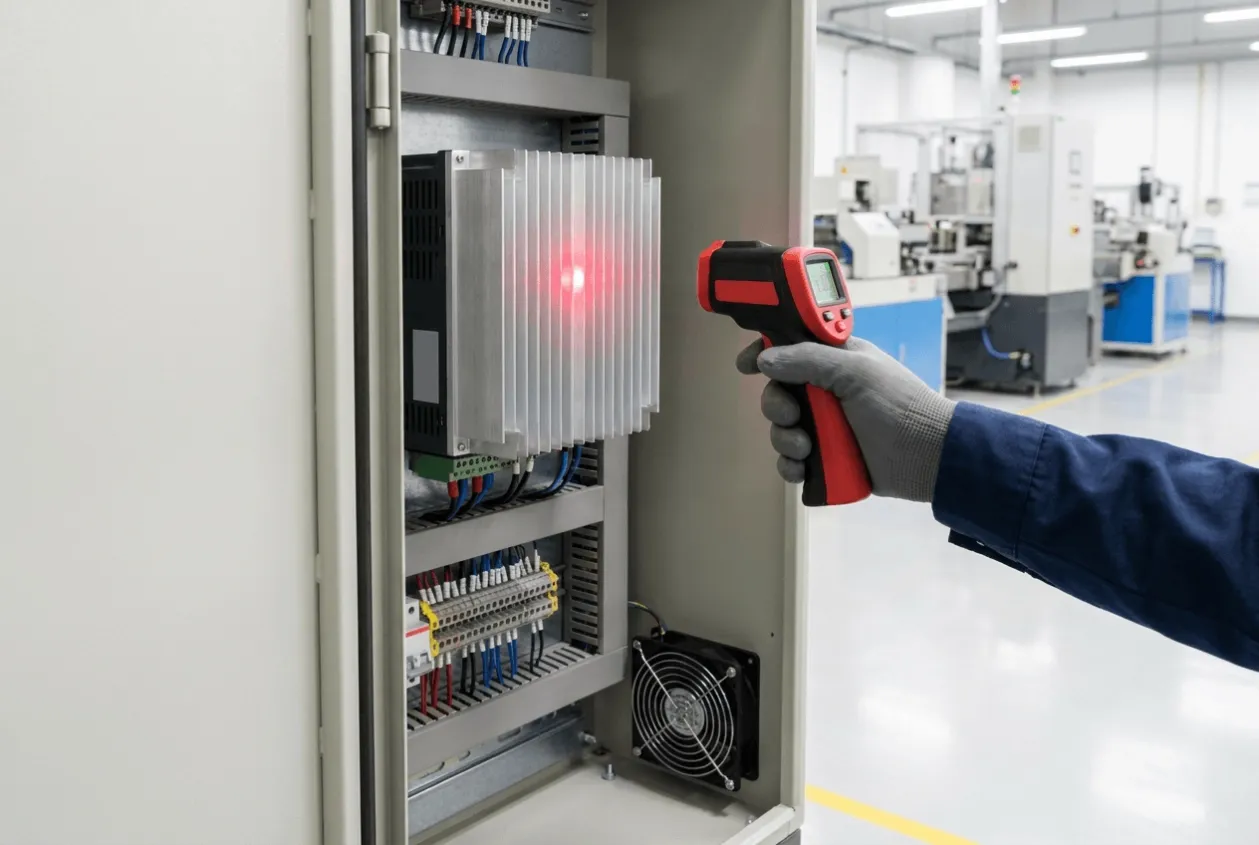
If the drive is correctly sized but the enclosure[^12] is too hot, I would improve the cabinet ventilation or cooling. If the application has little thermal margin because of high ambient temperature[¹3], altitude[¹4], or frequent cycling, I would review the manufacturer's VFD sizing and derating rules[¹5] before deciding whether a larger model is necessary.
A larger VFD can be the right solution, but only after the reason for the overheating is understood.
One Thing Most People Miss
Most teams check whether the VFD has enough current capacity for the motor. Fewer teams check whether the cabinet has enough cooling capacity for all the components installed inside it.
That distinction matters because a cabinet is part of the operating system. Every VFD, transformer, power supply, relay, and braking resistor adds heat, while the enclosure and ventilation system determine whether that heat can escape.
I also check the physical mounting arrangement. Cable ducts, wiring bundles, or another drive may be installed too close to the VFD, even when the cabinet drawing appears correct. The equipment may pass a factory test in a clean and cool environment but overheat later on the production floor, where the temperature, dust level, and operating cycle are more demanding.
Related Questions
How Much Clearance Does a VFD Need Inside a Control Cabinet?
The required clearance depends on the brand, model, power rating, and mounting arrangement. The correct value should come from the manufacturer's VFD installation clearance guide[^16], not from a general rule applied to every drive. Proper mounting clearance[¹7] ensures adequate airflow and cooling, helping maintain reliable VFD operation over its service life.
Should I Reduce the Carrier Frequency to Prevent Overheating?
Reducing the carrier frequency may lower switching losses, but it can also increase audible motor noise and affect motor operation. The setting should be reviewed against the manufacturer's carrier frequency recommendations.
Can a Sealed Electrical Enclosure Cause VFD Temperature Alarms?
Yes. A sealed enclosure can trap heat unless it uses a correctly selected air conditioner, heat exchanger, or another suitable cooling method. The required cooling capacity should be based on a cabinet heat-load calculation.
How Do I Know Whether a VFD Cooling Fan Is Failing?
A failing fan may produce unusual noise, weak airflow, intermittent rotation, or a rapid rise in heat-sink temperature. The inspection and replacement method should follow the manufacturer’s VFD fan maintenance guide.
Should I Oversize a VFD for High Ambient Temperatures?
A larger drive may be necessary when the ambient temperature exceeds the standard rating, but the decision should follow the manufacturer’s derating data. Oversizing should not be used as a substitute for correcting poor cabinet cooling.
Can Frequent Acceleration and Deceleration Cause VFD Overheating?
Yes. Repeated speed changes can create more thermal stress than steady operation, even when the running current appears normal. The actual production cycle should be compared with the VFD’s overload and duty-cycle rating.
Conclusion
When a VFD overheats under normal motor load, the current reading is only the beginning of the diagnosis. The cabinet temperature, airflow, filter, fan, heat sink, carrier frequency, operating cycle, and derating requirements all need to be reviewed before the drive is replaced.
Natalie’s View: I rarely recommend replacing a VFD before understanding why it became hot in the first place.
Beyond This Question
If another engineer reads this six months from now, the most useful lesson should still be clear: normal current does not prove that a VFD is operating in a safe thermal environment.
Before replacing the VFD:
- Measure the cabinet temperature.
- Check the cooling fan.
- Inspect the filter and heat sink.
- Verify the airflow path.
- Review the carrier frequency.
- Check the operating cycle.
- Confirm the required derating.
Related Articles: