
Oct 6, 2026Buying Guides
Top 10 Mistakes When Specifying Outdoor Electrical Cabinets
Outdoor electrical cabinets often fail because small specification details are overlooked. This guide explains 10 common mistakes involving IP ratings, cooling, materials, cable entry, layout, drawing
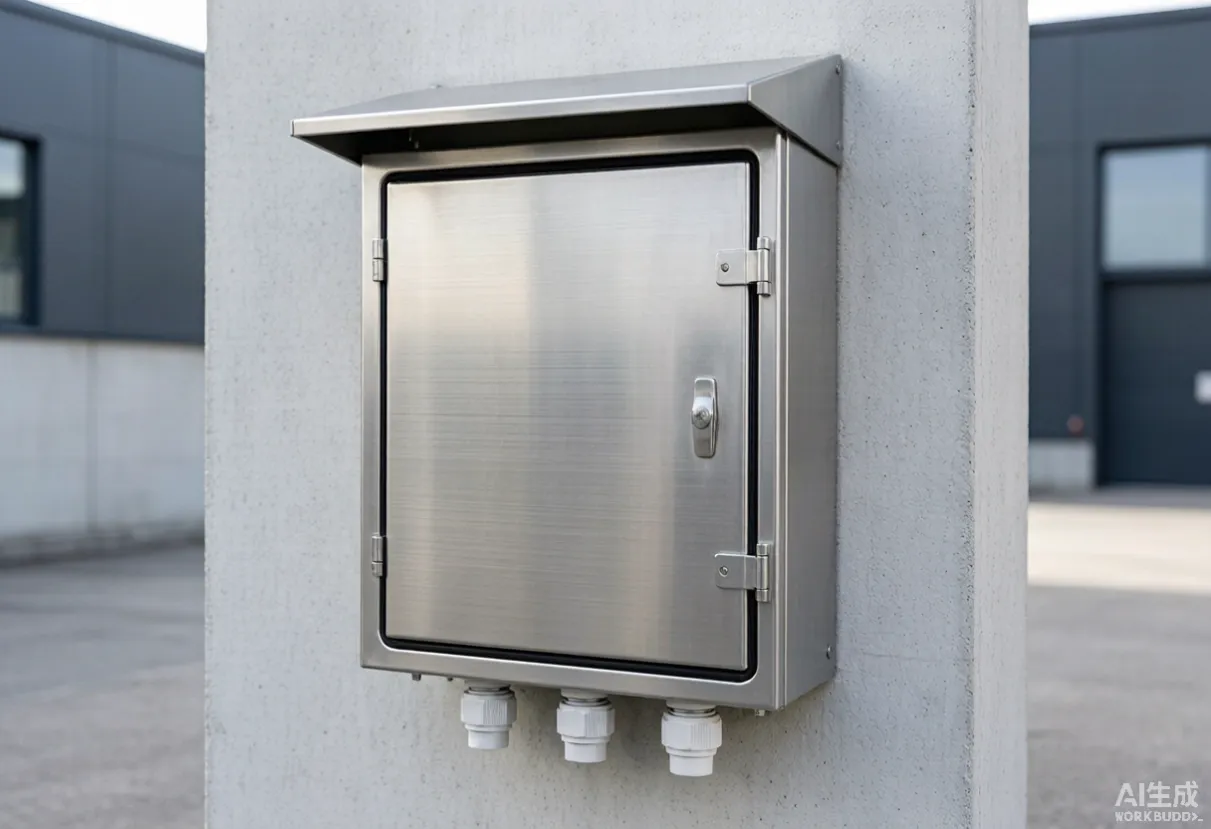
Top 10 Mistakes When Specifying Outdoor Electrical Cabinets
Quick Answer
The most common mistakes when specifying an outdoor electrical cabinet are not usually dramatic engineering failures. More often, they are small details missed between design, purchasing, manufacturing, and site installation.
Typical problems include choosing an enclosure rating without considering the real environment, ignoring condensation, underestimating heat load, selecting the wrong material, leaving cable entry undefined, using unsuitable accessories, allowing too little wiring space, forgetting mounting requirements, approving production without drawings, and comparing quotations only by price.
The safer approach is to specify the outdoor cabinet as a complete installed system, not simply as a metal enclosure with an IP rating.
A cabinet can look correct on an RFQ and still become a problem in the field.
That difference matters.
Why This Guide Can Be Trusted
I work with industrial automation projects involving control cabinets, PLC systems, HMIs, industrial UPS systems, electrical components, and custom enclosures.
One thing I have noticed over the years is that cabinet problems rarely start with the cabinet itself.
They often start much earlier.
A buyer sends a basic RFQ. The supplier quotes exactly what was written. Engineering assumes some details are understood. Production follows the drawing. Then the cabinet reaches site and someone discovers that the cable entry is in the wrong position, the cooling capacity is insufficient, or maintenance access was never considered.
Nobody necessarily made one major mistake.
The specification simply left too much room for interpretation.
This guide focuses on those gaps.
Procurement AdviceA detailed RFQ is not about making purchasing more complicated. It reduces the number of assumptions that suppliers need to make before quotation and production.
What Should Buyers Check Before Ordering an Outdoor Electrical Cabinet?
Before looking at the ten mistakes in detail, I normally divide the specification into six areas:
Area | Questions to Confirm |
|---|---|
Environment | Rain, dust, humidity, sunlight, chemicals, salt, washdown |
Protection | IP or NEMA enclosure requirement |
Thermal Conditions | Ambient temperature, heat load, cooling, heating |
Construction | Material, dimensions, doors, gland plates, mounting |
Internal Equipment | PLCs, VFDs, power supplies, UPS, terminals |
Project Requirements | Drawings, certification, documentation, delivery |
If several of these items are still marked TBD, price comparison is usually not the most important question yet.
The technical scope needs to become clearer first.
1. Choosing an IP Rating Without Considering the Site
One of the easiest mistakes is writing IP65 or IP66 on the RFQ and assuming the environmental requirement has been solved.
It has not.
The IP code describes degrees of protection provided by the enclosure against access, solid objects, and water. IEC 60529 is the international standard commonly associated with IP ratings. :contentReference[oaicite:0]{index=0}
But a real installation involves much more than an enclosure test.
Consider:
- Is the cabinet fully exposed to rain?
- Can water be driven toward the doors by wind?
- Will operators wash the equipment?
- Is there heavy dust?
- Is the cabinet installed under a shelter?
- Are cable glands entering from the top?
- Will field modifications be made?
A buyer should define the environment first and the enclosure rating second.
For North American projects, NEMA enclosure types may also be specified. NEMA 250 covers several enclosure types intended for outdoor locations, including Types 3, 3R, 4, and 4X. :contentReference[oaicite:1]{index=1}
IP and NEMA ratings should not simply be treated as interchangeable labels.
Engineering NoteThe rating on the cabinet nameplate is only part of the story. The finished installation also includes glands, vents, fans, indicators, switches, door hardware, and any modifications made after production.
2. Assuming a Sealed Cabinet Cannot Have Condensation
This mistake surprises many buyers.
A well-sealed outdoor enclosure can still experience moisture problems.
Outdoor temperatures change between day and night. Internal equipment creates heat. Humidity changes. The metal enclosure itself heats and cools.
Under the wrong conditions, moisture can appear inside the cabinet even when rainwater never enters.
That is why outdoor enclosure design may need to consider:
- Anti-condensation heaters
- Hygrostats
- Thermostats
- Controlled ventilation
- Drain or pressure compensation solutions
- Cabinet positioning
- Internal heat generation
I would be particularly careful in locations with large daily temperature swings or high humidity.
The important question is not simply:
“Can water get inside?”
It is also:
“What happens to the air and moisture already inside the enclosure?”
That is a different engineering problem.
3. Undersizing Cooling Because the Cabinet Is “Only Outdoors”
Thermal management is often treated too casually during early purchasing.
The cabinet may contain:
- PLCs
- VFDs
- Industrial PCs
- Power supplies
- Transformers
- UPS systems
- Contactors
- Communication equipment
All of these contribute heat.
Then the sun adds another variable.
A cabinet installed outdoors in direct sunlight can behave very differently from the same cabinet installed under a roof.
This is why I would not select a fan or air conditioner simply from cabinet dimensions.
At minimum, engineering should consider:
- Internal component heat dissipation
- Maximum ambient temperature
- Desired internal temperature
- Solar exposure
- Enclosure material and color
- Ventilation restrictions
- Required ingress protection
One mistake I see in purchasing is selecting the cooling accessory too early because the buyer wants to complete the BOM.
Sometimes it is better to leave the exact cooling capacity open until the heat-load information becomes clearer.
Why It MattersOversizing a cabinet slightly may cost more upfront. Undersizing its thermal management can affect every heat-sensitive component inside it.
4. Selecting 304 or 316 Stainless Steel by Habit
Stainless steel is often specified for outdoor cabinets, but “stainless” is not a complete material specification.
304 stainless steel is commonly used for many industrial and general outdoor applications.
316 stainless steel is often considered when corrosion conditions are more demanding, particularly where chloride exposure is a concern.
But that does not mean every outdoor cabinet should automatically use 316.
The right choice depends on:
- Coastal exposure
- Salt spray
- Chemical atmosphere
- Washdown chemicals
- Expected service life
- Surface finish
- Project budget
There are also projects where painted carbon steel or other materials make better commercial sense.
The question should be:
What level of corrosion resistance does this site actually need?
Not:
What material do we normally buy?
For a deeper comparison, see 304 vs 316 Stainless Steel Outdoor Enclosures: How to Choose the Right Grade.
5. Leaving Cable Entry Until the Cabinet Reaches the Site
Cable entry is one of the smallest details on a drawing and one of the easiest ways to create a site problem.
I have seen enclosure RFQs provide detailed dimensions, material, and IP requirements while saying almost nothing about the incoming cables.
That creates unnecessary risk.
Before production, try to define:
- Approximate number of cables
- Cable diameters
- Gland sizes
- Bottom, side, or rear entry
- Gland plate dimensions
- Spare cable capacity
- Segregation requirements
- Whether field drilling is expected
The issue is not only convenience.
Poorly planned cable entry can affect sealing, internal layout, wiring radius, installation time, and maintainability.
NEMA technical guidance also illustrates an important system principle: when components in an installation have different protection ratings, the overall installation may effectively be limited by the lower-rated part. :contentReference[oaicite:2]{index=2}
Common MistakeDo not approve the cabinet first and ask the installation team to “make the cables fit later.” Field modification often costs far more than drawing modification.
6. Specifying an Outdoor Cabinet but Using Indoor Accessories
The enclosure body may be suitable for outdoor service while the accessories are not.
This is easy to miss because accessories often appear as small BOM items.
Check items such as:
- Door locks
- Hinges
- Push buttons
- Indicator lights
- Ventilation grilles
- Filter fans
- Cooling units
- Cable glands
- Viewing windows
- Rain hoods
- External handles
Each penetration or external component should be reviewed against the environmental requirement.
This is where specifying the cabinet as a complete assembly becomes important.
Buying an IP66 enclosure does not automatically mean every component subsequently installed on its doors and walls will preserve the intended protection.
The same thinking applies when equipment is modified at site.
A hole drilled for one additional switch can change the performance of an otherwise carefully designed enclosure.
7. Choosing Cabinet Dimensions Without Leaving Enough Working Space
One mistake I have seen repeatedly is calculating cabinet size from the component footprint alone.
Everything fits on the mounting plate.
So the cabinet must be large enough.
Unfortunately, that is not the same thing.
You still need space for:
- Wiring ducts
- Terminal blocks
- Cable bending
- Device spacing
- Heat dissipation
- Labels
- Future expansion
- Door-mounted components
- Maintenance access
A cabinet that looks spacious on a general arrangement drawing can become crowded very quickly after wiring begins.
This is especially important for cabinets containing VFDs, larger breakers, transformers, UPS equipment, or multiple terminal groups.
I normally prefer engineering to look at the serviceable layout, not just the smallest possible enclosure.
Buying TipSaving a small amount by reducing cabinet dimensions rarely looks attractive when technicians later spend additional hours trying to terminate, trace, or replace components in a crowded panel.
8. Forgetting Mounting, Lifting, and Site Handling Requirements
Large outdoor electrical cabinets have to arrive somewhere, be moved into position, and stay securely installed.
That sounds obvious, yet handling details are regularly left out of early RFQs.
Depending on the project, buyers may need to specify:
- Plinths
- Base frames
- Wall-mounting brackets
- Pole-mounting hardware
- Lifting lugs
- Forklift access
- Anchoring points
- Roof structures
- Rain canopies
Weight also matters.
A large stainless-steel cabinet fitted with mounting plates, cooling equipment, transformers, UPS systems, or other heavy components may require a very different handling plan from an empty enclosure.
For large cabinets, I would confirm these requirements before the mechanical design is frozen.
Changing lifting or mounting details after fabrication is rarely convenient.
9. Releasing Production Before Reviewing the Drawings
This is one of the highest-value checks a buyer can make.
Before production, review the general arrangement drawing.
Do not treat drawing approval as an administrative step.
Check:
- Overall dimensions
- Door quantity
- Door opening direction
- Gland plate location
- Cooling equipment
- Mounting plate dimensions
- Internal component positions
- Plinth or base
- Lifting points
- External accessories
- Cable entry
- Maintenance clearance
For assembled control cabinets, internal layout drawings become even more important.
What I like about drawing approval is that problems are still inexpensive at this stage.
Moving a cable entry on a PDF is easy.
Moving it after the cabinet has been fabricated, wired, packed, shipped, and delivered is not.
Procurement AdviceOne of the most useful questions before approving production is: “What assumptions has the supplier made that are not clearly shown on our RFQ?”
That question often reveals more than another round of price negotiation.
10. Comparing Quotations Only by Cabinet Price
Two quotations can look nearly identical in a purchasing spreadsheet while representing very different scopes.
Supplier A may include:
- Mounting plate
- Gland plate
- Plinth
- Lifting hardware
- Specified locks
- Cooling accessories
- Drawings
- Surface treatment
- Packaging
Supplier B may quote only the basic enclosure.
If procurement compares only the total price, Supplier B naturally looks cheaper.
But it may not actually be the lower-cost option.
I have learned to compare scope against scope before comparing price against price.
A useful quotation comparison should ask:
Comparison Item | Supplier A | Supplier B |
|---|---|---|
Enclosure material | Confirm | Confirm |
IP/NEMA rating | Confirm | Confirm |
Mounting plate | Included? | Included? |
Gland plate | Included? | Included? |
Plinth | Included? | Included? |
Cooling | Included? | Included? |
Accessories | Included? | Included? |
Drawings | Included? | Included? |
Certification | Confirm | Confirm |
Lead time | Confirm | Confirm |
A cheaper cabinet can become expensive if the project later requires rework, additional accessories, site modification, or replacement because important requirements were never included in the original scope.
Before Sending an RFQ: Outdoor Electrical Cabinet Checklist
A useful outdoor cabinet RFQ does not need to be complicated.
But the more relevant information you provide, the fewer assumptions the manufacturer needs to make.
Site Conditions
- Installation country and location
- Indoor, sheltered outdoor, or fully exposed outdoor
- Minimum ambient temperature
- Maximum ambient temperature
- Humidity
- Rain and washdown exposure
- Coastal or corrosive environment
- Direct solar exposure
Cabinet Construction
- Required dimensions
- Material
- Stainless-steel grade if applicable
- Surface finish
- Number of doors
- IP or NEMA requirement
- Wall-mounted or floor-standing
- Plinth or base frame
- Lifting requirements
Internal Equipment
- Component list
- Approximate heat load
- VFDs or other high-heat devices
- UPS or batteries
- Terminal requirements
- Spare capacity
- Cooling or heating requirements
Cable Entry
- Entry direction
- Approximate cable quantity
- Cable size
- Gland plate requirements
- Required glands
- Spare entries
Documentation
- General arrangement drawing
- Internal layout drawing
- BOM
- Wiring documentation if applicable
- Certification requirements
- Inspection requirements
Engineering NoteIf you do not know every answer yet, that does not mean the RFQ has to stop. Mark uncertain items clearly and ask the supplier to identify which points must be resolved before final design.
What Experienced Buyers Usually Check That New Buyers Miss
After comparing many industrial purchasing situations, I think three areas deserve more attention.
1. Interfaces Create More Risk Than Individual Components
The cabinet body may be correct.
The fan may be correct.
The cable gland may be correct.
But the important question is whether they still work correctly together after assembly.
This is why enclosure specification should include penetrations, accessories, cooling, and installation details—not just the enclosure shell.
2. A Better RFQ Can Be More Valuable Than a Lower Quotation
A supplier cannot accurately price what has not been defined.
When two suppliers make different assumptions, the quotations stop being directly comparable.
Improving the RFQ often creates a better commercial result than pushing another few percentage points out of an unclear quotation.
3. Maintenance Requirements Should Be Designed Before Maintenance Begins
Buyers naturally focus on commissioning.
But an outdoor cabinet may remain in service for many years.
Someone will eventually need to:
- Replace a fan
- Tighten terminals
- Check a breaker
- Replace a power supply
- Add wiring
- Troubleshoot a PLC
- Clean filters
If technicians cannot reach these components safely and conveniently, the cabinet was not fully designed for its lifecycle.
Standards and Compliance: What Should Buyers Mention?
The exact standards depend on the project, destination country, equipment type, and customer requirements.
For enclosure ingress protection, IEC 60529 defines the IP Code classification system. :contentReference[oaicite:3]{index=3}
For projects using NEMA enclosure types, ANSI/NEMA 250 addresses enclosures for electrical equipment and includes enclosure types intended for indoor and outdoor use. :contentReference[oaicite:4]{index=4}
NEMA Type 4X is associated with additional corrosion protection compared with Type 4, which is one reason it frequently appears in demanding outdoor specifications. :contentReference[oaicite:5]{index=5}
For complete industrial control panels, additional panel-level requirements may apply depending on the destination market and project specification.
The important procurement lesson is simple:
Do not assume that specifying an enclosure standard automatically defines every requirement for the completed control panel.
Confirm the actual certification scope before placing the order.
Frequently Asked Questions
What is the biggest mistake when specifying an outdoor electrical cabinet?
Ignoring the installation environment.
The correct enclosure depends on rain, dust, humidity, ambient temperature, solar exposure, corrosion, cable entry, and the equipment installed inside.
Start with the site conditions before selecting the enclosure.
Is IP66 enough for an outdoor electrical cabinet?
IP66 provides a defined level of protection against solids and water under the IP classification system, but it does not by itself solve thermal management, condensation, corrosion, installation, or accessory-selection issues.
An outdoor cabinet should be reviewed as a complete system.
Should I always choose 316 stainless steel for an outdoor enclosure?
No.
316 stainless steel can be useful in more corrosive environments, but material should be selected based on the actual exposure, expected service life, and project economics.
For many environments, another material may be perfectly appropriate.
Should cooling be selected before the cabinet is designed?
Usually, the thermal requirements should be understood early, but final cooling selection should be based on realistic information about internal heat load, ambient conditions, solar exposure, and the target internal temperature.
What information should I send to an outdoor electrical cabinet manufacturer?
At minimum, send the installation environment, dimensions, material preference, required protection rating, component list, cable entry requirements, thermal requirements, mounting method, and documentation requirements.
Even a preliminary equipment list or sketch can be useful at the early quotation stage.
Is the lowest cabinet quotation usually the best value?
Not necessarily.
First confirm that each supplier is quoting the same technical scope.
Accessories, material thickness, gland plates, mounting hardware, cooling, documentation, certification, packaging, and testing can all affect the real project cost.
Final Recommendation
A good outdoor electrical cabinet specification should answer much more than three questions:
What size? What material? What IP rating?
Before ordering, I would also review the environment, thermal conditions, condensation risk, cable entry, external accessories, internal layout, mounting, maintenance access, drawings, and documentation.
The point is not to make the specification unnecessarily complicated.
It is to solve inexpensive problems while they are still on the drawing.
Once a cabinet has been fabricated, wired, packed, shipped, and delivered to site, even a small specification mistake becomes much harder to correct.
If you are preparing an RFQ for an outdoor electrical cabinet, UniRegal can review the environmental requirements, cabinet arrangement, component information, cable entry, thermal requirements, and documentation before quotation.
You do not necessarily need a finished specification to start.
A component list, preliminary drawing, or basic project requirement is often enough to identify the technical questions that should be answered before production.
Related guides
Standards & compliance
Outdoor enclosure ratings follow IEC 60529 (IP code) and NEMA 250 (NEMA 4X). Assembled control panels are built to UL 508A where required.
Need help specifying or sourcing this for your project? Request a quote - we reply within 1-2 working days with a technical review.