
Oct 24, 2026Buying Guides
Should Buyers Choose a Containerized or Skid-Mounted Water Treatment System?
The post is discussing how to choose a containerized panel or skid-mounted panel cabinet. Hope this article is helpfull.
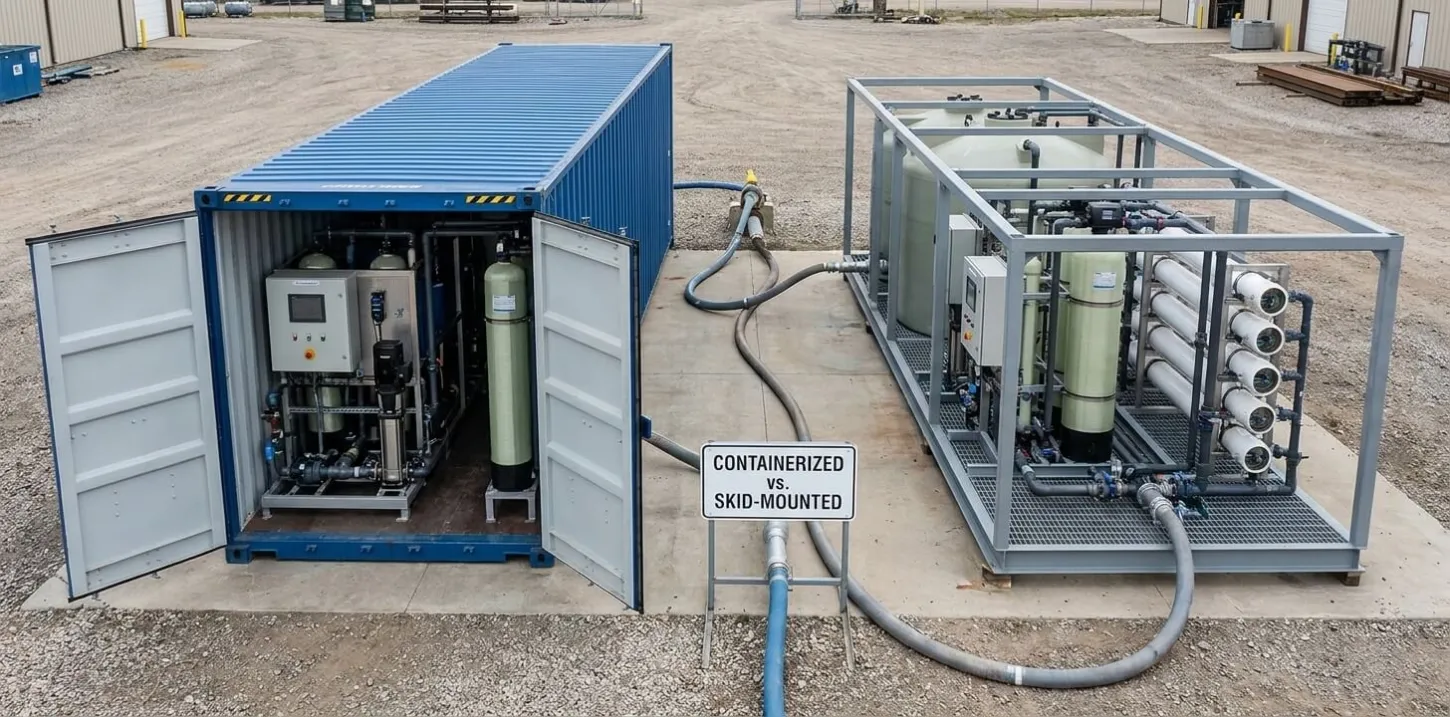
Engineering Question
Should a buyer choose a containerized water treatment system or a skid-mounted water treatment system?
Quick Answer
Choose a containerized water treatment system when the project benefits from faster site installation, outdoor protection, mobility, temporary operation, remote deployment, or reduced civil work. Choose a skid-mounted system when the site already has a suitable plant room, better maintenance access, adequate ventilation, or future expansion requirements.
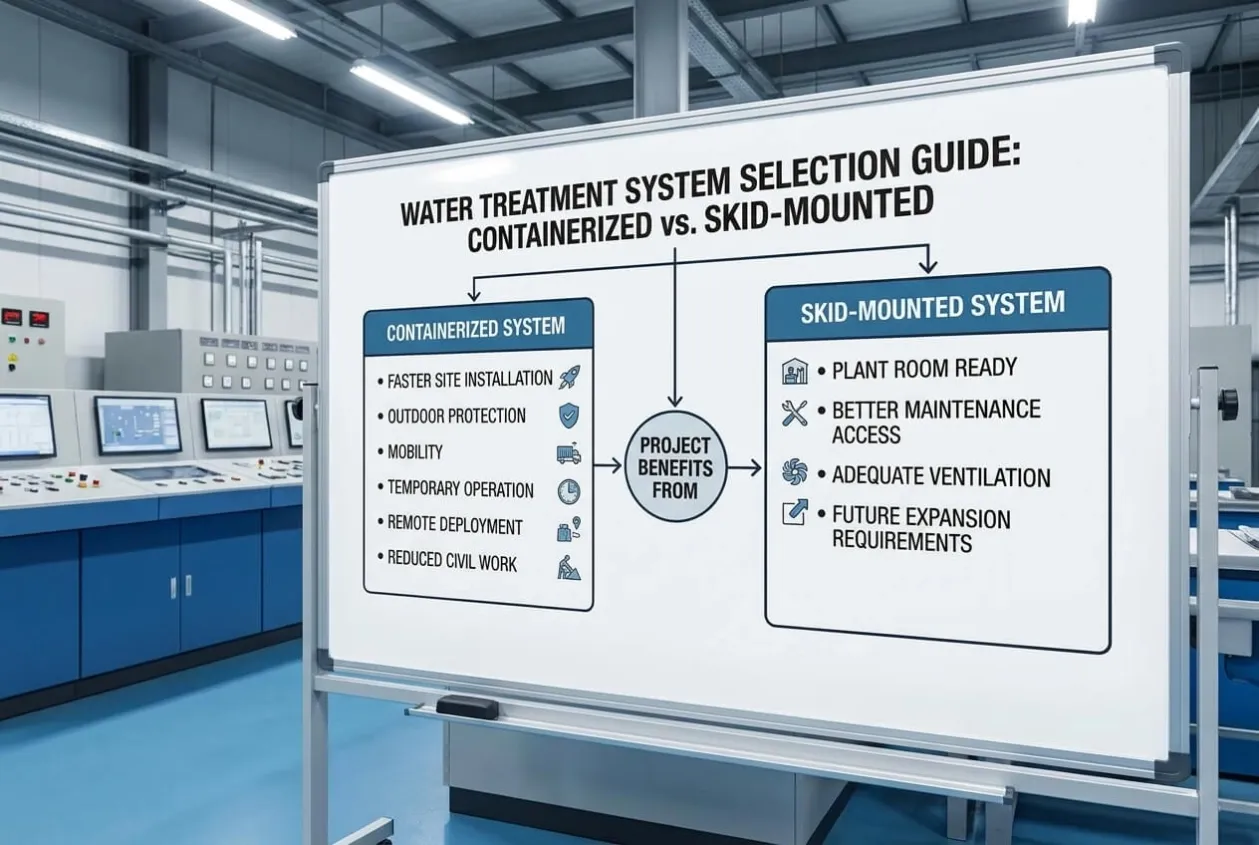
The decision should not be based on the package itself. It should be based on how the treatment system will be installed, operated, and maintained throughout its service life. Site conditions, climate, maintenance access, available utilities, and future operating requirements usually have a much greater influence on long-term reliability than whether the equipment is delivered inside a container or on an open skid.
Why Buyers Ask This Question
Many buyers are naturally attracted to containerized systems[¹] because they appear complete before they even leave the factory. Factory assembly, pre-commissioning, and simplified transportation make the project feel more predictable, particularly when installation time is limited or the project is located in a remote area.
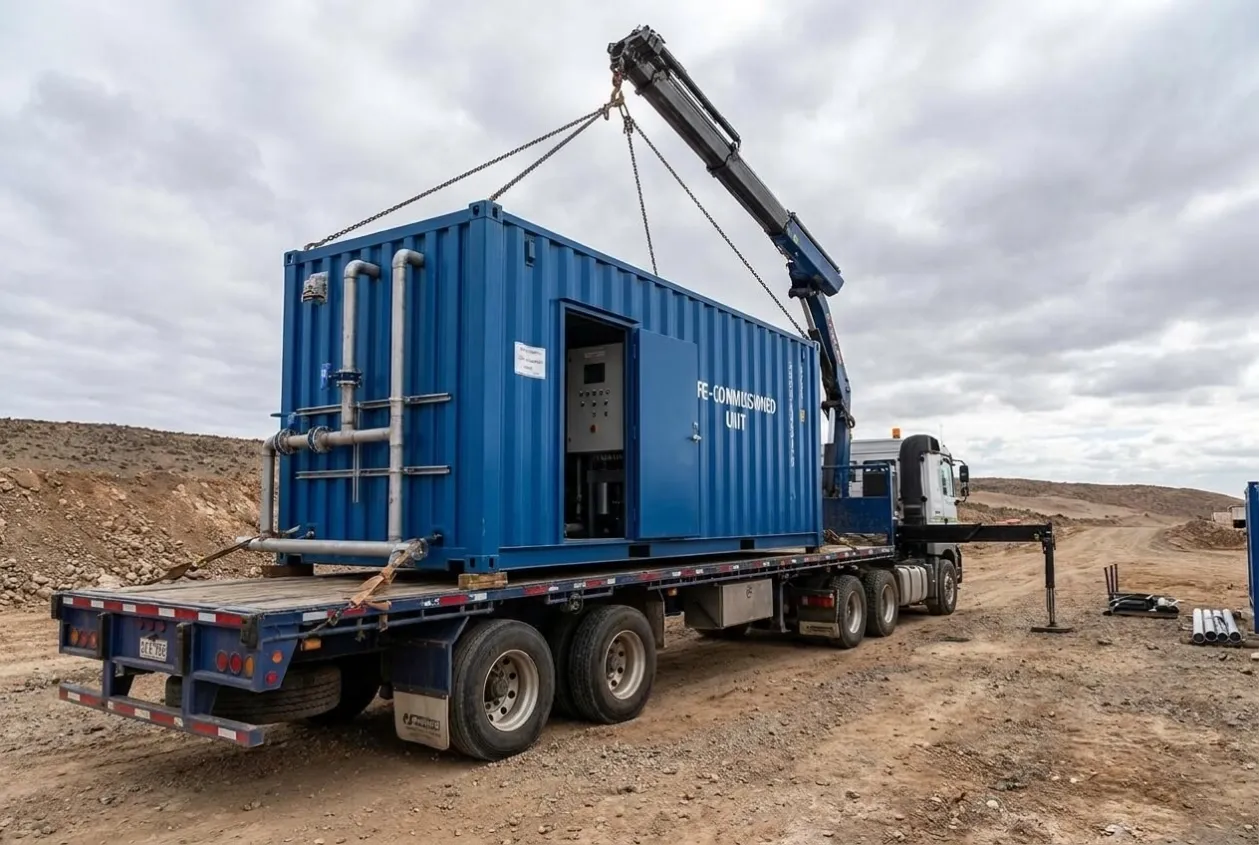
Those advantages are real, but they often encourage buyers to focus on the package before fully understanding the project itself.
- A containerized system does not eliminate engineering challenges. It simply moves more of those challenges inside the enclosure. Ventilation[²], maintenance access, drainage, lighting, chemical handling, and operator movement still need to be designed carefully because they determine how easily the plant can be operated long after commissioning.
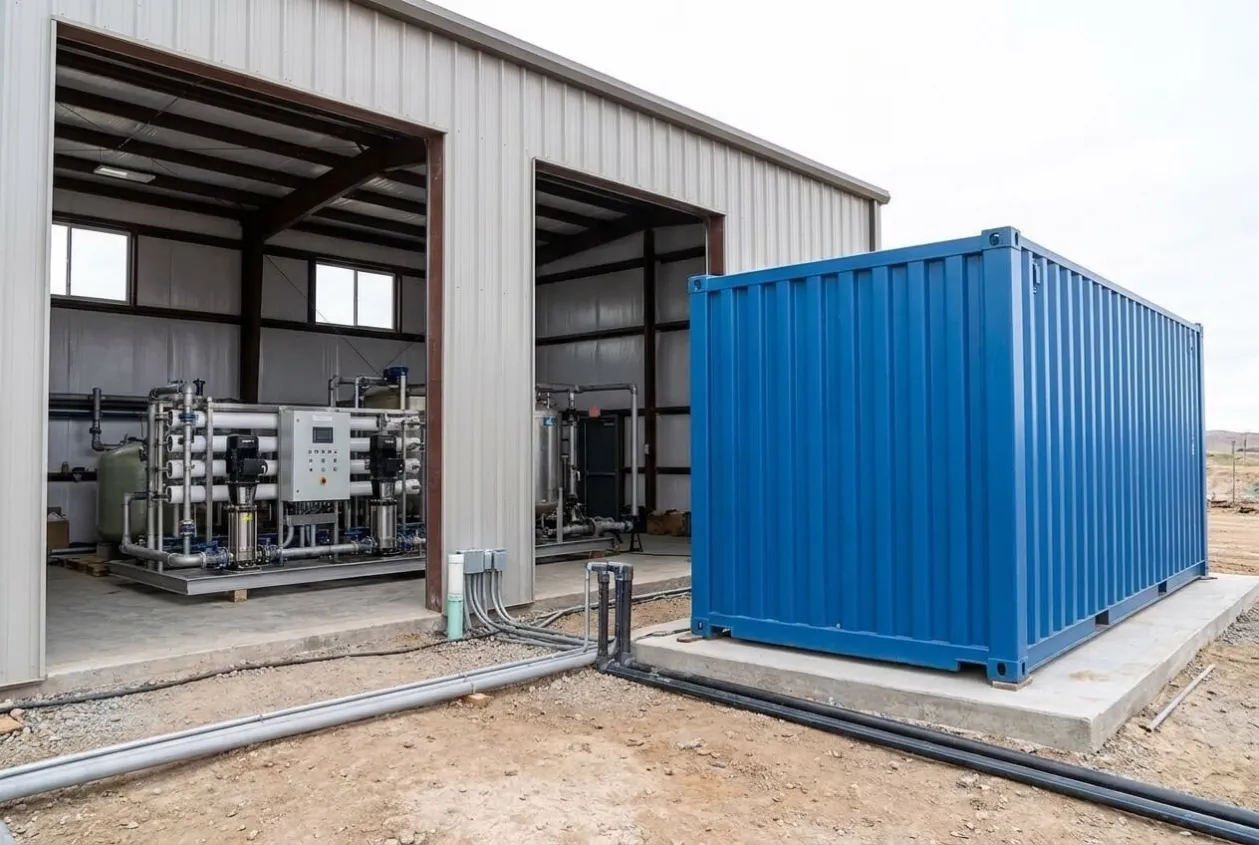
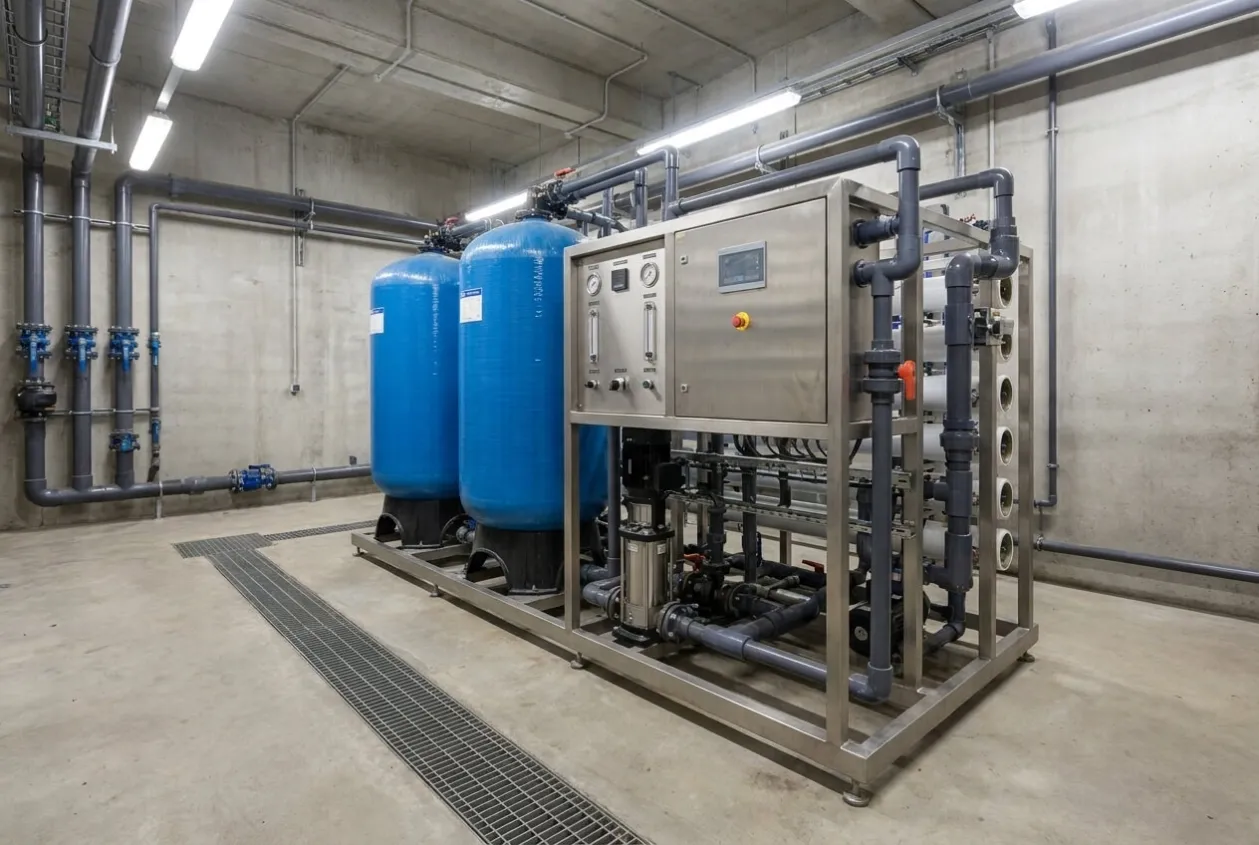
- A skid-mounted system[³] solves the same engineering problem differently. Instead of relying on the enclosure to provide the working environment, it relies on the surrounding plant room, allowing maintenance access, ventilation, and future modifications to be planned more openly where suitable facilities already exist. Good equipment layout should also consider safe access for operation and maintenance in line with OSHA guidance[⁴].
The package changes.
The engineering responsibility does not.
Engineering TipDo not choose between a containerized system and a skid-mounted system simply because one looks more complete. Choose the solution that best supports the way the treatment plant will actually operate throughout its life.
A Simple Selection Framework
Choosing between a containerized system and a skid-mounted system is usually one of the last engineering decisions rather than the first.
Experienced engineering teams rarely begin by asking how the equipment should be packaged. They begin by understanding where the treatment system will operate, how it will be installed, and how operators will maintain it throughout its service life. Once those questions have been answered, the packaging decision becomes much more straightforward because it supports the project instead of defining it.
A practical engineering review often follows a sequence like this.
Engineering Review Stage | Why It Matters |
|---|---|
Site Environment | Determines whether the treatment system must withstand outdoor exposure, local climate, limited utilities, or restricted working space. |
Installation Constraints | Reviews transportation, lifting, civil construction, and the resources available for installation. |
Maintenance Strategy | Confirms that operators can safely inspect, service, and replace equipment throughout the operating life of the plant. |
Future Expansion | Evaluates whether additional treatment capacity or process modifications are likely after commissioning. |
Packaging Decision | Once the operating requirements are understood, selecting a containerized or skid-mounted layout becomes a logical engineering outcome rather than an early assumption. |
Looking at the project in this order prevents a common mistake. Instead of selecting a package first and expecting the site to adapt to it, the engineering review allows the operating environment to determine the most suitable package.
Practical Comparison
Factor | Containerized System | Skid-Mounted System |
|---|---|---|
Site installation | Faster if interfaces are ready | It depends on the plant room and piping. |
Weather protection | Better for outdoor sites | Needs shelter if outdoors |
Mobility | Better | Limited |
Maintenance access | Can be tight | Usually easier |
Ventilation | Must be designed carefully | Easier in open layout |
Expansion | More limited | Usually easier |
Chemical safety | Needs careful layout | More flexible |
Shipping | Convenient standard package | May need multiple shipments |
Operator comfort | Depends on container design | Depends on room design |
The comparison above explains how the two package types differ, but experienced buyers rarely make their decision by comparing one row of the table at a time.
Instead, they usually return to the same question throughout the engineering review: Which solution will be easier to install, easier to maintain, and more practical to operate under the actual conditions of this project?
When the discussion stays focused on that question, the advantages and limitations of each package become much easier to evaluate because they are considered within the context of the project rather than in isolation.
Real Buyer Example
A remote mining-related project needed water treatment equipment quickly, with limited building infrastructure. A containerized system was the more practical choice because most of the mechanical, electrical, and automation work had already been completed before shipment. Once the foundations and utilities were ready, the installation required much less site coordination, and the system could be commissioned sooner.
In another factory project, the buyer already had a utility room with good drainage, ventilation, crane access, and sufficient space for future expansion. Packaging the treatment system inside another enclosure would have added very little value because the building already provided the operating environment that the container was designed to create. A skid-mounted layout gave operators easier access to pumps, valves, filters, membranes, and chemical tanks while leaving enough flexibility for future modifications.
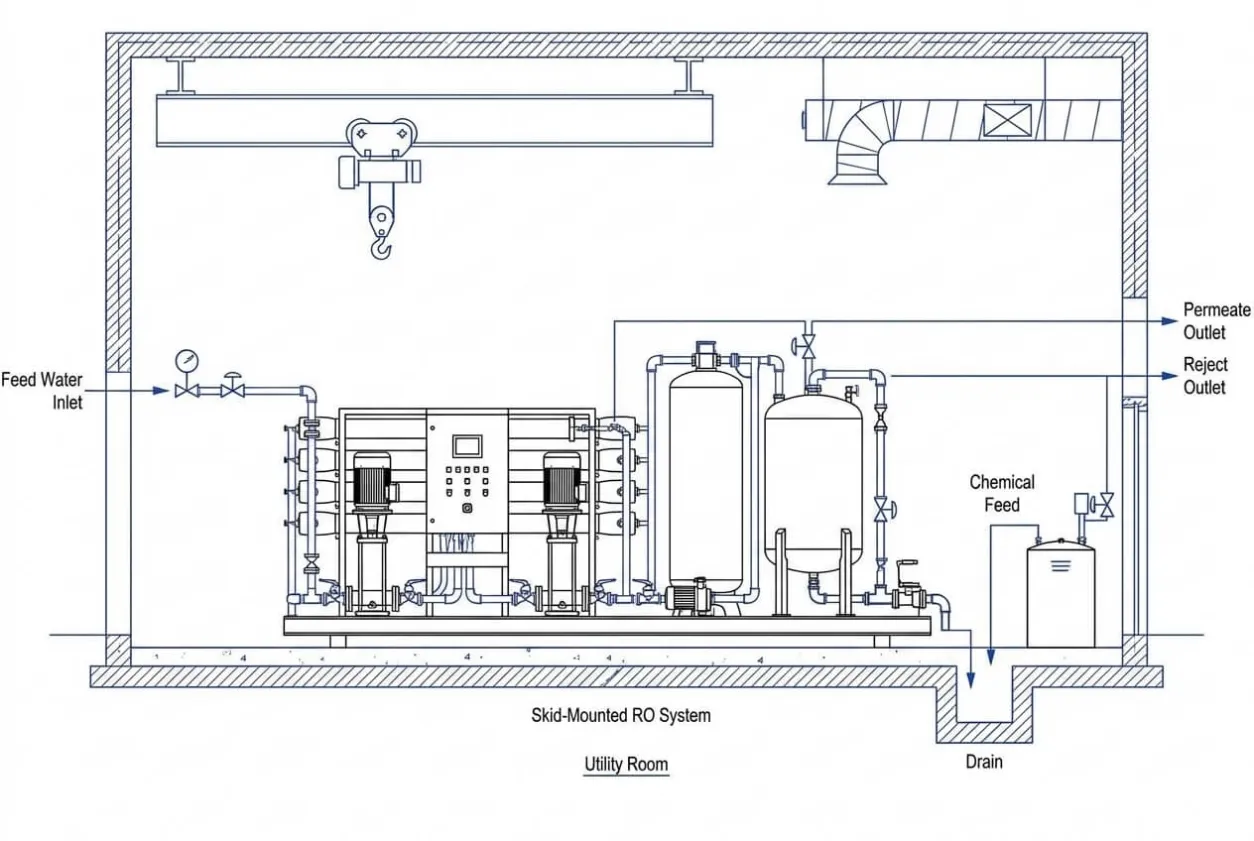
The treatment technology remained the same in both projects.
The packaging changed because the site conditions were different.
Common MistakeBuyers sometimes assume containerized systems require no site work. In reality, they still need foundations, power, inlet and outlet piping, drainage, chemical handling, ventilation and safe operator access before commissioning can begin.
Key Questions Before Choosing
By this stage of the engineering review, the answer is often becoming clear because the discussion has gradually shifted away from the package itself and towards the operating requirements of the project.
Rather than asking whether a container or a skid is generally better, buyers should confirm whether the proposed layout genuinely supports the way the treatment plant will be installed, operated, and maintained over the coming years.
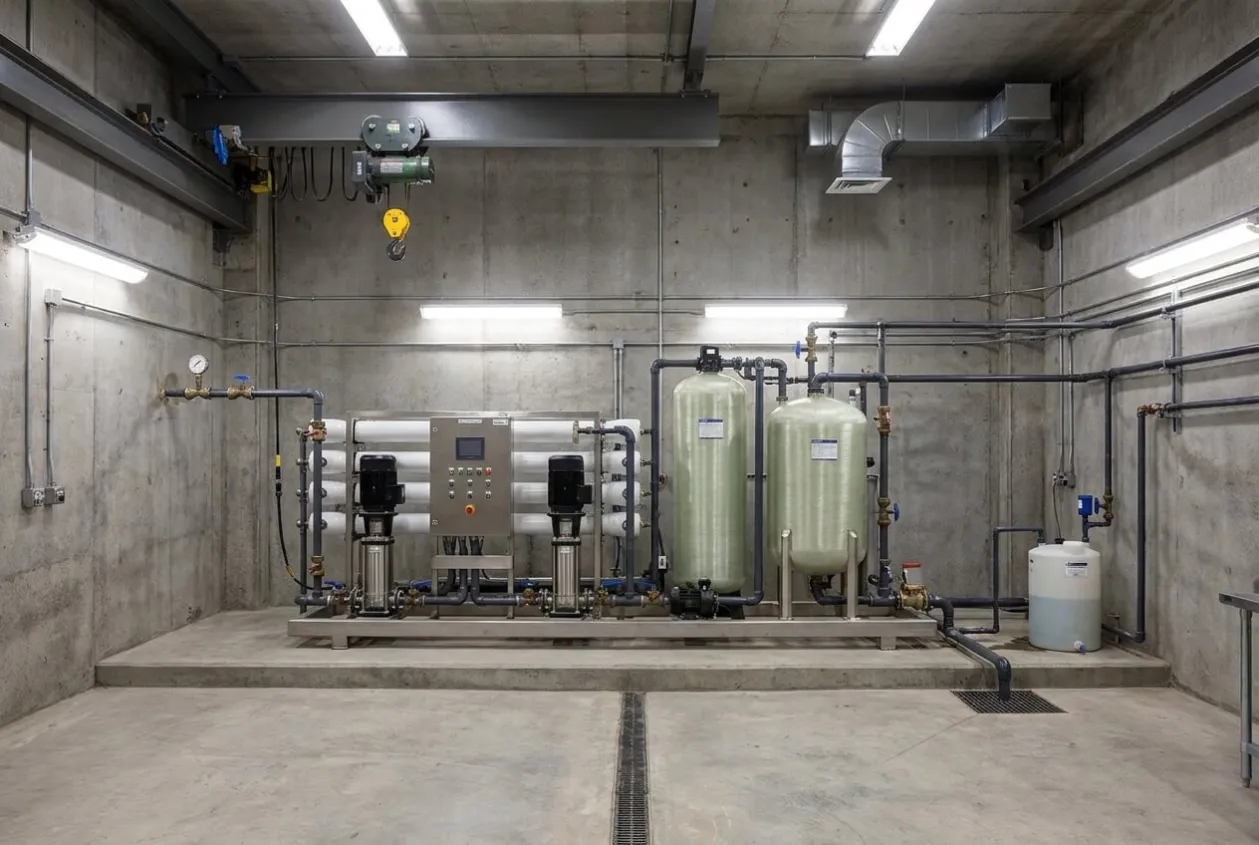
Questions such as these usually provide a much clearer basis for the decision.
- Is the system indoor or outdoor?
- What is the local climate?
- Is there enough space for maintenance?
- Are chemicals stored inside or outside the container?
- How will heat be removed?
- How will wastewater, reject water, and drains be handled?
- Can operators access filters, membranes, pumps, and instruments safely?
- Is future expansion expected?
- Is the project permanent or temporary?
- Are there transport restrictions?
When these questions have been answered, the packaging decision usually becomes much more straightforward because it is supported by the realities of the project rather than by personal preference.
Solution Path
Choose containerized when
- The site is remote.
- Installation time must be reduced.
- Outdoor protection is needed.
- The system may need relocation.
- Civil construction must be minimized.
- The buyer wants factory pre-assembly and testing.
Choose skid-mounted when:
- A plant room already exists.
- Operators need easy maintenance access.
- Expansion is likely.
- The system includes large tanks.
- Ventilation and chemical storage need more space.
- The buyer wants a flexible layout.
Field ObservationContainerized systems rarely create operational problems because they are installed inside a container. Problems usually appear when the internal layout leaves too little space for routine maintenance. A compact design may look efficient during a design review, but technicians quickly discover its limitations when replacing filters, removing RO membranes or servicing pumps becomes unnecessarily difficult.
If This Was My Project
Before approving either layout, I would spend less time looking at the equipment arrangement and more time reviewing the maintenance sequence. So list the following questions for your work:
- Can one technician replace cartridge filters safely without removing surrounding pipework?
- Can RO membranes be withdrawn without moving adjacent equipment?
- Can dosing pumps be serviced without climbing over pipes or chemical tanks?
- Will electrical equipment remain within its recommended operating temperature during summer?
- If a chemical spill occurs, where will it be contained and how will operators deal with it safely?
These questions rarely appear on equipment datasheets, yet they often determine whether the treatment system remains practical to operate throughout the next ten or twenty years.
The package itself is only one part of the design.
How people interact with that package every day determines whether the design continues to perform as intended.
Related Questions
- What are the advantages of containerized water treatment systems?
- Is a skid-mounted RO system better for factory installation?
- What site preparation is needed for containerized water treatment?
- Can containerized wastewater treatment systems operate outdoors?
- How much maintenance space does a water treatment system need?
Conclusion
Containerized systems are well suited to projects that require rapid deployment, outdoor installation, or reduced site construction. Skid-mounted systems are often the better choice where suitable facilities already exist and long-term maintenance, accessibility, and future expansion are priorities.
The better decision is rarely determined by the package itself. It is determined by how well that package supports the operating environment, the maintenance strategy, and the long-term objectives of the project.
Beyond This Question
If another engineer reads this six months from now, what practical lesson will still be valuable?
The best packaging solution is not necessarily the most compact or the most complete. It is the one that allows the treatment system to be installed efficiently, maintained safely, and operated reliably under the real conditions of the site.
Related Articles:
The control panel inside either option is built to your I/O list — see the water treatment control panel scope .
Need help specifying or sourcing this for your project? Request a quote - we reply within 1-2 working days with a technical review.