
Oct 9, 2026Buying Guides
Enclosure Vibration Isolation Guide: Spec the Base Before the Cabinet Fails
Vibration cracks seals, loosens terminations, and walks enclosures off their feet. Spec isolation mounts and a structural base so the cabinet — and what's inside — survives.
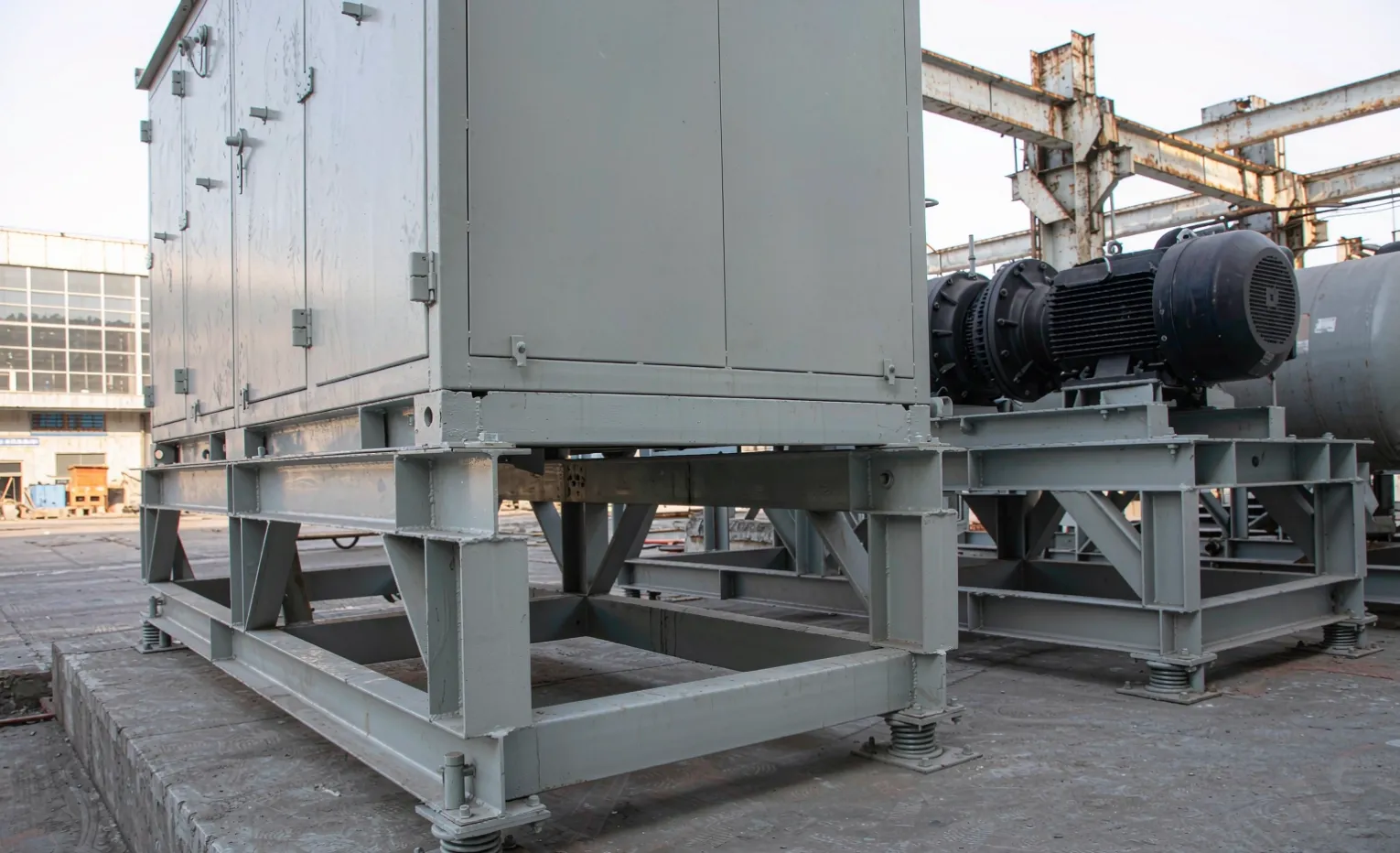
Vibration is the silent killer of enclosures. It doesn't show up on the spec sheet and it doesn't fail on day one. It works on the cabinet for months — cracking the gasket, backing fasteners out of their holes, and slowly walking a freestanding enclosure across the floor—until something opens up or a termination goes loose. If your enclosure lives on a skid, near a pump, or against a machine frame, isolation belongs in the RFQ, not the afterthought.
Quick boundary: we supply the enclosure and the base frame as part of the panel or box build. We're a sourcing partner and panel-build shop, not the machine's dynamic engineer, so we spec the mount for the weights and frequencies you give us—we don't model your whole machine. What we own is making sure the cabinet and everything bolted inside it stays put.
Why vibration wrecks enclosures
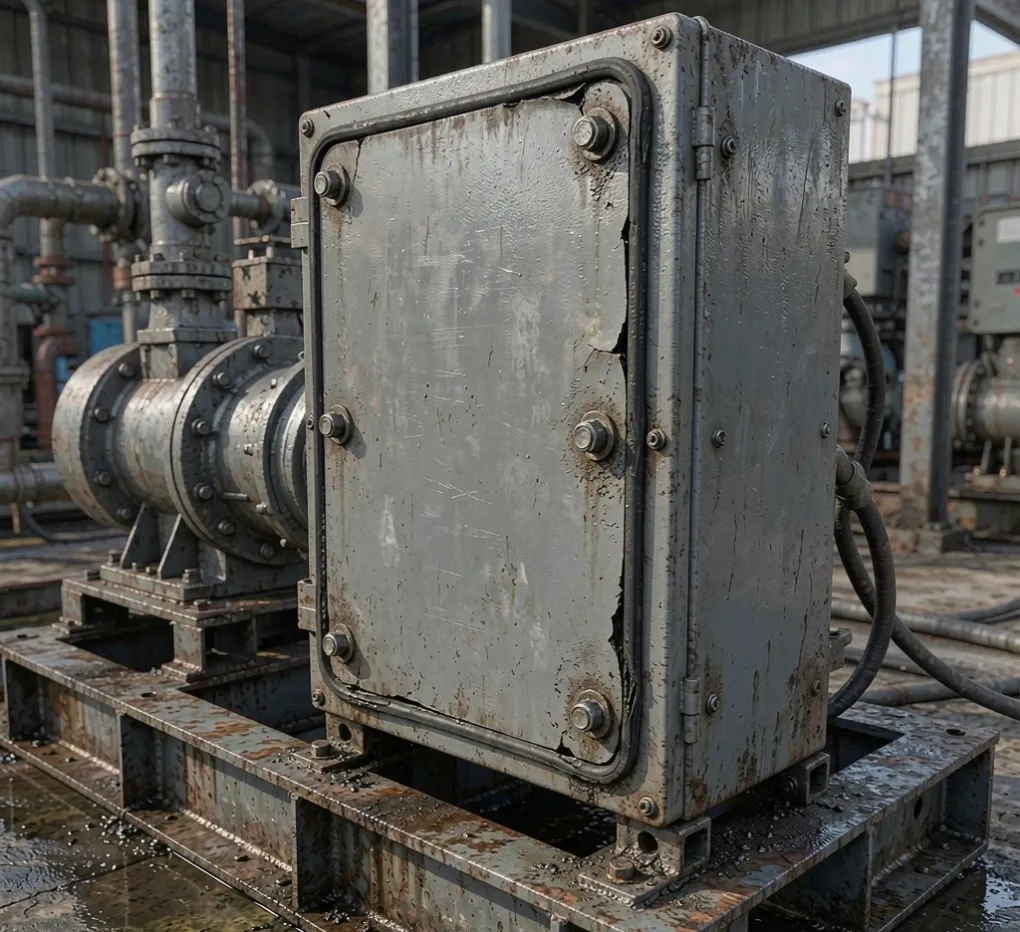
Vibration is cyclic stress, and enclosures are full of things that hate cyclic stress:
- Seals and gaskets lose their set and start weeping—the IP/NEMA rating you paid for quietly dies.
- Fasteners back out. A hinge screw at a resonance frequency can loosen in weeks.
- Terminations and relays chatter. Loose lugs are a heat and arc risk; relays drop out on the wrong frequency.
- Electronics on soldered boards develop cracks you can't see until they fail.
None of this is a quality problem with the box. It's a mounting problem.
What to put in your RFQ
Isolation is a spec, not a guess. Four numbers get you most of the way there.
Cabinet weight and center of gravity
The mount carries the loaded cabinet—steel, doors, devices, and cable. Give us the real weight, not the empty-shell number, and say where the mass sits. A top-heavy cabinet needs a wider base than its footprint suggests.
Disturbance frequency
What's shaking it? A 1,750 rpm motor is ~29 Hz. A slow agitator might be 2–3 Hz. The mount has to beat that frequency, not match it.
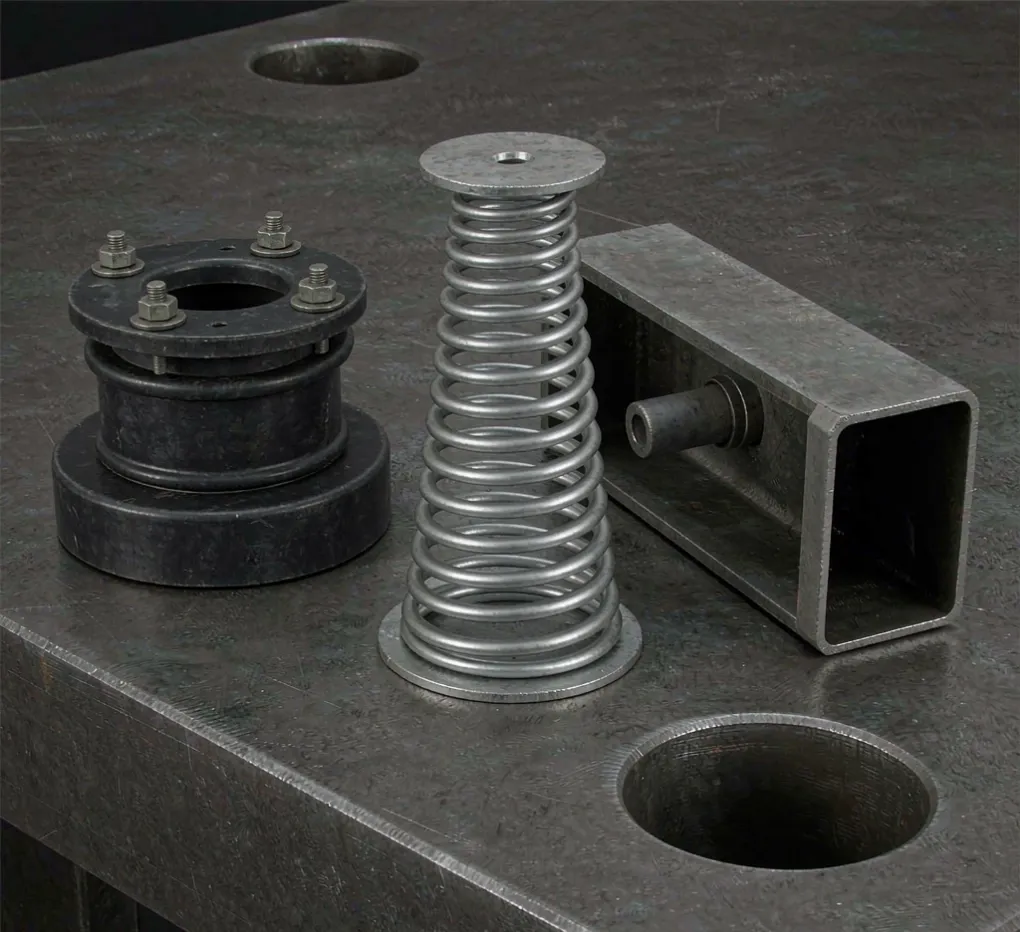
Isolation mounts
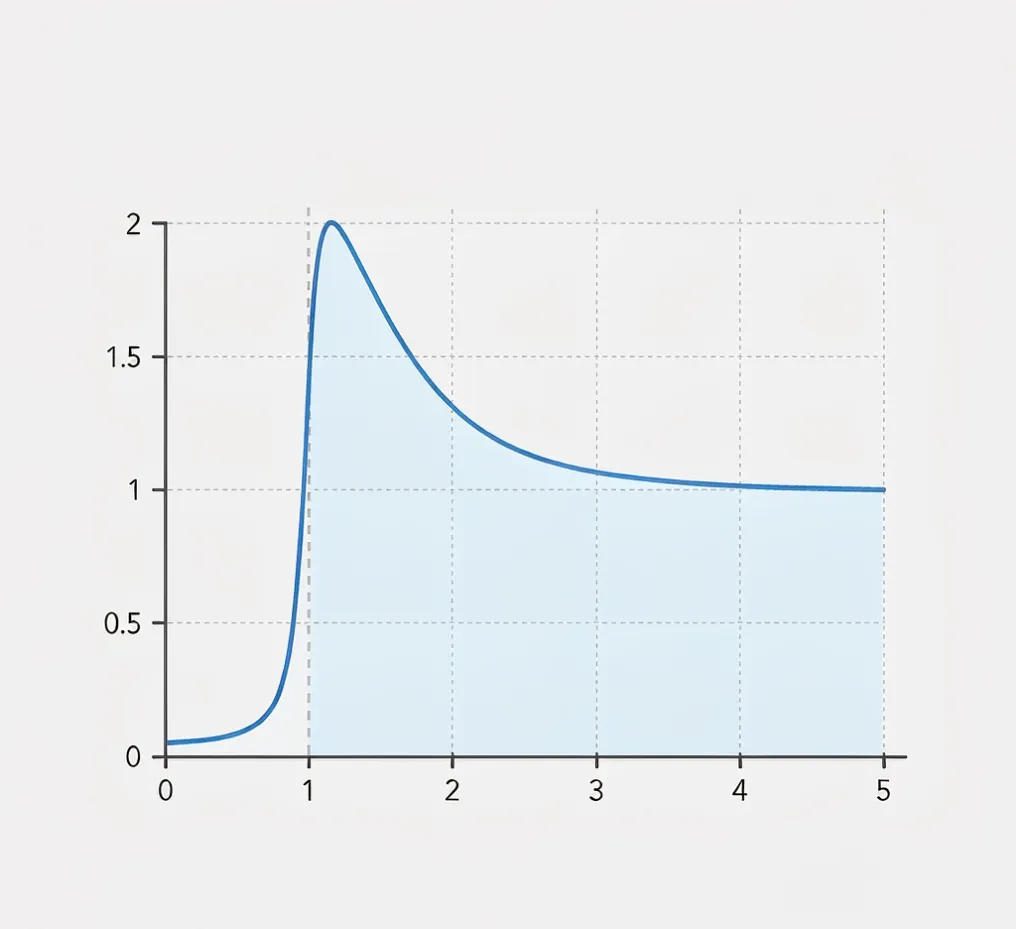
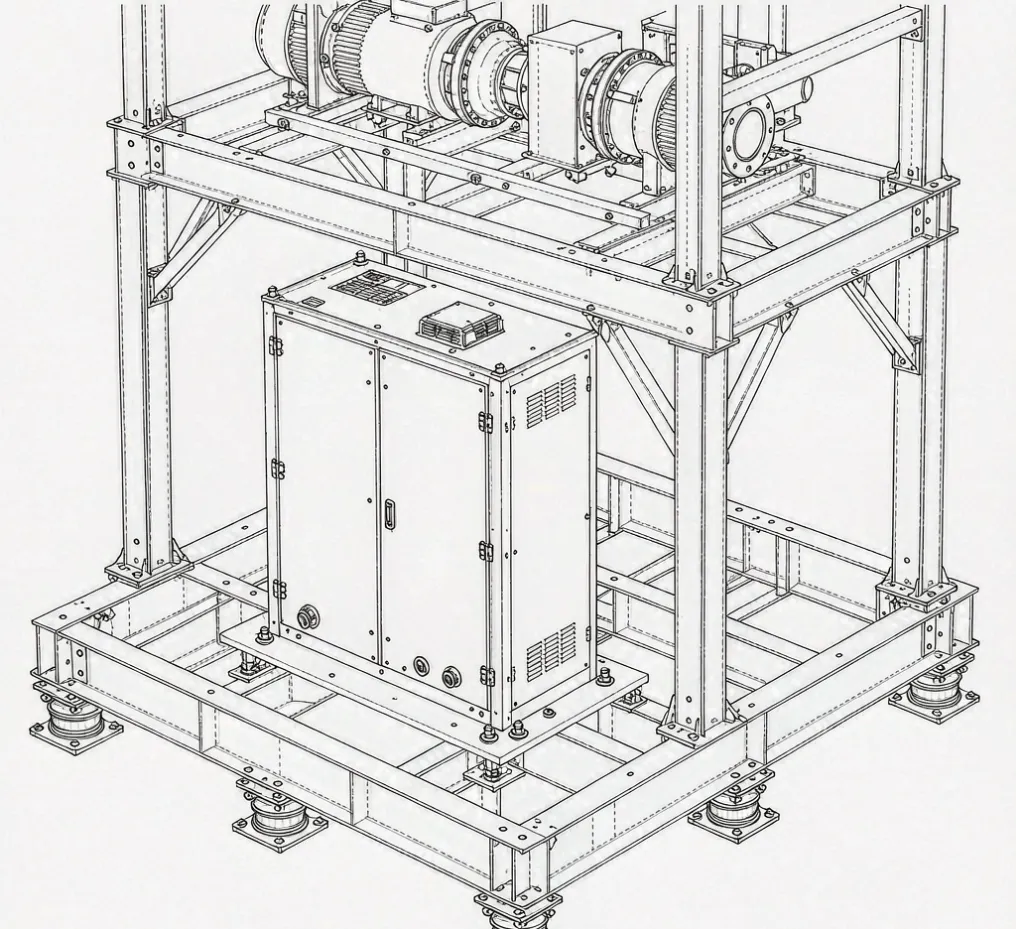
Here's the rule that matters: transmissibility—the force that actually reaches the cabinet—drops hard once the mount's natural frequency is well below the disturbance. As a working target, you want the disturbance frequency to be at least √2 times the mount's natural frequency. Done right, good mounts cut transmitted force by roughly 80–95%. Get it wrong and you build a resonance amplifier instead of an isolator.
Structural base and material
A flimsy base just transmits the shake. We build a rigid base frame, anchor it, and—for outdoor or washdown duty—use 304 or 316 stainless or a NEMA 4X-rated enclosure so the mount doesn't become the corrosion point.
How to choose the mount
Mount type | Best for | Watch out for |
|---|---|---|
Rubber pad / elastomer | Higher-frequency shake, lighter boxes | Stiffens and ages; re-check after a few years. |
Spring isolator | Low-frequency, heavy cabinets | Can be tall; needs a restraining base |
Wire-mesh isolator | Harsh, oily, wide-temperature sites | Cost: needs correct load rating |
Rigid base frame + pads | Skid-mounted packages | Only as good as the pad under it |
A spec we fixed
A water-treatment integrator bolted a control enclosure straight to a pump-base skid. At 1,750 rpm the whole cabinet found a resonance, and, within three months, terminations on the VFD input loosened and the door gasket wept. We added a structural base frame and tuned isolators so the cabinet's natural frequency sat well below the pump speed. Retightening at commissioning, then again at six months, showed nothing had walked. The pump didn't change—the mount did.
FAQ
Do I need isolation if the panel is just on the floor?
If it's near rotating equipment—a motor, a pump, a compressor—yes. "On the floor" doesn't mean "not shaking." Distance helps; isolation is what actually works.
What's the rule for picking the mount?
Get the mount's natural frequency well below the disturbance. As a target, disturbance frequency ≥ √2 × mount natural frequency, aiming for transmitted force under about 20% of input.
Rubber or springs?
Rubber for higher-frequency, lighter shake. Springs for low-frequency or heavy cabinets. Wire mesh when the site is oily, hot, or wide-temperature.
Can you supply the base frame?
Yes—it's part of the enclosure package. Send the cabinet weight, center of gravity, and the disturbance frequency, and we'll spec the frame and mounts together.
Does isolation hurt the IP/NEMA rating? Not if it's done right. The seal stays intact; we isolate the structure, not the door. A bad mount that lets the cabinet shift is what breaks the rating.
What's the lead time?
An enclosure runs a 5-piece minimum and about 15 days. Add a custom base frame and tuned mounts and plan a few more days on top.
Buyer takeaway
Vibration fails enclosures slowly and expensively. Treat isolation as a spec: give us cabinet weight, center of gravity, and disturbance frequency; pick mounts whose natural frequency sits well below the shake; and put it all on a rigid base frame. Do that and the cabinet—and the drives, terminations, and seals inside it—rides out the machine instead of fighting it.
Related guides
If the cabinet holds a servo or VFD panel, also read our servo control panel design guide — a good layout and a good mount are two halves of the same reliability story.
We cover the broader build-and-ship process in our electrical enclosure supplier's guide to sourcing from China, and our electrical enclosures solution page shows what we build and ship.
Specifying a skid- or machine-mounted enclosure? Upload your cabinet weight, center of gravity, and disturbance frequency for a mount spec — we'll return a base-frame and isolator recommendation you can drop into the RFQ.