
Sep 12, 2026
Electrical Enclosure RFQ Guide: How to Specify and Request a Quote
What to put in an electrical enclosure RFQ—dimensions, material, IP/NEMA rating, cooling, certification, quantity—so you get an accurate, fast, comparable quote instead of three rounds of questions.
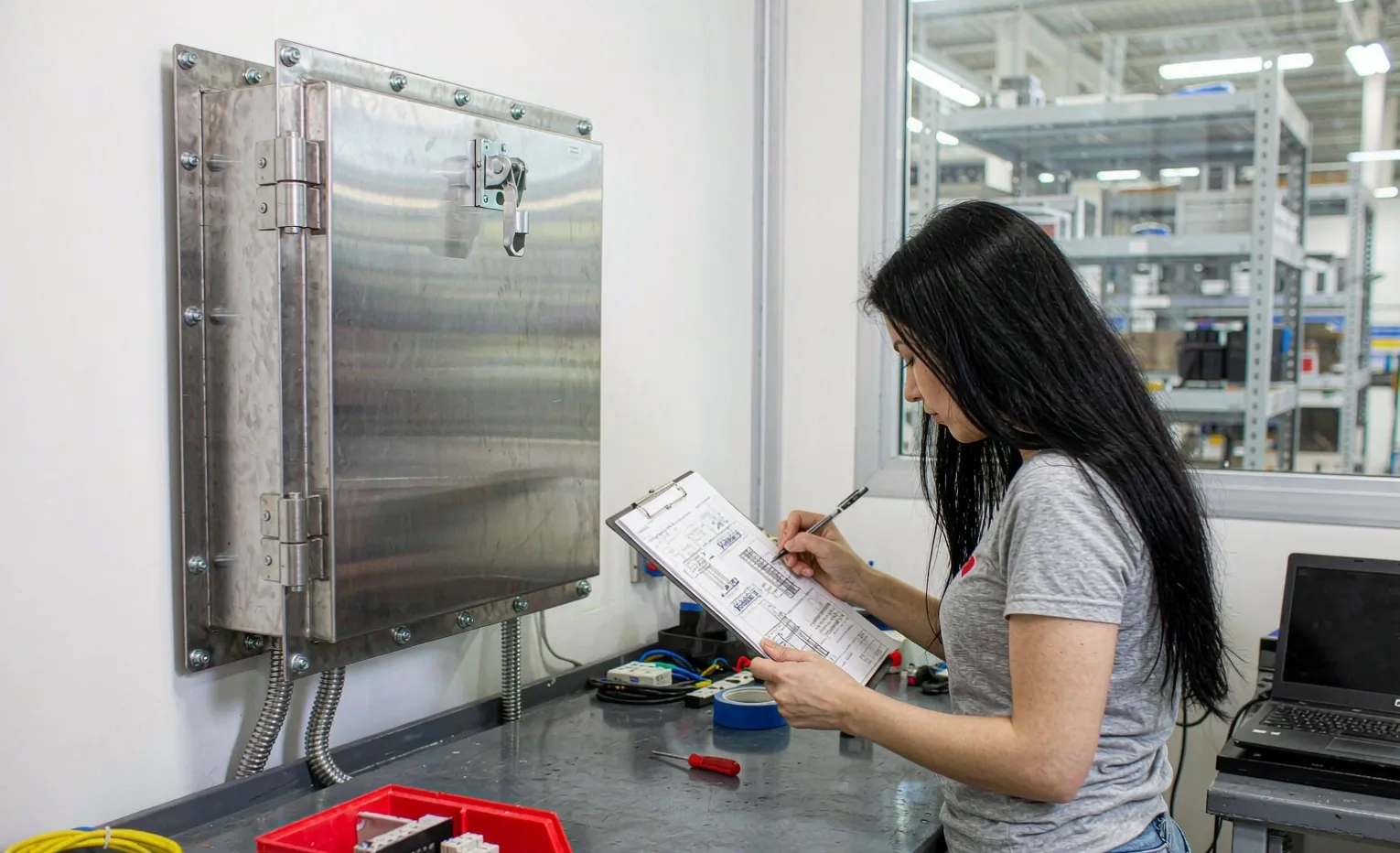
Why a vague enclosure request costs you two weeks
You send a one-line email — "need a stainless enclosure, IP65, 20 of them" — and three days later you get three supplier questions back, then a quote that does not match what your panel shop expected. The bottleneck is almost never the build shop. It is the request.
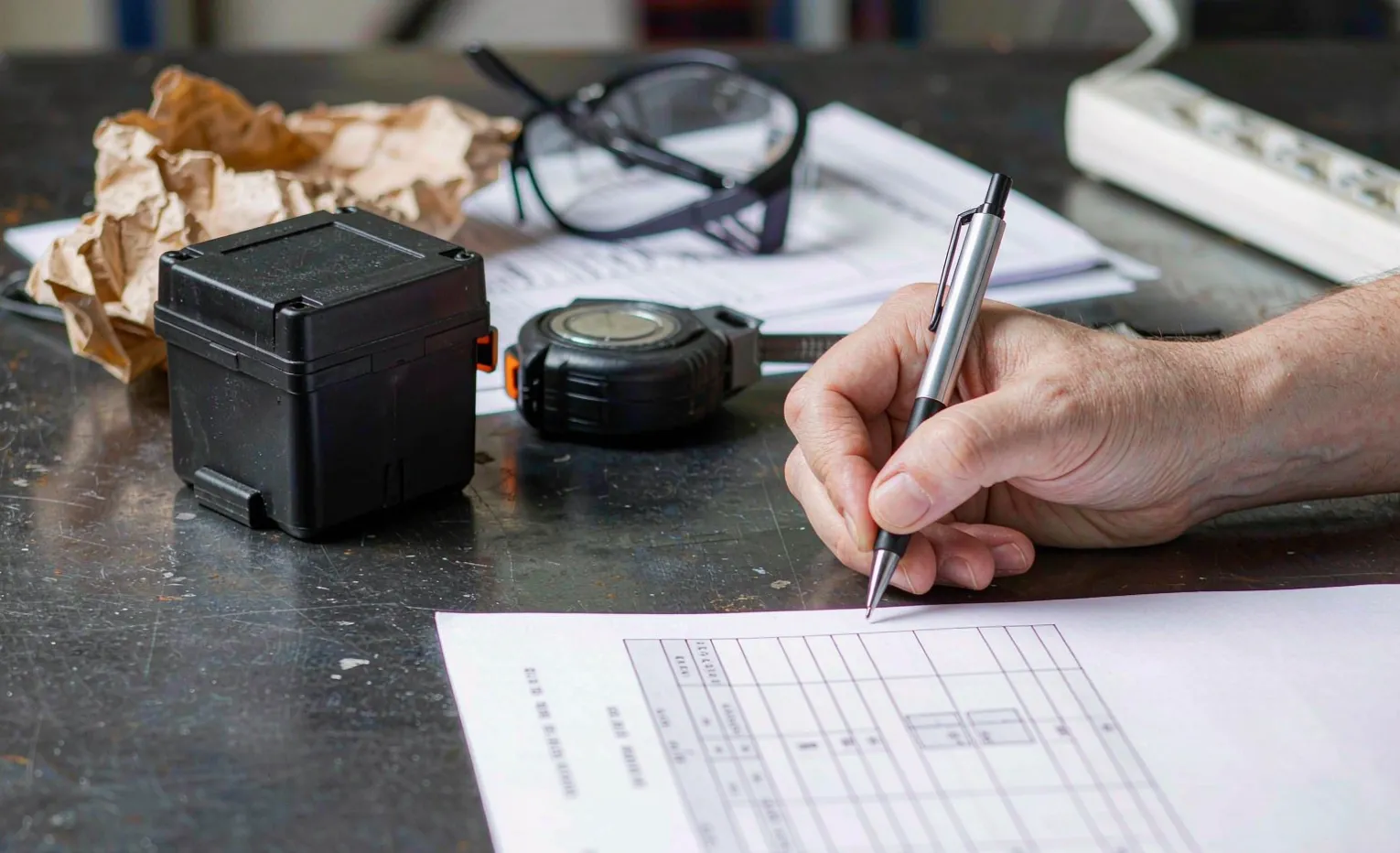
An enclosure request for quote (RFQ) is the single document that decides whether your quote is accurate, fast, and comparable across suppliers. This guide walks through the nine data points every enclosure RFQ should carry, the mistakes that trigger delay, and exactly what happens after you send it. If you have not chosen a material or rating yet, start with our enclosure sourcing guide before writing the RFQ.
Buyer decision: Treat the RFQ as a spec, not a wish. Every blank field becomes a question, and every question becomes a day of delay.
The nine data points every enclosure RFQ must include
A complete RFQ removes guesswork. Here is what to put in it, and why each field changes the price or the lead time.
1. Dimensions and mounting style
State the external height × width × depth in millimetres, and whether the unit is wall-mounted, floor-standing, or pole-mounted. Wall-mount and floor-standing share almost nothing in their internal layout rules, so this single line changes the whole build. If you only have a panel cutout, say so — your supplier can propose a standard size that fits the opening.
2. Material
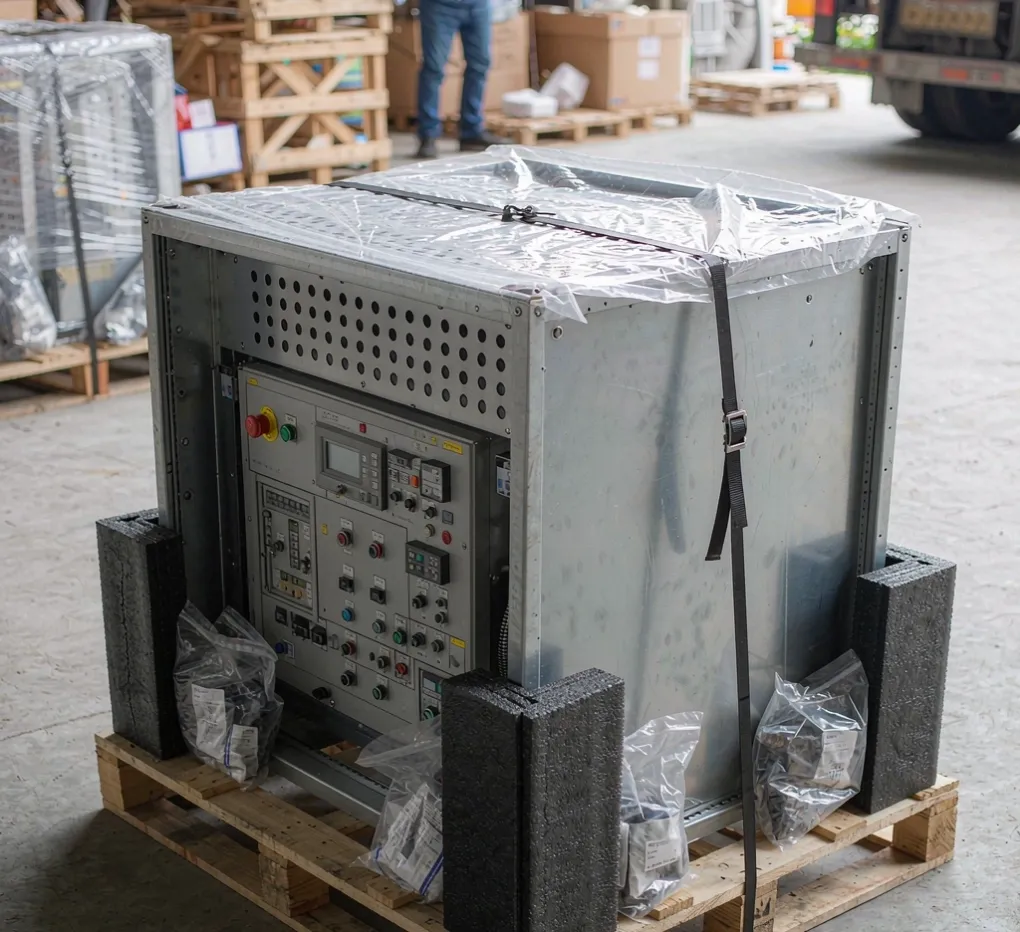
Pick from the four we actually build: carbon steel (painted), galvanized steel, 304 stainless, or 316 stainless. We do not build aluminium enclosures — if your spec says aluminium, expect a substitution question. Material drives both corrosion resistance and cost, so name it explicitly. Our galvanized vs stainless cost comparison breaks down the trade-off by environment and lifecycle.
3. Ingress protection (IP / NEMA)
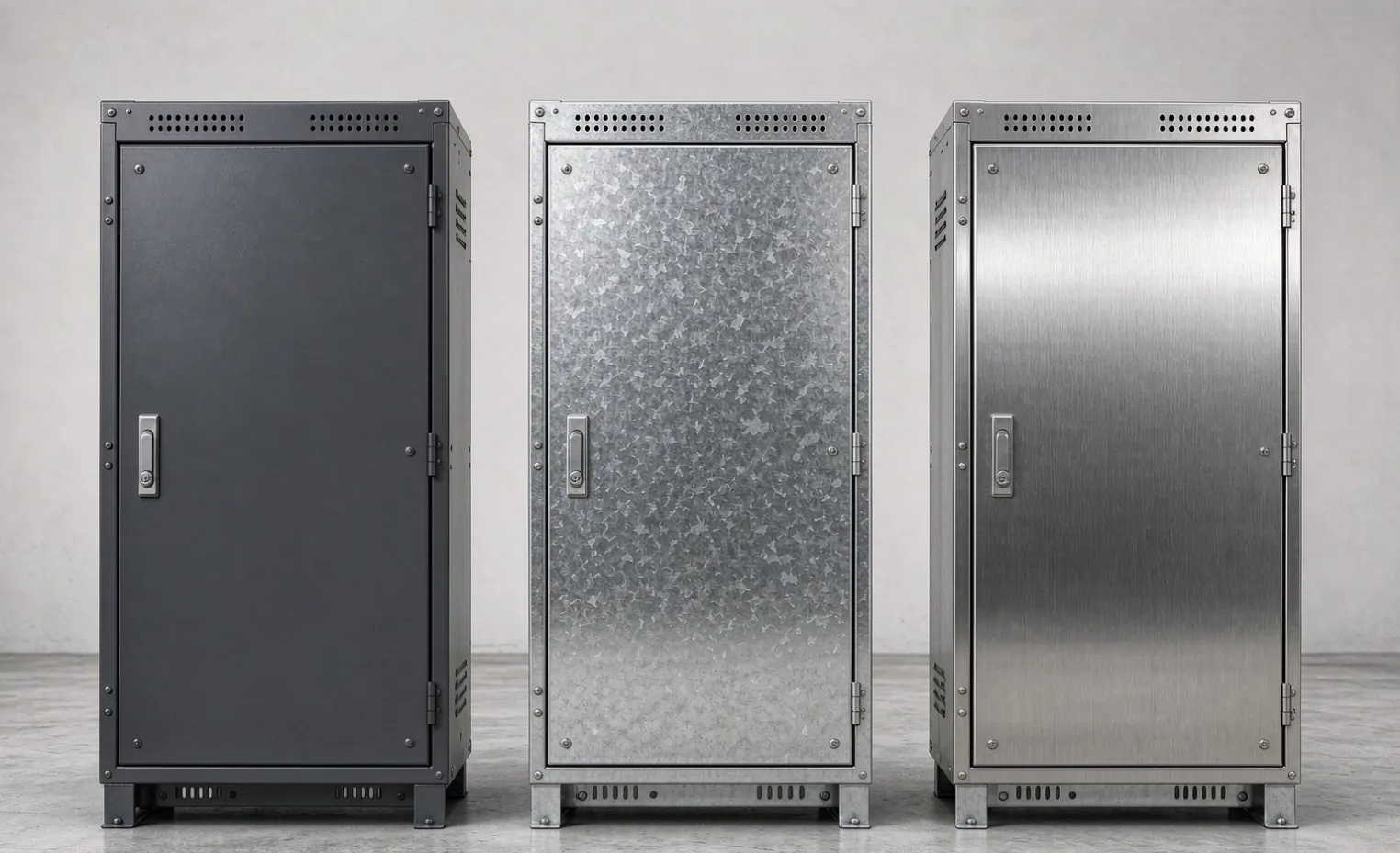
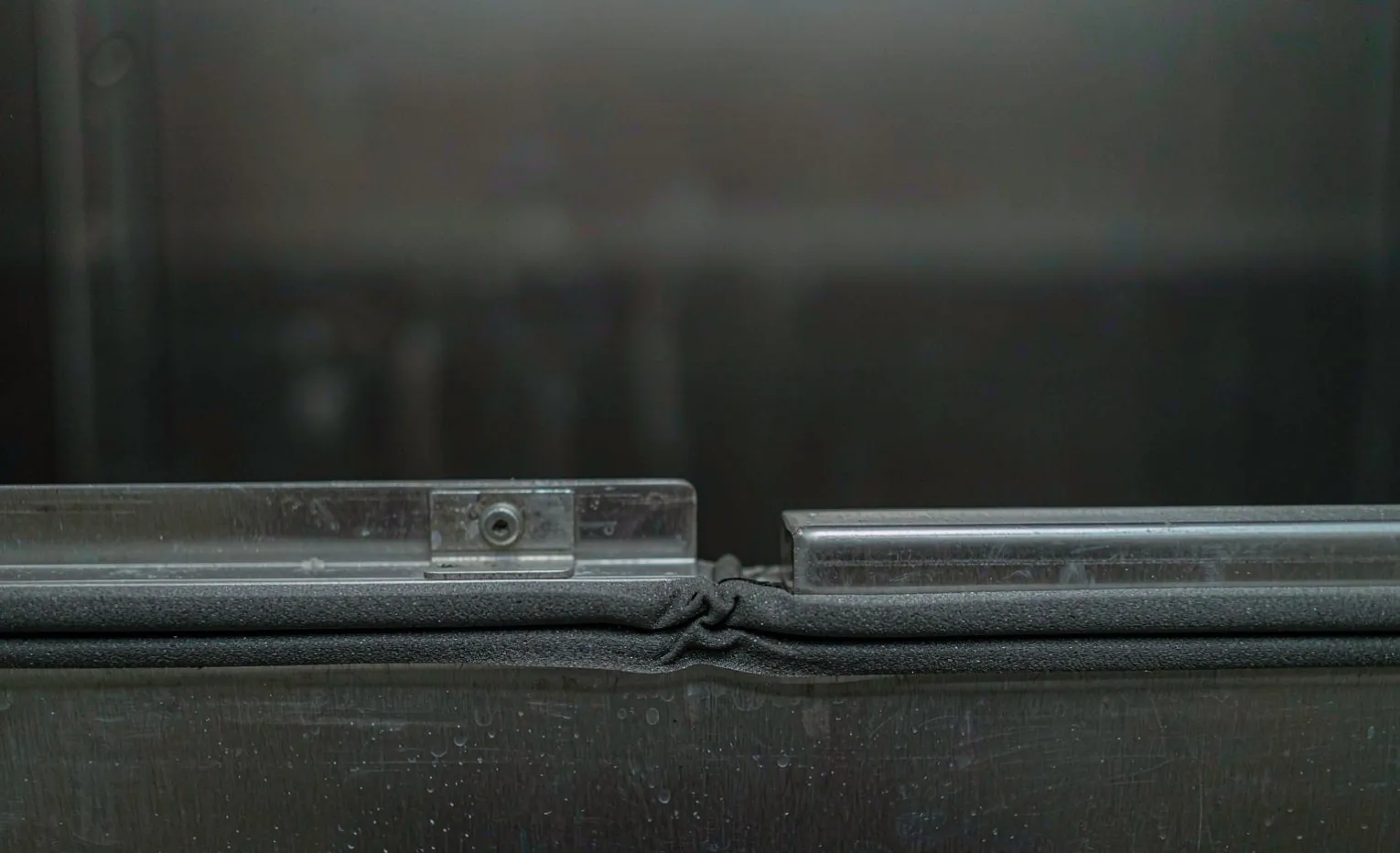
State the rating you need: IP65 for dust-tight and water-jet resistance, or NEMA 4X for outdoor and corrosive duty. NEMA 4X is the usual target for outdoor and washdown sites. If you are unsure which rating your environment needs, our enclosure selection guide maps environment to rating. Get this wrong and the seals — not the box — fail first.
4. Thermal load and cooling
List the heat your components generate (watts) or name the biggest heat sources — drives, power supplies, relay banks. Cooling method (fan filter, heat exchanger, air conditioner, vortex) changes the cutout and the door layout. Our enclosure cooling selection guide sizes each option against your heat load. Adding cooling after the box is built means a new door cutout and a re-quote.
5. Certifications
Say UL, CE, or both. We source UL-listed build shops per order — UL is not a stock item, it is a per-project match to a listed facility. Naming the certification up front avoids a re-quote later. See how UL-listed sourcing works in China. For the standard itself, the UL 50 / NEMA enclosure ratings page is the reference buyers cite.
6. Internal layout and components
Decide who supplies the internals. If you send your own components (customer-furnished parts), the build shop only fabricates the enclosure and wires to your drawing. If you want turnkey, list the component brands — we supply Mitsubishi, Siemens, ABB and other major PLC, drive, and HMI brands as a distributor. This single choice splits the quote into "fabrication" versus "fabrication plus distribution."
7. Quantity and lead time
Our enclosure minimum order is five units, with about a 15-day build. Components from our distribution stock ship in 3–5 days. State the quantity and your needed date; the quote reflects whether expediting is even possible. Ordering one unit when you need five either returns a one-off premium or a request to raise the quantity.
8. Finish and painting
For carbon steel, name the coating (powder coat colour, zinc plating). For stainless, state whether a brushed or polished finish is required. This is where outdoor UV and chemical exposure decide longevity — a marine site and a dry warehouse do not get the same finish.
9. Documentation
State what you need back: manufacturing drawings, as-built drawings, bill of materials, test records. Our pre-delivery checklist shows what a complete package looks like. Documentation is cheap to specify and expensive to reconstruct after the fact.
RFQ template you can copy
Field | What to write | Why it matters |
|---|---|---|
Dimensions (H×W×D) | e.g. 1200×800×400 mm | Drives layout and shipping |
Mounting | Wall / floor / pole | Changes the build entirely |
Material | Carbon / galvanized / 304 / 316 | Cost + corrosion |
Rating | IP65 / NEMA 4X | Seal and test method |
Heat load | Watts or component list | Cooling method |
Certification | UL / CE | Per-order match |
Components | Furnished / turnkey + brands | Scope of supply |
Quantity | e.g. 5 / 20 | MOQ and lead time |
Finish | Coating / polish | Longevity |
Docs | Drawings / BoM / test | Handover |
Environment-to-specification worksheet
Most RFQ delays come from a mismatch between the site and the spec. Use this map to pre-fill fields 2–4 before you write the RFQ.
Site condition | Material | Rating | Cooling |
|---|---|---|---|
Indoor, dry warehouse | Carbon steel, painted | IP54 | None / FFU |
Outdoor, temperate | Galvanized or 304 | NEMA 4X | FFU or heat exchanger |
Coastal / chemical | 316 stainless | NEMA 4X | Heat exchanger or AC |
Washdown (food / pharma) | 304, polished | NEMA 4X | Sealed heat exchanger |
Hot plant, 40 °C+ ambient | 304 / 316 | NEMA 4X | Air conditioner |
Engineering note: The two fields that cause the most re-work are material grade and heat load. Get those two right and most delays disappear.
Mistakes that delay your quote
- "Stainless" without a grade. 304 and 316 are not interchangeable near seawater or chemicals. Name the grade.
- Rating left blank. Without IP/NEMA, the build shop guesses — and guesses wrong on seals.
- No heat load. Cooling added after the fact means a new door cutout and a re-quote.
- One unit when you need five. Below MOQ, the quote either comes back as a one-off premium or asks you to raise the quantity.
- Drawing referenced but not attached. "See the PDF" with no PDF = a question, not an RFQ.
What happens after you send the RFQ
You upload your drawing and spec to our engineering review. We check it against the nine points above, flag conflicts (a NEMA 4X rating on a vented door, a heat load that needs an air conditioner but no cutout), and return suggestions before quoting. That review step is where most buyers save money — often by dropping a feature they thought they needed.
When the spec is locked, you receive a quote with a clear build schedule. Because we are a sourcing partner, not a manufacturer, the quote reflects matched suppliers for your material and certification, not a single factory's catalogue.
How a supplier prices your enclosure RFQ
The number you get back is not random — it is built from five cost blocks, and knowing them lets you read a quote instead of just comparing totals.
Material cost
Carbon steel is the floor; galvanized adds the zinc layer; 304 stainless adds corrosion resistance; 316 stainless (with molybdenum) is the marine and chemical grade and the most expensive of the four. The grade you name sets the material line before any labour starts. Our galvanized vs stainless cost comparison puts real numbers on the gap.
Fabrication
Cutting, bending, welding, and the door system scale with size and complexity. A floor-standing unit with a viewing window and a cable entry plate costs more to build than a plain wall box. This is the block most affected by your dimension accuracy — a clean drawing builds once, a vague one builds twice.
Cooling and rating
A NEMA 4X seal set, a fan filter, a heat exchanger, or an air conditioner are separate line items. The rating also drives the test — a NEMA 4X enclosure is tested for ingress, and that test is part of the cost. Size the cooling with our enclosure cooling selection guide before you quote.
Certification
UL adds a per-project match to a listed build shop and the listing paperwork. CE is lighter. Naming the certification up front keeps it in the original quote instead of a re-quote later. See how UL-listed sourcing works in China.
Volume
Five units is our minimum; the per-unit cost drops as the run grows because setup is amortised. A one-off quote is always the worst per-unit number you will see.
Engineering note: If two quotes differ mainly on the material and certification lines, they are probably for the same box. If they differ on fabrication, one supplier misread your drawing.
RFQ red flags to watch before you send
- "Best price" with no spec. A supplier who quotes a box they cannot describe is quoting a guess.
- No drawing attached. A verbal size is not a dimensioned outline; expect a clarifying question, not a number.
- Rating assumed. If the quote does not state IP65 or NEMA 4X, the supplier filled the blank for you — probably wrong.
- Certification silent. A quote that omits UL or CE will not carry it, and adding it later is a re-build.
FAQ
How detailed does my drawing need to be? A dimensioned outline with mounting, cutouts, and rating is enough to quote. A full CAD file is better, but not required to start.
Can I supply my own components? Yes. Customer-furnished parts are common — we fabricate and wire to your drawing, and our components ship in 3–5 days if you prefer us to supply.
What is the minimum order and lead time? Five units minimum, about 15 days to build. Expediting depends on material and certification availability.
Do you provide UL-listed enclosures? We source UL-listed build shops per order. Name UL up front so the facility match is built into the quote.
What if I only have a rough spec? Send what you have. The engineering review returns the missing fields as questions with recommendations, not as a rejection.
How is an enclosure RFQ priced? By material, size, rating, cooling, certification, and quantity. Turnkey (with components) prices the distribution parts separately from the fabrication.
The RFQ send-off checklist
Before you hit send, run this list. Every box ticked is a day saved.
- [ ] External dimensions and mounting type stated (not "standard size").
- [ ] Material grade named — carbon, galvanized, 304, or 316.
- [ ] Rating stated — IP65 or NEMA 4X — with the site condition.
- [ ] Heat load listed, or the component list that generates it.
- [ ] Certification named — UL or CE.
- [ ] Components decided — furnished or turnkey, with brands if turnkey.
- [ ] Quantity and needed date stated (five-unit minimum).
- [ ] Finish specified — coating or polish.
- [ ] Return documents listed — drawings, BoM, test record.
- [ ] Drawing attached, not just referenced.
If nine of ten are filled, your quote comes back comparable and fast. If four are filled, expect four questions first.
Engineering takeaway
A good enclosure RFQ is a spec, not a sentence. The nine fields — dimensions, material, rating, heat load, certification, components, quantity, finish, documentation — turn a vague email into a comparable, fast quote. Get the material grade and heat load right first; they cause most delays. Upload your drawing for an engineering review and you will usually cut cost before you ever see a number.
Related guides
Get a quote
Upload your drawing and spec for an engineering review. We return suggestions and a matched quote — usually within days, not weeks.