
Aug 23, 2026Buying Guides
Single-Wall vs Double-Wall Outdoor Electrical Cabinets
A design review guide comparing single-wall and double-wall outdoor electrical cabinets, helping buyers judge thermal risk, sun exposure, heat load, cooling needs, cost, and supplier recommendations.
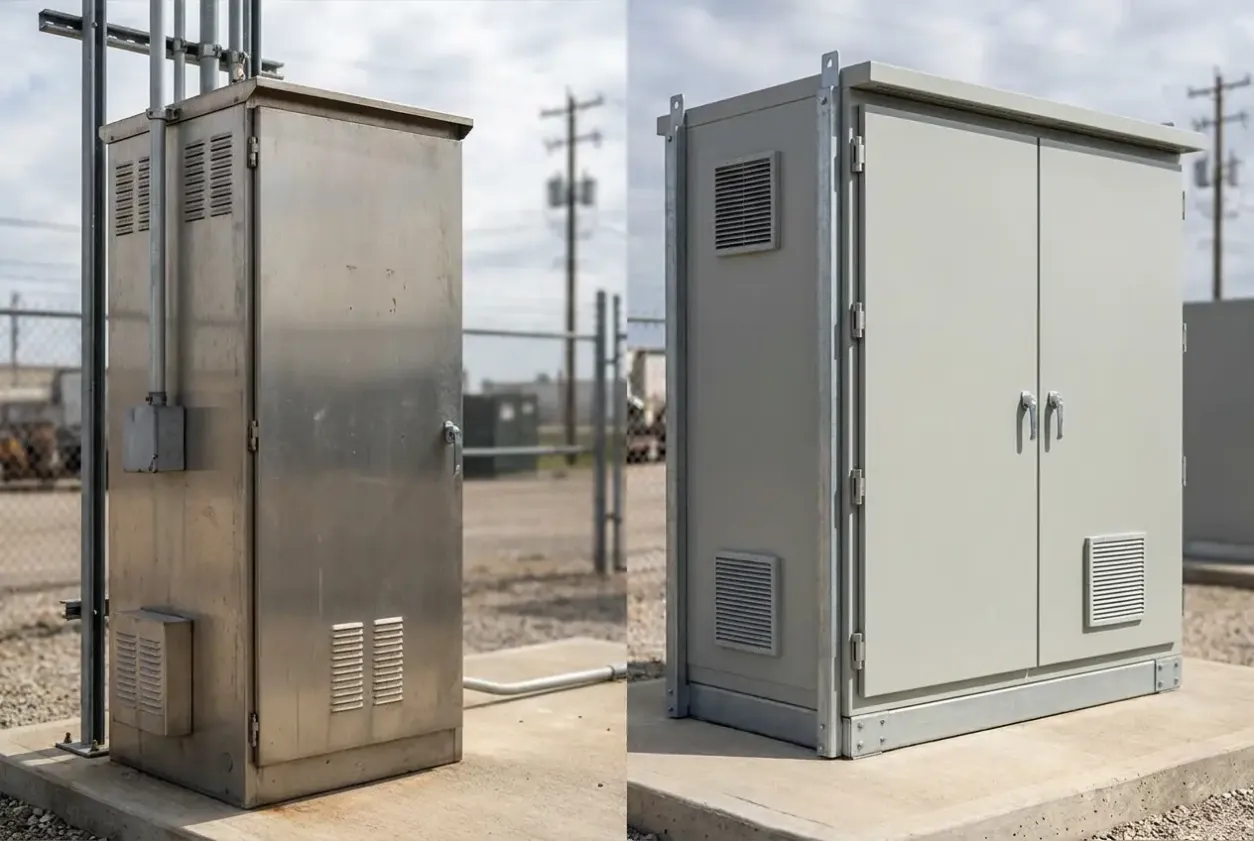
Single-Wall vs. Double-Wall Outdoor Electrical Cabinets: A Design Review for Buyers
One RFQ simply said, "Outdoor enclosure: double-wall.”
No explanation.
That worried me more than if it had specified single-wall.
Double-wall construction can be useful, but it should answer a real site condition. If nobody explains whether the concern is sunlight, high ambient temperature, sensitive electronics, reduced ventilation, or long-term reliability, the specification is not really finished.
When reviewing an outdoor electrical cabinet, the better starting question is not “single-wall or double-wall?” The better question is, what thermal problem must the enclosure solve?
Double-wall construction is often one of the last thermal decisions, not the first.
Design Review: What Each Option Really Solves
Review Point | Single-Wall Cabinet | Double-Wall Cabinet | Buyer Concern |
|---|---|---|---|
Best Use | Standard outdoor sites with moderate exposure | Hot sites with direct sun and sensitive equipment | Wrong choice can overdesign or underprotect the cabinet. |
Cost | Lower | Higher | Double walls may increase cost without solving internal heat. |
Weight | Lower | Higher | Extra weight may affect mounting, shipping, and installation. |
Cabinet Size | More compact | Larger | Space planning may change. |
Solar Heat Reduction | Limited | Better | Single-wall may absorb more solar heat. |
Cooling Requirement | Depends on heat load | Still depends on heat load | Double-wall does not replace heat removal. |
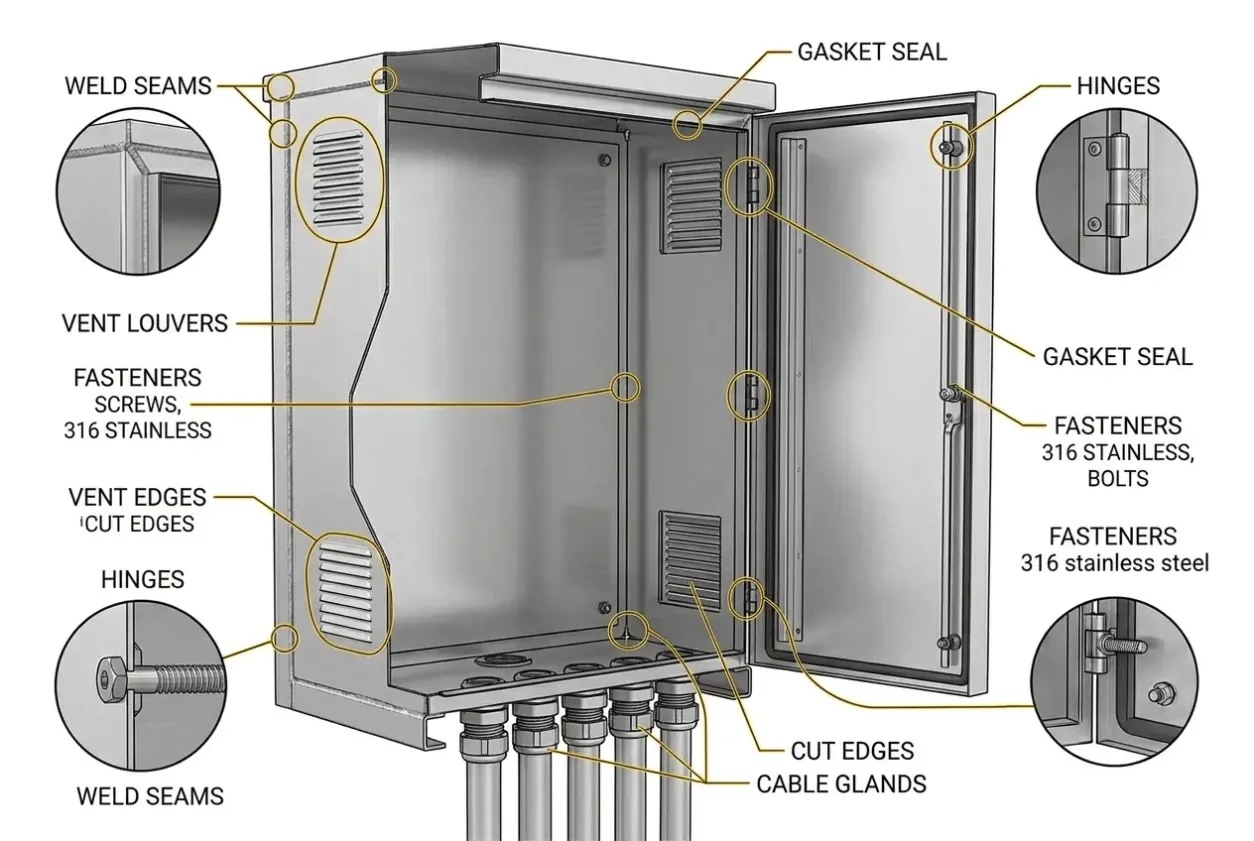
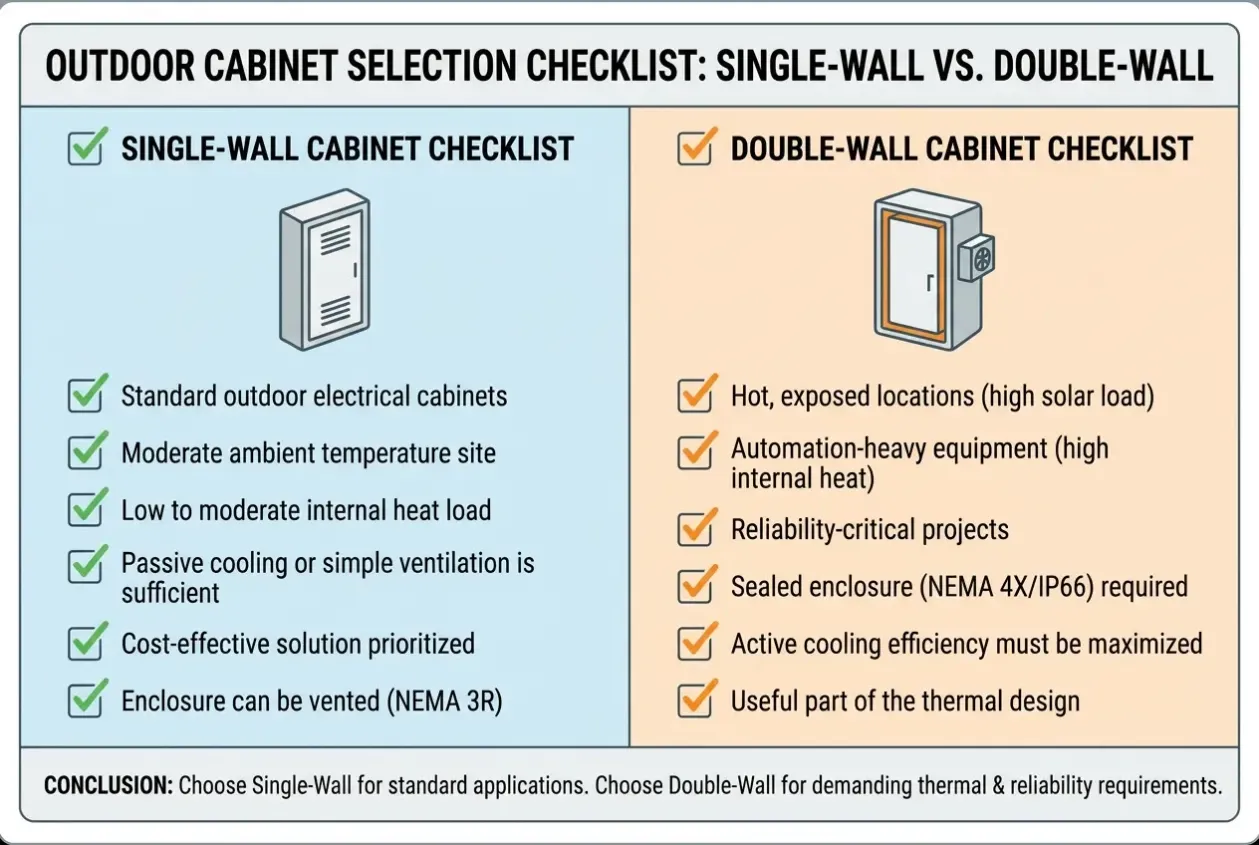
A single-wall outdoor cabinet has one enclosure wall between the equipment and the environment. It is simpler, lighter, more compact, and usually more cost-effective. For many standard outdoor applications, that is enough.
A double-wall cabinet adds an outer layer and an inner layer, often with an air gap between them. Its main value is reducing direct solar heat transfer and improving thermal stability. It is not a magic cooling system.
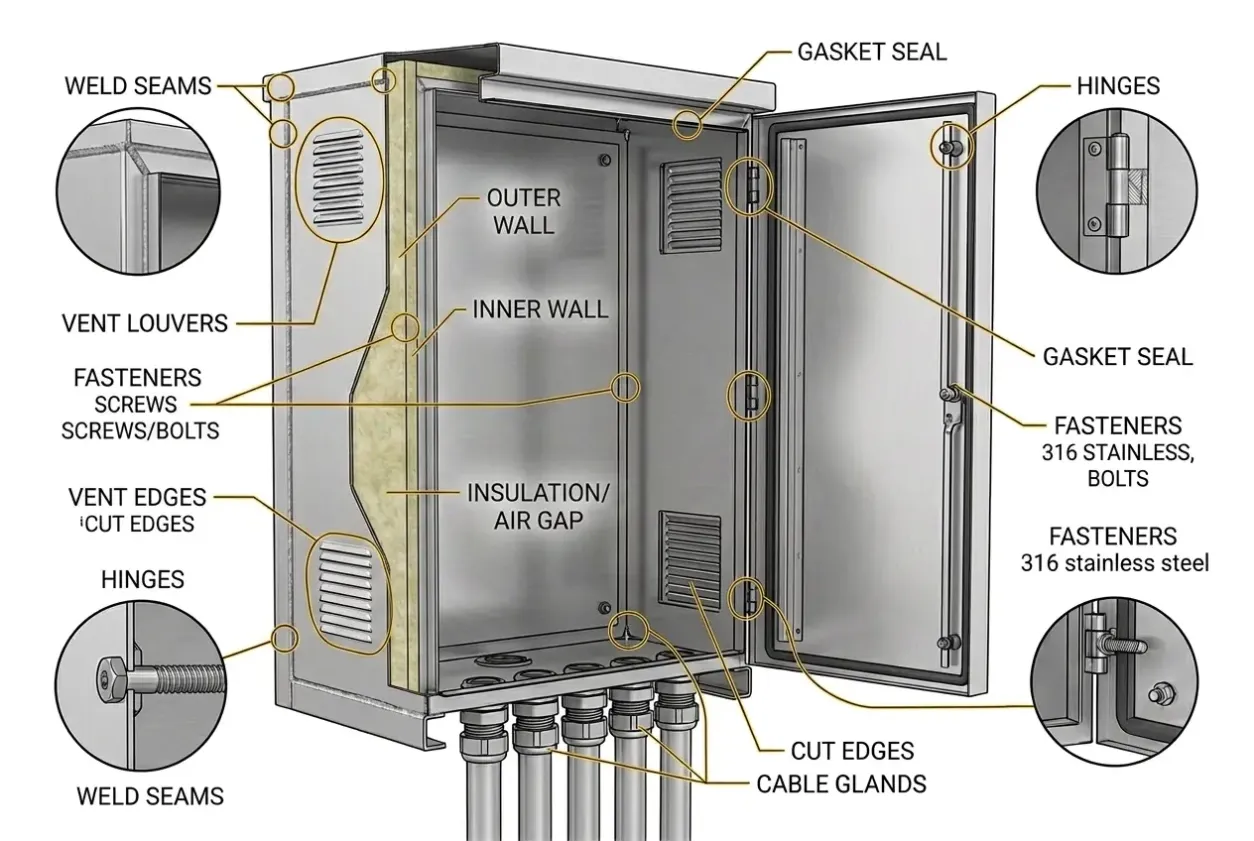
That is where many specifications go wrong. A buyer may upgrade to double-wall construction and still need a fan, heat exchanger, or cabinet air conditioner if the internal heat load is high. On the other hand, a single-wall cabinet with good spacing, shading, and low heat load may work perfectly well.
Engineering Position
Outdoor exposure alone is not enough reason to approve double-wall construction. The decision should be tied to strong afternoon sun, high ambient temperature, sensitive automation electronics, limited ventilation options, low maintenance access, or high downtime consequence.
For a cabinet under a canopy with mostly terminals or low-heat devices inside, single-wall construction may be the better practical choice. The saved budget may be more useful for better gasket design, cable glands, stainless hardware, sun shielding, or internal layout.
A second wall does not replace a first thermal calculation.
What Buyers Should Ask Before Approval
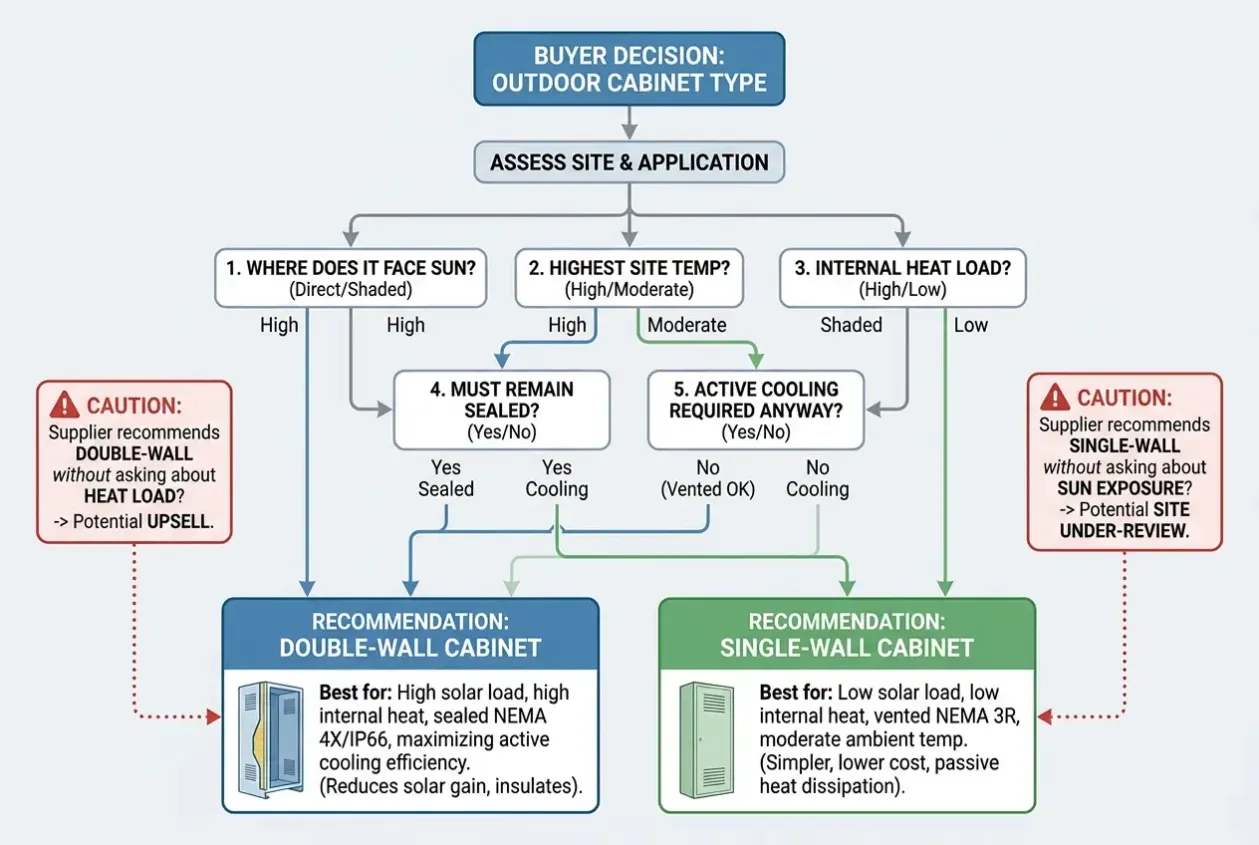
Before choosing single-wall or double-wall, buyers should ask the supplier where the cabinet will face the sun, what the highest site temperature is, what equipment is installed inside, whether the enclosure must remain sealed, and whether active cooling is required anyway.
A supplier who recommends double-wall without asking about heat load may simply be selling an upgrade. A supplier who recommends single-wall without asking about sun exposure may be under-reviewing the site.
UniRegal Engineering Note
At UniRegal, wall structure is reviewed as part of the full outdoor enclosure design. Cabinet size, heat load, installation direction, sun exposure, stainless steel grade, cable entry, gasket structure, and cooling method are considered together.
Sometimes the right solution is a single-wall cabinet with better spacing. Sometimes it is double-wall construction. Sometimes it is double-wall plus a sun shield or active cooling.
Good enclosure design starts with heat, not with wall count.
FAQ
Is a double wall always better for outdoor electrical cabinets?
No. Double-wall construction can reduce solar heat gain, but it adds cost, size, and weight. For moderate environments and low heat-load cabinets, a single wall may be the better choice.
Does a double-wall cabinet replace an air conditioner?
No. Double-wall design helps reduce heat transfer from sunlight, but it does not remove heat generated by internal components. High heat-load cabinets may still need fans, heat exchangers, or air conditioning.
When should buyers choose single-wall?
Single-wall is usually suitable for standard outdoor conditions, moderate sun exposure, low internal heat load, and applications without sensitive electronics.
When should buyers choose double-wall?
Double-wall is worth reviewing when the cabinet faces strong sunlight, high ambient temperature, sensitive electronics, limited ventilation options, or reliability risk caused by internal temperature rise.
Final Recommendation
Do not specify double-wall because it sounds safer. Do not specify single-wall only because it is cheaper.
Choose the wall structure based on the thermal risk of the site.
For standard outdoor electrical cabinets, single-wall construction is often enough. For hot, exposed, automation-heavy, or reliability-critical projects, double-wall construction can be a useful part of the thermal design.
A good supplier should explain what problem the cabinet wall structure is solving before asking you to pay for it.
Related guides
Standards & compliance
Specify enclosures to recognized standards: NEMA 250 (Enclosure Types) and UL 508A for Industrial Control Panels.