Oct 6, 2026Buying Guides
How Can Buyers Prevent RO Membrane Fouling Before Buying the System?
RO membrane fouling is usually the result of poor system design rather than poor membranes. Learn how water analysis, pretreatment, monitoring, and realistic recovery rates help prevent fouling.
Engineering Question
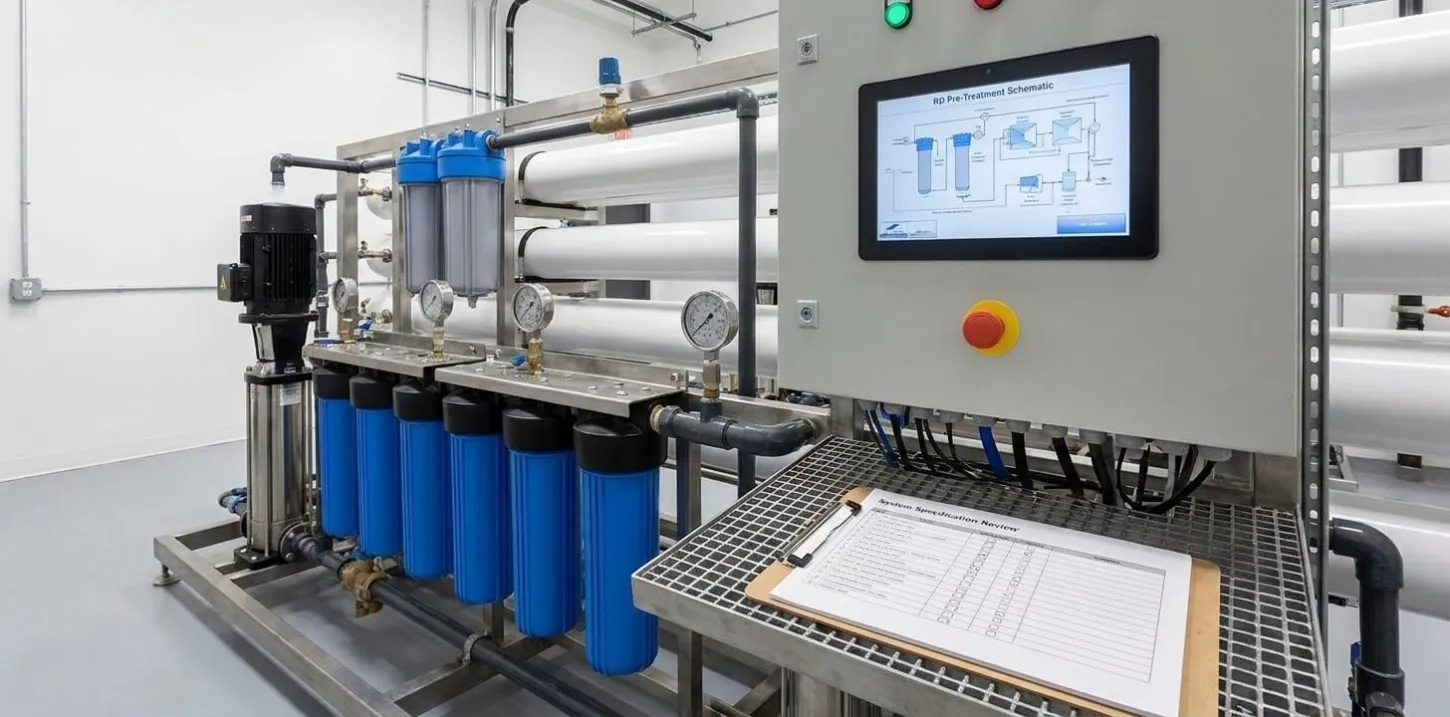
How can buyers reduce the risk of RO membrane fouling before purchasing an industrial reverse osmosis system?
Quick Answer
Buyers can significantly reduce the risk of RO membrane fouling[¹] before purchasing a system by understanding the feedwater[²] first rather than focusing only on the membrane itself. A complete water analysis, appropriate pretreatment[³], a realistic recovery rate, effective scaling control, proper monitoring, and practical cleaning provisions all contribute to long-term membrane performance.[⁴]
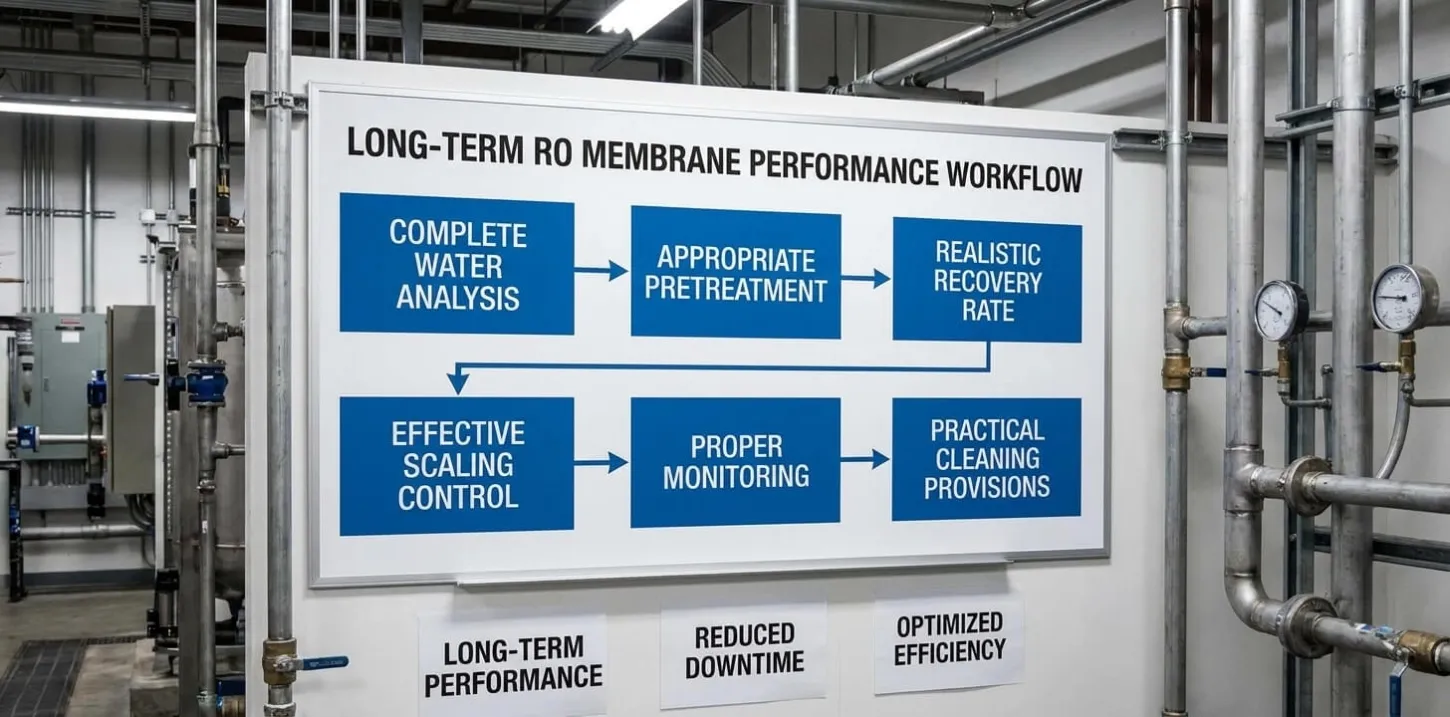
RO membrane fouling is rarely caused by a single component. In most projects, it develops because contaminants that should have been removed upstream gradually accumulate until the membranes become the final barrier. Preventing fouling therefore begins during system design, long before the first membrane is installed.
Why RO Fouling Becomes Expensive
RO membranes are often regarded as the heart of an industrial reverse osmosis system, but they should never become the first barrier against poor feedwater quality.
When membrane fouling develops, operators usually notice declining permeate flow, increasing operating pressure, deteriorating water quality, or more frequent chemical cleaning. These symptoms are easy to observe because they appear inside the RO system, but they rarely explain where the problem actually started.
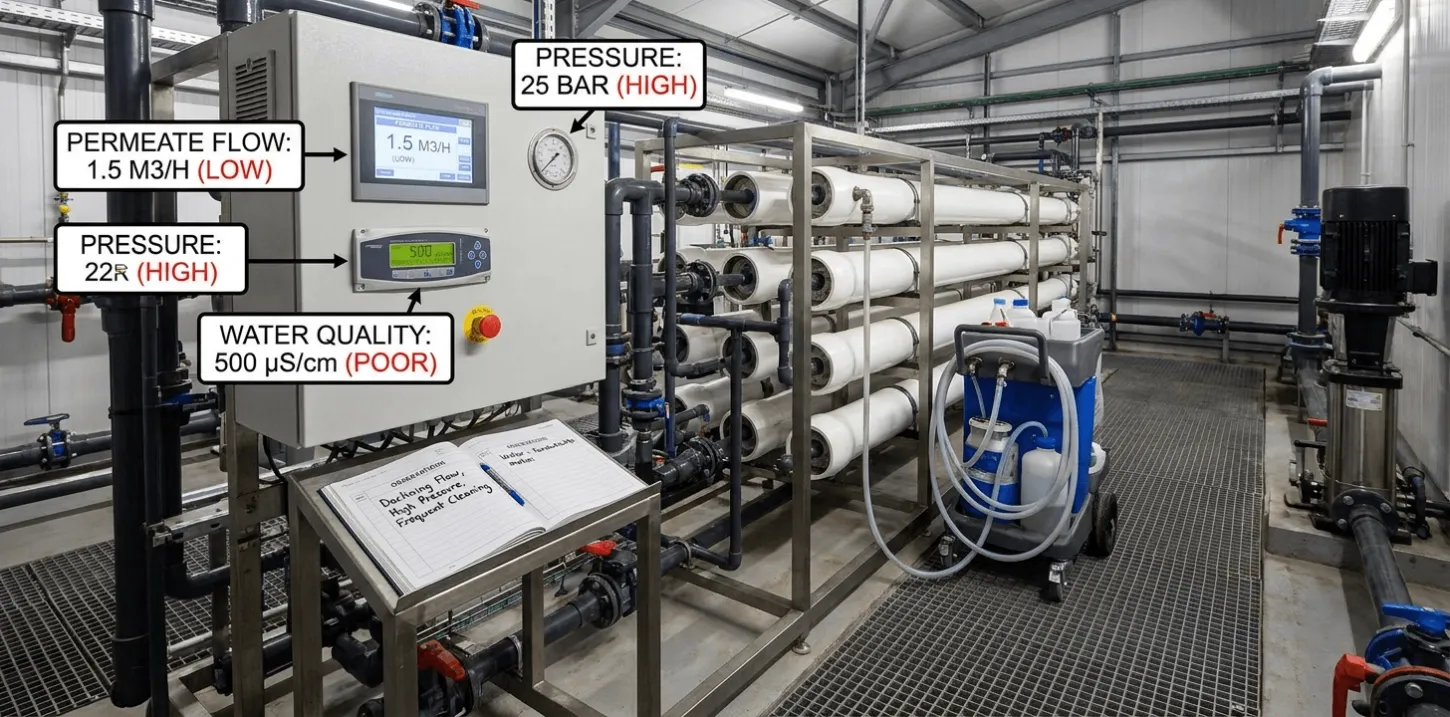
In many projects, the conditions that lead to fouling are established much earlier. Incomplete water analysis, inadequate pretreatment, excessive recovery, or unstable operating conditions gradually increase the burden on the membranes until performance begins to decline.
By the time membrane fouling becomes visible, the engineering decisions that caused it have often been in place since the system was first designed.
Engineering TipRO is not a substitute for pretreatment. It is the final purification stage. The cleaner and more stable the feedwater becomes before reaching the membranes, the more reliable the entire treatment system will remain throughout its operating life.
A Simple Fouling Prevention Framework
Experienced engineering teams rarely begin membrane protection by selecting a membrane brand.
They begin by understanding the water.
A reliable RO system is usually developed by working through the treatment process in a logical sequence. Raw water quality determines the pretreatment requirements. Pretreatment determines the quality of the RO feedwater. The RO design then establishes operating conditions that match the treated water, while monitoring confirms whether the system continues to operate within its original design basis. Membrane cleaning and routine maintenance become the final layer of protection rather than the primary solution.
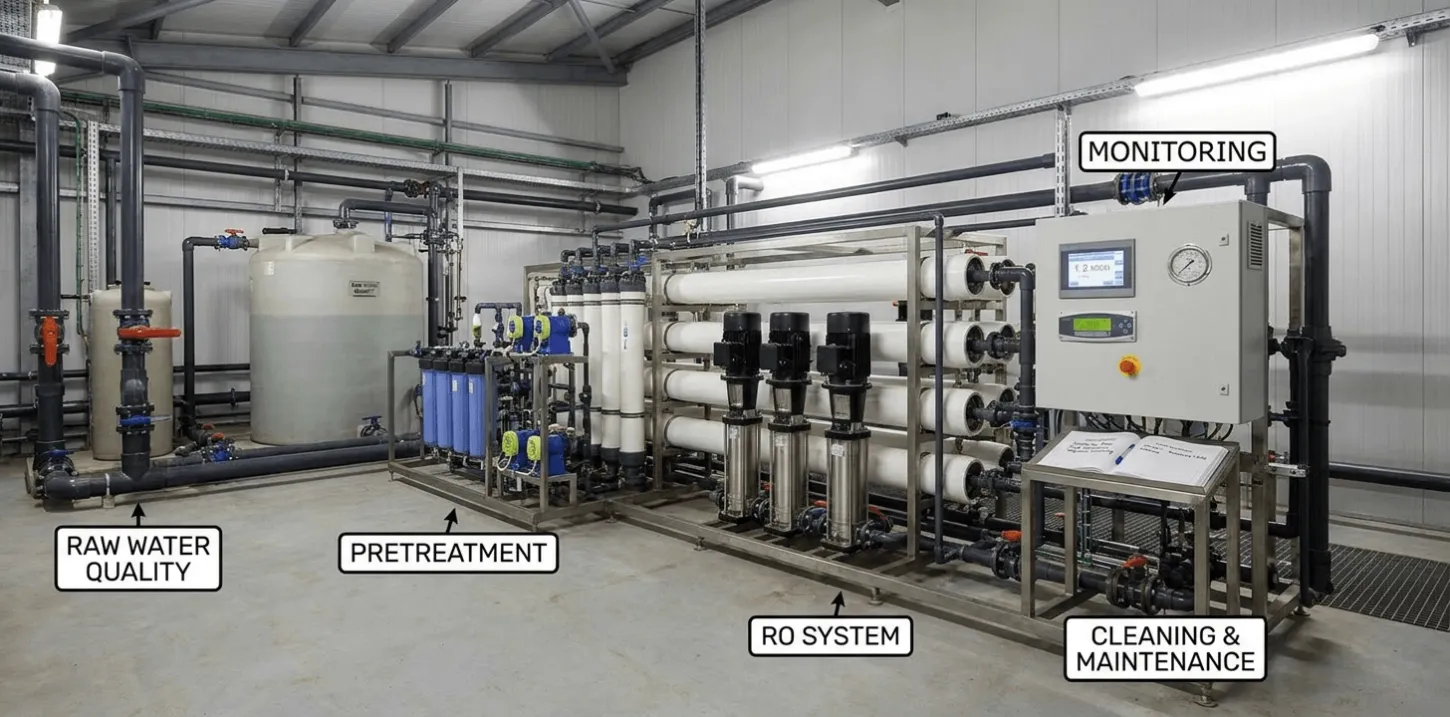
The membrane is therefore the final step in the protection strategy instead of the starting point.
Engineering Review Stage | Why It Matters |
|---|---|
Raw Water Analysis | Identifies suspended solids, hardness, silica, organics, bacteria, and other contaminants that influence membrane performance. |
Pretreatment Design | Removes or reduces contaminants before they reach the RO membranes. |
RO System Design | Selects recovery rate, operating pressure, and flow conditions that match the treated feedwater. |
Monitoring Strategy | Uses SDI, conductivity, pressure, and differential pressure to detect changing operating conditions early enough for corrective action before fouling becomes difficult or expensive to reverse. |
Membrane Protection | Antiscalant dosing, cleaning strategy, and operating procedures help maintain long-term membrane performance. |
Following this sequence allows buyers to prevent fouling at its source instead of relying on membrane cleaning after performance has already deteriorated.
Main Types of Fouling
Fouling Type | Common Source | Buyer Prevention |
|---|---|---|
Particulate fouling | Suspended solids, turbidity, colloids | Filtration, UF, cartridge filters and SDI control |
Scaling | Hardness, silica, sulfate, carbonate | Softening, antiscalant, pH control and recovery design |
Organic fouling | COD, natural organics, process residues | Activated carbon, biological pretreatment and feedwater evaluation |
Biological fouling | Bacteria, biofilm, stagnant water | Appropriate disinfection strategy, sanitation and stable operation |
Oil fouling | Process wastewater, compressors, oily water | Oil separation, DAF, activated carbon and source control |
Chemical damage | Chlorine or oxidants on sensitive membranes | Dechlorination and continuous ORP monitoring |
The type of fouling that develops depends entirely on the characteristics of the feedwater. That is why membrane selection alone can never compensate for incomplete water analysis or inadequate pretreatment.
Real Buyer Example
A buyer planned to install an RO system for treated wastewater reuse. Because the existing treatment process produced water that looked clear, the project team assumed the remaining contaminants could be removed by the RO system without significant difficulty.
The water quality looked acceptable during normal operation, but it changed noticeably during certain production cycles. Organic loading increased, the pretreatment process could not maintain stable feedwater quality, and the membranes began fouling much sooner than expected.
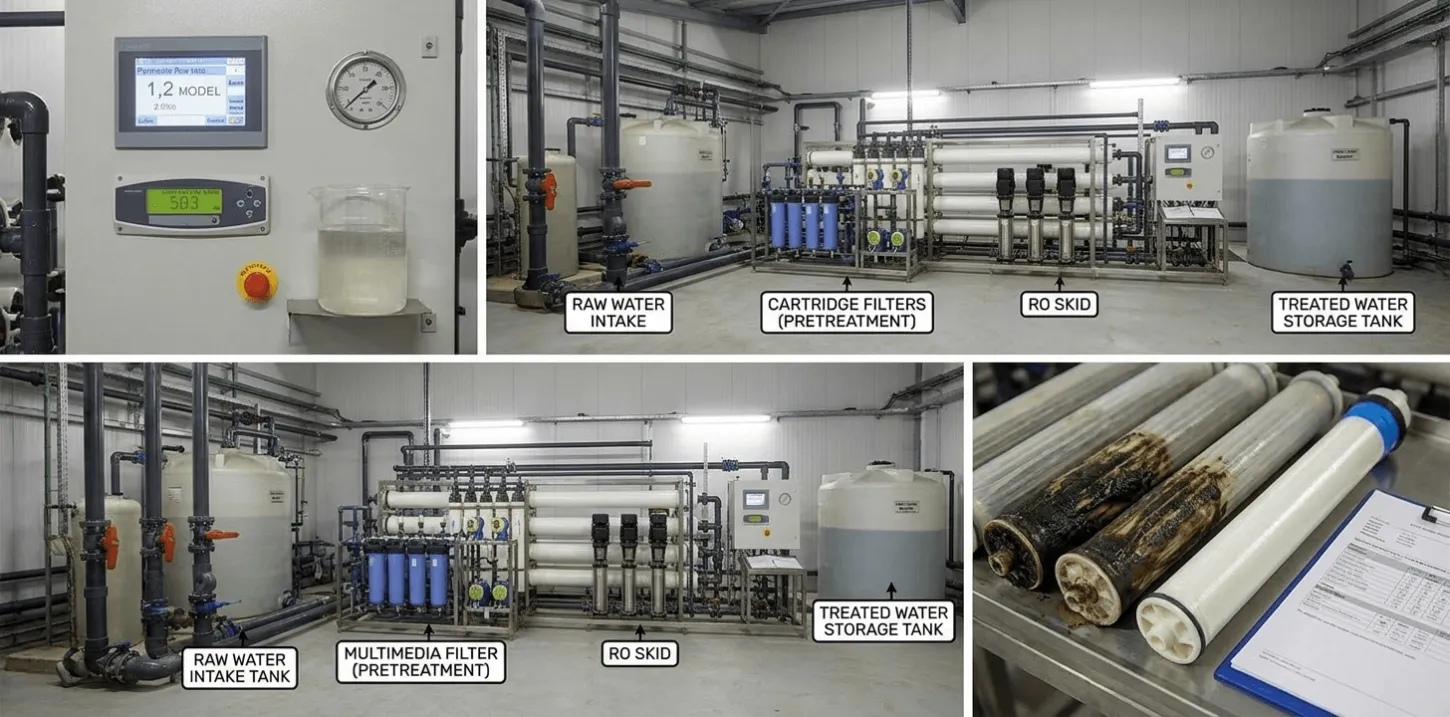
The investigation showed that the membrane itself had performed exactly as designed.
The problem was that the feedwater reaching the RO system no longer matched the design assumptions. Improving equalization, stabilizing upstream treatment, and strengthening pretreatment reduced the fouling rate far more effectively than replacing the membranes.
Common MistakeClear water is not necessarily suitable RO feedwater. Dissolved organics, scaling ions, bacteria and residual chemicals cannot always be identified by appearance, yet they often determine how quickly membranes foul.
Questions Buyers Should Ask Before Purchase
By the time an RO quotation is being reviewed, buyers should already understand the conditions that the membranes are expected to handle.
Rather than focusing only on membrane quantity or brand, the discussion should confirm whether the overall design protects the membranes under realistic operating conditions throughout the life of the plant.
Questions such as these usually provide a much clearer basis for evaluating the proposal.
- Was the raw water analysis based on a single sample, or does it represent seasonal operating conditions?
- What assumptions were used to determine the design recovery rate?
- If feedwater quality changes after startup, how will the system continue protecting the RO membranes?
- What recovery rate was selected, and why?
- What scaling calculations support the design?
- Is antiscalant required under all operating conditions?
- What pretreatment protects the RO membranes?
- What feedwater SDI or turbidity has been assumed?
- Is chlorine present, and how is it removed?
- Which operating parameters will be monitored continuously?
- How frequently is cartridge filter replacement expected?
- How often should membrane cleaning normally be required?
- Are CIP connections included in the system?
- What operating data should be recorded to identify developing fouling before production is affected?
If the discussion never moves beyond membrane brand and price, an important part of the engineering review is still missing.
Solution Path
A reliable RO system is rarely achieved by selecting a premium membrane alone. It is achieved by making a series of engineering decisions that progressively reduce the risk of fouling before water reaches the membrane.
The process begins with representative raw water analysis so that scaling potential, suspended solids, organic loading, and biological activity are understood under realistic operating conditions. Pretreatment is then designed to manage those risks before they reach the RO system instead of expecting the membranes to remove them directly.
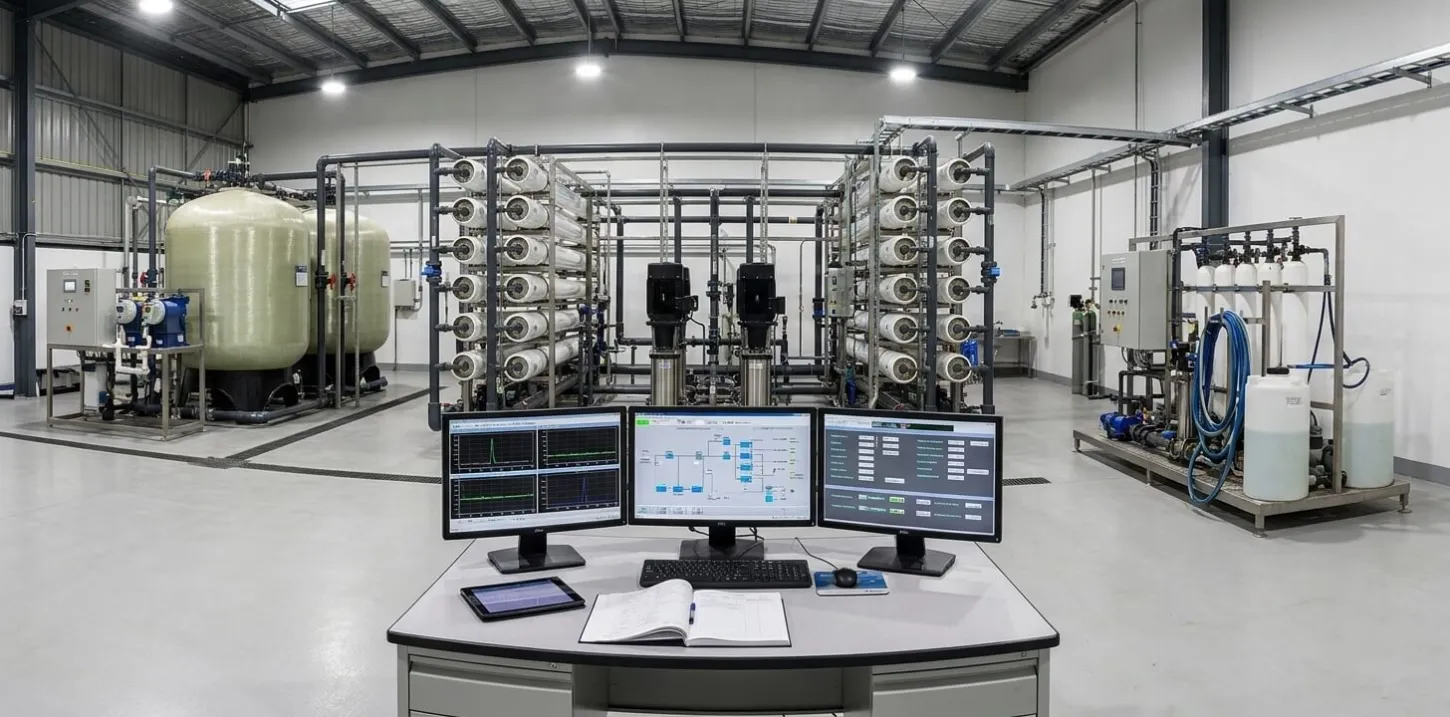
Once feedwater quality has been stabilized, the recovery rate can be selected according to the water chemistry rather than pursuing the highest possible water recovery. Monitoring instruments are then incorporated so that changes in conductivity, SDI, pressure, and differential pressure can be recognized while the system is still operating normally. The objective is not simply to collect operating data. It is to identify developing fouling early enough for operators to correct the cause before membrane performance has been permanently affected.
Finally, cartridge filter replacement, membrane cleaning procedures, and operator training complete the protection strategy, allowing routine maintenance to correct small changes before they develop into expensive membrane replacement.
Field ObservationBuyers often request higher recovery because reducing wastewater discharge appears to improve project economics. However, when recovery exceeds what the feedwater chemistry can support, scaling risk increases and membrane life may be reduced. The most economical operating point is usually the one that balances water recovery with long-term membrane protection.
If This Was My Project
I would not approve an RO quotation without reviewing the complete pretreatment strategy[⁵] together with the membrane design.
The membrane quantity alone does not indicate whether the system will operate reliably. I would want to understand the design basis, the expected feedwater quality[⁶], the selected recovery rate, the monitoring strategy, and the provisions for membrane cleaning[⁷] before making a purchasing decision.
For wastewater reuse[⁸] projects, this review becomes even more important because feedwater quality can change with production schedules, cleaning procedures, seasonal variation, and operating practices. A well-designed RO system can perform reliably under these conditions, but only when the upstream process has been designed to provide stable feedwater.
Related Questions
- Why do RO membranes foul so quickly?
- What pretreatment is needed before reverse osmosis?
- Can RO treat wastewater directly?
- How often should RO membranes be cleaned?
- What is SDI in RO system design?
Conclusion
RO membrane fouling is rarely a sudden failure. In most cases, it develops gradually because contaminants that should have been controlled upstream continue reaching the membranes during normal operation.
The most effective way to protect RO membranes is not to rely on more frequent cleaning or higher-quality membranes after problems appear. It is to understand the raw water, design suitable pretreatment, establish realistic operating conditions, and monitor system performance before fouling has an opportunity to develop.
Good RO performance is rarely determined by the membrane alone. It is determined by how well the entire treatment system protects the membrane from the day the plant begins operating.
Beyond This Question
If another engineer reads this six months from now, what practical lesson will still be valuable?
RO membranes rarely fail because they were selected incorrectly.
They usually fail because the treatment system asks them to solve problems that should have been removed upstream.
Protecting an RO membrane therefore begins long before the membrane is installed.
It begins with good engineering.
Related Articles:
Need help specifying or sourcing this for your project? Request a quote - we reply within 1-2 working days with a technical review.