
Aug 29, 2026Buying Guides
Pump Control Panel Buying Guide: How to Spec a Panel That Survives the Field
How to specify a pump control panel: VFD vs bypass, IP rating, overload protection, and the sourcing pitfalls that cause pump failure in the field.
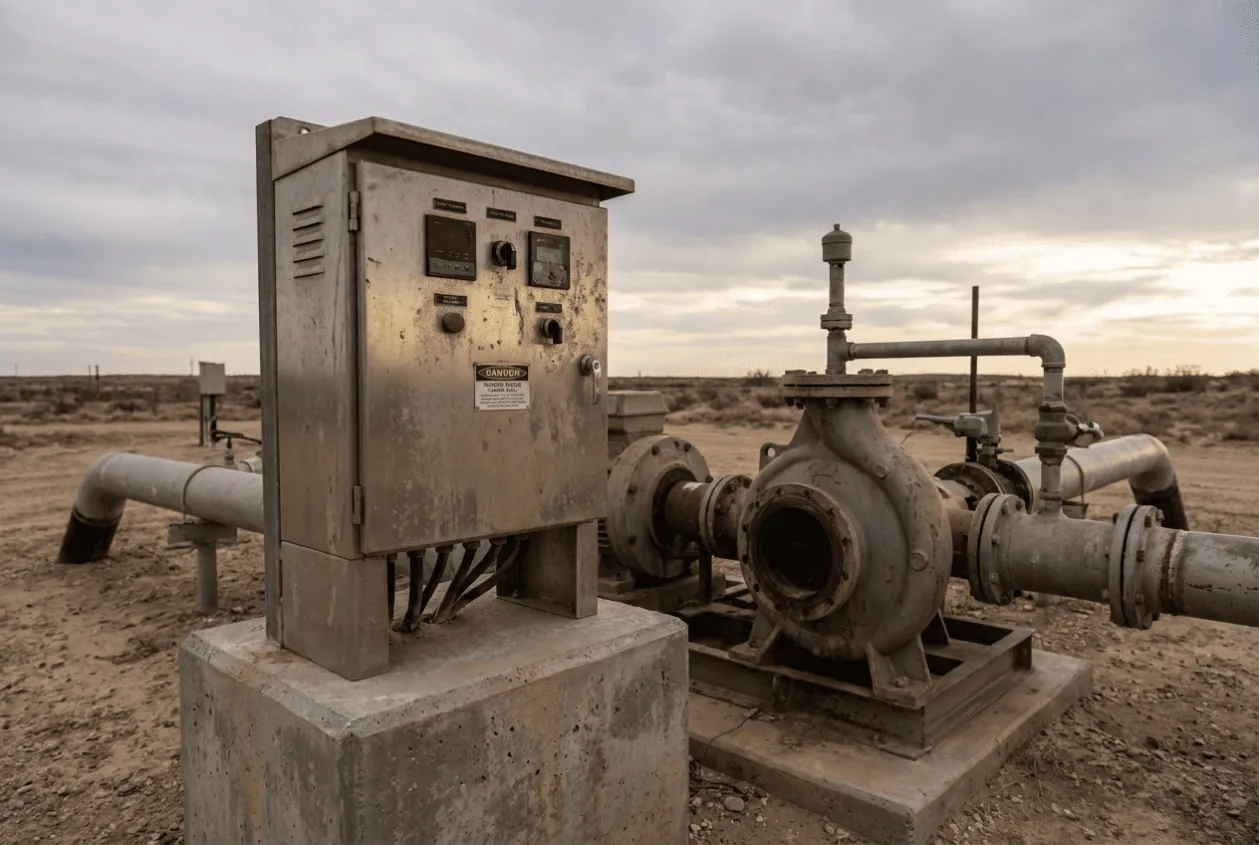
Pump Control Panel Buying Guide: What I Look for Before I Recommend a Solution
I remember placing two pump control panel quotations side by side on my desk and thinking the review would be simple. The drawings were similar, the motor power was the same, and both suppliers had used component brands the buyer already knew. The buyer wanted my opinion because the two prices were close enough that nobody in the purchasing meeting felt comfortable choosing one by price alone.
After twenty minutes, the discussion had almost nothing to do with price.
The panel was for a wastewater collection pit at a municipal site. The pump started several times every hour, the water level changed quickly after rain, and the station was usually unattended at night. Nobody wanted that pit to overflow at three o’clock in the morning because a control panel had been designed around a neat drawing instead of the way the pump actually worked.
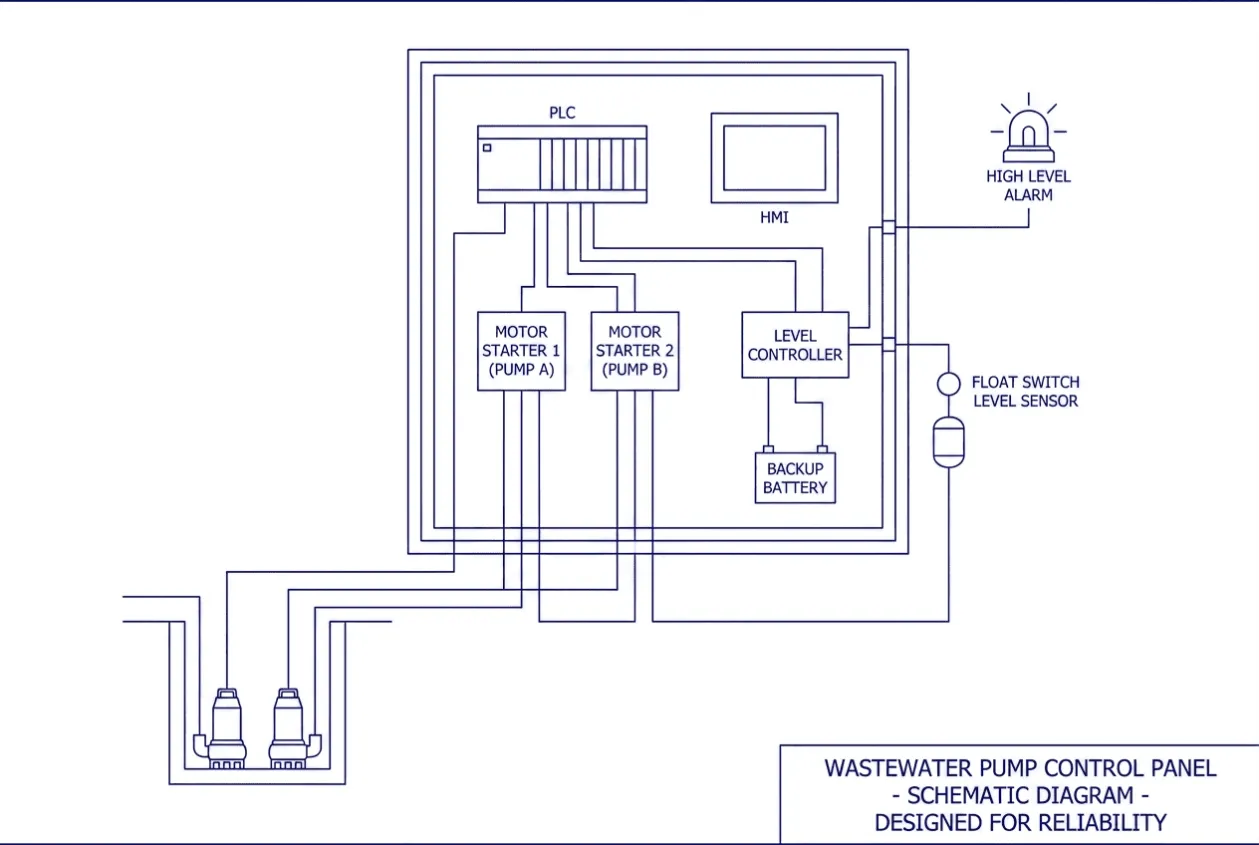
One quotation had priced the hardware correctly, at least from the drawing. The other quotation had asked about level control, alarm signals, dry-run protection, local maintenance, and what should happen if the pump failed when nobody was nearby. It was not better because it looked more complicated. It was better because someone had clearly thought about the application before putting a number on the page.
That is usually where a pump control panel review really begins. Not with the cabinet size. Not with the VFD brand. Not even with the PLC.
It begins with the pump.
I start with the pump duty, not the component list.
A sump pump controlled by float switches, a booster pump maintaining pressure, and a process pump following a transmitter signal can all appear under the same broad category of “pump control panel.” In a supplier directory, they may even look similar. In the field, they are different machines with different habits.
I have made the mistake of treating them too similarly before. Years ago, I looked at a small pumping project and thought the cheaper quotation was the smarter decision because the motor was simple and the duty looked easy. At the time, that felt practical.
I was wrong.
The pump did not fail because the components were poor. It failed because we had not understood how often the pump would start, how fast the level changed, and how little time operators had to react when the process moved out of the normal range. The quotation had matched the drawing. It had not matched the site.
That experience changed the way I review pump panels. Now, before I look too closely at the component list, I want to understand a normal day in the life of the pump. Does it start twice a day or twenty times an hour? Does it run against a changing pressure demand? Is there a standby pump? What happens if the level signal fails? Who gets called when an alarm appears?
These questions sound ordinary, but they decide whether the design should be simple, flexible, or more protective than the buyer originally expected.
A VFD Is Useful Only When It Solves a Real Problem
Variable frequency drives often make quotation reviews more interesting because they carry both technical value and commercial noise. In some projects, the VFD is absolutely justified. In others, it appears because everyone feels safer leaving it in the design.
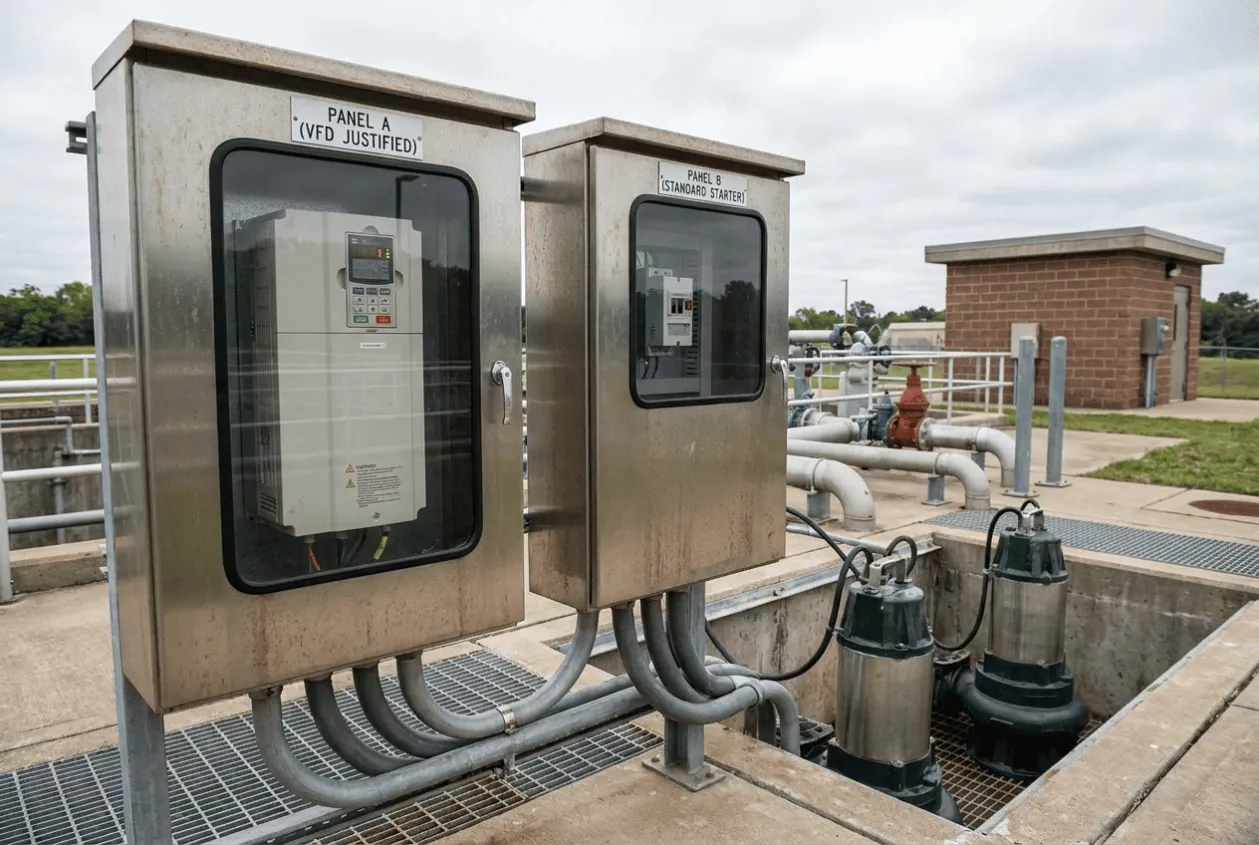
One quotation I reviewed included a VFD for a pump that only emptied a tank between two fixed levels. The supplier said variable-speed control could improve efficiency and provide smoother operation. Technically, he was not wrong, but when we asked whether the pump ever needed to run at partial speed, nobody answered immediately.
That silence told me more than the quotation.
After a short discussion with the end user, it became clear that the pump started, ran at full capacity, emptied the tank, and stopped. There was no pressure control requirement, no changing flow demand, and no process benefit from speed regulation. Removing the VFD reduced cost and simplified maintenance without hurting the application.
A few months later, I saw the opposite situation. A lower-cost starter looked attractive in the quotation, but after commissioning the operators struggled with pressure swings because demand changed throughout the day. The starter was not the villain. It had simply been selected for a job that needed better control.
Some projects specify a VFD because the process genuinely needs one. Some specify it because nobody wants to be the engineer who removed it. Most engineers smile at that line because they have seen the same thing happen in a meeting.
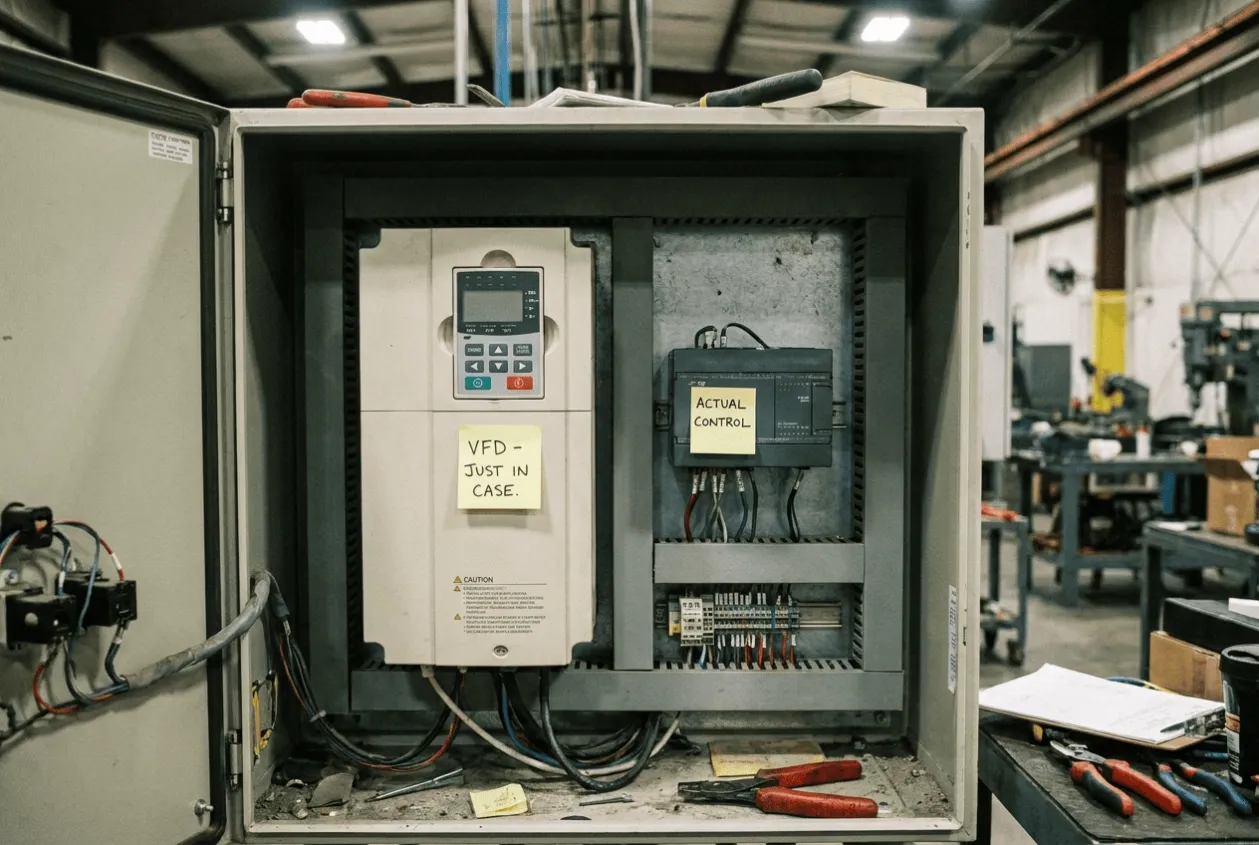
For me, the useful question is not, “Should this pump panel have a VFD?” The better question is, “What problem is the VFD supposed to solve?” If the answer is stable pressure, changing flow, soft starting, energy control, or process adjustment, then the discussion is worthwhile. If the answer is only “because it looks safer,” I keep asking questions.
The Enclosure Has to Survive the Place Where It Is Installed
Pump rooms are rarely clean. Wastewater pits are usually damp. Outdoor stations spend years under rain and sun. The enclosure has to live there long after the quotation has been forgotten.
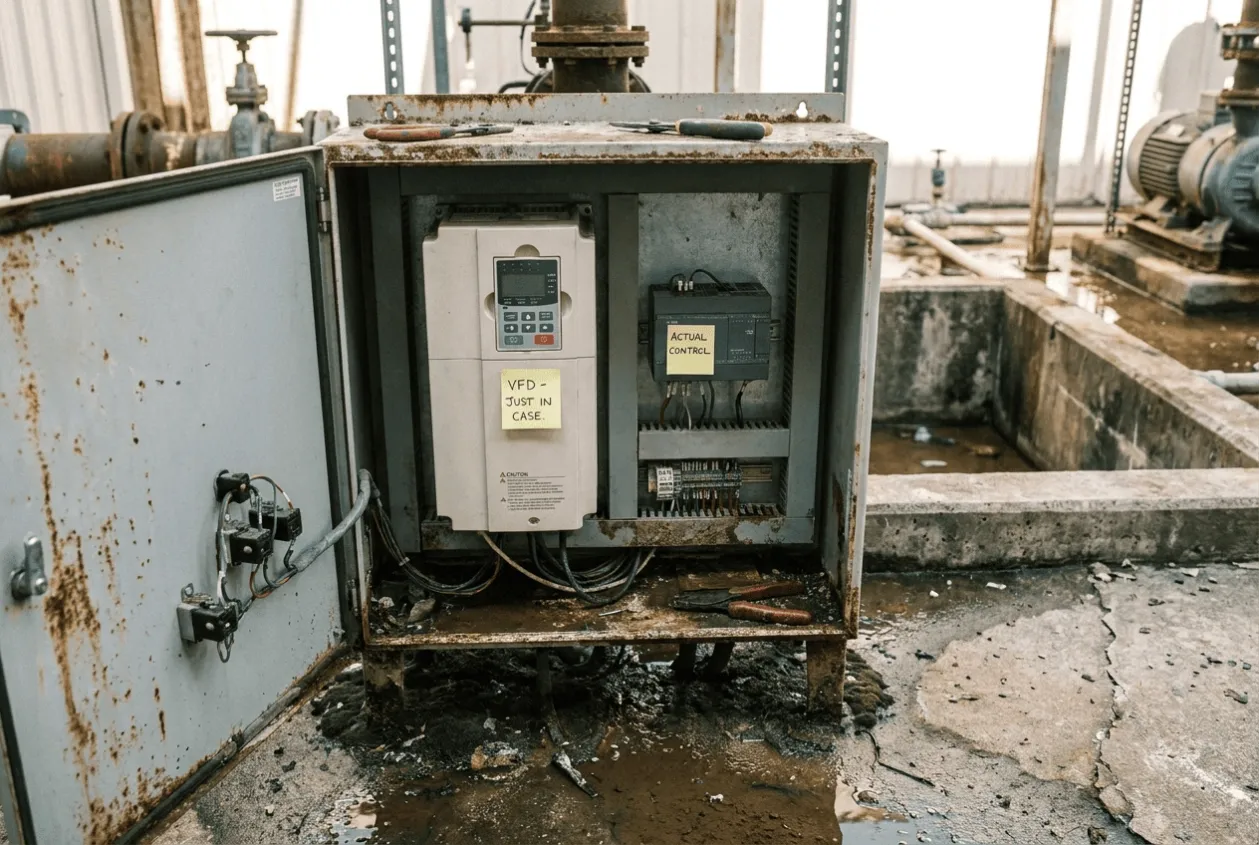
This is why I do not like reviewing enclosure material as a simple price line. A painted steel cabinet may be perfectly reasonable in a dry indoor pump room. Stainless steel becomes much easier to justify when the site involves washdown, humidity, wastewater, outdoor exposure, or corrosive air. In coastal or chemical-heavy environments, 316 stainless may deserve a serious discussion, although I still do not like specifying it everywhere just because it sounds safer.
The enclosure is not decoration around the electrical parts. It decides whether moisture reaches the terminals, whether corrosion slowly damages hardware, whether cable glands remain reliable, and whether the control devices inside the cabinet get a fair chance to survive. I have seen panels where the PLC and VFD were still good, but the cabinet environment had already turned the installation into a maintenance problem.
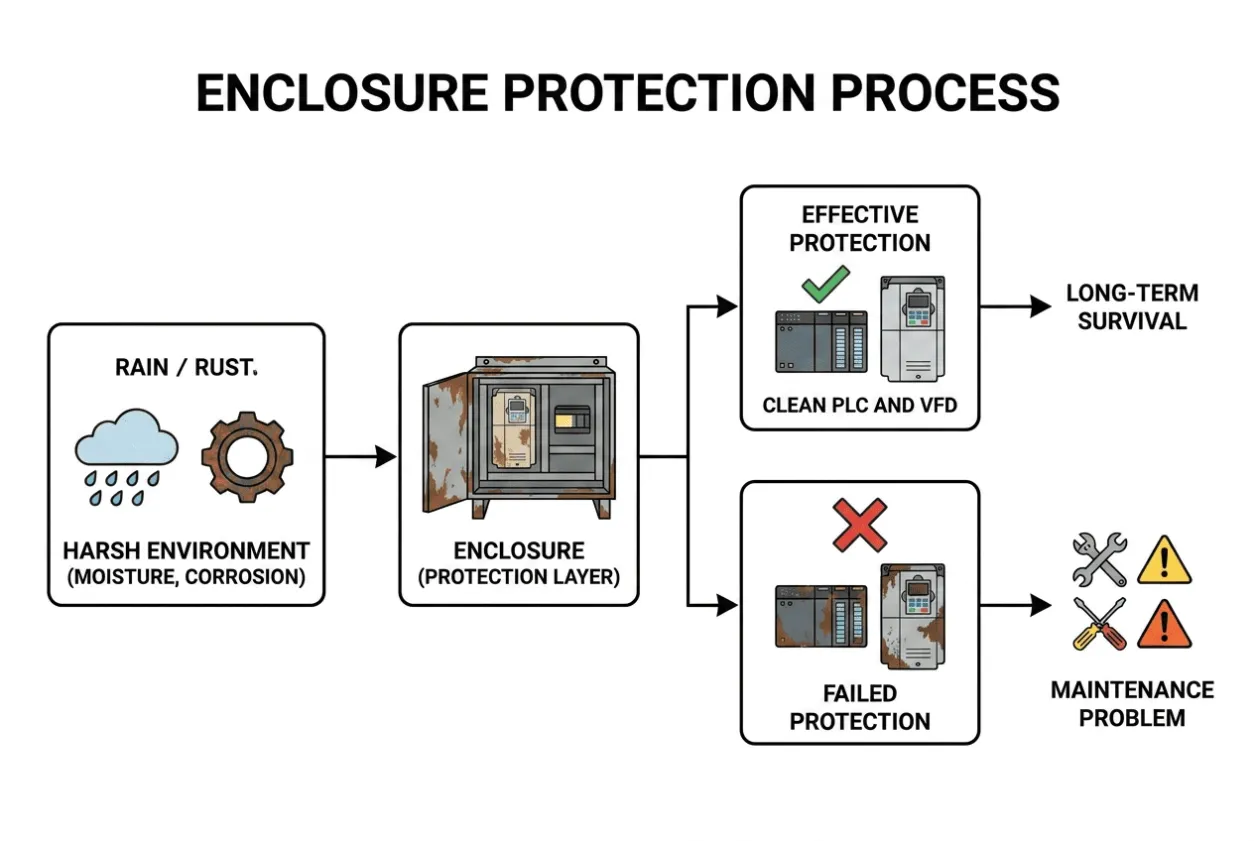
This is also where accessories matter more than many quotations admit. Door gaskets, gland plates, cable entries, ventilation, drainage, sun exposure, and condensation control can change the real performance of the cabinet. A rating on the datasheet helps, but the installation details decide whether that rating still means much after a few years on site.
Protection Is Where Small Decisions Become Expensive Later
Buyers naturally compare PLC brands, HMI sizes, and VFD models because those items are visible. Protection devices do not attract the same attention. They sit quietly in the panel, and during procurement nobody wants to spend half an hour talking about a relay that may never operate.
Then one day it does.
A municipal water project taught me that lesson clearly. Two suppliers submitted proposals that looked very close. During review, one engineer noticed that only one quotation included dry-run protection. At the time, nobody around the table treated it as a major decision. The incoming water supply seemed reliable, and the probability of the pump running dry looked low.
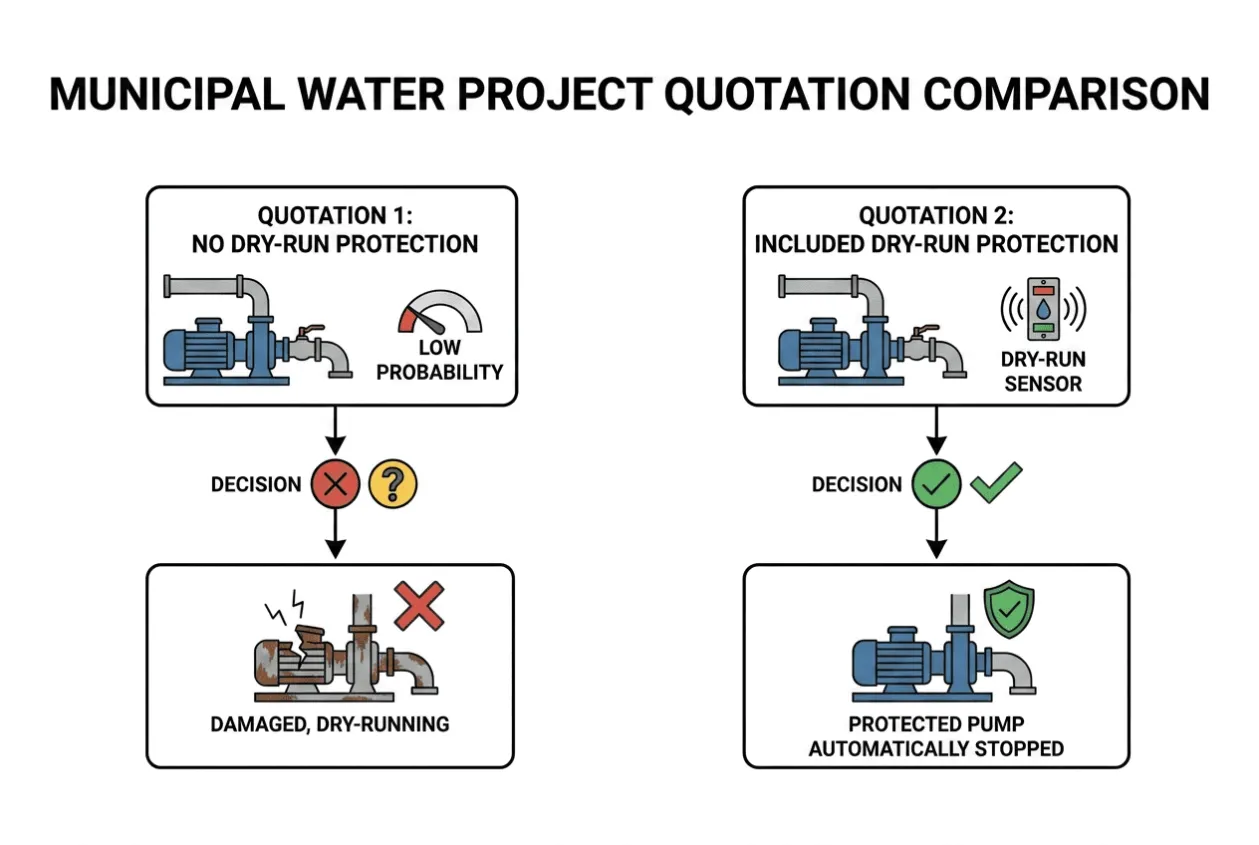
Months later, during planned maintenance, the water supply was interrupted. Fortunately, it happened on a weekday while operators were already nearby. The dry-run protection stopped the pump before the mechanical seal was damaged.
Nobody remembered that relay during procurement. Nobody cared about it when the panel was shipped.
Until they had to.
That relay probably cost less than a box of coffee for the project meeting. The pump it protected certainly did not. Nobody ever thanks a protection relay during procurement. They usually thank it after the first failure.
For pump panels, I like to see protection discussed before production, not added as a guilty thought afterward. Overload sizing, phase loss, phase imbalance, dry-run protection, high-level alarms, fault indication, manual reset logic, and alarm outputs all deserve attention. The right answer depends on the application, but leaving the discussion vague is rarely a good sign.
Signal Type Is a Small RFQ Detail Until It Is Wrong
One of the easiest ways to create rework is to leave the field signal unclear. A panel built for float switches is not the same as a panel built for a 4–20 mA pressure or level transmitter. The terminals may change, the input module may change, the power supply may change, and the logic may change as well.
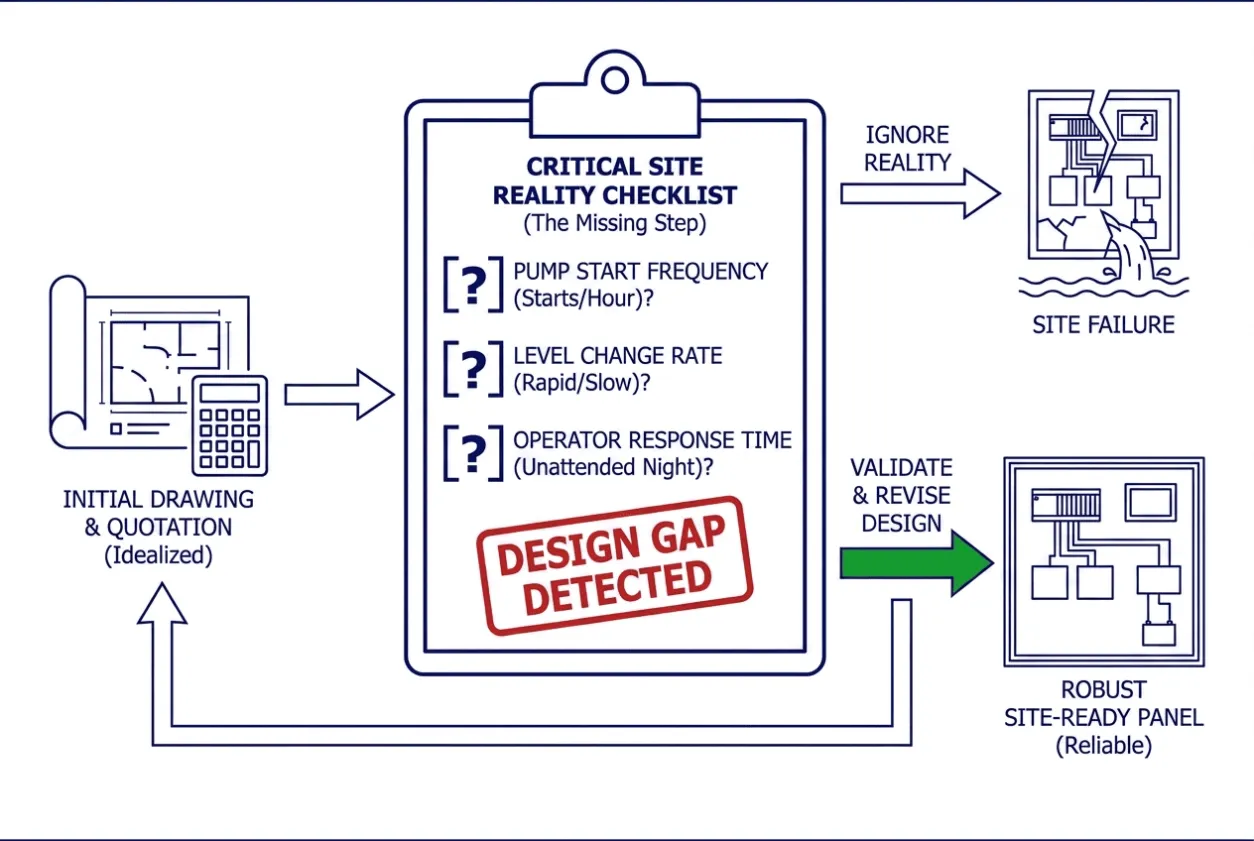
I once saw a supplier build a neat, well-wired panel based on dry contact level switches. The site later confirmed that the main feedback signal was a pressure transmitter. Nobody had intentionally hidden the information. It had simply been described too casually in the early email chain, and everyone assumed someone else had checked it.
The panel was not badly built.
It was built for the wrong conversation.
One sentence in the RFQ can save two days of rewiring later. If the pump starts from float switches, say that. If it follows a transmitter, include the signal type. If there is a high-level alarm, standby pump, duty rotation, remote alarm, or SCADA interface, write it clearly before the quotation is final. Engineers do not need perfect RFQs. They need honest ones.
This information does not make the quotation complicated. It makes the quotation useful.
Drawings Help, but People Find the Problems
A good electrical drawing matters. I do not want to minimize that. Clear terminal numbers, wire labels, component layout, and control logic save time during wiring, FAT, commissioning, and maintenance.
Still, drawings do not explain everything.
I remember one review where the panel drawing looked excellent. The wiring was tidy, the terminals were numbered, and the component placement made sense on paper. A maintenance engineer looked at the drawing for a while, then asked a very simple question.
“Where exactly am I supposed to stand?”
The room went quiet for a moment because the answer was not in the drawing. The panel could be built exactly as shown, but once installed, replacing one contactor would have been awkward because of the cabinet position and nearby piping.
That is the kind of detail a drawing can miss. The drawing explains the panel, but the conversation explains the project. The buyer, operator, supplier, and maintenance engineer each see a different risk because each of them has to live with a different part of the decision.
Good Quotations Usually Ask Better Questions
I used to feel slightly impatient when a supplier came back with questions instead of a price. Like many people in procurement meetings, I wanted the quotation quickly so we could keep the project moving. After enough commissioning problems, I became more patient.
A supplier asking where the panel will be installed is not wasting time. He may be thinking about enclosure material, corrosion, washdown, sunlight, or condensation. A supplier asking how the pump starts and stops may be checking whether the control method really fits the process. A supplier asking about FAT, documentation, spare parts, and preferred component brands is trying to understand what the buyer expects after the cabinet leaves the workshop.
Of course, questions can also be used to delay. I have seen that too. But thoughtful questions, especially early in the project, usually reduce the number of expensive surprises later. The fastest quotation may only prove that someone opened the drawing quickly. A useful quotation shows that someone understood what the drawing did not say.
What I Want Before I Approve a Pump Panel
I do not expect every buyer to send a perfect specification. Real projects rarely start that cleanly. Sometimes the process engineer has one set of information, the electrical engineer has another, and purchasing receives the RFQ after half the important decisions have already been discussed elsewhere.
Before approving a pump control panel, I want the missing pieces brought into one place. Pump duty, motor voltage, full-load current, starting method, signal type, enclosure environment, protection requirements, certification needs, FAT expectations, quantity, and delivery target should all be clear enough that the supplier is not forced to guess.
This is also how we review projects at UniRegal.
FAQ
Do all pump control panels need a VFD?
No. If the pump only starts and stops from a float switch or fixed level signal, a VFD may not add much value. If the pump needs stable pressure, changing flow, soft starting, or energy control, then a VFD becomes much more reasonable. The application should make the decision.
What enclosure material should I choose?
I would start with the site, not the catalogue. A dry indoor pump room may not need stainless steel, while an outdoor wastewater station probably deserves a much more serious enclosure discussion. Material, sealing, cable entry, drainage, and corrosion exposure all matter.
Is dry-run protection really necessary?
For many pump applications, yes. A pump running without liquid can damage mechanical parts quickly. Dry-run protection is often inexpensive compared with the cost of a failed pump, an emergency visit, and an uncomfortable explanation to the customer.
What should I send before requesting a quote?
Send the pump duty, motor data, field signal type, control method, installation environment, enclosure preference, protection requirements, brand preferences, FAT scope, certification requirements, quantity, and lead time expectation. It does not need to be beautiful. It needs to be clear.
Final Thought
Looking back, I do not remember which quotation was the cheapest on that wastewater project. I remember which supplier understood the pump, the site, and the people who would maintain the system after commissioning.
Those turned out not to be the same thing.
The best pump control panel is not the one with the longest component list. It is the one that has been specified around the real application, including the parts of the project that never fit neatly into a drawing.
Related guides & solution centers
Need a quote on your pump panel?