Oct 12, 2026Case Studies
Commissioning New Control Panels Without Disturbing a Live System
The recording details for the finished project: Commissioning New Control Panels Without Disturbing a Live System. Hope it is helpful
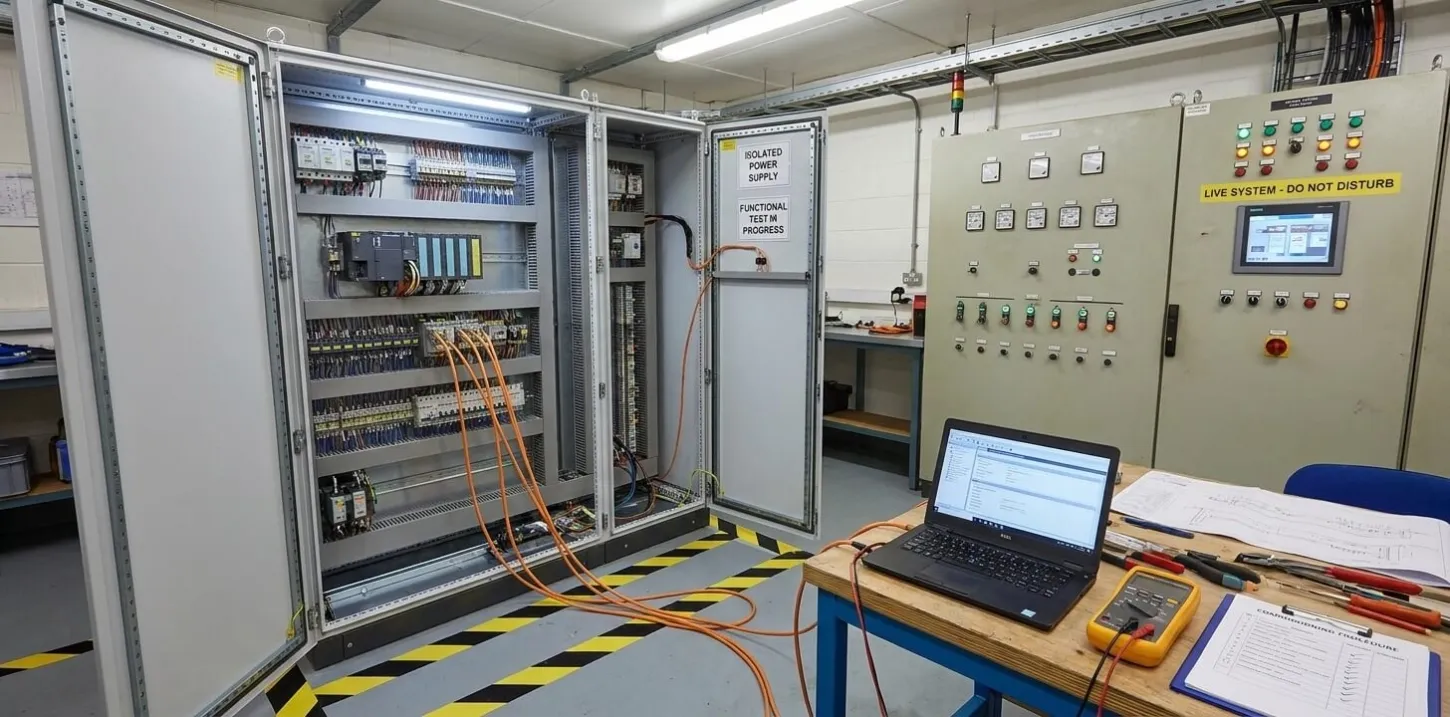
Brownfield Redundancy Lines Project: Commissioning New Control Panels Without Disturbing a Live System
The hardest part of this project was not installing new remote-control panels. It was proving the new redundancy lines while the existing system continued to operate. In a brownfield environment, one wrong signal can disturb a process that was already stable. This case documents how Phase-01 and Phase-02 were tested, commissioned, and handed over without treating live operation as a testing ground.
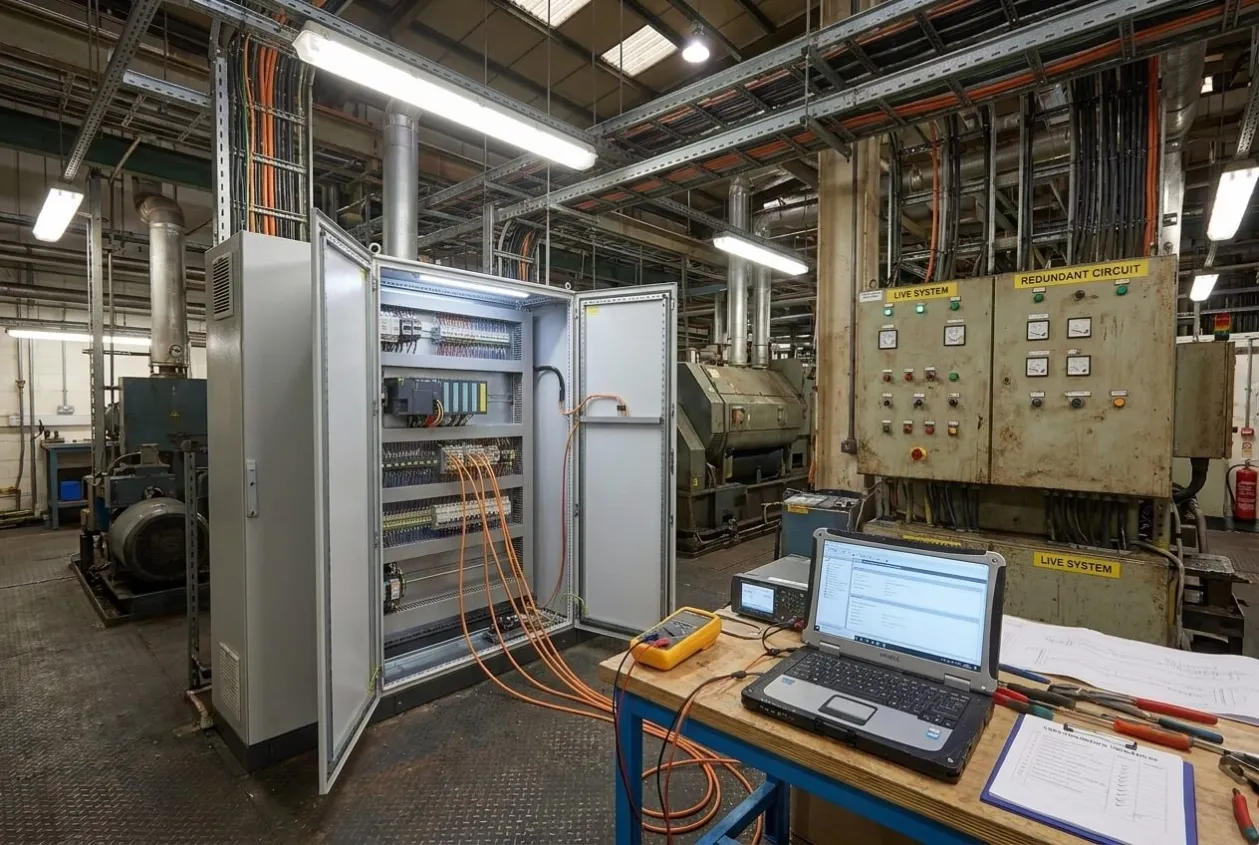
Project Snapshot
Item | Description |
|---|---|
Industry | Industrial Automation / Infrastructure Upgrade |
Application | |
Project Type | Brownfield upgrade, testing, and commissioning |
Location | Existing live operating facility |
Project Phases | Phase-01 and Phase-02 |
Products | Remote-control panels, control equipment, field interface devices |
Services | Testing, commissioning, integration review, functional verification |
Result | Both Phase-01 and Phase-02 successfully tested and commissioned in a live brownfield environment |
Project Overview
This project involved the testing and commissioning of Phase 01 and Phase 02 of a redundancy line upgrade inside an existing live facility. The scope included new remote-control panels, upgraded control equipment, field signal integration, and functional testing against the existing operating system.
The unusual part was this: the new system had to be commissioned beside the old one, not after the old one was removed.
That is where brownfield work becomes serious. On a new site, the team can build from clean drawings, pull new cables, test freely, and correct mistakes before operation begins. On a live site, every terminal already has a purpose. Every operator already has a routine. Every shutdown request needs a reason. The existing system may not be perfect, but it is working, and that makes it valuable.
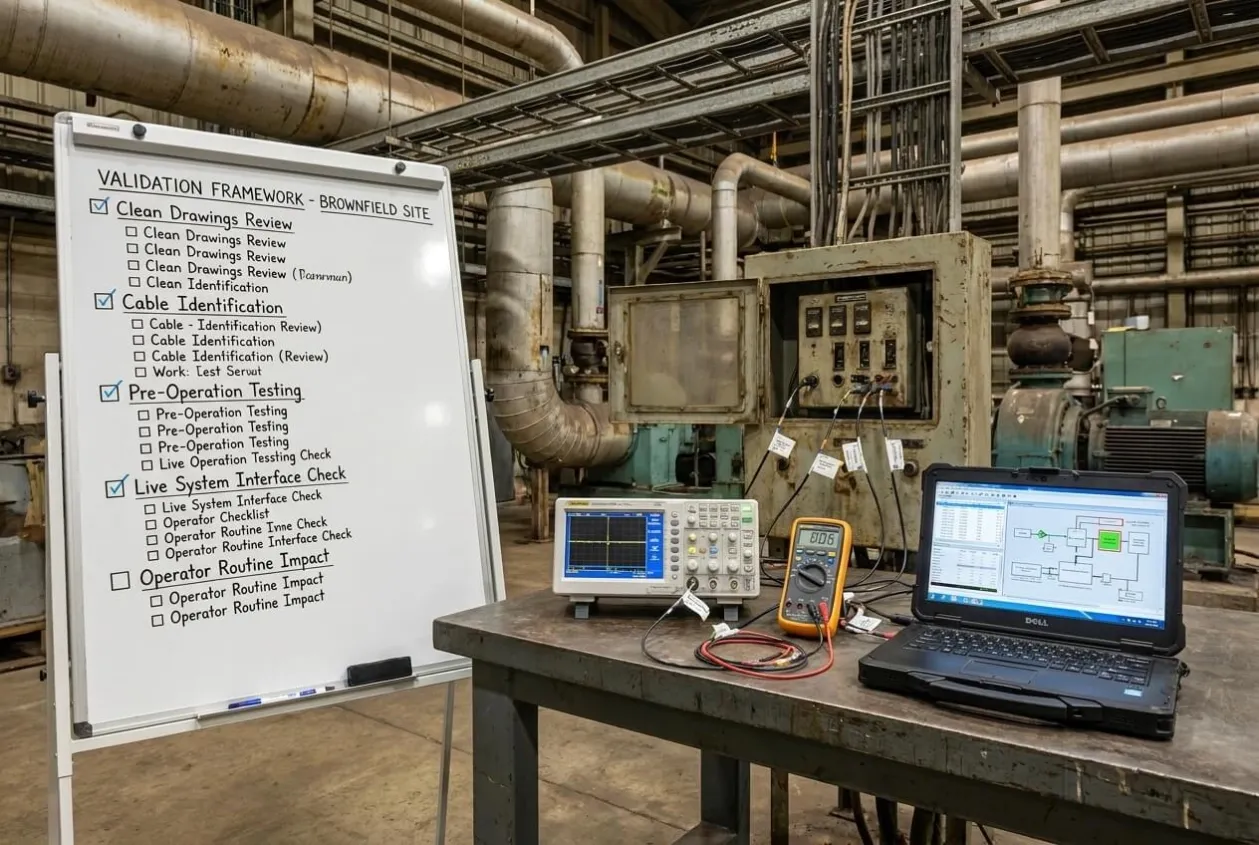
The customer needed additional redundancy and remote-control capability, but the existing operation could not be disturbed just because new equipment was being added. That became the core message of the project: a brownfield upgrade is successful only when the new system works and the existing operation remains trusted.
For us, the project was not about proving that a panel could power up. It was about proving that Phase-01 and Phase-02 could be integrated without creating uncertainty for the operators who had to run the system after we left.
Customer Challenge
From the customer’s side, the pressure was practical and immediate. They needed the redundancy lines commissioned, but they could not afford a situation where the new control panels introduced confusion into a live operation.
The site was already running. Operators were already depending on the existing control behavior. Maintenance personnel already knew which panels to check, which signals mattered, and which parts of the system needed caution. Adding new remote-control panels changed that familiar environment.
The main risk was not that the new panels would fail to turn on. The bigger risk was that the new panels would work only in isolation but create problems once connected to the existing system.
The customer had several concerns:
- Existing operations had to remain stable during testing.
- New remote-control panels had to match the real site wiring, not only the drawings.
- Phase-01 and Phase-02 signals had to be identified separately.
- Local and remote control authority had to be clear to operators.
- Commands, feedback, permissives, and alarms had to be verified before functional operation.
- Legacy interlocks had to be understood before new logic was introduced.
- Commissioning steps had to be controlled so that any issue could be isolated quickly.
- Operators needed confidence that the new redundancy lines would not make daily operation harder.
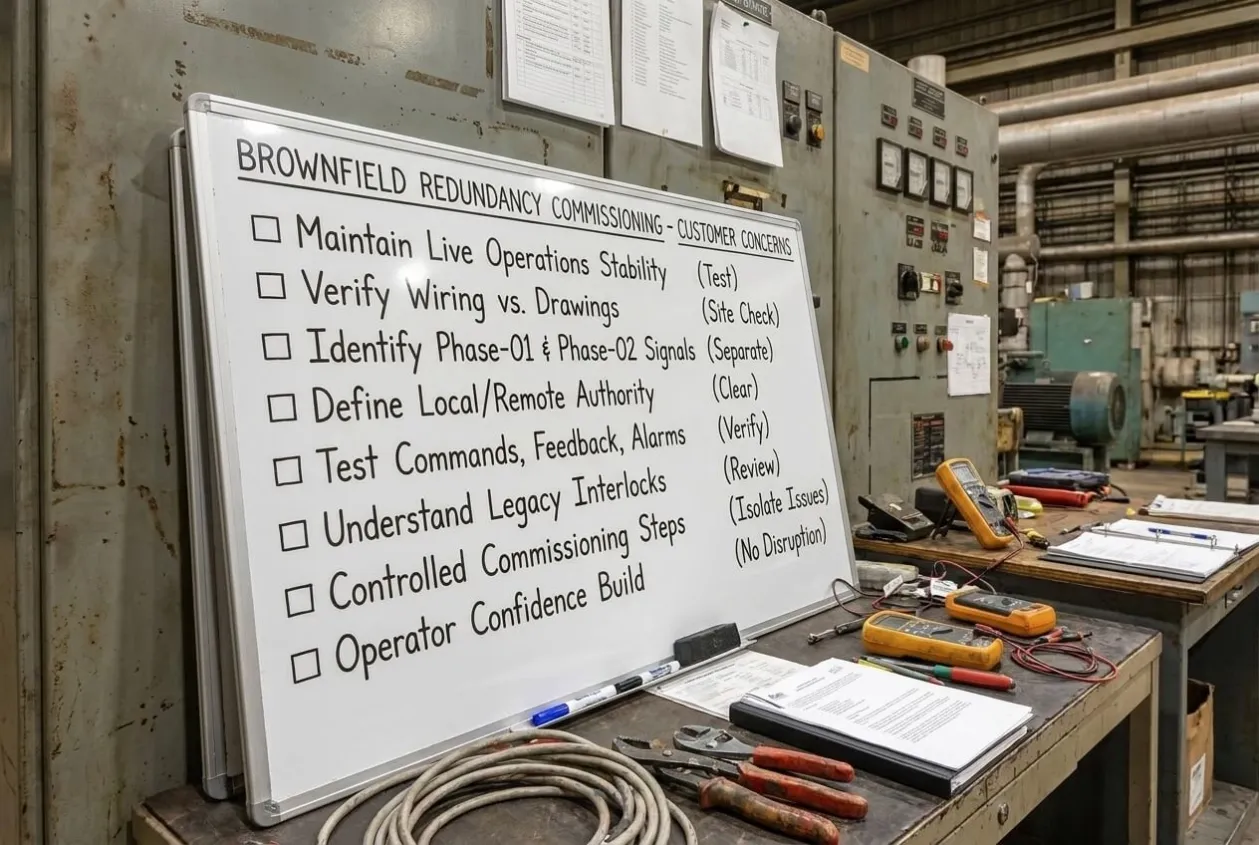
This is the pain point in many brownfield projects. The new equipment may be technically correct, but the site still rejects it because the integration was not handled carefully.
A wrong feedback signal can show equipment as available when it is not. A wrong command path can make the operator doubt the remote-control panel. A poorly understood local/remote mode can lead to two teams thinking they have control at the same time. A small wiring mistake inside an old panel can take hours to trace because nobody wants to disturb a live system without evidence.
The customer was not asking for a dramatic solution. They were asking for something harder: make the upgrade work without making the existing operation feel unsafe.
Engineering Review
The engineering review focused on the one issue that could make or break the project: interface certainty.
In a brownfield redundancy lines project, the interface between new and existing equipment is the real risk area. The new remote-control panels may be neatly built and fully tested in the workshop, but once they meet legacy wiring, old terminal blocks, previous modifications, and live operating rules, the project changes.
The first engineering task was to separate assumption from evidence.
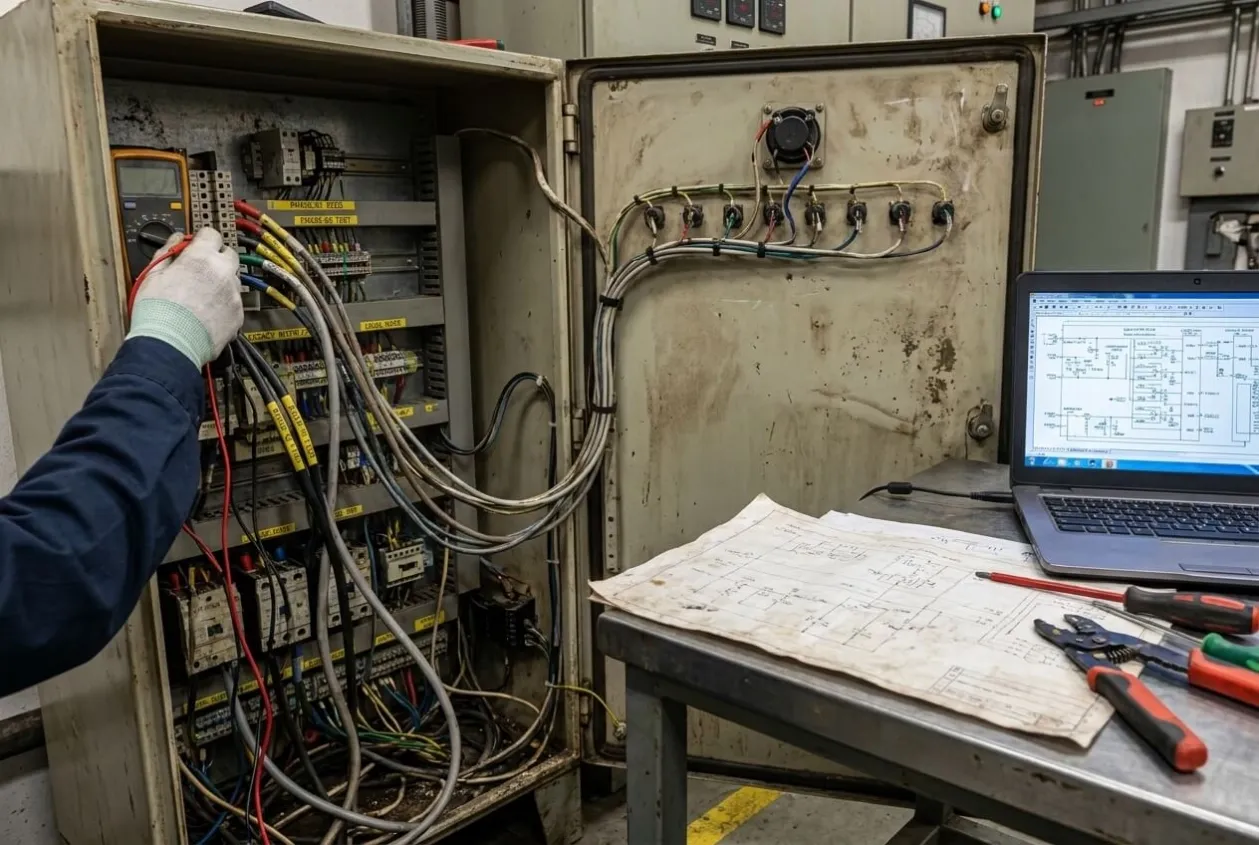
Old drawings were reviewed, but they were not treated as final truth. In brownfield facilities[¹], drawings may show the original design, while the panel shows the operating history. Cables may have been re-terminated. Spare cores may have been used. Interlocks may have been modified during earlier maintenance. A terminal label may still exist even though the circuit behind it has changed.
That is why every important signal had to be verified at the panel and at the field interface.
The second task was to define control authority[²]. Remote-control panels are useful only when the operator understands when remote control is active, when local control is active, and what prevents a command from being accepted. If this is unclear, the system may still function electrically, but the operator will not trust it.
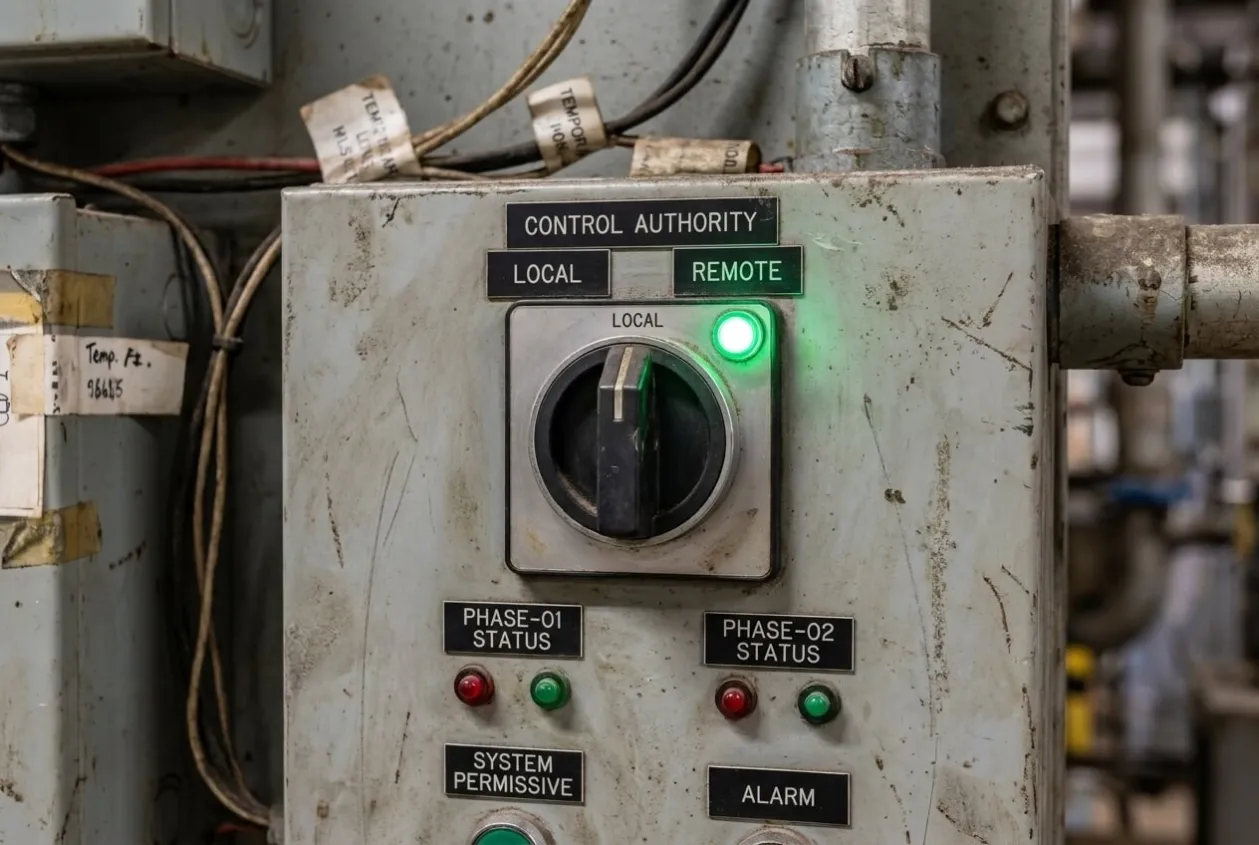
The third task was to commission Phase 01 and Phase 02 separately. The two phases were part of the same redundancy lines project, but they could not be treated as identical. Brownfield systems often look repetitive on drawings while behaving differently onsite. The safest approach was to prove each phase on its own before confirming the complete upgrade while following recognized IEC industrial control system standards[³].
A simplified engineering review table is shown below:
Review Item | Engineering Question | Risk if Ignored |
|---|---|---|
Existing drawings | Do drawings match the actual panel and field wiring? | Wrong terminal assumptions during testing |
Legacy logic | Are existing interlocks and permissives understood? | Unexpected trip or rejected command |
Remote-control panels | Are command and feedback paths mapped correctly? | Operator loses confidence in remote operation |
Redundancy lines | Does each line respond correctly under verified conditions? | Redundancy exists only on paper |
Phase-01 testing | Can the first phase be proven without affecting live operation? | Early disruption and unclear fault source |
Phase-02 testing | Can the second phase be tested without relying on Phase-01 assumptions? | Hidden interface mismatch |
Local/remote mode | Is control authority visible and unambiguous? | Unsafe or confusing operation |
Alarm behavior | Do alarms show the real system condition? | False alarms or missed faults |
Field wiring | Are old and new terminations clearly separated? | Slow troubleshooting under pressure |
Commissioning sequence | Can each test step be stopped, checked, and reversed? | Poor recovery if a test fails |
The review changed how we approached the work. Instead of asking, “Is the new panel ready?” we asked, “Can the new panel be trusted by the existing system?”
That question made the testing more focused. We were not trying to prove everything at once. We were trying to remove uncertainty from the interface, one signal at a time.
Critical Engineering Decision
The turning point of the project was the decision to test Phase-01 and Phase-02 separately before treating the redundancy lines as one completed system.
This decision sounds simple, but it changed the outcome.
There was pressure to move faster. The panels were installed, cables were ready, and the customer wanted to see the redundancy function completed. In many projects, this is the moment when teams jump straight into full functional testing because the schedule looks tight.
We chose not to do that.
A full-system test may look efficient, but in a brownfield environment[⁴] it can hide the source of a problem. If a command fails, the issue could come from the new remote-control panel, the old terminal wiring, the existing interlock, the field device, the local/remote mode, or the interface between Phase-01 and Phase-02. Troubleshooting all of that during live operation creates unnecessary pressure.
So we separated the risk.
Phase 01 was tested first. Wiring was checked, signals were verified, remote commands were confirmed, feedback was observed, alarms were reviewed, and local/remote control[⁵] behavior was proven. Only after Phase-01 was understood did the team move to Phase-02 with the same discipline while following recognized industrial control system commissioning[⁶] practices.
This decision avoided the most expensive brownfield mistake: creating one large problem with too many possible causes.
It also gave operators confidence. They did not see the project team guessing. They saw a controlled process where each phase was confirmed before the next step started. That matters because operators will not trust a system just because an engineer says it is commissioned. They trust it when the behavior they see matches the behavior they were told to expect.
The real engineering value was not in adding redundancy lines. It was in proving the redundancy lines without damaging trust in the existing operation.
Solution Delivered
The delivered solution included the successful testing and commissioning of both Phase-01 and Phase-02 of the redundancy lines project.
New remote-control panels[⁷] were integrated with the existing infrastructure. These panels supported remote operation, status monitoring, and interface functions required for the redundancy lines. The equipment was not checked as standalone hardware only. It was checked as part of the live system it had to serve.
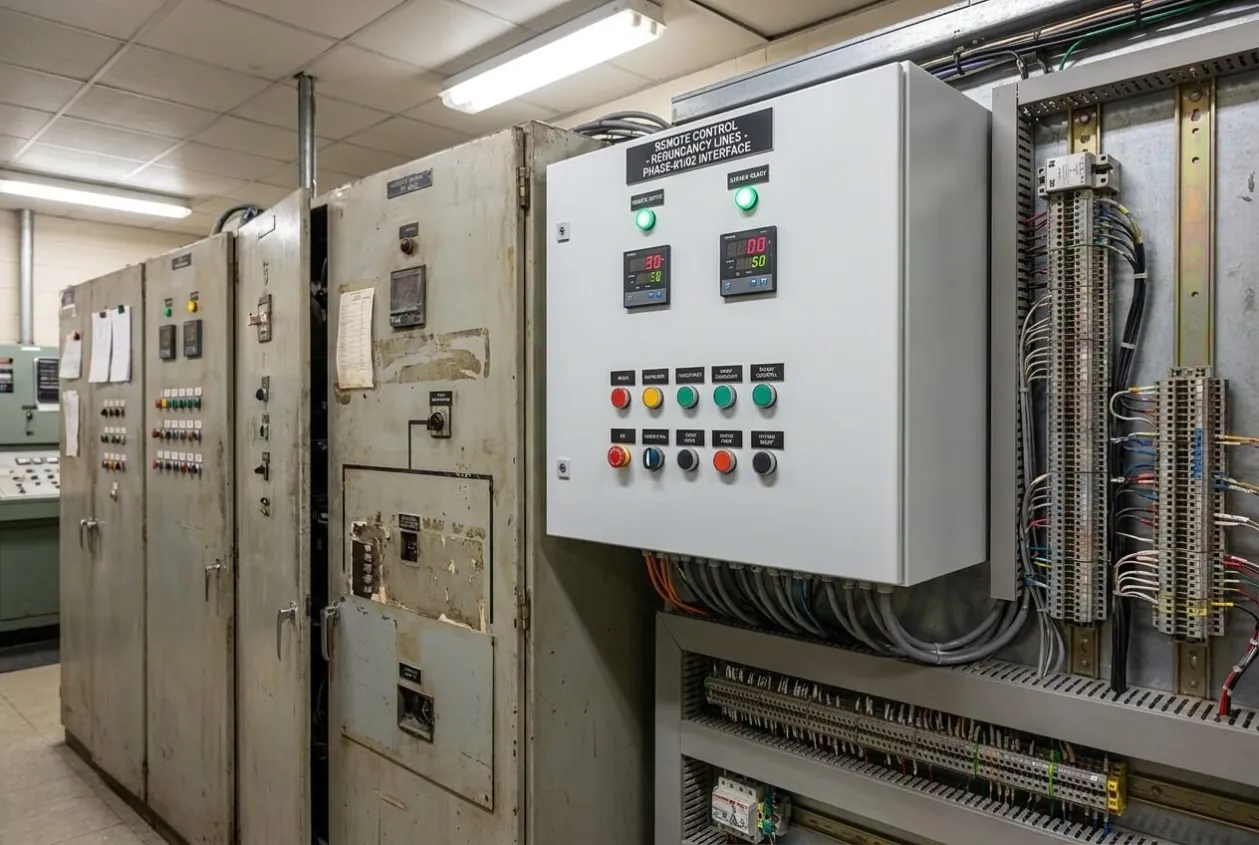
For Phase-01, the team verified the first section of the redundancy lines in a controlled sequence. The work included terminal checks, wiring confirmation, command testing, feedback verification, alarm review, and local/remote mode testing. Each signal had to make sense electrically and operationally in accordance with recognized industrial control system standards[⁸].
For Phase-02, the same process was repeated instead of assuming it would behave the same as Phase-01. This was important because brownfield sites often carry small differences that are not obvious until testing begins. One panel may have an old modification. One cable route may not match the drawing. One feedback signal may have been renamed years earlier.
The final solution gave the customer a commissioned redundancy lines system with both phases tested under real site conditions using established commissioning and verification practices[⁹].
Just as important, the project gave the operators clearer control. They could understand what was being controlled remotely, what status was being returned, and how the system responded when a command was issued.
That is what a brownfield upgrade needs to achieve. The new equipment must not only be installed but also be maintained. It must become understandable to the people who operate the plant while supporting safe electrical work practices described by NFPA[¹0].
Before Shipment Verification
For this project, verification was not limited to factory release. Because the work involved a live brownfield site, the most important verification happened during onsite testing and commissioning.
The following activities were included:
Verification Activity | Why It Mattered |
|---|---|
Component verification | Confirmed installed devices matched the approved design |
Wiring inspection | Checked new panel wiring and field termination accuracy |
Terminal identification | Reduced confusion between old and new signals |
Continuity testing | Confirmed cable paths before functional testing |
Power-up checks | Verified control supply and safe energization |
I/O signal testing | Confirmed commands, feedback, alarms, and permissives |
Local/remote mode test | Verified operating authority and control transfer |
Phase-01 functional test | Confirmed the first phase operated correctly |
Phase-02 functional test | Confirmed the second phase operated correctly |
Redundancy response test | Verified the system response under intended operating conditions |
Alarm and indication test | Confirmed operators received correct information |
Documentation review | Checked that drawings and test records matched actual installation |
Operator handover check | Confirmed the site team understood the new functions |
The most important verification item was terminal identification. In a brownfield panel, old and new wiring often sit together. A cable marker may be faded. A wire number may not match the latest site practice. A terminal may have been reused after a previous modification. If the team skips this step, the first functional test becomes a gamble.
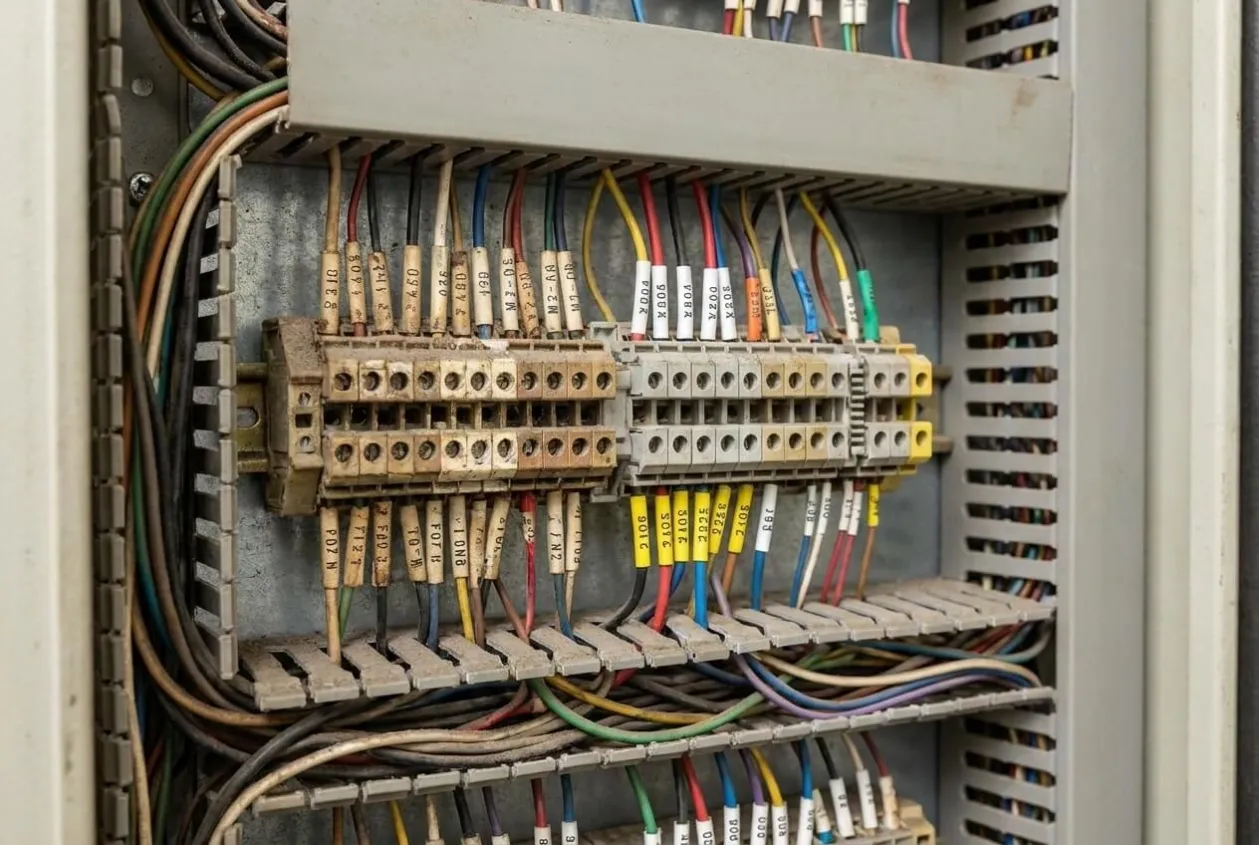
Local/remote mode testing was another key check. This is where many brownfield upgrades become confusing. The control panel may send the correct command, but if the system is not in the expected mode, nothing happens. Without clear indication, the operator may think the new panel failed. In reality, the logic may be doing exactly what it was designed to do.
That is why the test team confirmed not only whether a command worked but also why it worked or why it was blocked.
Both Phase-01 and Phase-02 were tested and documented separately. This gave the customer clearer evidence and reduced future troubleshooting effort. If a question comes up later, the team can refer back to phase-specific test records rather than relying on memory.
Verification in a brownfield project is not paperwork. It is how we protect the live system from guesswork.
Project Results
Testing and commissioning were successfully completed for both Phase-01 and Phase-02.
The result was practical and measurable:
- 2 project phases commissioned: Phase 01 and Phase 02.
- 2 redundancy line stages tested under brownfield site conditions.
- 2 integration layers verified: new remote-control panels and existing live infrastructure.
- 4 core commissioning areas confirmed: wiring, signal response, functional operation, and operator indication.
- 5 key interface groups reviewed: remote commands, status feedback, alarms, permissives, and local/remote mode behavior.
- 1 live operating environment protected throughout the commissioning process.
The strongest result was not that the new panels powered up. That was expected. The real result was that the new redundancy lines were proven without creating unnecessary disturbance to the existing operation.
The customer received a system where both phases had been tested separately, interface signals had been checked, and local/remote behavior had been confirmed. Operators had clearer visibility of the new control functions. Maintenance personnel had better confidence in signal paths and test records. Future troubleshooting became easier because the commissioning evidence was organized by phase and function.
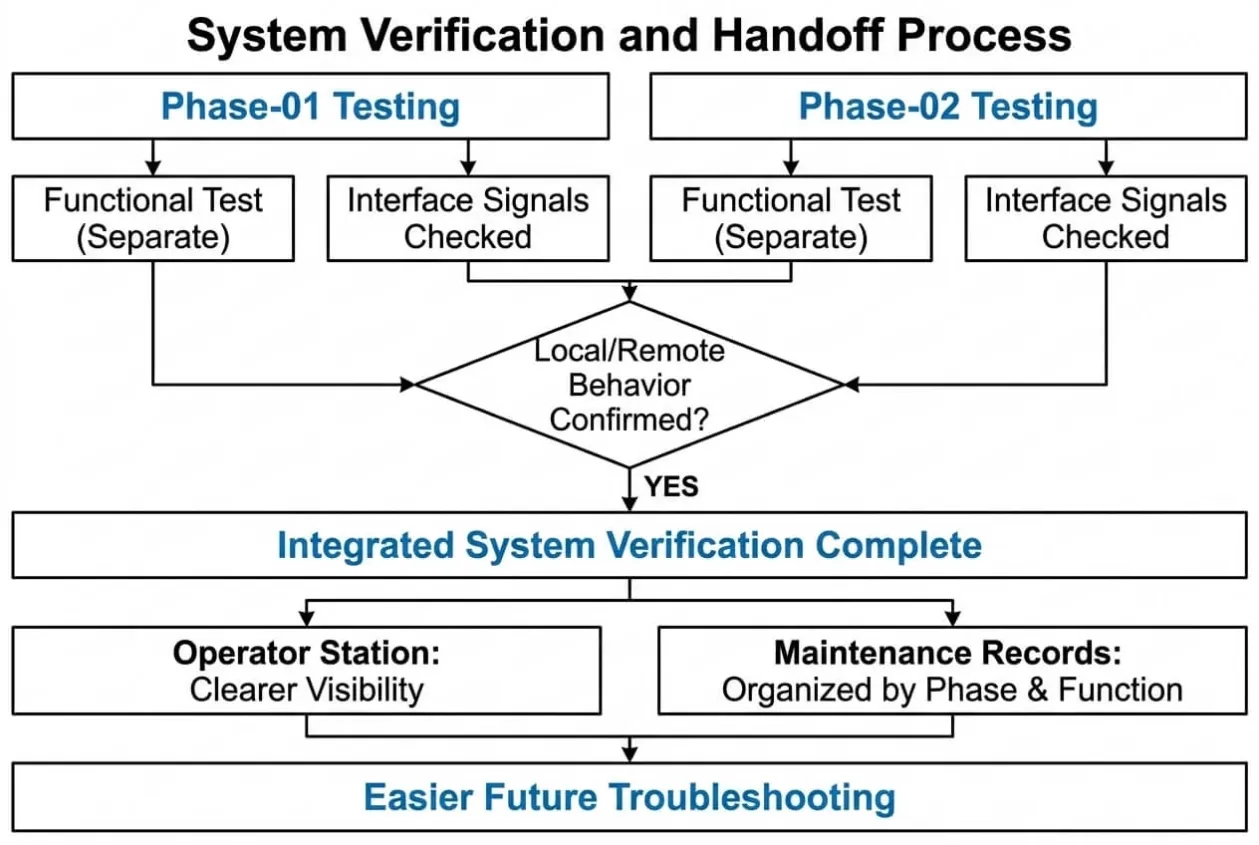
This is what matters in brownfield automation work. The value is not only in adding new equipment. The value is in removing uncertainty from the handover.
A new panel that nobody trusts is just another cabinet on the wall. A tested panel with verified signals, clear modes, and documented behavior becomes part of the operation.
Engineering Notes from Natalie
The most uncomfortable part of brownfield commissioning is that you are working inside someone else’s running system.
In the workshop, a wrong wire is just a correction. On site, a wrong wire can become a meeting, a delay, or a shutdown request. That changes how you think. You stop assuming. You start proving it.
For this project, I kept coming back to one habit: verify the interface before judging the function. If a command did not work, we did not immediately blame the new panel or the old system. We checked the signal path, the mode condition, the permissive, and the feedback. That method kept the work calm.
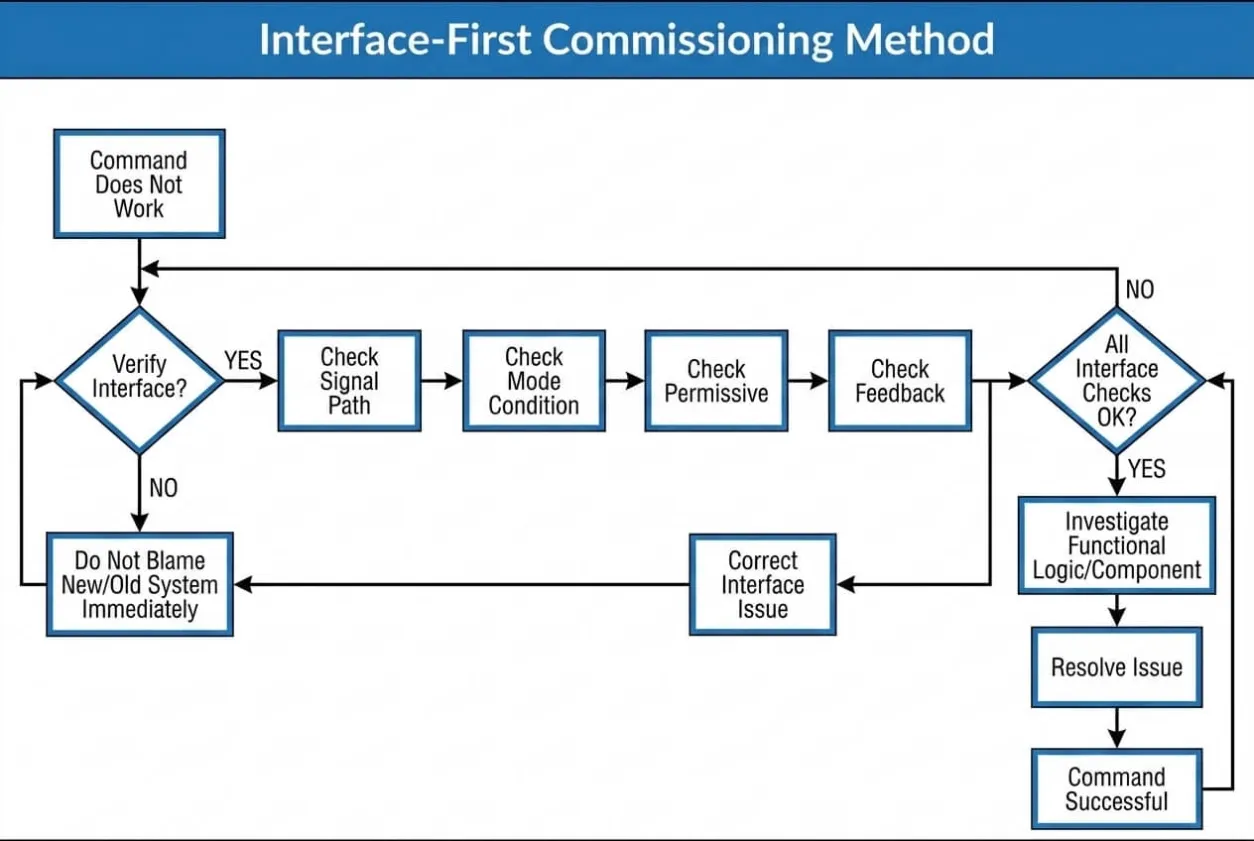
Brownfield sites always carry history. Some of that history is written in drawings. Some of it is hidden inside panels. Some of it is known only by the operators who have lived with the system for years.
Good commissioning respects that history. It improves the system without embarrassing the people who kept it running before the upgrade.
Lessons Learned
1. Brownfield projects must start with verification, not assumptions
Existing drawings, cable labels, and control logic may not fully match the real installation. Site verification should always come before final integration.
2. The interface is usually the real risk
New control panels can pass workshop tests and still fail onsite if command paths, feedback signals, permissives, and local/remote modes are not matched to the existing system.
3. Redundancy must be proven under real conditions
A redundancy line is useful only if its commands, feedback, alarms, and operating response work when connected to the live system.
4. Phase-by-phase commissioning reduces pressure
Testing Phase-01 and Phase-02 separately makes it easier to isolate problems and prevents one issue from becoming a system-wide troubleshooting exercise.
5. Operators need clear control authority
A remote-control upgrade must show when remote control is active, when local control is active, and why a command is accepted or blocked.
6. Commissioning records protect future maintenance
Brownfield projects often reveal differences between drawings and actual installation. Phase-specific test records and updated documentation help future technicians work faster and safer.
Key Takeaways
✔ The real risk in brownfield automation is not the new panel. It is the interface with the live system.
✔ Redundancy lines must be verified through commands, feedback, alarms, permissives, and local/remote modes.
✔ Phase-by-phase commissioning protects live operation and gives operators a reason to trust the upgrade.
Need Similar Support?
If you are planning a brownfield control upgrade, redundancy line project, remote control panel, or live system modification, send us:
✓ Existing Single Line Diagram
✓ Control Philosophy
✓ I/O List
✓ Current Panel Drawings
✓ Installation Environment
We can review the interface points before fabrication or commissioning, including legacy signals, local/remote control behavior, shutdown-sensitive test steps, and the parts of the system that cannot be disturbed during the upgrade.
Related Articles:
Need help specifying or sourcing this for your project? Request a quote - we reply within 1-2 working days with a technical review.