
MCC Panels
APFC Panel Supplier & Manufacturer
UniRegal supplies custom APFC panels for automatic power factor correction, capacitor switching, kVAR compensation and industrial power-quality projects. Send your voltage, load profile, target power factor and SLD for quotation.
Automatic Power Factor Correction Panels for Industrial Power Systems
UniRegal designs and manufactures APFC panels for industrial and commercial facilities that need automatic reactive-power compensation, stable power factor control, and better use of existing electrical capacity.
Our APFC panel design is based on the site voltage, transformer rating, load profile, target power factor, harmonic condition, installation method, and required kVAR capacity.
Recommended for: factories, pumping stations, commercial buildings, hospitals, hotels, utilities, and facilities with motors or other inductive loads.
Quick Answer
What is an APFC Panel?
APFC stands for Automatic Power Factor Correction.
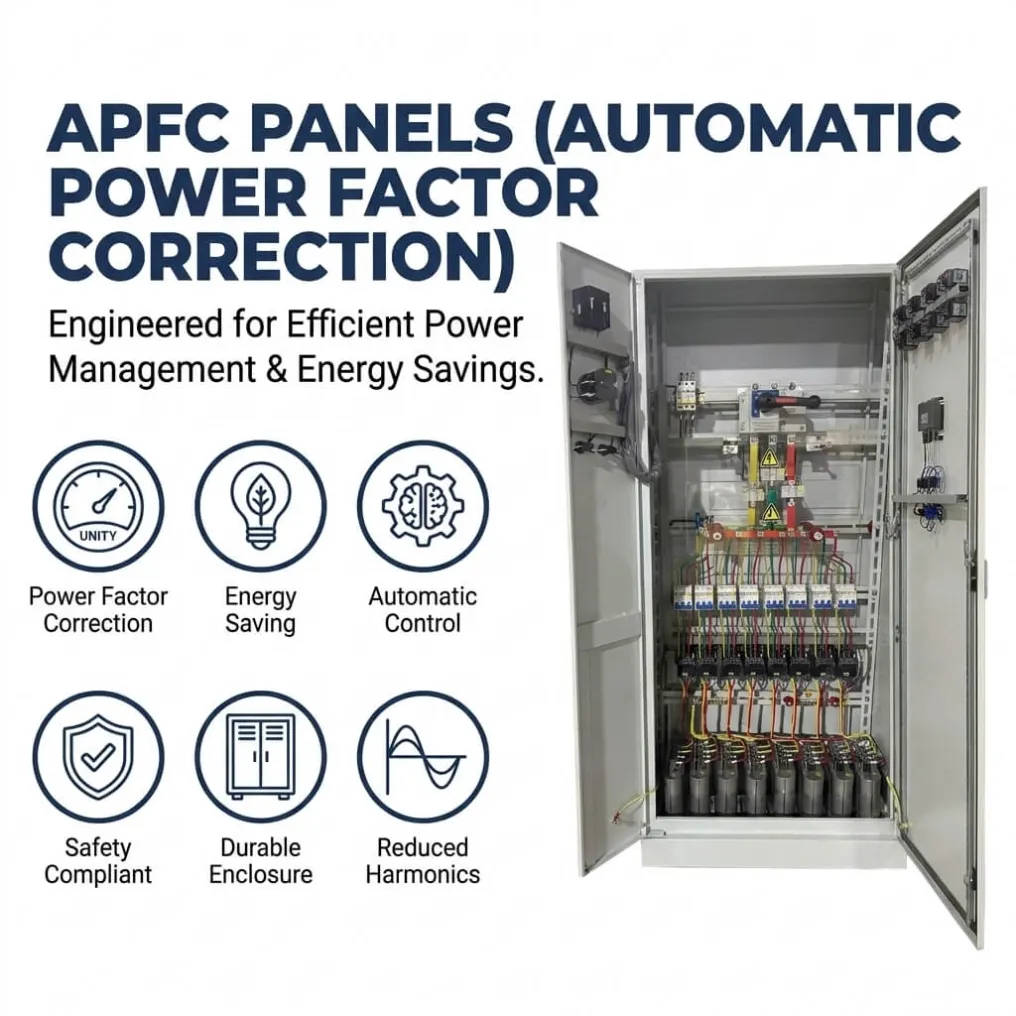
An APFC panel monitors the power factor of an electrical system and automatically switches capacitor steps in or out according to the reactive-power demand. This helps maintain the required power factor under changing load conditions.
The panel is not selected by cabinet size alone. Correct performance depends on the required kVAR, switching method, capacitor duty, harmonic level, protection system, and control-wiring arrangement.
APFC Panel at a Glance
Buyer question | Engineering answer |
|---|---|
What problem does it solve? | Low power factor caused by motors, transformers, pumps, compressors, welding equipment, and other inductive loads. |
What does the panel control? | Capacitor-bank steps used for automatic reactive-power compensation. |
How is the size selected? | From measured load data, present power factor, target power factor, transformer capacity, and operating pattern. |
When are detuned reactors needed? | When the network contains significant harmonics from VFDs, UPS systems, rectifiers, welders, or electronic loads. |
What affects APFC panel price? | Total kVAR, number of steps, capacitor type, reactor requirement, switching technology, protection, enclosure, metering, and testing. |
Can it be connected to an MDB or PCC? | Yes. The connection point depends on the distribution arrangement and the compensation strategy. |
Why Your Facility May Need an APFC Panel
A facility normally needs automatic power factor correction when one or more of the following conditions are present:
- The utility bill includes a low-power-factor or reactive-energy penalty.
- The transformer is carrying unnecessary reactive current.
- The main incomer current is higher than expected for the useful load.
- Large motors, pumps, compressors, or HVAC systems operate for long periods.
- The load changes significantly during different shifts.
- The facility wants to increase usable capacity without immediately replacing the transformer.
- The existing capacitor bank is fixed and causes leading power factor during low-load periods.
A fixed capacitor bank may work for a stable load. An APFC panel is more suitable when the reactive-power demand changes throughout the day.
Select the APFC Configuration by Load Type
Stable Industrial Loads
For facilities with relatively predictable motors and steady operating hours, a contactor-switched APFC panel may provide a practical solution.
Typical applications include:
- Standard production lines
- Water pumps with stable duty cycles
- Compressors with consistent operating periods
- Commercial buildings with predictable demand
Rapidly Changing Loads
For cranes, welding lines, elevators, presses, or machinery that changes load within seconds, thyristor-switched compensation may be considered.
This configuration reduces mechanical switching wear and responds more quickly to changing reactive-power demand.
Harmonic-Rich Networks
For systems with VFDs, UPS units, rectifiers, welding equipment, or large electronic loads, a detuned APFC panel should be evaluated.
Detuned reactors are used to reduce the risk of resonance and harmonic amplification between the capacitor bank and the electrical network. The reactor rating and tuning point must be selected from the measured harmonic condition, not added as a standard accessory.
APFC Panel Design: How the kVAR Requirement Is Determined
UniRegal does not select capacitor capacity from connected motor horsepower alone. A practical APFC panel design normally considers:
- Existing power factor at the main incomer
- Target power factor required by the utility or project
- Maximum demand and average operating demand
- Transformer rating and spare capacity
- Motor, pump, compressor, and HVAC loading
- Daily and shift-based load variation
- Harmonic distortion and installed electronic equipment
- Required installation location and cable-entry direction
- Future load expansion
- Required enclosure and protection class
The target power factor is normally defined by the utility tariff, project specification, or consulting engineer. The controller then operates the capacitor steps to maintain the target without creating an unwanted leading power factor.
Information Needed for an APFC Panel Quotation
Please provide the following information whenever available:
- System voltage and frequency
- Three-phase or other system arrangement
- Transformer rating
- Existing power factor
- Desired power factor
- Maximum demand or main-incomer current
- Required total kVAR, if already specified
- Presence of VFDs, UPS systems, rectifiers, welders, or solar inverters
- Indoor or outdoor installation
- Floor-mounted or wall-mounted arrangement
- Incoming and outgoing cable requirements
- Local standard or project specification
If the required kVAR is unknown, an electricity bill and transformer/load schedule can be used for an initial engineering review.
What Is Included in a UniRegal APFC Panel?
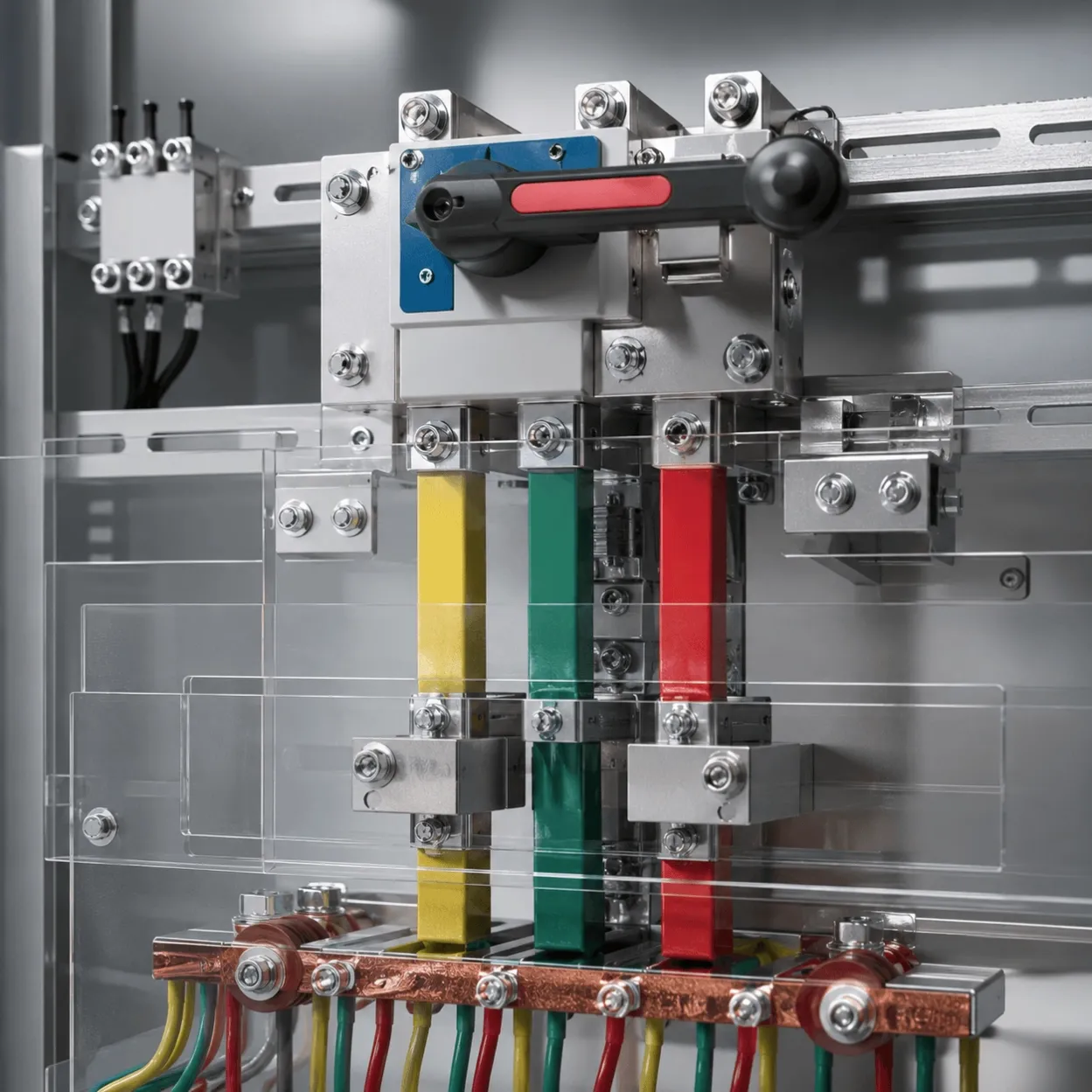
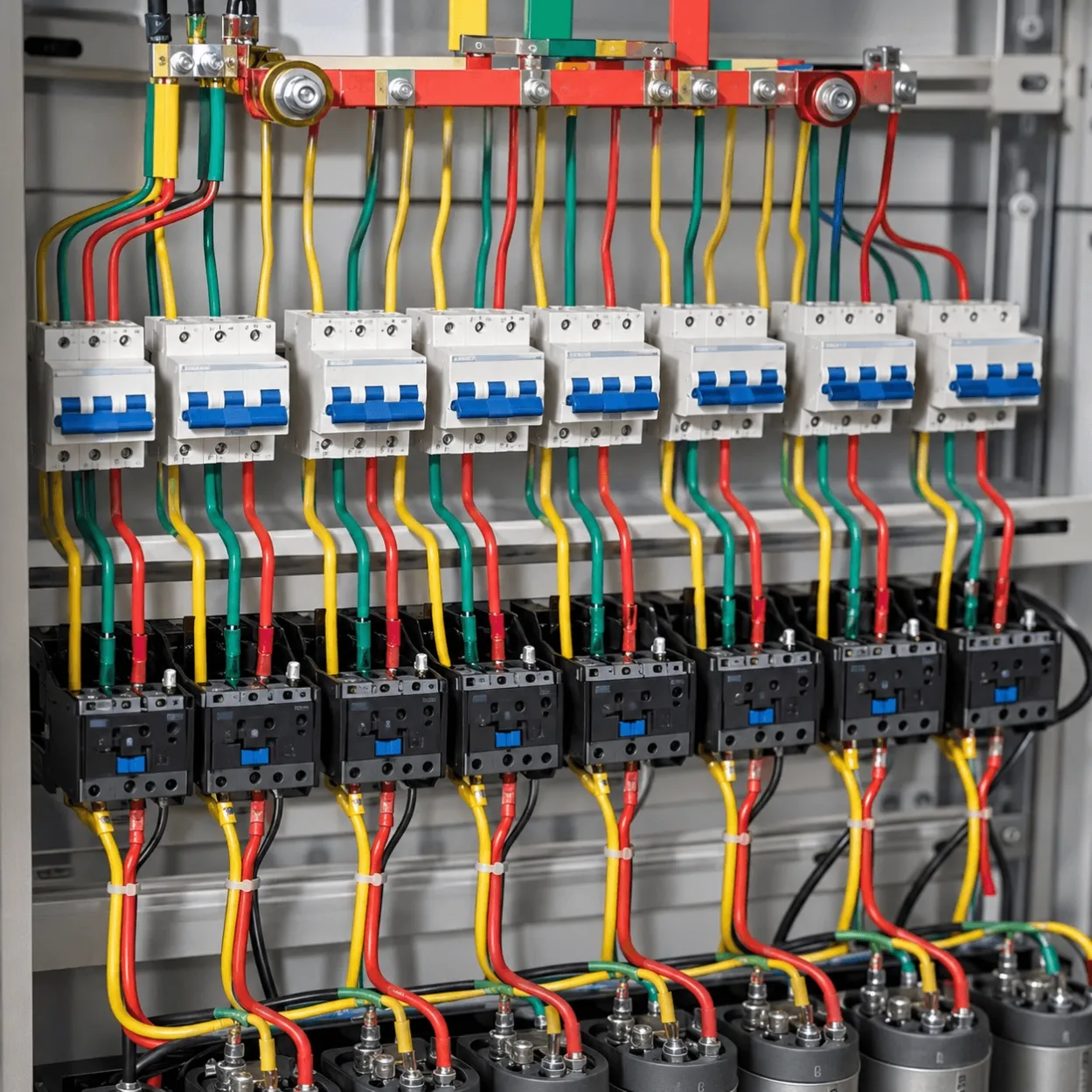
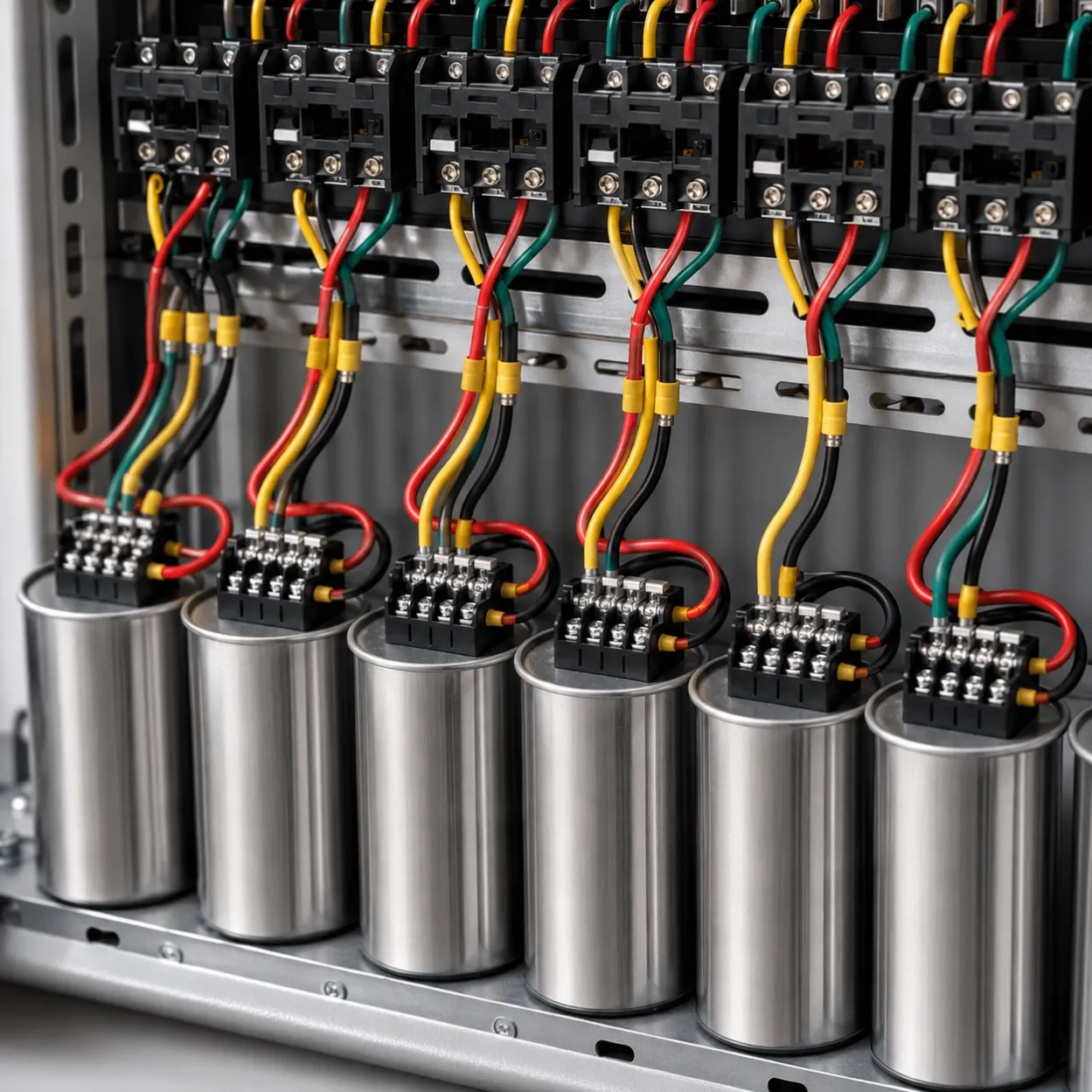
The final configuration depends on the approved single-line diagram and technical specification. A typical APFC panel may include:
- APFC power-factor controller
- Capacitor-duty contactors or thyristor switching modules
- Power capacitors
- Detuned reactors where harmonic conditions require them
- Incomer MCCB or ACB
- Step protection
- HRC fuses or specified branch protection
- Copper or aluminium busbars
- CT input and metering
- Auto/manual selector
- Alarm and indication circuits
- Capacitor discharge components
- Cooling fan and ventilation control
- Temperature monitoring where specified
- Cable glands, terminals, labels, and internal wiring
- Form of separation and enclosure arrangement according to the project requirement
APFC Panel Control Wiring
Correct control wiring is essential for reliable automatic operation.
The APFC controller must receive the correct voltage reference and a correctly positioned current-transformer signal. CT polarity, CT ratio, phase reference, and connection location must match the approved wiring diagram.
Incorrect CT installation can cause:
- Unstable capacitor-step switching
- Incorrect power-factor readings
- Unwanted leading power factor
- Failure to connect required capacitor steps
- Repeated alarms or unnecessary switching
The final APFC panel control-wiring diagram should show:
- Controller auxiliary supply
- CT connection and polarity
- Voltage-sensing terminals
- Capacitor-step outputs
- Contactor or thyristor interfaces
- Fan and thermostat circuits
- Alarm contacts
- Interlocks
- Manual/automatic selection
- Protection and isolation points
- Earthing connections
UniRegal can prepare the wiring documentation according to the approved project schematic and component arrangement.
APFC Panel Price: Why Quotations Differ
Two APFC panels with the same total kVAR may have different prices and different operating performance.
The main price factors include:
Configuration item | Why it changes the quotation |
|---|---|
Total kVAR | Determines capacitor-bank capacity and cabinet space. |
Number of steps | More steps can provide finer control for changing loads. |
Capacitor type | Heavy-duty or application-specific capacitors may be required. |
Detuned reactors | Add cost, space, heat dissipation, and reactor protection requirements. |
Switching method | Contactor and thyristor systems have different response and maintenance characteristics. |
Incomer and step protection | Depends on fault level, current, coordination, and project standards. |
Enclosure | Material, IP rating, mounting method, and cable entry affect cost. |
Busbar system | Material, current rating, temperature rise, and separation affect the design. |
Metering and communication | Local meters, alarms, or communication interfaces add hardware and testing requirements. |
Factory testing | Functional testing, wiring checks, insulation checks, and documentation affect delivery scope. |
A low initial price can become expensive if the panel is undersized, exposed to harmonics, incorrectly controlled, or difficult to maintain.
APFC Panel vs PCC Panel
A PCC panel distributes incoming electrical power to downstream feeders.
An APFC panel compensates reactive power by controlling capacitor-bank steps.
They perform different functions and may operate together in the same low-voltage distribution system. The connection point depends on the main distribution design, feeder arrangement, and desired compensation strategy.
APFC Panel vs MCC Panel
An MCC panel starts, stops, protects, and distributes power to motors.
An APFC panel corrects the reactive-power demand created by motors and other inductive equipment.
A motor-heavy facility may require both systems: the MCC controls the loads, while the APFC panel manages the associated power factor.
Applications
UniRegal APFC panels can be engineered for:
- Manufacturing plants
- Textile factories
- Cement and chemical plants
- Food and beverage production
- Packaging machinery
- Water and wastewater pumping stations
- HVAC and chiller plants
- Cold-storage facilities
- Hospitals and hotels
- Commercial buildings
- Automotive facilities
- Warehouses and logistics centers
- Utility and infrastructure projects
Factory Testing Before Shipment
Before dispatch, the inspection scope can include:
- Verification of internal control wiring
- Component and terminal identification
- Controller power-up test
- CT-input and phase-reference verification
- Capacitor-step switching test
- Protection and interlock checks
- Alarm and indication checks
- Fan and thermostat operation
- Insulation and continuity checks
- Earthing verification
- Nameplate and label inspection
- Approved drawing and document review
- Factory acceptance testing when required
Testing requirements should be agreed during quotation so that the panel, documentation, and inspection records match the project expectation.
Frequently Asked Questions
1. What is the full form of APFC panel?
APFC means Automatic Power Factor Correction. The panel automatically switches capacitor steps to maintain the required power factor.
2. How do I know whether my facility needs an APFC panel?
Review the utility bill, present power factor, transformer loading, and main-incomer current. A site with low power factor or changing inductive loads may benefit from APFC correction.
3. How is APFC panel kVAR calculated?
The kVAR requirement is calculated from existing and target power factor together with the facility’s real-power demand. Load measurements provide a more reliable result than motor nameplate data alone.
4. What is the difference between a fixed capacitor bank and an APFC panel?
A fixed bank remains connected at a selected capacity. An APFC panel automatically switches multiple capacitor steps as the load changes.
5. When should I choose a detuned APFC panel?
Consider detuned reactors when the system contains VFDs, UPS units, rectifiers, welders, or other sources of harmonic current. A harmonic assessment should confirm the reactor requirement.
6. What information is needed to obtain an APFC panel price?
Provide voltage, frequency, transformer rating, present power factor, target power factor, required kVAR, harmonic information, enclosure details, and project standards.
7. Where is an APFC panel normally installed?
It is commonly installed near the main distribution point or the load section where compensation is required. The final location depends on cable length, feeder arrangement, and the electrical study.
8. Can UniRegal manufacture an APFC panel for overseas projects?
Yes. UniRegal can prepare a project-specific APFC panel proposal based on the buyer’s electrical data, approved drawings, component requirements, local standards, and inspection scope.
Start Your APFC Panel Project
Send us any available project information:
- Electrical single-line diagram
- Transformer rating
- Electricity bill
- Existing and target power factor
- Main-incomer readings
- Required kVAR
- Harmonic or power-quality report
- Installation dimensions
- Required standard or component brand
UniRegal will review the information and recommend an APFC panel configuration suitable for the actual load profile, switching behavior, and site conditions.