
Sep 25, 2026Case Studies
RTU Panel Startup Problems
A failure analysis of RTU panel startup problems, showing how missing I/O details, transmitter power assumptions, SCADA mapping, FAT scope, and weak supplier review can delay well-site commissioning.
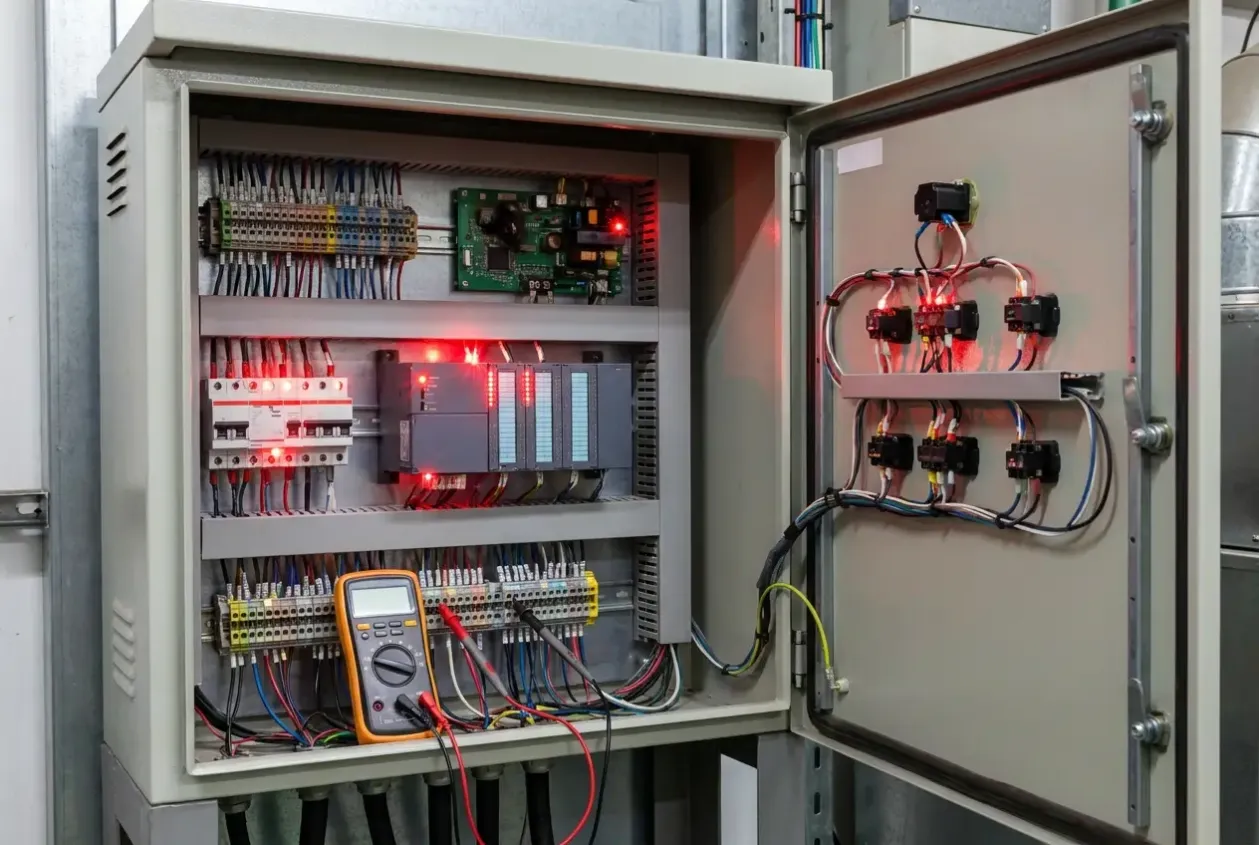
RTU Panel Startup Problems: A Failure Analysis for Well-Site Buyers
What Happened
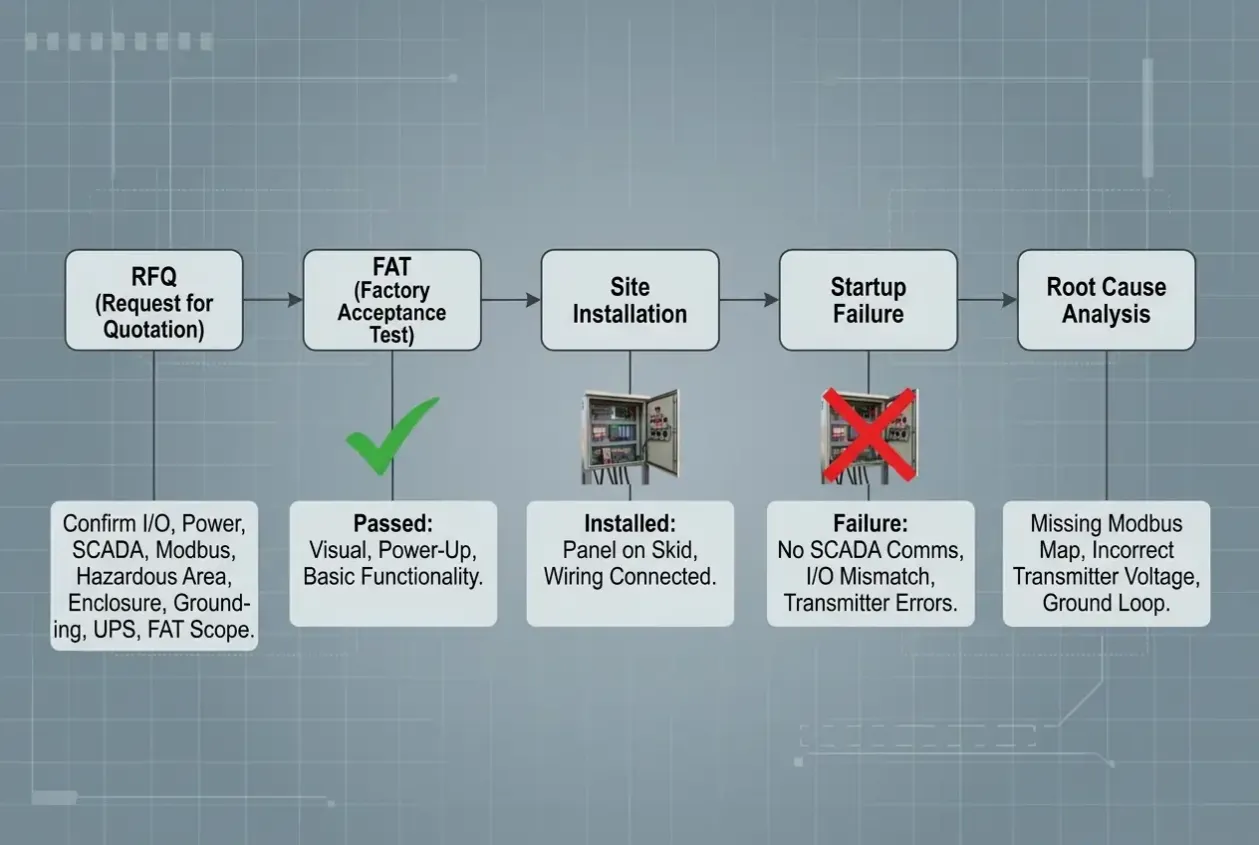
During one well-site project, the skid-mounted RTU panel passed workshop power-up and arrived on site without visible damage. The enclosure was correct, the RTU powered on, and the communication module showed normal status. At first, the startup team expected commissioning to move quickly.
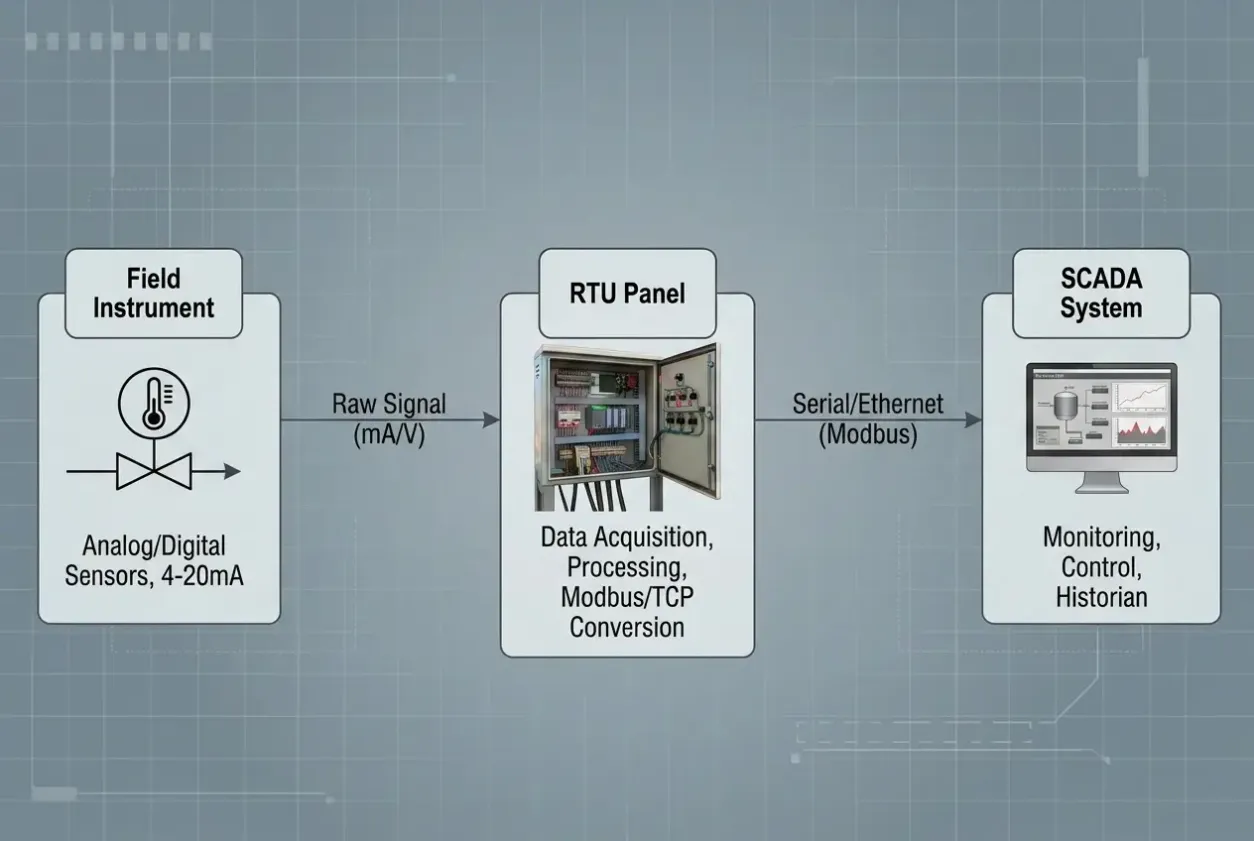
The problem appeared during the first signal verification. Four analog pressure transmitters did not appear correctly in SCADA[¹], and one tank level signal was mapped to the wrong Modbus register. The site team checked wiring, terminals, transmitter power, and Modbus settings. After several hours, the real issue became clear: those analog points had never been included in the approved I/O schedule [²], and two transmitters required a different power arrangement than the supplier had assumed.
The RTU did not fail because of poor wiring. It failed because nobody questioned an incomplete specification early enough.
Why It Happened
The RFQ only said “skid-mounted RTU panel, outdoor, Modbus RTU, Class I Division 2.” That sounded enough for a price, but it was not enough for a field-ready panel. The supplier quoted the enclosure, RTU hardware, terminals, and basic FAT but did not stop the process to confirm the full DI, DO, AI, and AO list.
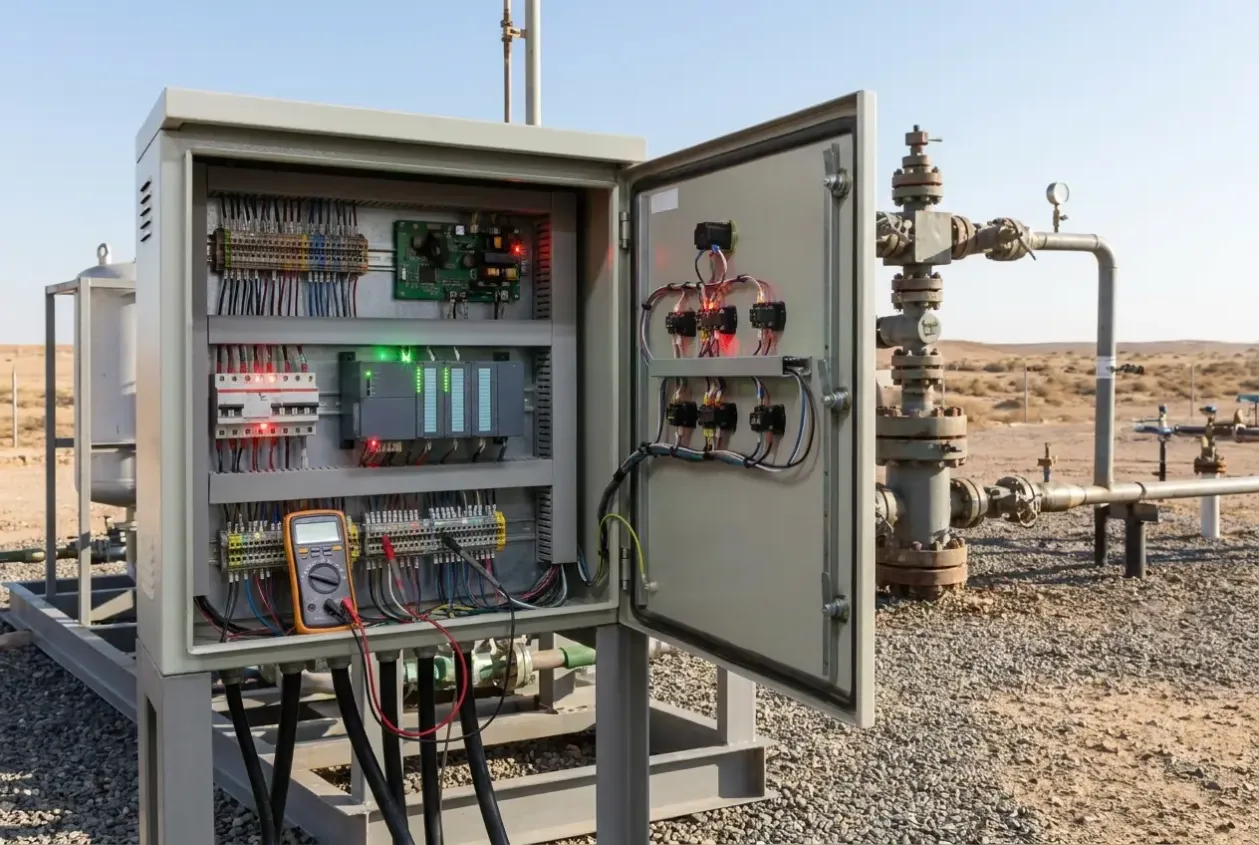
The FAT also missed the problem because it tested power-up and basic wiring, not the real site signals. By the time the issue was found, the panel was already installed, and every correction required field labor.
Most RTU startup failures begin months before the equipment is powered on. They begin when missing engineering information is accepted as “good enough.”
What Buyers Should Verify Before Approving an RTU Panel
Before approving the RTU panel supplier, the buyer should confirm the complete I/O schedule, transmitter power details, SCADA communication settings, Modbus address and register map, hazardous-area classification, enclosure rating, grounding method, UPS runtime, and FAT scope.
For a wellhead, pump station, or metering skid, the RTU panel is not just reading signals. It is connecting field instruments, local logic, communication hardware, power supply, safety inputs, and SCADA expectations into one package.
Before You Approve an RTU Supplier
Use these approval gates before releasing production:
- Complete the I/O list with DI, DO, AI, and AO points.
- Transmitter type and power supply confirmed
- Hazardous-area requirement clarified
- Modbus or SCADA architecture reviewed
- Enclosure material and rating approved
- Grounding and surge protection defined
- UPS or backup runtime confirmed
- FAT includes I/O simulation and communication test.
- Drawings, a terminal plan, labels, and test records included
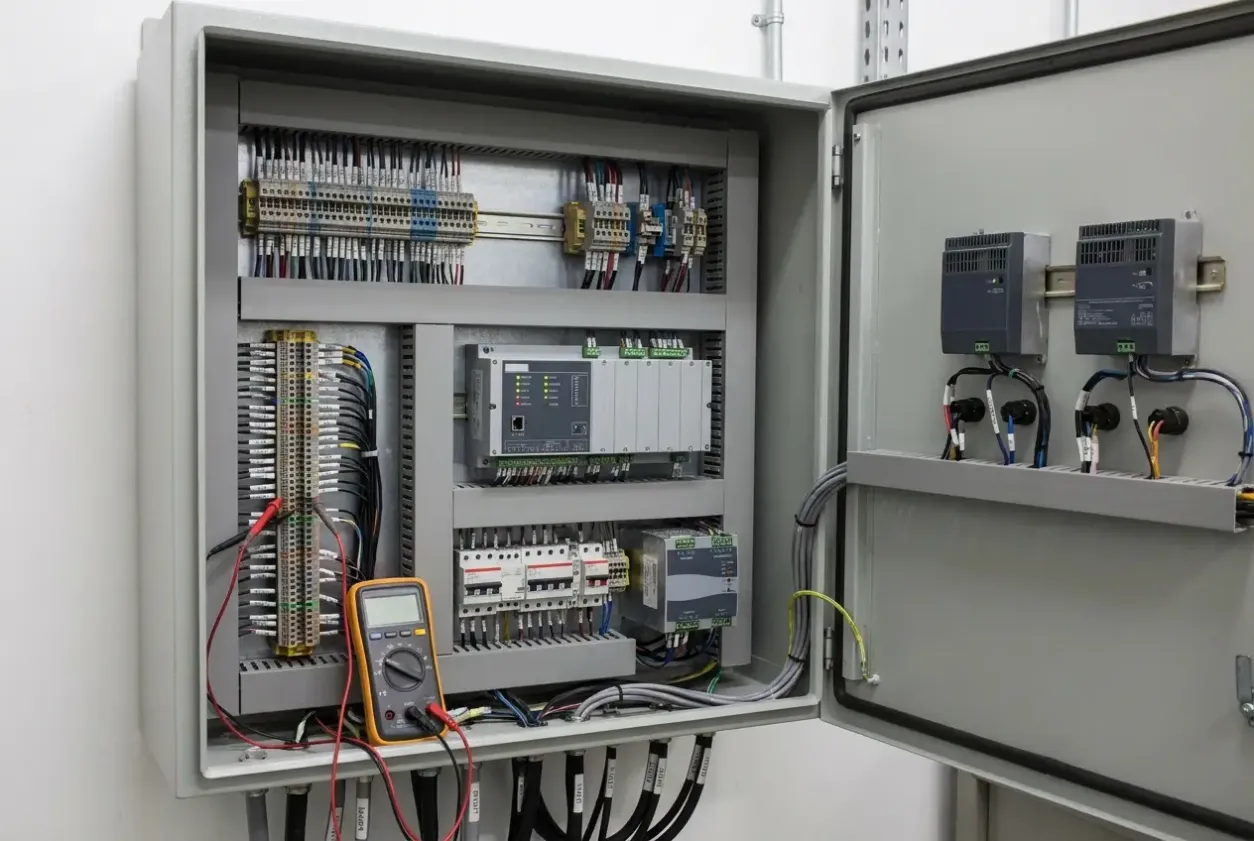
A supplier who only asks for RTU brand, enclosure size, and quantity is quoting a cabinet. A supplier who asks about field signals, communication, power, documentation, and startup sequence is reviewing the project.
Procurement Lesson
Most RTU panels are built correctly. Many RTU projects are specified incorrectly.
That difference determines whether startup takes one day or becomes several weeks of troubleshooting. At UniRegal, we would rather delay a quotation by one day than delay field commissioning by two weeks.
If you are preparing a skid-mounted RTU panel RFQ, send UniRegal your I/O schedule, hazardous-area information, SCADA protocol, enclosure requirement, power supply details, FAT expectations, and delivery target. We can review the package before production and help reduce commissioning risk before the panel reaches the well site.
Related reading
Need a skid-mounted RTU panel specified for your well sites? Send the I/O schedule and enclosure rating to our engineering team, and we will return a consolidated enclosure-plus-component quote from Foshan.
The panel side of the same story
Most of what went wrong here was decided before the panel ever reached the site — the I/O schedule, the enclosure rating, and the wiring standard were all settled too early. If you are specifying one now, our walkthrough of what a skid-mounted RTU panel actually does at a well site covers the same eight review points in the order a buyer meets them, before the drawings go out.