Jul 2, 2026Integration & Compatibility
Why Does a Custom Industrial Automation Control Panel Decide Project Success?
Why Does a Custom Industrial Automation Control Panel Decide Project Success? Meta Description: Discover how custom industrial automation control panels improve system reliability, reduce downtime, op
Why Does a Custom Industrial Automation Control Panel Decide Project Success?
Meta Description: Discover how custom industrial automation control panels improve system reliability, reduce downtime, optimize lead time, and ensure compatibility for factories, EPC contractors, and system integrators.
Keywords: custom industrial automation control panel, PLC control panel manufacturer, industrial automation solutions, custom electrical control panels, industrial control panel design, automation panel builder, PLC integration solutions
Industrial automation projects rarely fail because of one defective component.
Most failures come from unstable integration, poor wiring, communication conflicts, or delayed delivery. I have watched factories lose thousands of dollars simply because a control panel was not engineered correctly.
For EPC contractors, manufacturing plants, and system integrators, uncertainty is expensive. A poorly designed automation control panel can create commissioning delays, maintenance headaches, and production downtime.
A custom industrial automation control panel improves operational stability, communication reliability, and project efficiency. At Uniregal, we design control panels around engineering standards, compatibility validation, and fast delivery. By following internationally recognized standards like IEC 61439 and IEC 60204-1,
Most suppliers sell electrical panels.
We engineer operational reliability.
Why Are Custom Industrial Automation Control Panels Important?
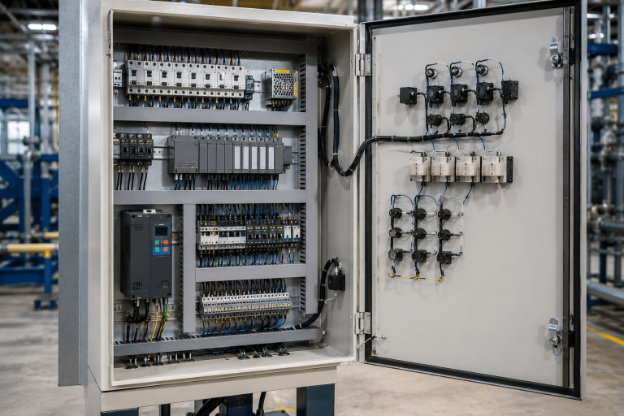
A control panel is the operational center of an automated system.
It connects PLCs, HMIs, VFDs, sensors, relays, breakers, and communication networks into one coordinated process.
Without proper engineering, problems appear quickly:
- Communication failures
- Unstable machine operation
- Long commissioning periods
- Difficult maintenance
- Unexpected downtime
According to the International Society of Automation (ISA), integration and wiring issues remain one of the leading causes of automation system failure.
At Uniregal, we focus on preventing these problems before production even starts.
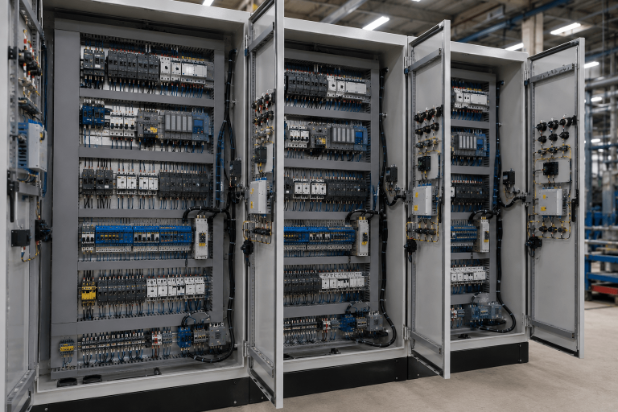
How Does Engineering Standardization Improve Reliability?
Engineering standards are not paperwork.
They are protection against future problems.
Our custom control panels are designed according to the following:
- IEC 61439 — Low-voltage switchgear and controlgear assemblies
- IEC 60204-1 — Safety of machinery electrical systems
These standards improve:
- Electrical safety
- Wiring consistency
- System integrity
- Inspection efficiency
- Global compliance readiness
Factories operating across multiple countries especially benefit from standardized electrical designs.
I always say this to customers:
“The best control panel is the one nobody notices because it simply keeps running.”
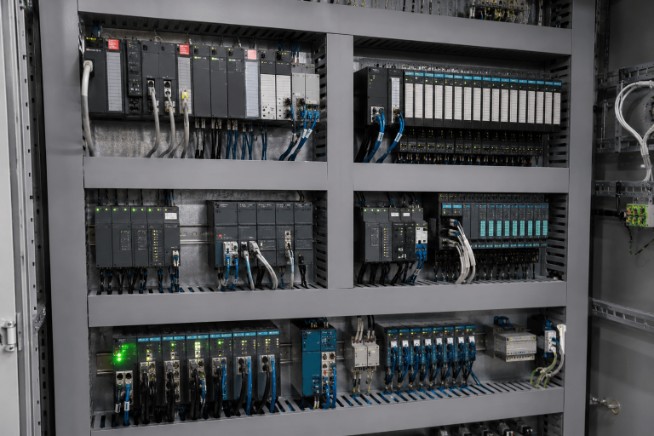
Why Does PLC and Protocol Compatibility Matter?
Modern factories use multiple automation brands.
One production line may include:
- Mitsubishi PLCs
- Siemens HMIs
- Allen-Bradley drives
- Omron sensors
- Schneider breakers
The challenge is communication.
Industrial protocols like the following:
- PROFINET
- EtherNet/IP
- Modbus TCP
must work together seamlessly.
Without compatibility validation, system conflicts can cause unstable operation or complete communication failure.
At Uniregal, we perform:
- Cross-brand integration checks
- BOM validation
- Protocol verification
- Communication testing
before production begins.
This reduces commissioning risks significantly.
How Does Fast Lead Time Reduce Factory Downtime?
Production downtime spreads fast.
One failed panel can stop an entire manufacturing line.
Traditional panel builders often depend on slow procurement cycles.
That creates unnecessary delays.
Our approach combines:
- Stock-based component sourcing
- Modular panel assembly
- Structured engineering workflows
Based on internal project comparisons, this can reduce delivery cycles by approximately 20–30%.
For urgent replacement projects, fast delivery becomes critical.
Customers do not measure suppliers by promises.
They measure them by recovery speed.
What Industries Use Custom Electrical Control Panels?
Custom industrial control panels support nearly every automated industry.
Water Treatment Automation
Water treatment facilities require:
- Stable analog signal handling
- Continuous operation
- Reliable remote monitoring
Communication reliability is essential for operational safety.
HVAC Automation Systems
HVAC control panels improve the following:
- Energy efficiency
- Environmental control
- Automated scheduling
Replacing traditional relay systems with PLC automation increases flexibility significantly.
Oil and Gas Automation
Oil and gas applications require the following:
- High system reliability
- Rugged electrical design
- Stable communication
Operational interruptions can become safety risks.
Manufacturing Production Lines
Manufacturing plants demand:
- Minimal downtime
- Fast machine coordination
- Stable production control
Even small electrical issues can interrupt entire production schedules.
Why Is Pre-Delivery Testing Critical?
A control panel should never arrive untested.
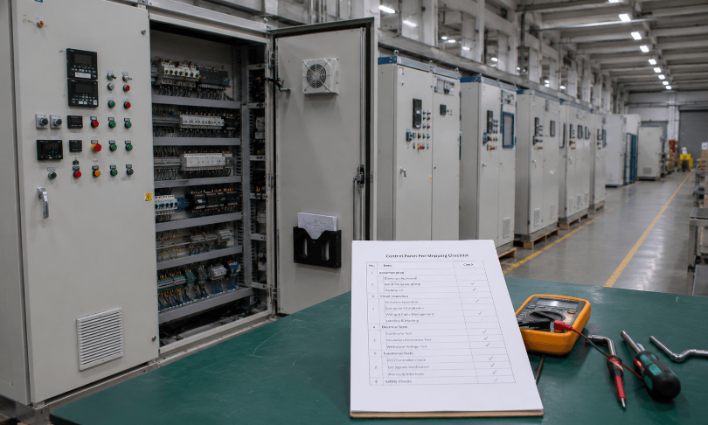
Before shipment, our engineering team performs:
- I/O testing
- Communication validation
- Wiring verification
- Functional simulation testing
These procedures align with common industrial best practices and IEC recommendations.
Pre-tested panels help customers:
- Reduce onsite debugging
- Shorten commissioning time
- Improve startup reliability
In industrial automation, prevention always costs less than emergency troubleshooting.
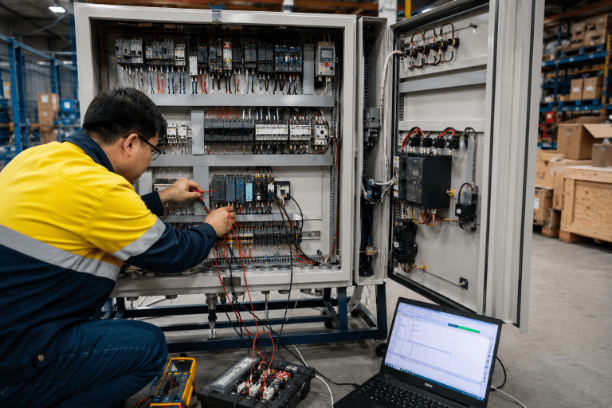
Can Custom PLC Panels Support Existing Equipment?
Yes.
Many factories operate with legacy systems that cannot be replaced immediately.
We regularly support retrofit projects involving:
- Older relay systems
- Existing PLC architectures
- Legacy motor controls
- Non-standard layouts
Instead of forcing complete replacement, we integrate modern automation into existing systems.
This helps factories improve automation gradually while controlling investment costs.
Industrial automation is not always about replacing everything.
Sometimes it is about upgrading intelligently.
Real Industrial Automation Project Examples
Water Treatment Plant Upgrade
Problem:
Mixed protocols caused unstable PLC communication.
Solution:
Uniregal implemented unified Modbus and PROFINET integration.
Result:
Commissioning time reduced by approximately 30%.
HVAC System Retrofit
Problem:
Manual relay systems required frequent adjustment.
Solution:
Custom PLC-based control panel with automated control logic.
Result:
Operational efficiency improved by around 25%.
Emergency Manufacturing Line Replacement
Problem:
Unexpected panel failure stopped production.
Solution:
Rapid-build control panel using stocked automation components.
Result:
Delivery time improved by approximately 40%.
More Related Questions
What Is a Custom Industrial Control Panel?
A custom industrial control panel is an engineered electrical enclosure designed specifically for a machine, process, or factory automation system.
Which PLC Brands Can Be Integrated?
Common PLC brands include:
- Mitsubishi
- Siemens
- Omron
- Allen-Bradley
- Schneider
- ABB
What Causes Industrial Automation System Failure?
Typical causes include the following:
- Poor wiring
- Protocol conflicts
- Weak engineering
- Inadequate testing
- Improper integration
How Long Does Custom Panel Manufacturing Take?
Lead time depends on project complexity and component availability. Structured workflows and stocked inventory can significantly reduce delivery schedules.
Why Are IEC Standards Important?
IEC standards improve:
- Electrical safety
- Global compliance
- System reliability
- Inspection efficiency
Can Existing Machines Be Retrofitted?
Yes. Modern PLC systems can often integrate with existing factory equipment without full replacement.
Conclusion
A custom industrial automation control panel is more than an electrical enclosure.
It is the operational foundation of a reliable automation system.
At Uniregal, we focus on engineering quality, compatibility validation, and fast delivery because stable production matters more than marketing language.
When factories need automation systems that work reliably under real operating conditions, engineering always matters first.