Oct 6, 2026Integration & Compatibility
The Checklist We Use Before Shipping a Control Panel
The Checklist We Use Before Shipping a Control Panel. Why a Pre-Shipment Checklist Matters A control panel may look complete inside the workshop, but that does not mean it is ready for installation or
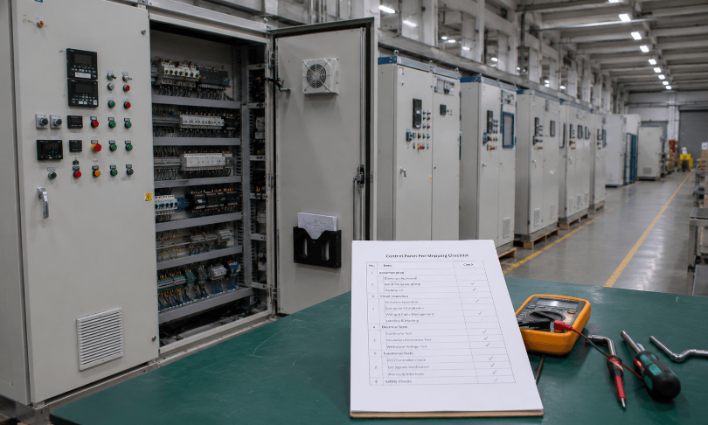
The Checklist We Use Before Shipping a Control Panel.
Why a Pre-Shipment Checklist Matters
A control panel may look complete inside the workshop, but that does not mean it is ready for installation or startup at the customer site. In industrial automation projects, many failures are not caused by major design problems. They are caused by small issues that were missed before shipment, including loose terminals, incorrect wire labels, unstable control voltage, damaged components during transport, or PLC logic errors that only appear during commissioning.
Most buyers are not simply purchasing a metal enclosure with electrical components inside. They are purchasing startup reliability. They want confidence that the panel will arrive ready to install, ready to power up, and ready to operate without wasting valuable commissioning time.
This is why a structured control panel shipping checklist matters. A proper checklist verifies electrical performance, confirms mechanical integrity, validates documentation, and reduces the risk of startup failure after delivery.
In real industrial projects, the cost of finding problems after shipment is significantly higher than fixing them inside the factory. Once the panel arrives on site, troubleshooting may involve electricians, controls engineers, project managers, production personnel, and customer maintenance teams. Even a small issue can delay commissioning schedules and increase labor costs quickly.
A disciplined pre-shipment inspection process reduces these risks before the panel leaves the workshop.
Wiring and Terminal Checks
Wire Tightness and Terminal Inspection
Loose terminals remain one of the most common issues discovered during final inspection. In many cases, the wiring appears acceptable during initial power-up testing, but vibration during transport or heat generated under operating load can weaken unstable connections further.
When this happens on site, the symptoms are often difficult to diagnose. A loose connection may cause random PLC communication loss, unstable drive operation, intermittent alarms, or unexpected shutdowns during commissioning. These problems consume significant troubleshooting time because the panel may appear functional during some operating conditions and unstable during others.
Before shipment, all terminal screws, grounding points, power connections, relay terminals, and control conductors should be checked carefully to confirm proper tightening and conductor security.
A proper terminal inspection helps prevent intermittent faults, startup instability, and difficult field troubleshooting.
Wire Labeling and Device Labeling
Correct labeling is essential during installation, commissioning, and future maintenance work. Every wire number, terminal identifier, relay tag, breaker label, and component marker should match the approved electrical drawings before the panel is released for shipment.
Labeling mistakes create unnecessary confusion during startup. Maintenance personnel may spend hours tracing wiring manually if terminal numbers or device references do not match the documentation. During emergency shutdown conditions, poor labeling also slows troubleshooting response.
Well-organized labeling improves communication between the supplier, installation contractor, commissioning engineer, and customer maintenance team. It also reduces the risk of future wiring errors during modification or expansion projects.
A complete labeling inspection helps prevent documentation mismatches, maintenance delays, and commissioning confusion.
Cable Routing and Physical Protection
Cable routing affects reliability, thermal performance, and long-term serviceability. Wires should be routed cleanly, separated where necessary, and protected from sharp edges, excessive bending stress, or pinch points inside the enclosure.
Poor cable management creates multiple long-term risks. Wires may wear against metal surfaces during vibration, insulation may become damaged over time, or crowded cable routing may restrict airflow inside the panel.
Transport vibration is another important factor. During international shipment, especially for overseas projects, panels may experience continuous vibration for extended periods. Weak cable support or poor routing can allow conductors to move, loosen, or become damaged before the panel even arrives at the customer site.
Clean cable routing improves reliability and also makes future maintenance significantly easier.
This inspection helps prevent cable damage, vibration-related faults, and short circuit risks.
Electrical and Control Testing
Power Supply and Voltage Verification
Before packing, the control panel should be energized and tested under operating conditions. Control voltage levels, power supply outputs, transformer operation, and major electrical values should all be verified against the approved design specifications.
Voltage mismatch is one of the most common causes of startup failure after delivery. Incorrect voltage configuration can prevent devices from operating correctly or permanently damage sensitive automation equipment during commissioning.
Power verification also confirms that breakers, power supplies, relays, and protective devices are functioning correctly before shipment.
A complete electrical verification process helps prevent no-power conditions, unstable voltage problems, and startup failure on site.
PLC, I/O, and Sequence Testing
A control panel can appear mechanically complete while still containing serious control logic problems. This is why PLC validation and sequence testing are critical parts of the shipping checklist.
All PLC logic should be tested according to the project requirements. Input and output points should be verified individually, and critical operating sequences should be simulated before shipment approval.
In real projects, logic problems often do not appear until commissioning begins. Incorrect timer settings, missing interlocks, incomplete alarm logic, or sensor mapping errors can stop startup entirely even when the electrical assembly itself is correct.
Sequence testing allows these issues to be discovered inside the factory instead of at the customer site.
This process helps prevent logic failures, operational instability, and commissioning delays.
HMI, Alarm, and Emergency Stop Testing
The HMI system and alarm functions directly affect operator safety and equipment usability. Before shipment, all HMI screens, navigation functions, alarm conditions, reset behavior, and emergency stop circuits should be verified carefully.
Poor HMI configuration creates confusion during startup because operators may not understand equipment status or alarm conditions clearly. Incorrect alarm handling can also delay troubleshooting response during abnormal operation.
Emergency stop verification is especially important because it confirms that the panel responds safely under shutdown conditions.
These tests help prevent operator confusion, alarm failure, and safety-related startup problems.
How FAT Supports the Shipping Checklist
What FAT Verifies Before Shipment
Factory Acceptance Testing (FAT) is one of the most important stages before shipping a control panel. FAT confirms that the panel operates according to the approved project requirements before it leaves the factory.
During FAT, suppliers typically verify PLC sequences, HMI functionality, alarms, I/O behavior, communication systems, and critical operational logic. Depending on the project scope, the customer or third-party inspectors may also witness the testing process directly.
For many industrial buyers, FAT records provide confidence that the panel has already been validated under simulated operating conditions before delivery.
Why FAT Alone Is Not Enough
Although FAT is essential, it does not replace the shipping checklist.
A panel may pass FAT successfully and still experience shipment-related problems afterward. Loose hardware, transport vibration, poor packing protection, incorrect labeling, or missing documentation can still create major commissioning issues after delivery.
The FAT process verifies operational performance, while the shipping checklist verifies readiness for transport, installation, and startup.
Both processes are necessary for reliable project execution.
Why Buyers Ask for FAT Records
Experienced buyers often request FAT reports, test records, and inspection photos before shipment approval. These records improve traceability and help clarify technical responsibility if startup problems appear later during commissioning.
Documented testing also demonstrates that the supplier follows a controlled manufacturing and inspection process rather than relying only on visual assembly checks.
For OEM projects and custom automation systems, this level of traceability is extremely important.
Mechanical and Enclosure Checks
Enclosure Fit and Clearance
Control panel reliability depends not only on electrical performance but also on practical enclosure design. Components should have adequate spacing for airflow, cable routing, heat dissipation, and future maintenance access.
Tight layouts often create long-term problems. Heat buildup becomes more likely, maintenance work becomes more difficult, and technicians may accidentally damage adjacent wiring while servicing components.
A properly designed panel should remain serviceable throughout its operating life, not only during factory assembly.
This inspection helps prevent overheating, maintenance access problems, and assembly-related reliability issues.
Door, Lock, Hinge, and Mounting Inspection
Mechanical integrity becomes especially important during transport. Doors should close correctly, hinges should remain secure, locks should operate smoothly, and mounting structures should remain stable under vibration conditions.
Minor mechanical defects discovered before shipment often become major problems after transport. Misaligned doors, loose hinges, or unstable mounting hardware may damage internal components or affect enclosure sealing performance.
Mechanical inspection is therefore just as important as electrical testing during the final release process.
This inspection helps prevent transport damage, loose hardware, and enclosure alignment problems.
Grounding and Bonding Verification
Grounding verification is an essential safety requirement for industrial control panels. All grounding points and bonding connections should be inspected carefully before shipment approval.
Improper grounding may create electrical noise, unstable communication signals, or safety hazards during operation. Sensitive devices such as PLCs, servo drives, communication modules, and analog instruments are especially vulnerable to grounding problems.
Ground continuity testing confirms that grounding paths are installed correctly and meet project requirements.
This inspection helps prevent grounding failure, electrical interference, and operational safety risks.
Heat and Environmental Checks
Ventilation and Thermal Management
Thermal management directly affects long-term reliability inside a control panel. Cooling fans, filters, vents, and airflow paths should all be inspected carefully before shipment.
High-load industrial panels generate significant heat during operation. Without proper cooling, internal temperatures may rise beyond acceptable operating limits, causing thermal shutdowns or shortening component lifespan.
Overheating problems are often not discovered immediately during startup. In many cases, they appear only after the panel operates continuously under production conditions.
Thermal inspection helps identify these risks before delivery.
This process helps prevent overheating, premature component failure, and unstable operation.
Dust, Moisture, and Sealing Inspection
Environmental protection is another critical part of the pre-shipment process. The enclosure should seal correctly against dust, moisture, and external contamination according to the installation environment.
Moisture ingress may cause corrosion, insulation breakdown, or electrical short circuits. Dust accumulation may block ventilation systems and reduce cooling efficiency over time.
Industrial environments such as manufacturing plants, oil and gas facilities, and outdoor installations place additional demands on enclosure sealing quality.
A sealing inspection helps prevent contamination, corrosion, and environmental reliability problems after installation.
Documentation and Release Checks
Drawing and BOM Match
Before shipment approval, the completed panel should be compared carefully against the approved drawings and bill of materials.
A mismatch between documentation and hardware creates major confusion during commissioning. If the customer receives drawings that do not match the actual panel configuration, troubleshooting and future maintenance become much more difficult.
Documentation verification also helps avoid disputes regarding project scope, engineering revisions, or component substitutions.
This process helps prevent installation confusion, documentation mismatch, and change-order disputes.
Test Records and Photo Evidence
Inspection records, FAT reports, electrical test results, and assembly photos should all be saved before shipment.
These records provide proof that the panel was tested and inspected properly before release. They also improve traceability if technical questions arise later during installation or startup.
Photo evidence is especially valuable because it documents terminal conditions, cable routing, enclosure layout, and overall assembly quality before packing.
This helps prevent quality disputes, unclear handover conditions, and traceability problems.
Packing and Shipping Protection
Even a fully tested control panel can arrive damaged if shipping protection is inadequate. Before shipment, the enclosure should be secured using proper packaging materials, transport blocking methods, and vibration protection.
Sensitive components such as HMIs, relays, breakers, and communication devices may require additional protection depending on transport distance and shipping conditions.
Transport vibration is one of the most common causes of hidden shipping damage. Terminal loosening, cracked accessories, relay movement, and damaged mounting hardware may all occur during long-distance transport if the panel is not packed correctly.
A final shipping inspection confirms that the panel is ready not only for operation but also for transportation.
This process helps prevent transit damage, broken components, and arrival defects.
Who Should Approve a Control Panel Before Shipment
A professional shipping process normally involves multiple levels of verification before release approval.
The panel builder is responsible for assembly quality and internal verification during manufacturing. Quality control personnel typically perform inspection checks for wiring, labeling, mechanical assembly, and documentation accuracy.
Project engineers may review FAT performance, customer requirements, and revision compliance before shipment approval.
In larger projects, customers or third-party inspectors may also witness FAT testing and approve shipment release directly.
This structured approval process improves accountability and reduces the risk of preventable field problems after delivery.
What This Checklist Prevents in Real Projects
Startup Failure at the Customer Site
The most important purpose of a control panel shipping checklist is to reduce startup risk before installation begins.
Successful commissioning depends on much more than correct electrical assembly. A reliable startup also requires stable wiring, correct logic behavior, proper documentation, secure transport protection, and verified safety systems.
A disciplined inspection process reduces surprises during commissioning and helps projects move into operation faster.
Costly Rework After Delivery
Problems discovered after shipment are significantly more expensive to correct. Field troubleshooting requires additional labor, technical coordination, replacement parts, and often schedule changes.
By identifying issues inside the factory, suppliers and buyers both avoid unnecessary delays and expensive rework after delivery.
This approach protects project schedules and reduces overall commissioning costs.
Trust Issues Between Buyer and Supplier
A clear and documented shipping checklist also improves confidence between the supplier and the customer.
Industrial automation projects involve technical risk, schedule pressure, and operational responsibility. Buyers want evidence that the supplier follows a disciplined inspection and testing process before shipment.
Detailed records, FAT reports, inspection photos, and organized documentation demonstrate professionalism and accountability throughout the project.
This helps reduce disputes and improves long-term supplier relationships.
Conclusion
In industrial automation projects, the real test of a control panel is not when it leaves the workshop but when it starts successfully on site.
A disciplined control panel shipping checklist reduces startup risk, improves commissioning reliability, protects the project schedule, and gives both the supplier and the buyer greater confidence before installation begins.
The best shipment is not simply the one that passes factory inspection. It is the one that arrives ready to work.
FAQ
Why Is a Control Panel Shipping Checklist Important?
A control panel shipping checklist helps identify wiring problems, testing issues, labeling mistakes, documentation mismatches, and shipping risks before the panel leaves the factory.
This process reduces startup failure, hidden defects, and commissioning delays after delivery.
What Should Be Checked Before Shipping a Control Panel?
A complete inspection should include wiring tightness, terminal labeling, PLC testing, HMI verification, grounding inspection, thermal management checks, enclosure inspection, documentation review, and transport protection.
What Is the Most Common Problem Found Before Shipment?
Loose terminals, incorrect labels, incomplete PLC logic testing, and transport-related mechanical issues are among the most common problems discovered during final inspection.
Why Is FAT Related to the Shipping Checklist?
Factory Acceptance Testing verifies that the control panel operates correctly before shipment, while the shipping checklist confirms that the panel is fully inspected, documented, and protected for transportation and installation.
Should Customers Receive Test Records?
Yes. FAT reports, inspection records, and photo documentation improve traceability and help clarify technical conditions before shipment approval.
Can Shipping Damage Still Happen After Testing?
Yes. Even a fully tested panel can experience damage during transportation if packing quality and vibration protection are insufficient.
This is why shipping protection is a critical part of the final inspection process.
Related reading:
Need help specifying or sourcing this for your project? Request a quote - we reply within 1-2 working days with a technical review.