Jul 2, 2026Case Studies
How We Help Reduce Startup Delays in Packaging Machine Projects?
How Do We Help Reduce Startup Delays in Packaging Machine Projects? Many packaging machine projects fail during startup because hidden problems appear only after installation. These delays increase pr
How Do We Help Reduce Startup Delays in Packaging Machine Projects?
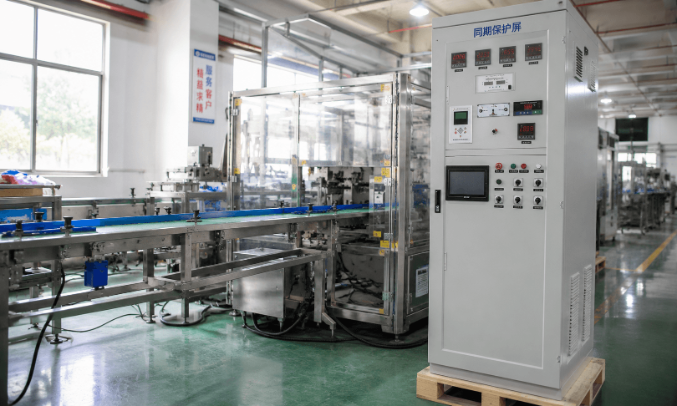
Many packaging machine projects fail during startup because hidden problems appear only after installation. These delays increase production pressure, labor costs, and launch risks for manufacturers.
Packaging machine startup delays usually come from weak factory testing, product mismatch, electrical faults, and poor commissioning preparation. Structured FAT testing and operator training help reduce these risks before shipment.
A successful packaging machine project depends on much more than machine speed or technical specifications. According to the International Society of Automation (ISA), commissioning problems discovered after installation cost significantly more to solve than issues identified during pre-shipment testing. Buyers now focus heavily on startup reliability because even short delays can affect production schedules, customer commitments, and revenue targets.
At Uniregal, we approach commissioning from a prevention-first perspective instead of relying on reactive troubleshooting after delivery. This method helps reduce startup uncertainty and improves long-term production stability.
What Do Buyers Worry About Before a Startup?
Many buyers worry less about machine specifications and more about whether the packaging line will operate smoothly after installation. Startup delays can damage production schedules immediately, especially when product launch dates are fixed.
Most buyers want to avoid commissioning delays, repeated troubleshooting, and unstable machine performance after shipment.
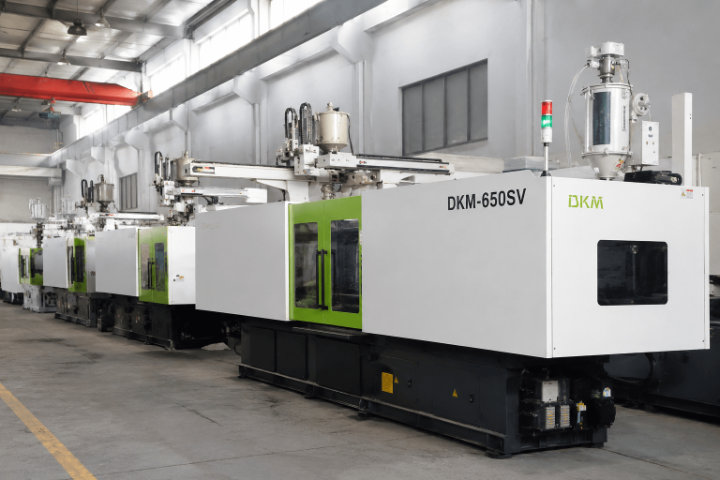
When I work with manufacturing teams, I often notice the same concern appearing during project discussions. Buyers worry that the machine may run correctly during factory demonstrations but fail under real production conditions.
Will the machine start smoothly on-site?
A packaging machine may perform well during short factory tests. Yet the real production environment is very different. Temperature, humidity, operator experience, utility stability, and material consistency all affect startup performance.
According to PMMI (Packaging Machinery Manufacturers Institute), integration issues remain one of the leading causes of packaging line commissioning delays because many systems are tested separately instead of under realistic production conditions.
Will the Project Need Too Much Troubleshooting?
Buyers do not want to spend weeks solving avoidable startup problems. Every additional commissioning day creates higher labor costs and production pressure.
Common Buyer Concerns Before Startup
Buyer Concern | Possible Result | Business Impact |
|---|---|---|
Feeding instability | Line stoppages | Delayed production |
Weak sealing quality | Product defects | Customer complaints |
PLC logic problems | Machine shutdowns | Long troubleshooting |
Poor operator training | Incorrect operation | Slow ramp-up |
Shipping damage | Mechanical misalignment | Rework during installation |
A difficult startup also affects supplier trust. Many manufacturers evaluate suppliers based not only on machine performance but also on how smoothly the installation process progresses.
The Project Management Institute (PMI) explains that early-stage defect prevention reduces overall project risk significantly because late-stage corrections require more time, more labor, and more operational disruption.
This is why startup preparation matters as much as machine manufacturing itself.
Common Startup Problems in Packaging Machine Projects?
Packaging startup failures usually come from predictable operational issues rather than major mechanical disasters. Most delays begin with small problems that were missed before shipment.
The most common packaging startup problems involve feeding instability, sealing inconsistency, electrical faults, and operator confusion.
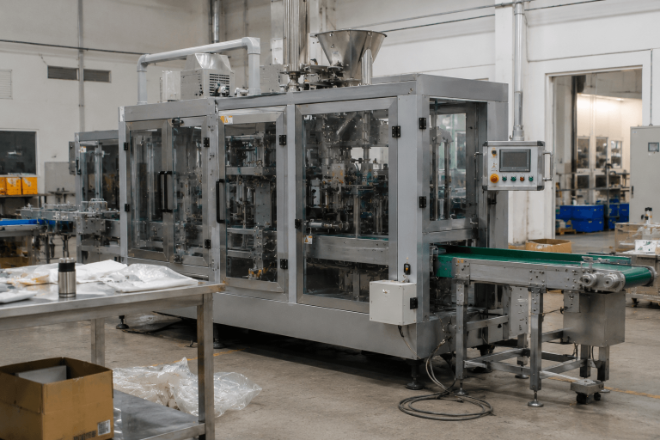
Carton Jams and Feeding Problems
Cartons, pouches, trays, or products may not feed consistently into the machine. Slight dimensional variation can create repeated stoppages.
Feeding instability is one of the most common causes of delayed commissioning because operators often spend days adjusting guides and alignment systems.
Sealing and Material Compatibility Issues
Different packaging materials react differently to heat, pressure, and timing. A sample may pass testing while full production runs reveal weak seals or leakage.
Flexible packaging projects are especially sensitive to material variation.
Electrical and Control Faults
PLC logic errors, sensor timing problems, and alarm coordination failures frequently appear during startup.
These issues are often difficult to identify without continuous runtime testing.
Operator Training Gaps
A technically correct machine can still fail operationally if the customer team lacks proper training.
Why These Problems Become Expensive
According to research published by McKinsey & Company, manufacturing disruptions caused by operational instability can create long-term efficiency losses that extend far beyond the original commissioning timeline.
Typical Startup Problems and Prevention Methods
Startup Problem | Root Cause | Prevention Method |
|---|---|---|
Carton jams | Guide misalignment | Feeding simulation tests |
Weak seals | Material mismatch | Real-product validation |
Sensor alarms | Incorrect PLC logic | Full FAT testing |
Conveyor instability | Poor synchronization | Continuous runtime testing |
Operator mistakes | Weak training | Structured training sessions |
In many failed projects, the machine itself was not fundamentally defective. The real issue was incomplete operational testing before shipment.
This is why modern packaging projects increasingly rely on Factory Acceptance Testing (FAT) as a risk reduction strategy.
Why Do Startup Delays Happen?
Startup delays usually begin long before the machine arrives at the customer site. Incomplete testing and rushed commissioning schedules create hidden operational risks.
Most packaging machine startup delays happen because project preparation is incomplete before shipment.
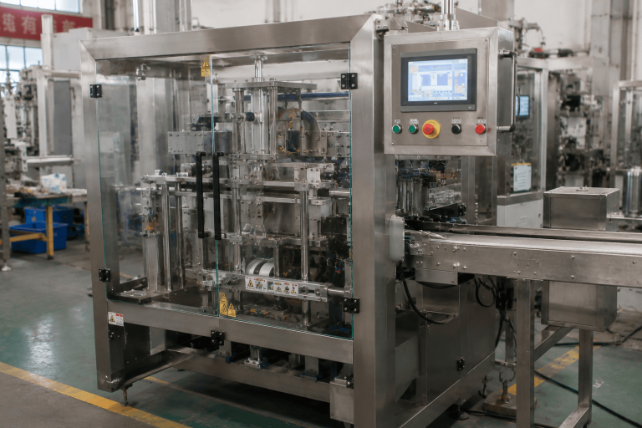
Problems Were Not Fully Tested Before Shipment
Some suppliers only perform limited demonstrations before delivery. Machines may run for a short period but never operate continuously under real production conditions.
The machine and product were not fully matched.
Packaging systems must match real products instead of ideal samples.
Factors like viscosity, dimensions, surface friction, and packaging material consistency all affect machine behavior.
Commissioning Was Rushed
Compressed project schedules often cause skipped checks, weak documentation, and incomplete operator preparation.
Why Prevention Is More Effective Than Reactive Repair
The U.S. Department of Energy explains that structured commissioning improves operational reliability because problems are identified earlier when corrective actions are simpler and less disruptive.
Main Causes of Startup Delays
Root Cause | Operational Impact | Prevention Strategy |
|---|---|---|
Limited testing | Hidden defects | Extended FAT |
Product mismatch | Unstable operation | Real-product trials |
Weak documentation | Setup confusion | Clear handover process |
Poor training | Slow ramp-up | Operator preparation |
Transit vibration | Mechanical drift | Shipping protection |
I often see buyers assume startup troubleshooting is normal. In reality, excessive troubleshooting usually signals weak preparation earlier in the project lifecycle.
A structured commissioning plan creates far more stability than trying to solve every issue after installation begins.
How Do We Reduce Startup Delays?
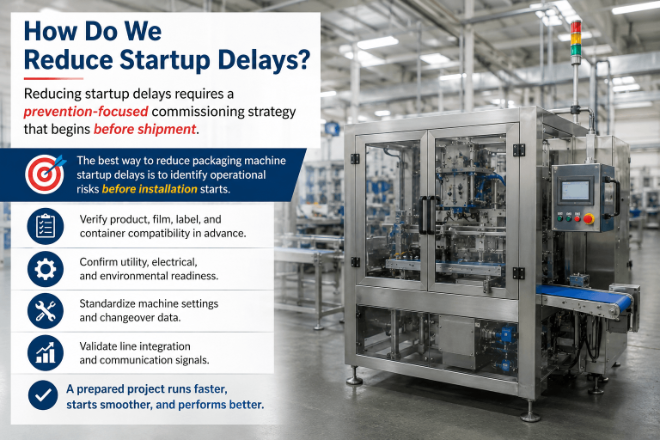
Reducing startup delays requires a prevention-focused commissioning strategy that begins before shipment.
The best way to reduce packaging machine startup delays is to identify operational risks before installation starts.
Pre-Shipment Testing and FAT
Factory Acceptance Testing helps validate machine behavior before delivery.
We test electrical systems, feeding consistency, alarm logic, and runtime stability under simulated production conditions.
Process and Product Compatibility Checks
Real-product testing helps verify feeding behavior, sealing quality, and operational consistency.
Clear Documentation and Setup Support
Structured manuals and startup records reduce confusion during installation.
Operator Training Before Launch
Training improves startup speed because operators understand alarm handling, setup procedures, and basic troubleshooting before production begins.
How Prevention Improves Startup Reliability
The International Electrotechnical Commission (IEC) recommends systematic validation of industrial control systems before operational deployment because preventive verification reduces operational instability.
Our Startup Prevention Process
Prevention Method | Operational Benefit | Startup Result |
|---|---|---|
FAT testing | Early defect detection | Faster commissioning |
Product compatibility checks | Stable operation | Fewer adjustments |
Documentation support | Clear installation process | Reduced confusion |
Operator training | Better response speed | Faster ramp-up |
Shipping protection | Preserved alignment | Less rework |
In many projects, startup success is determined before shipment even begins. Once the machine reaches the site, unresolved problems become far more expensive to correct.
That is why prevention-focused commissioning creates stronger long-term operational stability.
What Should Buyers Check Before Approving Shipment?
Buyers should verify more than basic machine movement before shipment approval. Small overlooked details can later become major startup delays.
A structured pre-shipment checklist helps reduce commissioning risks and installation delays.
Mechanical Setup and Alignment
Guides, feeders, and moving assemblies should operate under realistic production conditions before shipment.
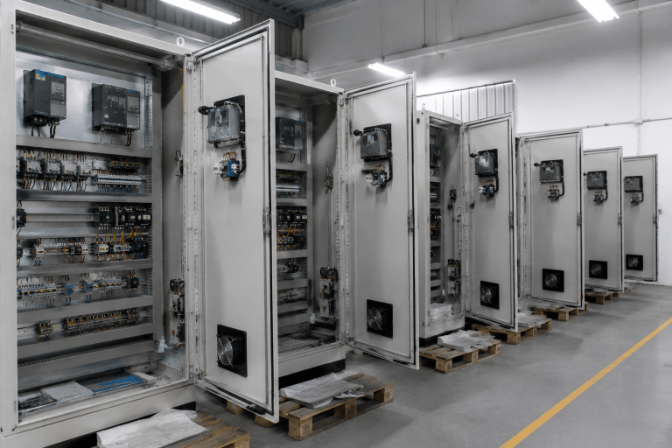
Control Logic and Alarm Behavior
PLC logic, sensors, alarms, and emergency stop functions should all be fully validated.
Packing and Shipping Protection
Transport vibration can affect machine alignment during delivery.
Important Pre-Shipment Inspection Areas
Inspection Area | What Buyers Should Verify | Risk Prevented |
|---|---|---|
Feeding systems | Stable alignment | Product jams |
Sealing systems | Seal consistency | Leakage |
PLC logic | Alarm coordination | Startup confusion |
Emergency stop systems | Safety response | Safety risk |
Shipping fixation | Structural stability | Transit damage |
The International Society of Automation recommends validating industrial automation systems under realistic operating conditions before deployment because incomplete testing often hides operational instability.
A strong pre-shipment process protects both the buyer and supplier from expensive commissioning surprises.
FAQ
What causes the most common startup delays in packaging machine projects?
The most common causes include feeding instability, sealing inconsistency, electrical faults, PLC logic errors, and operator training gaps. These issues often appear when testing before shipment is incomplete.
Why is FAT important before shipment?
Factory Acceptance Testing helps identify mechanical, electrical, and control issues before the machine reaches the customer site. Early defect detection reduces field troubleshooting and commissioning delays.
What should be tested before a packaging machine ships?
Key areas include feeding systems, alignment, sealing performance, PLC logic, alarms, emergency stop functions, and shipping protection.
How does operator training reduce startup delays?
Operator training helps production teams understand machine setup, alarm handling, and basic troubleshooting before production begins. This reduces human error and improves ramp-up speed.
Why do packaging machines fail at startup even after factory testing?
Many machines are tested without the real product, actual packaging material, or real operating conditions. This creates hidden compatibility problems that only appear during production.
Should packaging machines be tested with the real product?
Yes. Real-product testing provides a much more accurate picture of machine behavior under production conditions and helps reduce compatibility risks.
Conclusion
Packaging machine startup delays usually come from incomplete preparation rather than unexpected failure. Early testing, structured FAT procedures, compatibility validation, operator training, and clear documentation all help reduce commissioning risks before installation begins.
A prevention-focused commissioning strategy creates faster startup, lower operational cost, stronger production stability, and a better customer experience throughout the entire packaging project lifecycle.