Oct 4, 2026Buying Guides
Obsolete PLC Sourcing: What to Send for a Fast Quote
Nameplate photo, firmware label, I/O list, urgency and test requirements — the five items that get discontinued modules quoted in days.
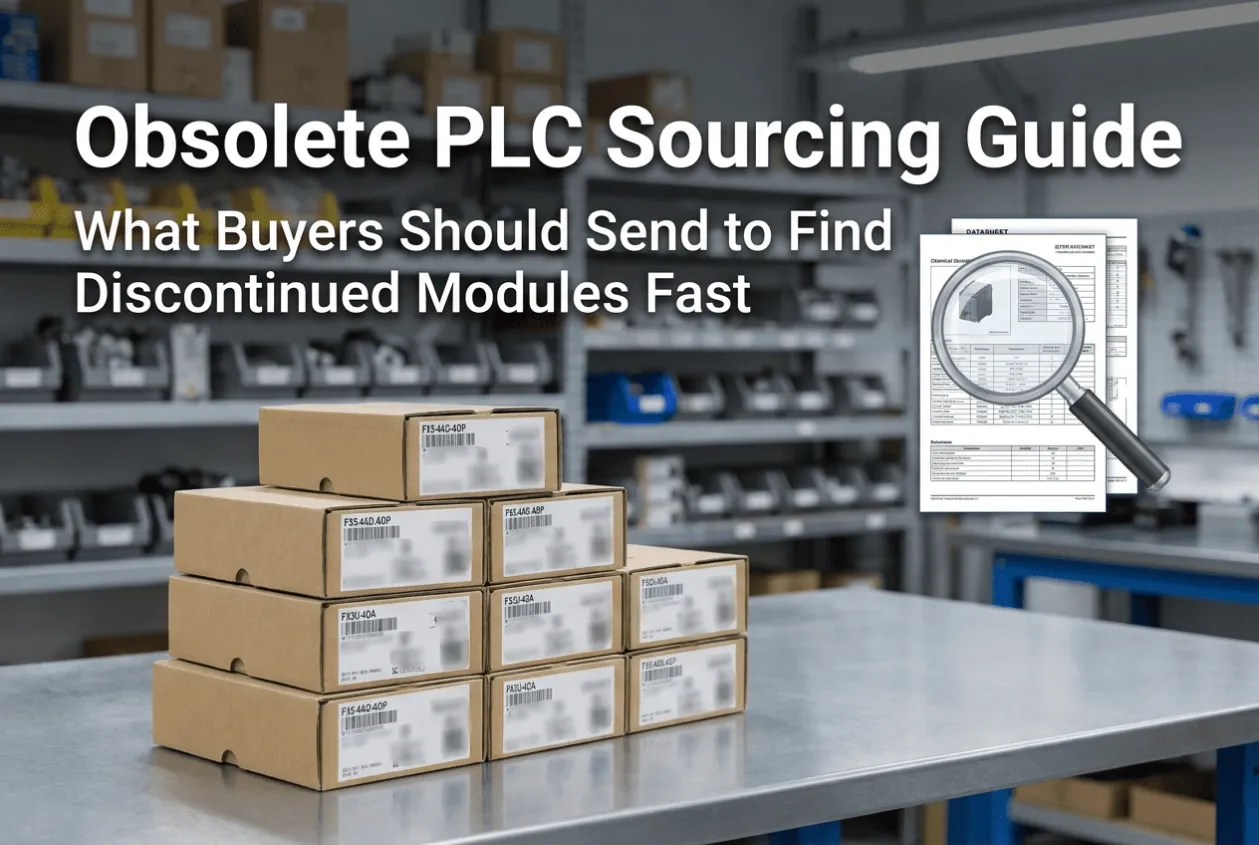
Obsolete PLC Sourcing Guide: What Buyers Should Send to Find Discontinued Modules Fast
A buyer once sent me a message late in the afternoon:
“We need this PLC module Buyer Decision Facts
Replacing obsolete PLC hardware: complete wired and tested panels start from 1 unit and run 35 to 40 days, and customer-supplied replacement modules are accepted. We mount, wire, label and functionally test the panel around the parts you supply. FAT records and photographs, and an as-built wiring diagram, ship with the panel. We build to the standard your destination market requires, and IP ratings such as IP65 (IEC 60529) are tested ratings, not certificates.
Not sure what to send for a quotation? The six items we need are listed at /resources/what-to-send-for-a-control-panel-quote . If you are supplying your own components, see /resources/customer-supplied-components-control-panels .urgently. The machine is down, and the OEM says the part is discontinued.”
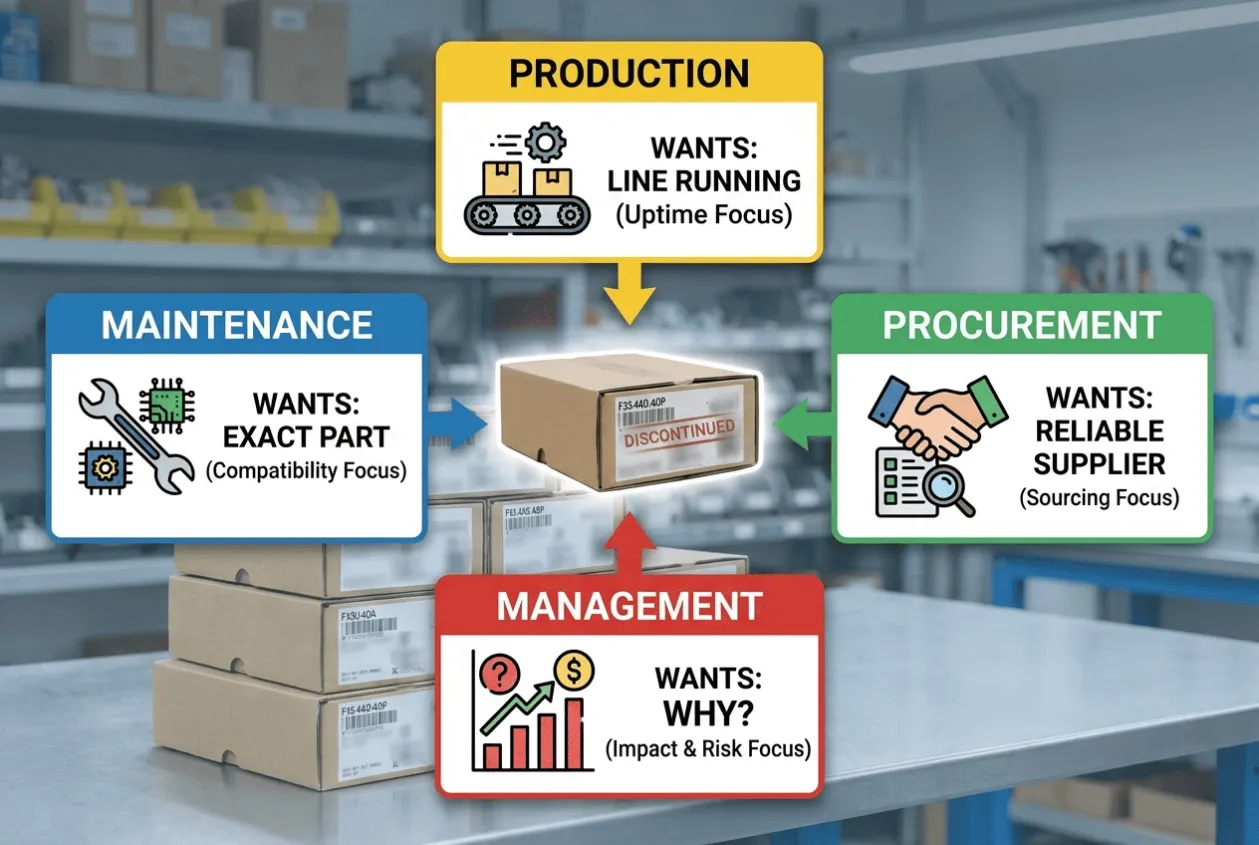
That sentence always creates pressure. Production wants the line running. Maintenance wants the exact part. Procurement wants a reliable supplier. Management wants to know why a small module has suddenly become the most important item in the factory.
The first thing I asked was not the target price. I asked for a photo of the nameplate.
For obsolete PLC sourcing, that photo often saves more time than ten emails. It gives the exact model, series, voltage, firmware, and sometimes the manufacturing batch. Without it, suppliers may quote the wrong version, a near match, or a module that looks correct online but will not work when installed.
The buyer’s real question is simple: how can I find a discontinued PLC module fast without buying a fake, wrong, or untested unit?
Why Obsolete PLCs Become a Procurement Problem
Machines often run much longer than the PLC platforms inside them. A compressor, press, packaging machine, water system, or production line may stay in service for 15 to 25 years. The PLC family may have a shorter active sales window before the manufacturer marks it as end-of-life.
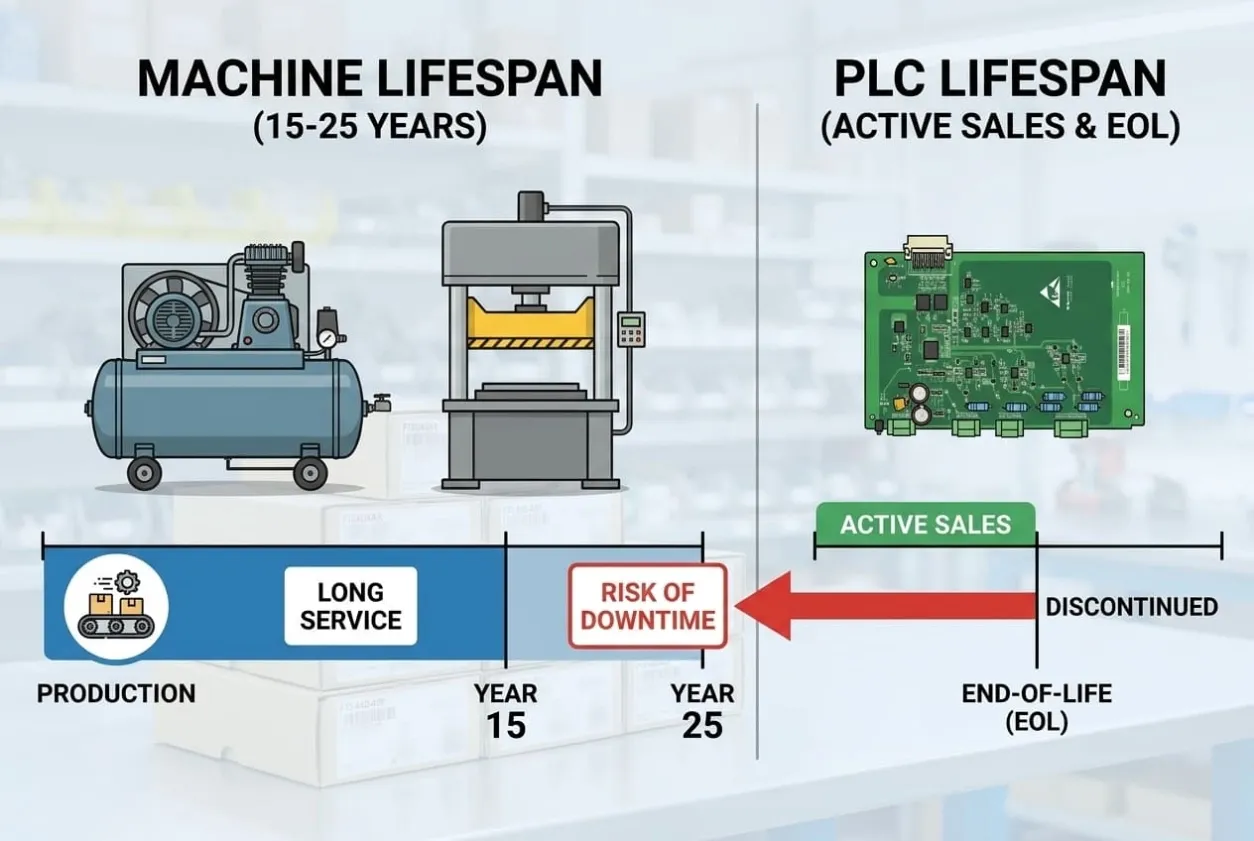
That does not always mean the part is impossible to find. It usually means the part has moved out of the official catalog and into the secondary market: surplus stock, new old stock, tested-pulled units, repair houses, brokers, and specialized distributors.
That market can solve a shutdown quickly. It can also create trouble if the buyer rushes.
The biggest risk is not always availability. The bigger risk is authenticity, condition, firmware compatibility, and whether the module has actually been tested before shipment. A module that is “in stock” but untested is not a solution yet. It is just hope with a tracking number.
The cheapest obsolete PLC often becomes the most expensive one after installation fails.
Three Ways to Replace a Discontinued PLC
Most obsolete PLC problems can be handled in three ways: buy a genuine surplus unit, cross-reference to a current equivalent, or migrate the logic to a newer platform.
Path | Best For | Lead Time | Buyer Risk |
|---|---|---|---|
Genuine surplus / NOS unit | Emergency swap, same program runs | Days–weeks | Condition and authenticity if unverified |
Cross-reference to current equivalent | Planned refresh, spare-parts strategy | 1–2 weeks | Requires I/O and firmware mapping |
Rehost/migrate to new platform | Whole-line modernization | Weeks–months | Engineering cost and revalidation |
If the machine is down and the program is stable, I usually check genuine surplus or tested-pulled stock first. Like-for-like replacement is often the fastest way to get production running again.
If the whole PLC family is no longer supported, and the plant has more than one machine using the same platform, then sourcing only one emergency module may not be enough. That is when the buyer should start thinking about a spare strategy or planned migration.
A Simple Replacement Decision Flow
For buyers under pressure, I usually simplify the decision like this:
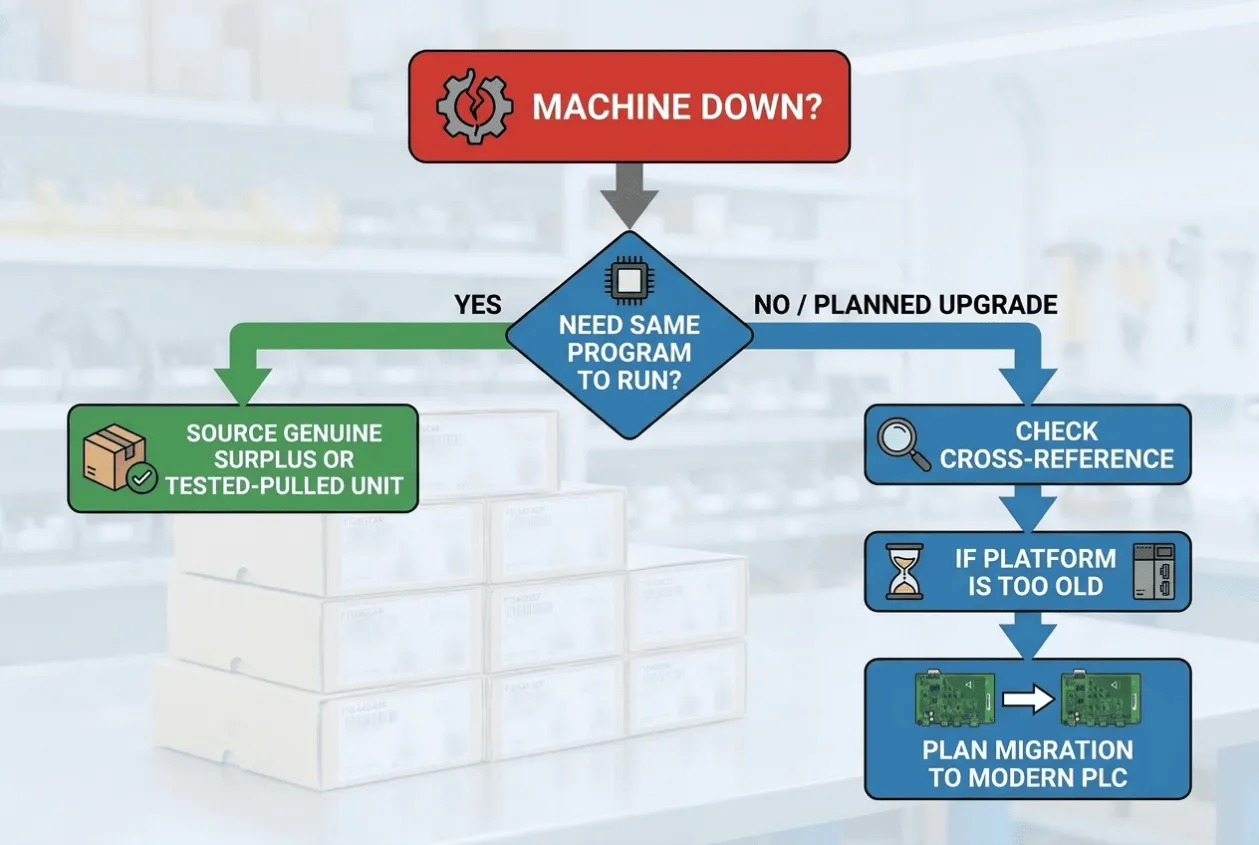
This is not a full engineering study. It is a practical buying path. When the line is stopped, the first goal is to recover safely. Once production is running again, the second goal is to avoid the same emergency next month.
What Buyers Should Send First
When someone asks us to find a discontinued PLC module, I do not need a long story at the beginning. I need the information that prevents a wrong quote.
What to Send | Why It Matters |
|---|---|
Nameplate photo | Confirms exact part number, series, and rating |
Firmware or version label | Prevents compatibility problems |
Quantity required | One emergency unit or spare stock changes sourcing. |
I/O list or module position | Helps confirm equivalent options |
Program file if available | Useful for cross-reference or migration review |
Urgency | Emergency shutdown and planned stocking are different jobs. |
Destination country | Affects shipping, documents, and certification needs |
A clear photo is usually better than a typed part number. I have seen buyers type one digit wrong and suppliers happily quote the wrong module. Nobody did it on purpose, but the machine does not care about intentions.
Before contacting several suppliers, preparing this information usually reduces quoting mistakes and speeds up verification. If you already have the nameplate photo, firmware label, or program details, UniRegal can review them before recommending a replacement path.
The Firmware Label Is Not Decoration
One buyer sent us the same part number twice, but the two photos showed different firmware revisions. At first, it looked like a simple sourcing request. Same brand, same series, same part number.
Then we checked the label more carefully.
The replacement would likely power up, but it might not communicate correctly with the existing system. That is the kind of problem that does not show up in a sales listing. It shows up when maintenance is standing beside a stopped machine, asking why the “same” module is not behaving like the old one.
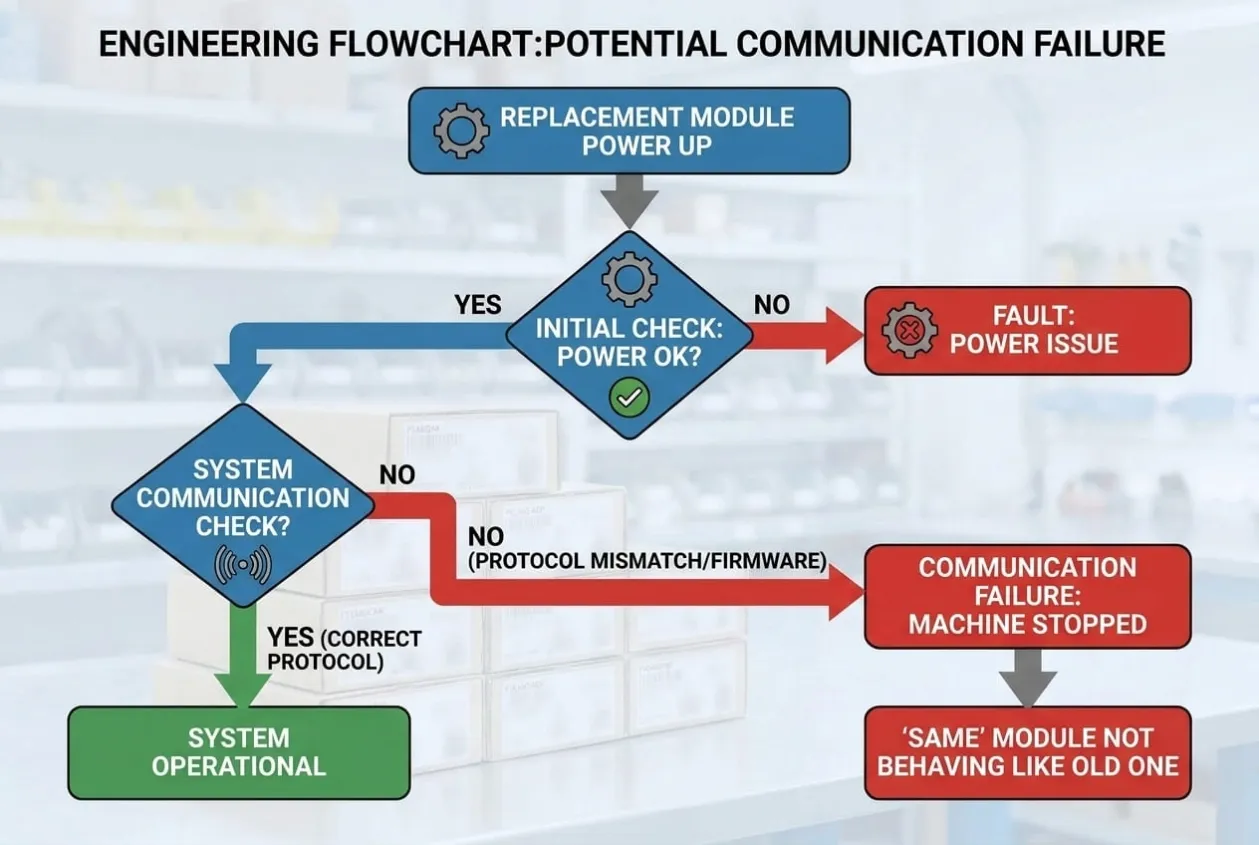
Obsolete parts punish assumptions faster than new parts do.
That is why I always ask for the photo, not just the typed model number.
Cross-Reference Is Not Guessing
Some buyers believe they must find the exact discontinued model or nothing else will work. Sometimes that is true, especially when the PLC program, firmware, communication card, or machine validation requires the same module.
But not always.
A competent sourcing partner can check the brand family, I/O count, signal type, communication port, firmware, and installation requirements. The discussion may involve legacy Mitsubishi PLC, Siemens PLC, OMRON PLC, Allen-Bradley PLC, Schneider Electric PLC, Yaskawa Controllers, or other PLC families. The goal is not to casually replace one part with “something similar.” The goal is to confirm whether there is a drop-in, near-drop-in, or migration path.
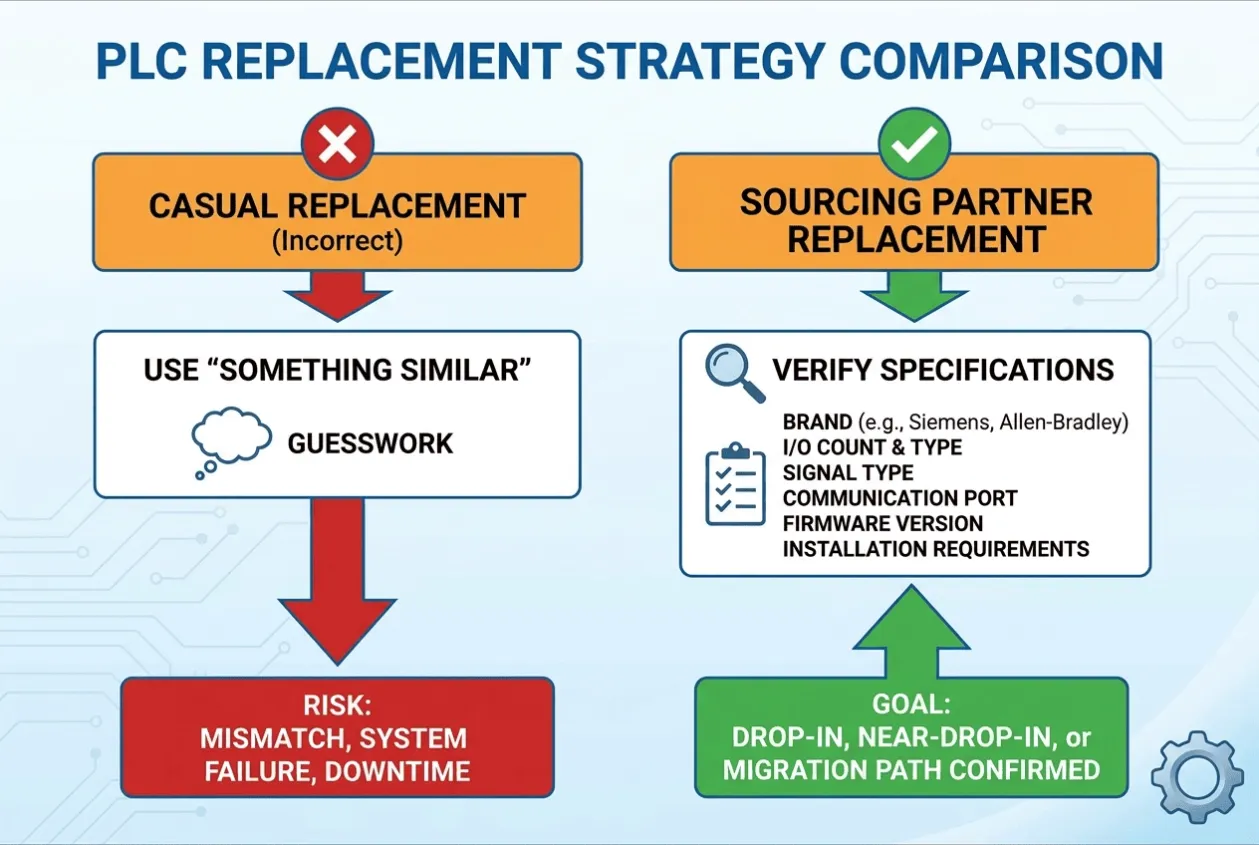
The buyer should ask, "Can you supply the exact model, or do you recommend an equivalent? If equivalent, what needs to be checked before purchase?”
That one question separates a real sourcing discussion from a marketplace listing.
Repair, Replace, or Buy a Spare?
Repair makes sense when the fault is repairable, the module is rare, and the plant needs the same unit back. Replacement makes sense when a genuine surplus or tested-pulled unit is available quickly. Buying a spare makes sense after the line is running again, because the next failure rarely waits for a convenient time.
Situation | Better Buyer Decision |
|---|---|
The machine is down now. | Source genuine surplus or tested-pulled unit fast |
The failed module is repairable. | Repair it and return it as a spare. |
Many machines use the same PLC family. | Buy spare stock before the platform dries up. |
Platform is fully unsupported | Plan migration instead of fighting every failure. |
This is where buyers should not only think about today’s quote. They should think about the next shutdown. Buying the wrong module once is painful. Buying downtime twice turns a spare-part issue into a management meeting.
Sourcing Channels and Their Risks
Obsolete PLCs can come from several channels. The lowest price is not always the safest channel.
Channel | Pros | Watch-Outs |
|---|---|---|
Authorized distributor | Genuine and warranted | Often cannot supply EOL parts |
Independent PLC surplus distributor | Finds NOS and pulled units | Need test report and authenticity check |
Online broker / marketplace | Fast and wide stock | Counterfeit, undeclared refurb, no traceability |
Repair the house. | Saves a dead module | Lead time and repairability limits |
For discontinued PLC sourcing, I care about verification. Ask for the unit serial number, condition, photos, test report, and whether the part is new, old stock, used, tested-pulled, or refurbished.
“New” is not always enough. New from where? Original packaging? Old warehouse stock? Repacked? Tested?
That is where buyers need to slow down, even when production is shouting.
What Makes Me Nervous
Three things make me careful when reviewing an obsolete PLC quote.
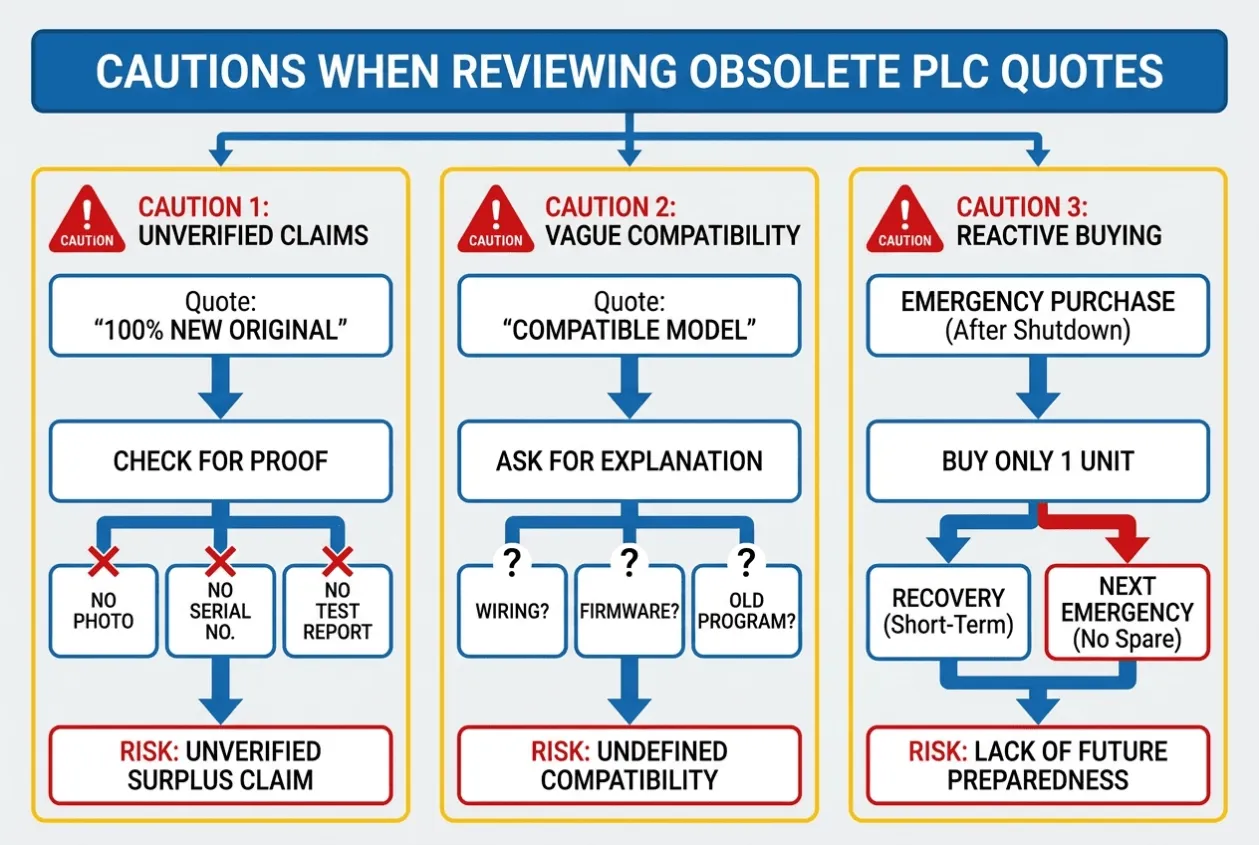
The first is “100% new original” with no photo, no serial number, and no test report. That phrase appears too easily in the surplus market.
The second is “compatible model” with no explanation. Compatible for wiring? Compatible with firmware? Compatible with the old program? Those are different questions.
The third is an emergency buyer purchasing only one unit after a shutdown. I understand the pressure, but if the machine uses several old modules, buying one spare after recovery can save the next emergency.
How UniRegal Helps Buyers Source Discontinued PLCs
UniRegal works as a sourcing partner and distributor, not as a PLC manufacturer. We help buyers source hard-to-find Mitsubishi, Siemens, OMRON, Allen-Bradley, Schneider, Yaskawa, and other legacy PLC modules through vetted supplier channels.
For urgent requests, send the nameplate photo first. If available, also send the I/O list, firmware version, module position, program file, quantity, and destination country. We can check genuine surplus, tested-pulled units, equivalent options, or repair coordination depending on the situation.
In-stock items can usually ship in 3–5 days, while rare models are quoted based on actual secondary-market availability. Low MOQ is possible for emergency units because many buyers only need one module to restart a machine.
FAQ
What does "obsolete PLC" mean for sourcing?
It usually means the original manufacturer has stopped normal catalog sales or support for that model. The part may still exist as new old stock, tested-pulled stock, repaired stock, or through specialized sourcing channels.
Can I replace a discontinued PLC with a different model?
Sometimes yes. It depends on brand family, firmware, I/O type, communication, wiring, and program compatibility. A proper cross-reference should be checked before purchase.
How do I avoid counterfeit surplus PLCs?
Ask for photos, a serial number, condition details, and a test report. Buy from a supplier who verifies the unit before shipment instead of relying only on an online listing.
What should I send for a fast quotation?
Send the nameplate photo, firmware or version label, quantity, urgency, destination country, and I/O list or program file if available.
How fast can UniRegal source an obsolete PLC?
In-stock items can usually ship in 3–5 days. Rare discontinued models depend on supplier availability, condition, and verification time.
About UniRegal
The UniRegal sourcing team supports system integrators, OEMs, and industrial buyers with PLC spares, discontinued module sourcing, cross-reference checks, and control-panel supply.
Final Thought
When a PLC becomes obsolete, time is valuable. But the wrong module costs more than waiting one extra day.
A verified replacement, correct firmware, and a tested unit will usually save far more downtime than the cheapest quotation on the market.
Related Guides:
Related Solutions: