Jul 2, 2026Case Studies
Industrial Control Panels for Food Processing Equipment
Industrial Control Panels for Food Processing Equipment — Why Many Panels Fail Long Before the Equipment Does Food processing facilities create a very different environment for industrial control syst
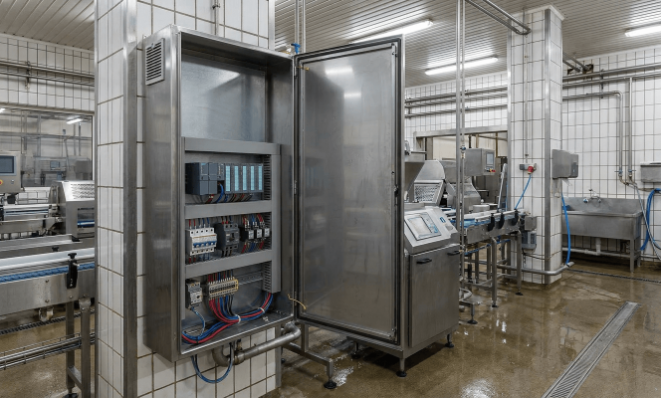
Industrial Control Panels for Food Processing Equipment — Why Many Panels Fail Long Before the Equipment Does
Food processing facilities create a very different environment for industrial control systems than many people expect at the beginning of a project.
On paper, the requirements may look straightforward. The production line needs a control panel capable of handling motors, sensors, conveyors, pumps, HMIs, and process automation. The enclosure may even meet the required IP or NEMA rating during procurement review.
But once the system enters daily operation inside a real food production environment, another layer of challenges begins to appear.
Cleaning crews wash equipment aggressively at the end of every shift. Humidity levels fluctuate constantly between production cycles and sanitation procedures. Warm production areas create condensation during temperature changes. Chemical cleaning agents slowly attack seals, hinges, and enclosure surfaces over time. Meanwhile, production managers expect the automation system to remain stable because any interruption can affect throughput, traceability, and food safety compliance simultaneously.
This is why food processing facilities often expose weaknesses in industrial control panels much faster than standard manufacturing environments.
A control panel that operates reliably for years inside a dry factory may begin developing reliability problems surprisingly quickly inside a food processing plant—not because the panel was poorly manufactured, but because the operating environment behaves differently than many projects initially assume.
Industrial control panels for food processing equipment therefore require more than basic automation functionality. They must be designed around long-term resistance to moisture, sanitation procedures, corrosion, temperature fluctuation, and maintenance pressure if they are expected to remain reliable over years of operation.
Why Food Processing Environments Create Unusual Stress on Control Panels
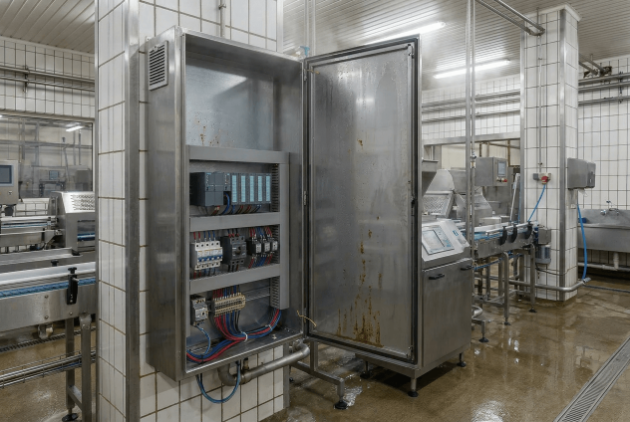
One of the reasons food industry automation becomes difficult is that the electrical system is constantly exposed to competing operational demands.
The production environment requires:
- continuous uptime,
- easy cleaning,
- strict hygiene,
- and stable automation performance.
At the same time, the sanitation environment introduces conditions that are unusually aggressive for electrical infrastructure.
High-pressure washdowns, airborne moisture, cleaning chemicals, steam, and frequent temperature cycling all place stress on enclosure systems in ways that are not always obvious during initial installation.
According to the U.S. Food & Drug Administration (FDA), hygienic facility design plays a critical role in reducing contamination risk and maintaining safe food production environments.
The challenge is that control panels are often installed at the intersection between sanitation requirements and industrial operation. They must remain cleanable while also protecting sensitive electronics from moisture and environmental exposure over long operating cycles.
That balance is much harder to maintain than many projects anticipate.
Most Food Processing Control Panel Failures Do Not Start with Water Leaks
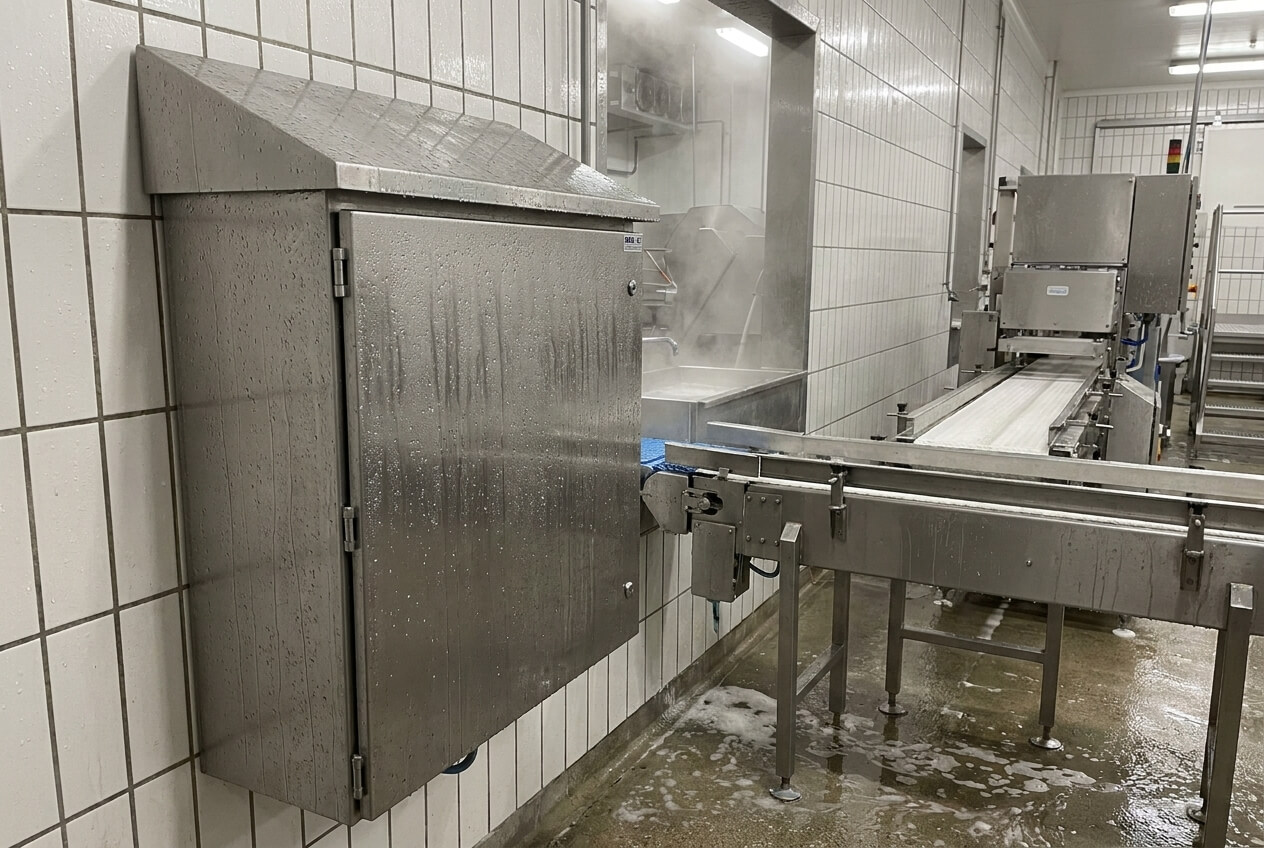
One of the most common misconceptions in food processing environments is the belief that electrical problems only occur when water physically enters the enclosure.
In reality, many reliability problems begin internally through condensation.
This distinction matters because a cabinet can remain technically sealed while still developing moisture-related failures over time.
Food production environments often experience rapid thermal changes throughout the day. Warm process areas, cold washdowns, steam exposure, refrigeration zones, and sanitation cycles create repeated temperature fluctuations inside and outside the enclosure.
Over time, these cycles generate internal condensation even when the enclosure itself has no visible leak.
At first, the effects may appear minor. Maintenance teams may notice occasional communication instability, small corrosion spots near terminals, or intermittent sensor faults during startup. Because the symptoms are inconsistent, the root cause is often difficult to identify early.
Months or years later, however, the operational impact becomes more visible:
- corroded terminals,
- unstable PLC communication,
- degraded insulation performance,
- or unexplained downtime during production shifts.
This is one reason why moisture management inside food processing control panels requires much more than simply choosing a waterproof enclosure.
According to Schneider Electric, humidity and condensation remain among the most underestimated contributors to electrical reliability issues in industrial environments.
Many facilities discover this only after the panel has already entered long-term operation.
Why Stainless Steel Alone Does Not Solve the Problem
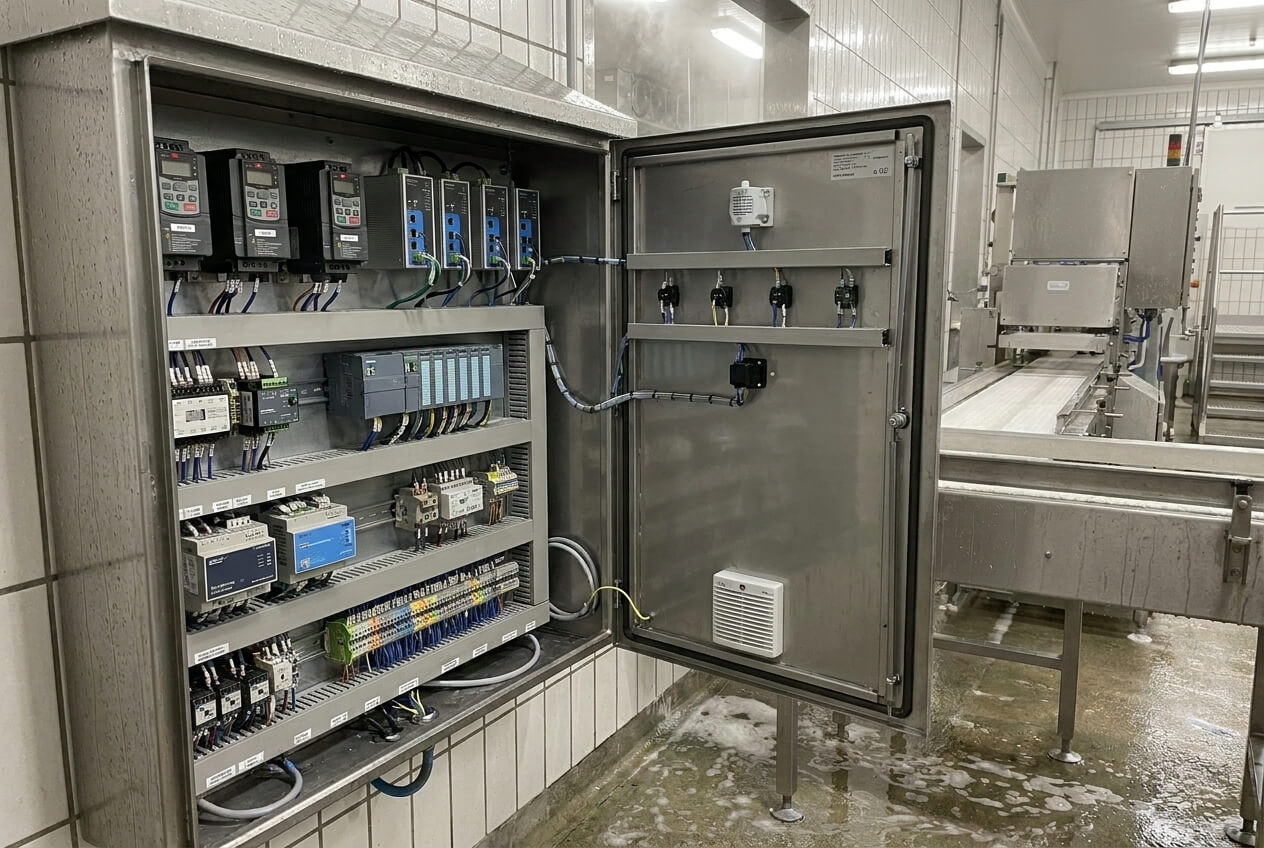
Stainless steel enclosures are widely used in food processing facilities for good reason. They provide strong corrosion resistance, improved cleanability, and better long-term durability under washdown conditions.
However, one of the biggest mistakes in food processing projects is assuming that stainless steel alone guarantees reliability.
In reality, many enclosure problems have less to do with the enclosure material itself and more to do with how the entire panel system behaves operationally over time.
A stainless steel cabinet may still experience the following:
- condensation accumulation,
- overheating,
- seal degradation,
- airflow restriction,
- or maintenance accessibility problems.
This becomes especially important in fully sealed washdown environments where designers often prioritize moisture protection without fully considering thermal management.
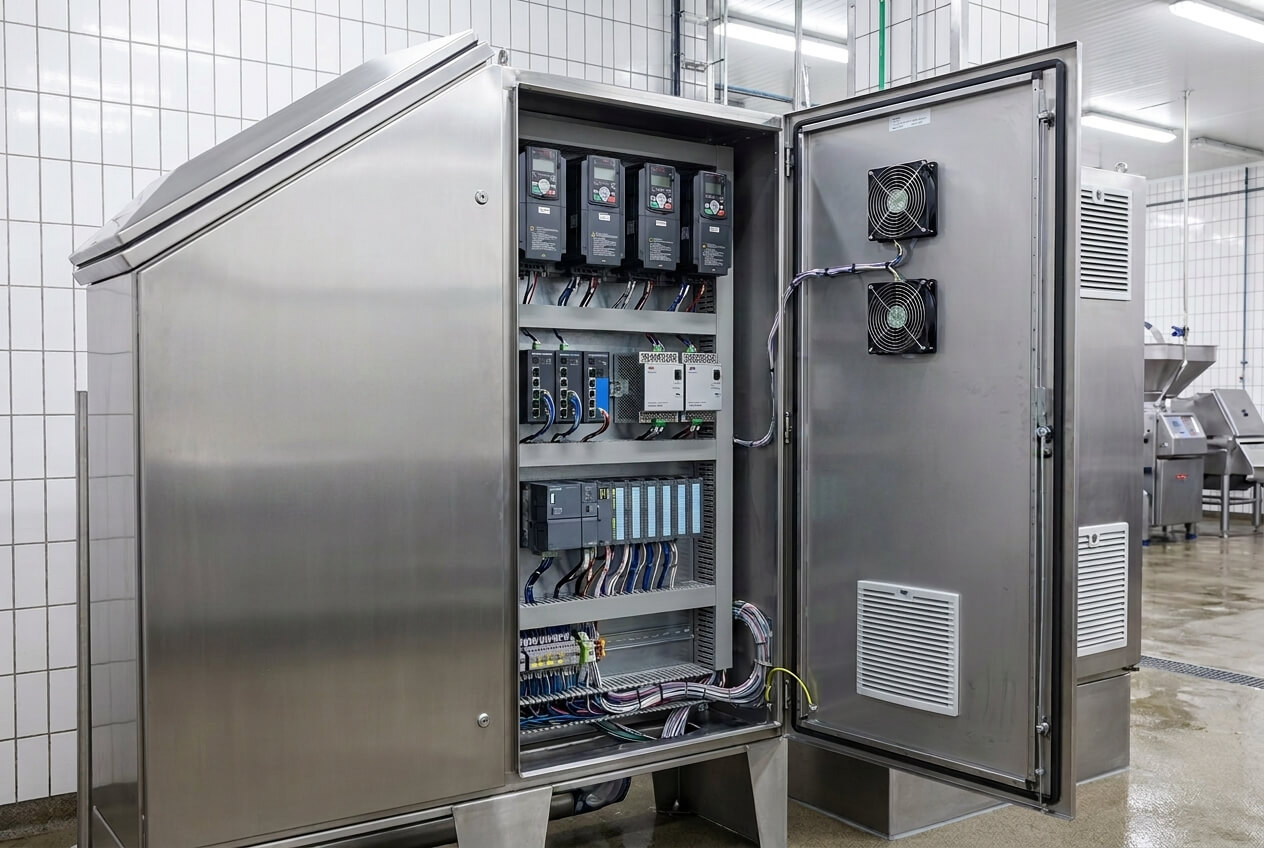
As modern food processing lines become increasingly automated, control panels now contain:
- VFDs,
- industrial networking equipment,
- PLC systems,
- power supplies,
- remote monitoring hardware,
- and high-density control architectures.
All of these components generate heat continuously during operation.
The challenge is that a tightly sealed enclosure designed to resist washdowns may also trap heat inside the cabinet for extended periods.
Over time, elevated internal temperatures accelerate:
- electronic aging,
- fan degradation,
- communication instability,
- and component wear.
According to research commonly referenced through Arrhenius thermal aging principles, increased operating temperature significantly reduces the expected lifespan of many electronic components.
This creates an engineering trade-off that many facilities underestimate during procurement:
The same enclosure strategy that improves moisture protection may also increase long-term thermal stress.
The Hidden Conflict Between Washdown Protection and Thermal Management
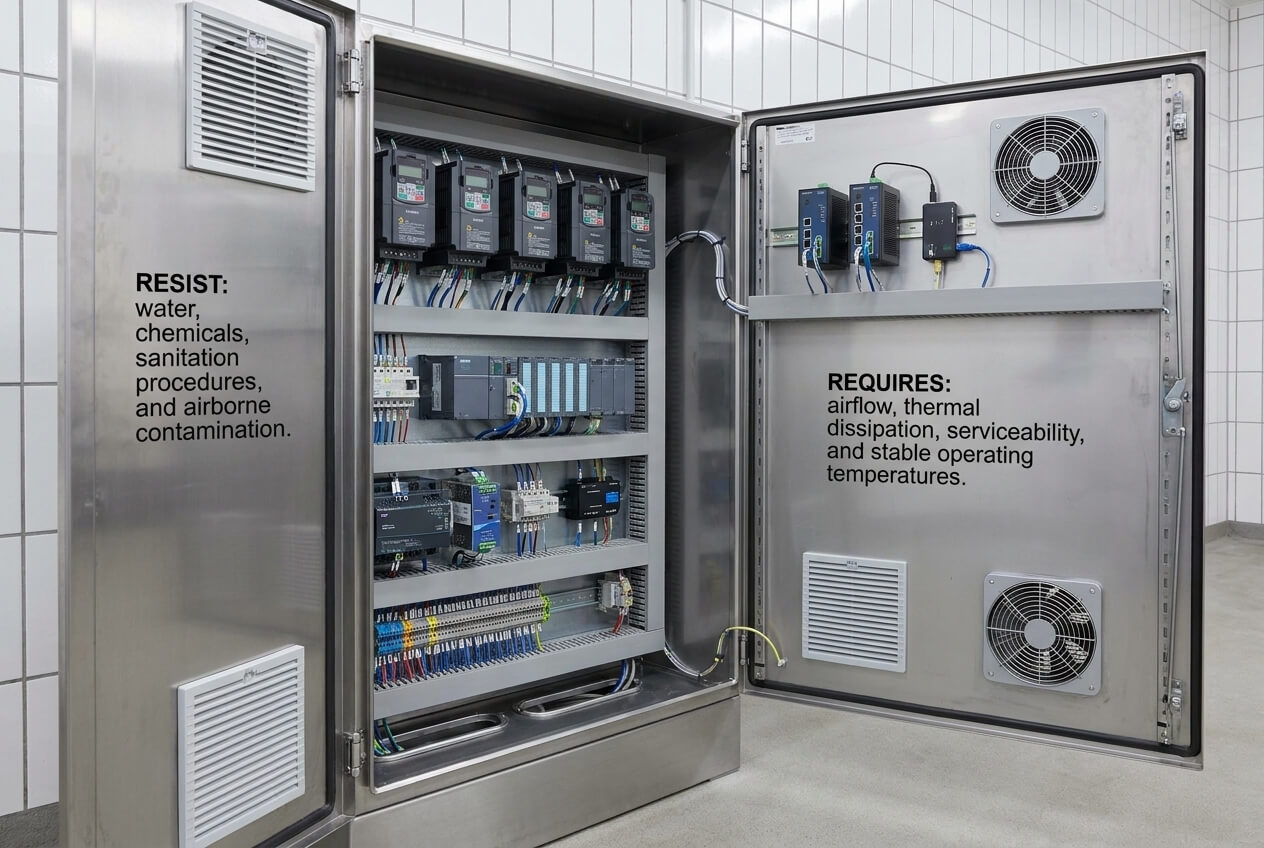
Food processing environments create one of the most difficult balancing acts in industrial enclosure engineering.
On one side, the panel must resist the following:
- water,
- chemicals,
- sanitation procedures,
- and airborne contamination.
On the other side, the automation system still requires:
- airflow,
- thermal dissipation,
- serviceability,
- and stable operating temperatures.
Many facilities initially solve the washdown problem by specifying highly sealed enclosures such as
- NEMA 4X,
- IP66,
- or IP69K cabinets.
While these protection levels are important, sealing the enclosure more aggressively often changes the thermal behavior inside the panel.
Heat generated by:
- VFDs,
- power supplies,
- servo controllers,
- and communication hardware
can accumulate gradually during long production cycles.
The result is not always immediate failure. More commonly, reliability slowly declines over time.
Maintenance teams may begin seeing the following:
- shortened component lifespan,
- intermittent PLC faults,
- unstable communication networks,
- or unexplained nuisance alarms during peak operating periods.
This is one reason why experienced food processing OEMs increasingly treat thermal management as part of hygienic design rather than as a separate engineering topic.
The enclosure is no longer simply protecting electrical equipment from the environment. It is actively influencing the long-term stability of the automation system itself.
For more discussion on enclosure reliability and environmental protection, see our related article:
Hygienic Design Is Also a Maintenance Strategy
Another area many projects underestimate is how enclosure design affects maintenance behavior inside food processing facilities.
At first glance, hygienic design is usually associated with sanitation and contamination prevention. While those factors are important, hygienic design also directly influences:
- inspection accessibility,
- maintenance efficiency,
- cleaning consistency,
- and long-term operational reliability.
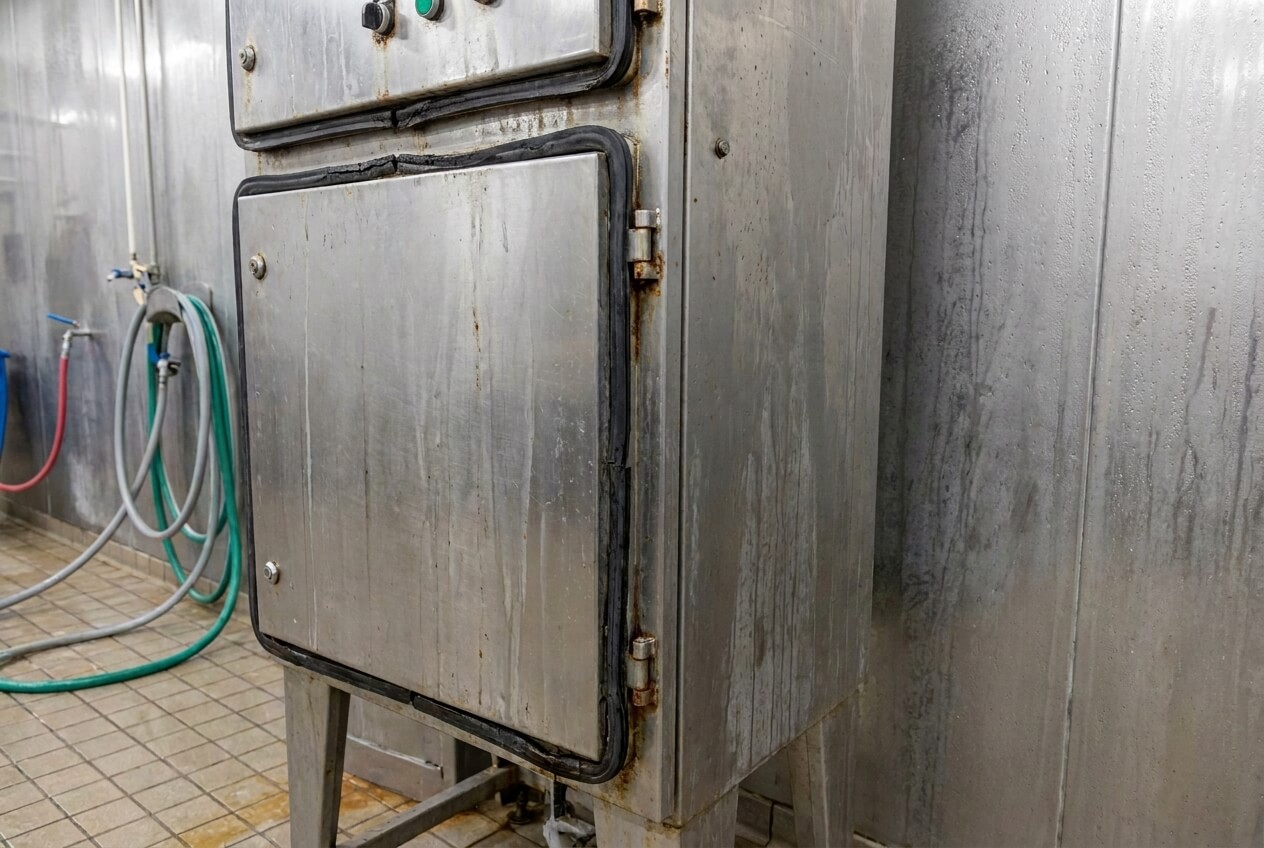
For example, poorly designed enclosures may create the following:
- water retention around seals,
- difficult-to-clean surfaces,
- hidden contamination zones,
- or awkward maintenance access during servicing.
Over time, maintenance teams adapt their behavior around these difficulties. Cleaning becomes inconsistent. Certain areas receive less inspection attention. Service access becomes more time-consuming during breakdowns.
These operational habits quietly increase reliability risk over time.
The European Hygienic Engineering & Design Group (EHEDG) has repeatedly emphasized that hygienic equipment design should reduce not only contamination risk but also cleaning and maintenance complexity.
This is why advanced food processing facilities increasingly evaluate control panels not only by enclosure material but also by the following:
- cleanability,
- accessibility,
- condensation management,
- and lifecycle maintainability.
Why Reliability Problems in Food Facilities Usually Develop Slowly
One reason electrical problems become expensive in food processing environments is that they rarely begin dramatically.
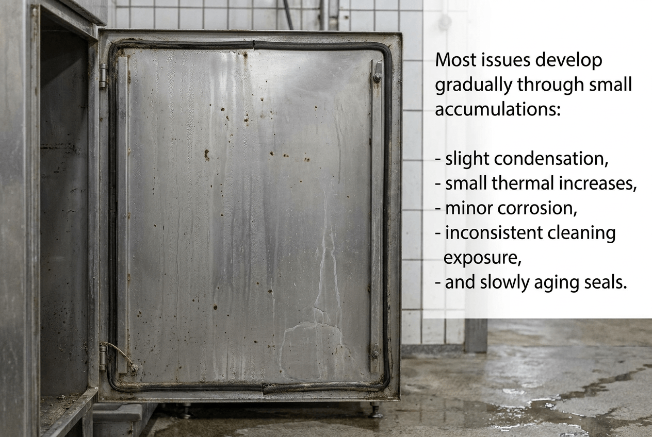
Most issues develop gradually through small accumulations:
- slight condensation,
- small thermal increases,
- minor corrosion,
- inconsistent cleaning exposure,
- and slowly aging seals.
Initially, the system still appears operational.
Then maintenance frequency begins increasing. Intermittent faults become harder to diagnose. Startup inconsistencies appear after sanitation cycles. Components begin failing earlier than expected.
Because the degradation happens slowly, facilities often normalize the symptoms instead of recognizing the underlying environmental cause.
This is particularly common in older production facilities where automation systems have expanded gradually over years without a complete enclosure strategy review.
The result is a control infrastructure that technically operates but becomes progressively more difficult to maintain confidently.
What Experienced Food Processing OEMs Actually Look for in a Control Panel
Experienced OEMs in food processing environments rarely evaluate control panels only by
- cabinet dimensions,
- PLC brands,
- or initial pricing.
Instead, they increasingly focus on how the panel will behave operationally after years of
- sanitation cycles,
- production pressure,
- maintenance activity,
- environmental exposure,
- and future system expansion.
Questions often shift toward:
- How will the enclosure manage condensation over time?
- Can maintenance teams clean and service the panel efficiently?
- Will thermal conditions remain stable during continuous operation?
- How easily can future automation upgrades be integrated?
- Will the panel remain reliable after years of washdown exposure?
These are not specification-sheet questions.
They are operational lifecycle questions.
And in food processing environments, lifecycle reliability often matters more than initial equipment appearance.
For additional reading on enclosure material selection in harsh environments, see:
Final Thoughts
Industrial control panels for food processing equipment operate in one of the most demanding environments in industrial automation.
The challenge is not simply building a panel that functions during installation.
The real challenge is ensuring the system remains reliable after years of:
- washdowns,
- humidity cycles,
- sanitation procedures,
- thermal stress,
- and continuous production demands.
Many reliability problems inside food facilities do not begin with major equipment failure. They begin quietly through condensation, heat accumulation, seal aging, and maintenance complexity that slowly increase operational instability over time.
That is why successful food processing control panel design requires more than automation expertise alone.
It requires understanding how electrical systems behave inside real sanitation environments long after the project has already been commissioned.