Jul 2, 2026Integration & Compatibility
How to Prevent Packaging Startup Failures Before Full Launch
How to Prevent Packaging Startup Failures Before Full Launch Launching a new product is exciting, but most buyers know the real pressure begins long before customers ever see the product on a shelf. T
How to Prevent Packaging Startup Failures Before Full Launch
Launching a new product is exciting, but most buyers know the real pressure begins long before customers ever see the product on a shelf. The packaging may look perfect during sampling, yet problems often appear once production starts running at full speed or products begin moving through real logistics conditions. A leaking cap, weak seal, or damaged carton can quickly turn a promising launch into a costly problem.
For startup brands and growing companies, these risks feel even heavier because early mistakes affect cash flow, customer trust, and future expansion plans. In many cases, the packaging itself is not necessarily “bad.” The real issue is that the system was never fully validated under real production and shipping conditions before launch.
Most packaging startup failures can be prevented before mass production begins. Problems usually happen because buyers move too quickly from sampling to large-scale production without fully testing compatibility, sealing performance, transportation durability, or inventory strategy. A successful launch depends less on attractive packaging samples and more on whether the packaging performs reliably during filling, shipping, storage, and customer use.
What Buyers Worry About Before Launch
Will the packaging fail in real use?
This is usually the biggest concern behind every packaging discussion, even when buyers do not say it directly.
A sample on a conference table is one thing. A fully loaded shipment traveling through warehouses, trucks, temperature changes, and retail handling is something completely different.
Buyers worry about practical problems such as the following:
- Leakage during transport
- Weak sealing performance
- Broken closures
- Poor compatibility with filling lines
- Packaging damage during shipping
The fear becomes even stronger for new product launches because early customer feedback matters so much. If customers receive damaged or leaking products during the first launch period, the brand may lose trust before it has a chance to grow properly.
According to the Packaging Machinery Manufacturers Institute (PMMI), packaging performance during transportation and handling remains one of the major concerns for companies launching new consumer products.
Source:
PMMI Industry Reports
Many buyers discover too late that packaging that performs well in small samples does not always behave the same way during full production runs.
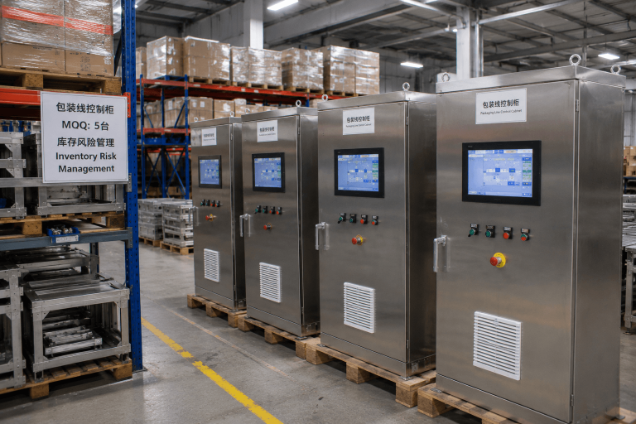
Will the MOQ Be Too High for a New Brand?
This concern is especially common among startup brands and smaller businesses entering competitive markets.
Large MOQs may help factories improve manufacturing efficiency, but from the buyer’s perspective, they can create serious pressure before the product is even validated in the market.
A high MOQ often means the following:
- More cash tied into inventory
- Less flexibility for design changes
- Greater storage pressure
- Higher risk if sales move slowly
I have seen companies order large quantities of custom packaging too early, only to discover later that they needed to revise the label, improve the closure, or adjust the product formula itself. At that point, the unused inventory becomes difficult to recover financially.
For many brands, packaging risk is not only about product protection. It is also about protecting cash flow during the most vulnerable stage of growth.
Why Packaging Startup Failures Happen
Sample Success Does Not Always Mean Production Success
One of the biggest misunderstandings in packaging development is assuming that a successful sample guarantees a successful production launch.
In reality, production environments introduce variables that samples cannot fully simulate.
Filling speed changes.
Machine pressure changes.
Temperature conditions fluctuate.
Material consistency varies between production batches.
These factors can expose weaknesses that never appeared during sample evaluation.
A package that works perfectly during manual testing may struggle once high-speed filling equipment is involved. Closures that seem stable during inspection may begin leaking after transportation vibration or warehouse stacking pressure.
According to the Institute of Packaging Professionals (IoPP), pilot-scale production testing is critical because packaging performance often changes significantly under commercial manufacturing conditions.
Source: IoPP Packaging Validation Resources
This is why experienced buyers rarely treat sample approval as the final step. They see it as the beginning of a larger validation process.
Product and Packaging Are Not Fully Compatible
Compatibility issues are another major reason packaging launches fail unexpectedly.
Many buyers test packaging with water or temporary sample liquids, but the real product formula may behave very differently once production begins.
This becomes especially important for the following:
- Oils
- Creams
- Cleaning products
- Alcohol-based liquids
- Chemical formulations
Viscosity, chemical composition, and ingredient interaction all influence packaging performance over time.
Typical compatibility problems include the following:
- Seal degradation
- Pump failure
- Leakage
- Material swelling
- Product contamination
A package that looks stable during short-term testing may fail after weeks of storage or transportation exposure.
Related reading:
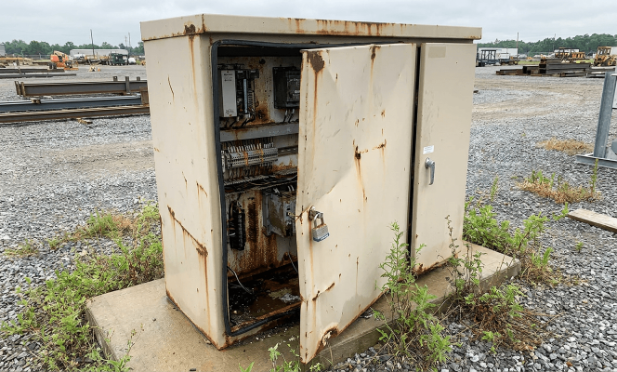
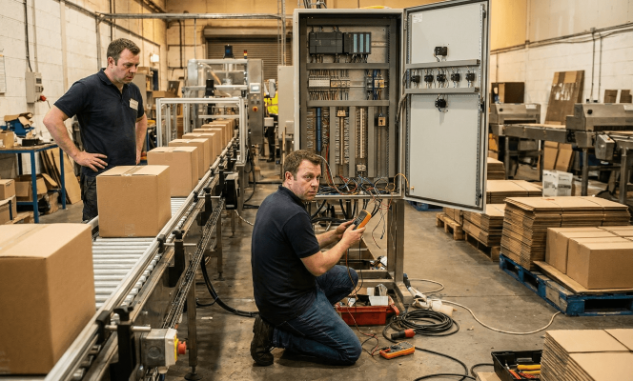
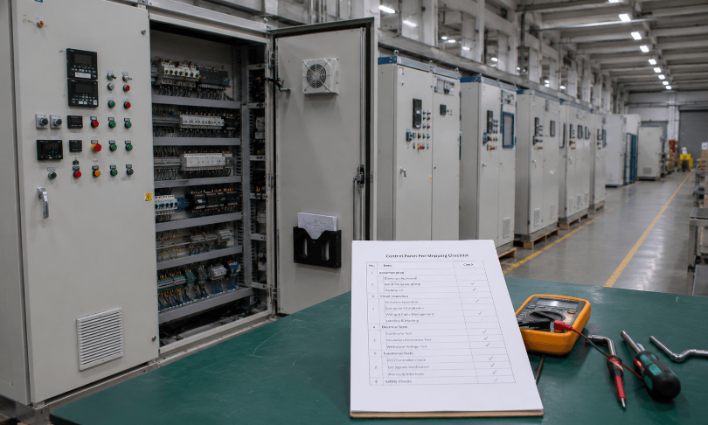
Although this article discusses industrial control panels, the principle is surprisingly similar: real operating conditions always expose weak assumptions that small tests fail to reveal.
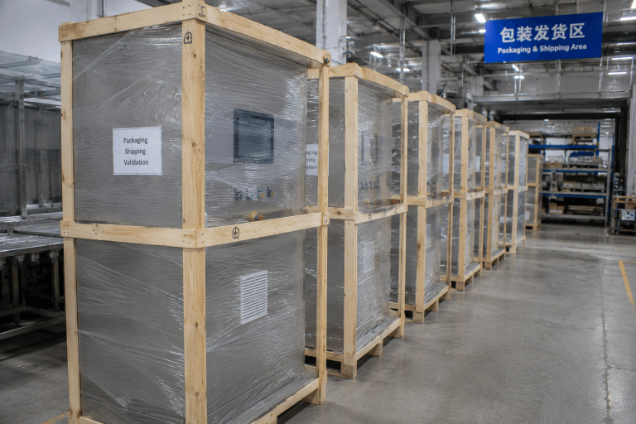
Shipping and handling were not tested enough.
Many packaging problems do not appear on the production line. They appear after the shipment leaves the factory.
Transportation places constant stress on packaging through vibration, stacking pressure, repeated handling, and environmental temperature changes.
Without proper shipping validation, buyers may face the following:
- Cracked containers
- Open closures
- Product leakage
- Carton collapse
- Damaged labels
According to the International Safe Transit Association (ISTA), transportation testing significantly reduces packaging damage and product returns during commercial distribution.
Source:
ISTA Transit Testing Standards
Shipping performance should never be treated as a secondary concern. Customers do not care whether the damage happened during filling or during transportation. They only care about the condition of the product they receive.
Testing That Prevents Launch Problems
Why Pilot Runs Are Critical
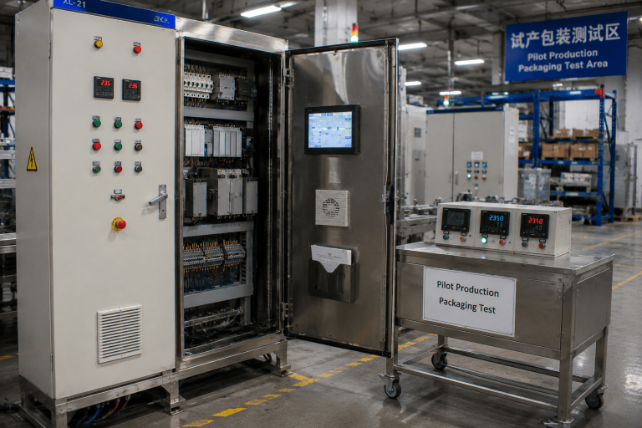
A pilot run creates the bridge between sample approval and full commercial production.
It allows buyers to evaluate how the packaging performs under realistic operating conditions without immediately committing to large-scale inventory.
During pilot production, teams can observe the following:
- Filling consistency
- Seal integrity
- Machine compatibility
- Label positioning
- Closure performance
- Operator handling
More importantly, pilot runs create room for correction while the financial risk is still manageable.
Fixing a sealing issue during a small pilot run is inconvenient. Discovering the same issue after producing 100,000 units becomes a very different conversation.
What to Test Before Full Launch
Before approving full production, buyers should carefully evaluate several critical areas.
These include:
- Leakage resistance
- Seal strength
- Closure fit consistency
- Label accuracy
- Product compatibility
- Transportation durability
For products using pumps or dispensing systems, pump consistency testing also becomes essential because small variations may affect customer experience significantly.
Different industries often face the same operational reality: the most expensive problems could have been discovered earlier through better testing.
Why a Small Test Batch Is Better Than a Big Mistake
Many startup brands feel pressure to scale quickly, especially after investing heavily in product development and marketing preparation.
But experienced buyers understand that small test batches create flexibility.
A smaller launch allows companies to:
- Collect real market feedback
- Monitor packaging performance
- Identify hidden issues
- Improve logistics processes
- Reduce financial exposure
Scaling gradually often creates a more stable long-term launch than rushing immediately into large inventory commitments.
MOQ and Inventory Planning
How High MOQ Creates Startup Risk
Large packaging orders can quietly create operational pressure before the product even reaches the market.
Cash becomes tied into inventory while demand is still uncertain. If adjustments become necessary later, excess packaging stock may no longer be usable.
This creates additional pressure on the following:
- Storage space
- Forecast flexibility
- Product revisions
- Budget planning
According to McKinsey & Company, inventory flexibility has become increasingly important for growing brands operating in uncertain consumer markets.
Source:
McKinsey Supply Chain Insights
Many successful launches today prioritize adaptability over aggressive early scaling.
How to Reduce Risk With Staged Production
A staged production strategy gives buyers more room to adjust based on real-world feedback.
Instead of committing immediately to full-scale production, companies can:
- Begin with pilot quantities
- Validate packaging performance
- Monitor customer response
- Scale gradually after confirmation
This approach reduces pressure while improving long-term decision-making.
In many cases, controlled growth creates far fewer operational problems than aggressive early expansion.
What Buyers Should Check Before Approving Production
Compatibility With Product Formula
Buyers should always test packaging using the actual product formula, not temporary substitutes.
This includes evaluating the following:
- Chemical stability
- Seal integrity
- Pump performance
- Material resistance
- Shelf-life behavior
This step becomes especially important for liquids, creams, oils, and chemical-based products where formula interaction may affect long-term packaging reliability.
Closure, Seal, and Fit Quality
Closures may appear simple, but small fit inconsistencies can create major operational problems later.
Before production approval, buyers should verify:
- Cap fit consistency
- Seal reliability
- Pump alignment
- Liner quality
- Torque stability
A package must survive both production handling and transportation stress without failure.
The industries are different, but the lesson is often the same: overlooked details usually become the expensive problems later.
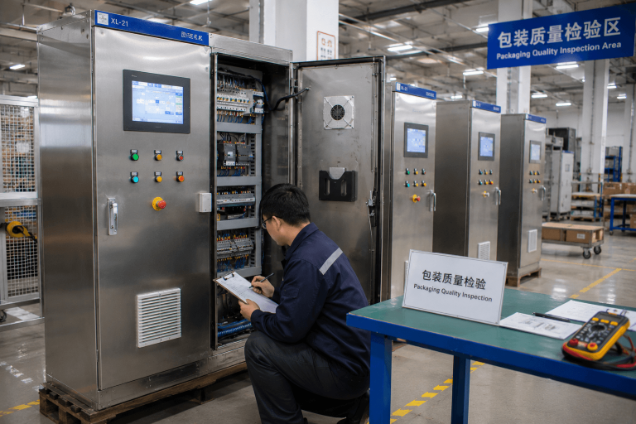
Labeling and Compliance Accuracy
Label review should never be treated as a last-minute task.
Buyers should confirm:
- Barcode accuracy
- Regulatory wording
- Ingredient information
- Artwork positioning
- Compliance requirements
Mistakes in these areas can create legal issues, shipment delays, or customer trust problems after launch.
How Good Packaging Design Helps the Buyer
Makes the Launch Smoother
Good packaging design reduces unnecessary complications during filling, packing, shipping, and retail preparation.
The production process becomes more stable, and teams spend less time correcting preventable issues.
Reduces Returns and Complaints
Better packaging validation usually results in fewer damaged shipments, fewer leaks, and fewer customer complaints after launch.
This matters because early customer reviews often shape long-term brand perception.
Helps the Brand Scale With Confidence
Once packaging performs reliably during pilot runs and early shipments, companies can scale production with far more confidence.
The focus shifts from solving packaging problems to growing the business itself.
Conclusion
The strongest packaging launches are usually not the fastest ones. They are the launches where problems are identified early, before they become expensive inventory, damaged shipments, or disappointed customers. In real commercial environments, successful packaging depends on careful testing, realistic pilot validation, compatibility checks, and inventory planning that matches the actual stage of the business.
FAQ
What is the most common packaging startup problem?
The most common issue is discovering that packaging performs differently during real production or shipping compared to initial sample testing.
Why is a pilot run important before full launch?
A pilot run helps identify production, sealing, compatibility, and handling problems before large-scale manufacturing begins.
What should buyers test before approving packaging production?
Buyers should evaluate sealing performance, compatibility, closure fit, transportation durability, labeling accuracy, and product stability.
How does MOQ affect startup risk?
High MOQs increase inventory pressure and financial exposure before market demand has been fully validated.
Why does packaging compatibility matter so much?
Because packaging that works with temporary samples may fail once exposed to the real product formula over time.
Should buyers ask for shipping tests?
Yes. Shipping tests help confirm that the packaging can survive transportation conditions without leakage, breakage, or customer complaints.