
Oct 6, 2026Buying Guides
How to Choose the Right Electrical Enclosure
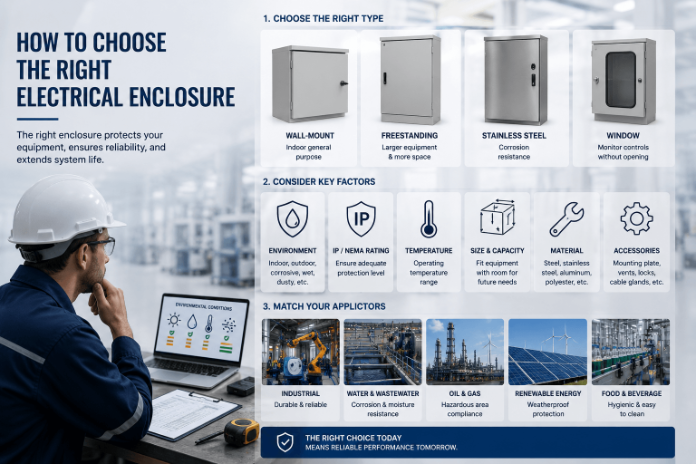
How to Choose the Right Electrical Enclosure Choosing the Wrong Electrical Enclosure Can Become an Expensive Mistake Many industrial equipment failures are not caused by the control system itself. The
How to Choose the Right Electrical Enclosure
Choosing the Wrong Electrical Enclosure Can Become an Expensive Mistake
Many industrial equipment failures are not caused by the control system itself. They happen because the electrical enclosure was never designed for the real operating environment.
We have seen outdoor cabinets fail because of water ingress after heavy rain. We have also seen indoor control panels overheat simply because airflow was ignored during the design stage.
In many projects, buyers focus heavily on PLC brands, electrical components, or software integration, while overlooking the enclosure that protects the entire system.
Choosing the right electrical enclosure means evaluating the installation environment, protection rating, enclosure material, cabinet size, cooling requirements, and future maintenance needs. A properly selected enclosure improves equipment reliability, extends service life, reduces downtime, and lowers long-term operating costs.
An electrical enclosure is not just a metal box. In industrial environments, it becomes the first line of defense for the entire control system.
Why Electrical Enclosures Matter More Than Many Buyers Realize
In industrial facilities, electrical cabinets face constant environmental stress:
- Dust
- Moisture
- Corrosion
- Oil exposure
- Temperature fluctuations
- Vibration
- Chemical cleaning
Over time, even small environmental problems can damage expensive electrical components inside the cabinet.
According to the U.S. Department of Energy, moisture and contamination are among the leading causes of electrical equipment failure in industrial environments.
For manufacturers, downtime is not just inconvenient. It can become extremely costly.
A report from Siemens Industrial Automation estimated that unplanned industrial downtime can cost manufacturers thousands of dollars per hour depending on the industry and production scale.
That is why experienced engineers often say the following:
“The enclosure protects the investment.”
Start by Understanding the Installation Environment
The first step in choosing an electrical enclosure is understanding where the cabinet will operate.
This sounds simple, but it is where many sourcing mistakes begin.
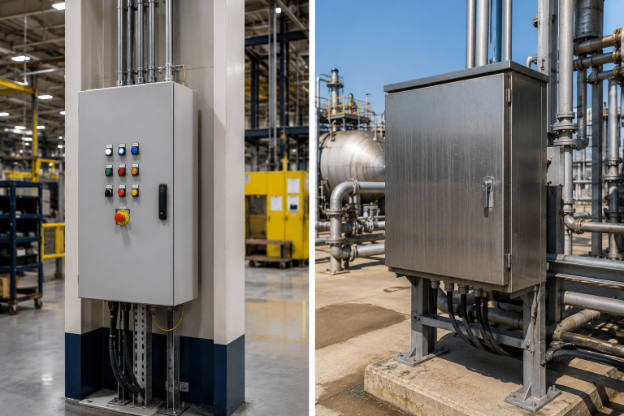
Indoor vs Outdoor Applications
Indoor electrical enclosures usually face the following:
- Dust
- Heat
- Oil mist
- Human contact
Outdoor electrical cabinets must also withstand the following:
- Rain
- UV exposure
- Humidity
- Temperature changes
- Corrosion
An enclosure that performs perfectly indoors may fail quickly outdoors.
Harsh Industrial Environments
Some industries are especially demanding:
Industry | Common Environmental Risks |
|---|---|
Food Processing | Washdown cleaning, humidity |
Chemical Plants | Corrosive chemicals |
Marine & Coastal | Salt corrosion |
Mining | Dust and vibration |
Oil & Gas | Hazardous locations |
Water Treatment | Moisture and chemical exposure |
For these applications, enclosure protection becomes critical for long-term reliability
Choose the Right Enclosure Material
Different materials perform differently depending on the environment.
Choosing the wrong material may lead to corrosion, overheating, structural damage, or higher maintenance costs.
Common Electrical Enclosure Materials
Material | Advantages | Best Applications |
|---|---|---|
Carbon Steel | Cost-effective, strong | General indoor industrial use |
Stainless Steel | Corrosion-resistant, durable | Food, marine, chemical industries |
Aluminum | Lightweight, corrosion-resistant | Outdoor telecom & lightweight systems |
Fiberglass | Non-conductive, chemical-resistant | Harsh corrosive environments |
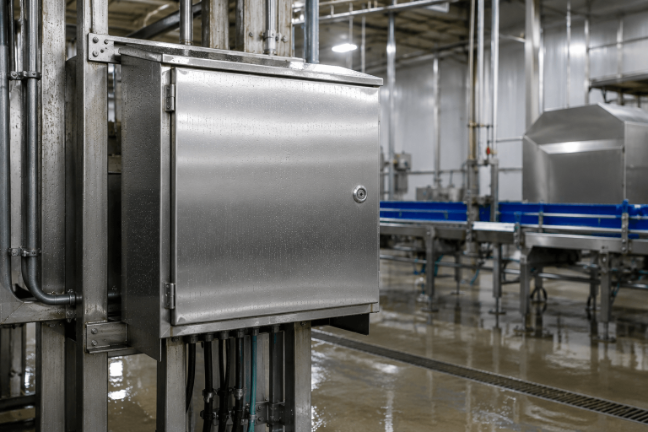
Why Stainless Steel Enclosures Are Popular in Harsh Environments
In many industrial projects, stainless steel electrical enclosures are preferred because they provide stronger resistance against:
- Corrosion
- Humidity
- Salt spray
- Chemical exposure
According to corrosion studies published by the Nickel Institute, stainless steel can significantly extend enclosure lifespan in chloride-rich industrial environments.
This is one reason why industries such as
- Food processing
- Pharmaceuticals
- Wastewater treatment
- Coastal infrastructure
often specify stainless steel NEMA 4X enclosures.
Understand IP and NEMA Ratings
One of the most confusing areas for buyers is enclosure protection ratings.
IP Ratings
IP ratings focus mainly on:
- Dust protection
- Water ingress protection
Common examples include:
- IP54
- IP65
- IP66
- IP67
NEMA Ratings
NEMA ratings are more commonly used in North America and also evaluate the following:
- Corrosion resistance
- Oil exposure
- Ice formation
- Hazardous environments
For example:
- NEMA 4
- NEMA 4X
- NEMA 12
Which Protection Rating Is Best?
There is no single “best” rating.
The correct choice depends on the operating environment.
Environment | Recommended Rating |
|---|---|
Indoor automation | IP54 / NEMA 12 |
Outdoor industrial | IP66 / NEMA 4 |
Washdown food processing | NEMA 4X |
Coastal installations | Stainless Steel NEMA 4X |
Dust-heavy workshops | IP65 or higher |
According to the IEC 60529 Standard, IP66 enclosures are tested against powerful water jets and are widely used in industrial automation projects worldwide.
Enclosure Size Is Often Underestimated
One of the most common mistakes buyers make is selecting an enclosure that is too small.
At first, a compact cabinet may seem efficient and cost-effective.
But later, problems appear:
- Poor airflow
- Difficult maintenance
- Cable congestion
- Heat buildup
- No room for expansion
Experienced panel builders usually recommend leaving additional space for:
- Future upgrades
- Cable routing
- Cooling systems
- Easier servicing
A slightly larger enclosure today can prevent expensive redesigns tomorrow.
Why Cooling and Ventilation Matter
Modern industrial control panels generate significant heat.
Components such as:
- PLC systems
- VFDs
- UPS units
- Power supplies
can quickly raise internal cabinet temperatures.
According to Schneider Electric, excessive heat is one of the leading causes of premature electrical component failure.
Proper enclosure cooling may include:
- Ventilation fans
- Filter fans
- Air conditioners
- Heat exchangers
Ignoring thermal management can shorten equipment lifespan dramatically.
Wall-Mounted vs Floor-Standing Cabinets
The installation method also matters.
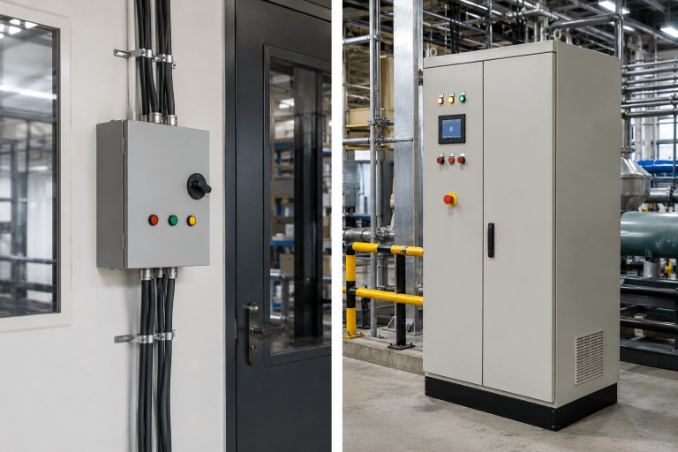
Wall-Mounted Enclosures
Best for:
- Smaller systems
- Limited floor space
- Indoor automation
Advantages:
- Compact
- Easier installation
- Lower cost
Floor-Standing Cabinets
Best for:
- Large control systems
- Industrial automation lines
- Power distribution systems
Advantages:
- More internal space
- Better cable management
- Easier future expansion
For many industrial projects, floor-standing cabinets provide better long-term flexibility.
Real-World Example: Water Damage in Outdoor Cabinets
A utility contractor in Southeast Asia installed several outdoor control cabinets near a coastal pumping station.
The original cabinets used painted steel enclosures with insufficient protection ratings.
Within two years, engineers discovered:
- Internal condensation
- Rust formation
- Seal deterioration
- Frequent electrical faults
The system later upgraded to stainless steel IP66 / NEMA 4X enclosures with improved sealing and ventilation.
According to the project maintenance report, service interruptions were significantly reduced after the upgrade.
Cases like this are common in humid and coastal industrial environments.
Common Mistakes Buyers Make When Choosing Electrical Enclosures
Choosing Based on Price Alone
A cheaper enclosure may create higher maintenance costs later.
Ignoring Environmental Conditions
Many failures happen because the cabinet was never designed for the actual operating environment.
Forgetting Future Expansion
Industrial systems often grow over time.
A cabinet with no spare space can become a major limitation.
Overlooking Cooling Requirements
Heat is one of the most underestimated risks in industrial control systems.
Questions to Ask Before Ordering a Custom Electrical Enclosure
Before placing an order, buyers should ask:
- Is the enclosure suitable for indoor or outdoor use?
- What IP or NEMA rating is required?
- Which material is best for the environment?
- Is future expansion considered?
- How is heat managed inside the cabinet?
- Does the enclosure support cable management?
- Is corrosion resistance necessary?
- Are certifications required for the project?
These questions help reduce sourcing risks and improve long-term reliability.
Final Thoughts
Choosing the right electrical enclosure is not simply about compliance or appearance.
It is about protecting the entire control system from real-world industrial conditions.
A well-designed enclosure improves the following:
- Reliability
- Safety
- Maintenance efficiency
- Equipment lifespan
In industrial automation projects, the enclosure is often overlooked at the beginning — but it becomes one of the most important decisions over the long term.
The best enclosure is not always the most expensive one.
It is the one designed for the environment, the application, and the future demands of the project.
Need help specifying or sourcing this for your project? Request a quote - we reply within 1-2 working days with a technical review.