
Oct 6, 2026Buying Guides
What Most Buyers Miss When Sourcing Control Panels
What Most Buyers Miss When Sourcing Control Panels Choosing the wrong control panel supplier can create costly delays Many buyers focus heavily on component brands when sourcing a custom control panel
What Most Buyers Miss When Sourcing Control Panels
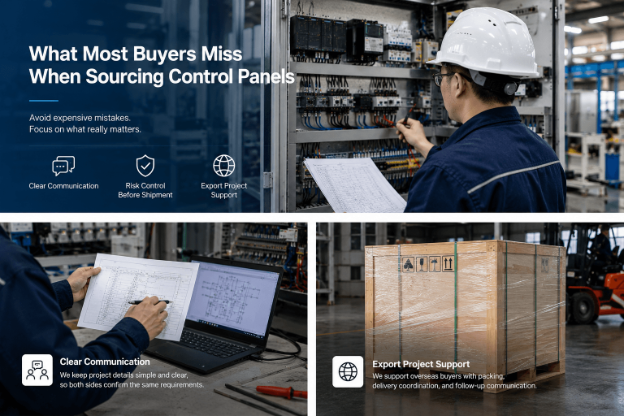
Many buyers focus heavily on component brands when sourcing a custom control panel. But in real industrial projects, failures often come from poor communication, incomplete technical validation, weak system integration, or insufficient testing. These issues can lead to downtime, redesign costs, shipment delays, and long-term maintenance problems.
Most buyers miss the fact that successful control panel sourcing depends on far more than component selection. Reliable industrial control panels require proper system integration, environmental protection, factory testing, documentation, and clear communication between the buyer and the panel builder. Without these factors, even high-quality components can fail in real operating conditions.
A well-built control system is not simply a cabinet filled with branded parts. It is a complete engineering solution designed for long-term reliability, safety, and operational stability.
Why Component Quality Alone Is Not Enough
Many buyers believe that using premium brands automatically guarantees a reliable industrial control panel. In reality, component quality is only one part of the equation.
Even the best PLC, circuit breaker, or UPS system can perform poorly if:
- The wiring layout is incorrect
- Heat dissipation is ignored
- The enclosure rating is unsuitable
- Power distribution is improperly designed
- System compatibility is not fully verified
A professional panel builder must understand the entire application, not just the bill of materials.
For example, a control cabinet used in a humid outdoor environment requires different enclosure protection, cooling methods, and cable management compared to a cabinet installed inside a clean factory.
Incomplete Technical Information Creates Expensive Delays
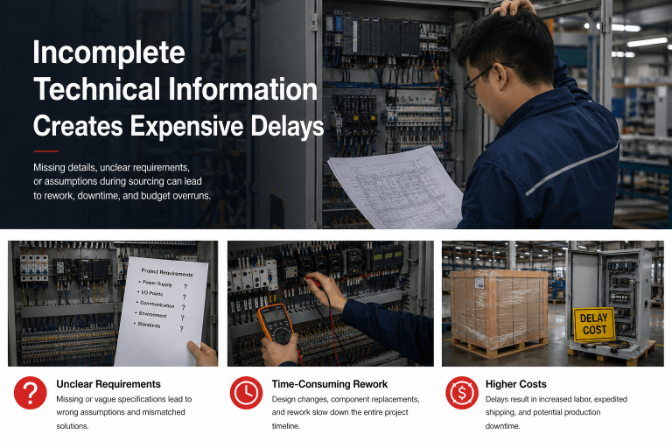
One of the most common sourcing problems starts before production even begins.
Many buyers provide:
- Basic drawings
- Incomplete specifications
- Unclear operating conditions
- Missing voltage information
- Limited installation details
This often results in:
- Engineering revisions
- Delayed production
- Incorrect component selection
- Additional shipping costs
- On-site installation issues
Experienced OEM manufacturing suppliers usually ask detailed questions early in the project to reduce these risks.
The more complete the project information is, the smoother the control panel manufacturing process becomes.
Many Buyers Underestimate System Integration Risks
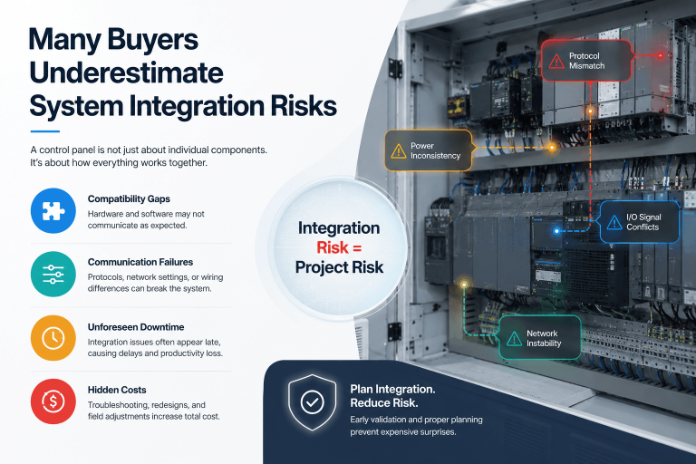
Industrial automation projects involve multiple systems working together.
A control panel may need to integrate with the following:
- PLC systems
- VFDs
- Sensors
- HMIs
- SCADA platforms
- UPS units
- Remote monitoring systems
Compatibility problems between these systems are one of the biggest hidden risks in industrial automation.
Even when individual components work properly, communication failures or programming mismatches can create major operational issues.
This is why system integration capability is often more important than simply offering low pricing.
Why Factory Testing Matters More Than Most Buyers Think
Some suppliers focus mainly on assembly speed while giving limited attention to testing procedures.
However, proper panel testing is critical before shipment.
Reliable manufacturers usually perform:
- Power-on testing
- I/O verification
- PLC function testing
- Safety inspections
- Wiring validation
- Communication testing
- FAT (Factory Acceptance Testing)
Without proper testing, buyers may only discover issues after installation at the project site, where troubleshooting becomes much more expensive.
Factory testing helps reduce downtime, startup delays, and maintenance risks.
Environmental Conditions Are Often Overlooked
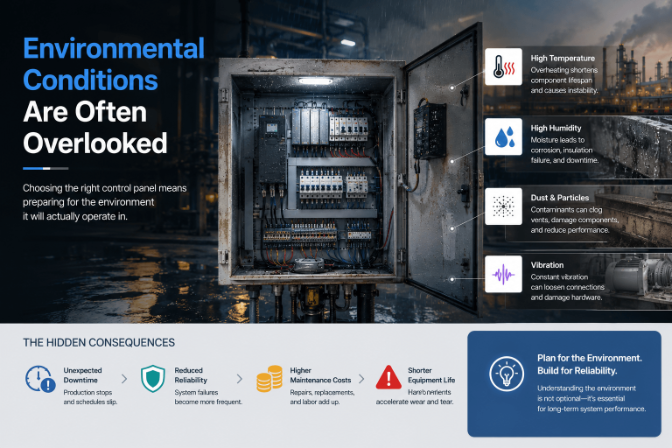
Not all industrial environments are the same.
Control panels installed in:
- Outdoor facilities
- Chemical plants
- High-temperature workshops
- Dusty environments
- Coastal regions
require different protection standards.
Buyers often overlook:
- IP ratings
- NEMA ratings
- Ventilation requirements
- Corrosion resistance
- Temperature management
For example:
- Stainless steel electrical enclosures are often preferred for corrosive environments
- Outdoor industrial cabinets may require additional waterproof and UV protection
- High-temperature facilities may need cooling fans or heat exchangers
Ignoring environmental conditions can significantly shorten equipment lifespan.
Communication Gaps Between Buyers and Manufacturers
Communication problems are one of the most underestimated risks in custom control panel projects.
Common issues include:
- Unclear revision management
- Different engineering standards
- Missing approval processes
- Incomplete documentation
- Slow technical feedback
International projects become even more complicated when multiple teams, languages, and time zones are involved.
Professional suppliers usually provide:
- Detailed drawings
- BOM confirmation
- Project timelines
- Technical review processes
- Regular progress updates
Strong communication reduces costly misunderstandings during production and installation.
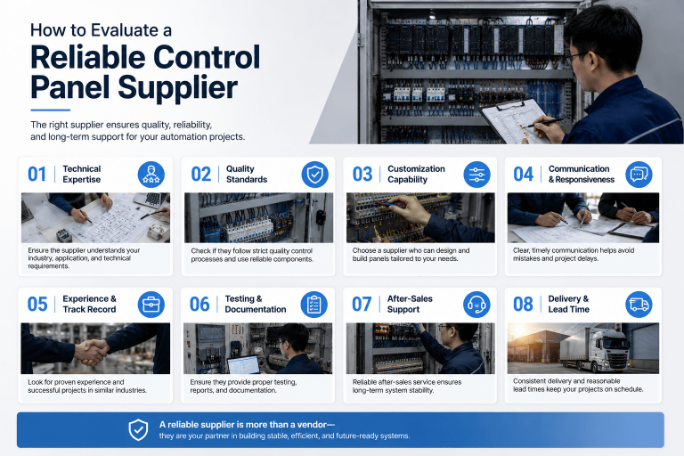
How to Evaluate a Reliable Control Panel Supplier
When choosing a control panel manufacturer, buyers should evaluate more than pricing alone.
Important factors include:
Engineering Capability
Can the supplier support system design, integration, and optimization?
Manufacturing Quality
Does the factory follow organized assembly and quality control procedures?
Testing Process
Are factory tests clearly documented?
Certification Support
Can the supplier support UL, CE, or other required standards?
Project Experience
Has the supplier handled similar industrial automation projects before?
Communication Efficiency
Can the team respond quickly and clearly during technical discussions?
Long-term reliability often depends on supplier capability rather than initial purchase cost.
Questions Buyers Should Ask Before Placing an Order
Before sourcing a custom control panel, buyers should ask:
- What testing procedures are included before shipment?
- Can the supplier support custom PLC programming?
- Which certifications are available?
- How is heat management handled inside the cabinet?
- What environmental protection standards are supported?
- How are engineering revisions managed?
- Can the supplier provide technical drawings and documentation?
- What industries has the supplier worked with before?
- What is the estimated lead time?
- Is remote technical support available after delivery?
These questions help reduce sourcing risks and improve project success rates.
Final Thoughts
Sourcing industrial control panels is not only about buying electrical equipment. It is about reducing operational risk across the entire project lifecycle.
The best suppliers do more than assemble components. They help buyers improve system reliability, reduce downtime, simplify integration, and support long-term industrial performance.
For complex automation projects, choosing an experienced control panel partner can save significant time, cost, and maintenance effort in the future.
Need help specifying or sourcing this for your project? Request a quote - we reply within 1-2 working days with a technical review.