Jun 26, 2026Case Studies
Vietnam vs. China Manufacturing Cost Breakdown
Vietnam vs. China Manufacturing Cost Breakdown: What Actually Drives Total Cost For the past few years, many sourcing discussions have revolved around the same question: “Is Vietnam cheaper than China
Vietnam vs. China Manufacturing Cost Breakdown: What Actually Drives Total Cost
For the past few years, many sourcing discussions have revolved around the same question:
“Is Vietnam cheaper than China?”
The question sounds simple, but most real manufacturing decisions are not made on labor cost alone. Companies that have already moved part of their production into Southeast Asia usually discover that factory pricing is only one layer of the equation. The real decision depends on landed cost, production stability, material sourcing, logistics efficiency, quality management, and how much operational risk a business is willing to absorb.
This is why some brands reduce costs successfully after moving production to Vietnam, while others end up spending more than they expected even when the factory quotation looked lower on paper.
According to a 2024 report from McKinsey & Company, global manufacturers are increasingly adopting “China Plus One” strategies not simply to reduce labor costs but to improve supply chain resilience and diversify geopolitical risk exposure.
This article breaks down the five major cost drivers that actually determine manufacturing economics between Vietnam and China, explains where Vietnam usually creates advantages, and outlines the product categories where shifting production makes the most operational sense.
Why “Cheap Labor” Is Only Part of the Story
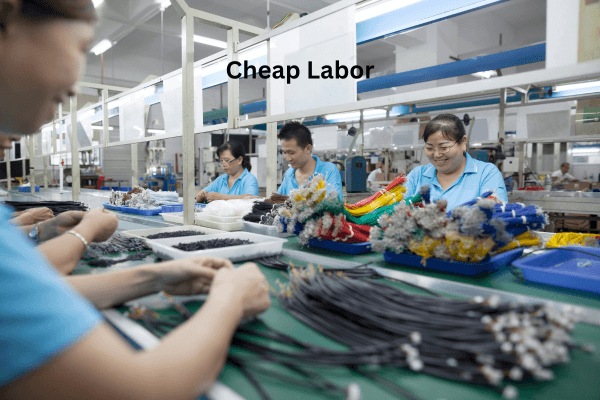
Many buyers first become interested in Vietnam because labor costs are lower than in most coastal manufacturing regions in China. That assumption is directionally correct, but it often oversimplifies how manufacturing cost structures actually work.
In practice, total manufacturing cost is shaped by a combination of:
- Labor efficiency
- Material sourcing
- Supplier maturity
- Logistics structure
- Tariff exposure
- Quality control requirements
- Inventory pressure
- Production management overhead
The relative importance of each factor changes depending on the product category.
For example, labor may dominate the
cost structure in manual packaging assembly, while materials and engineering support matter far more in complex industrial manufacturing.
This is one reason many companies discover that Vietnam works extremely well for certain product lines but not necessarily for others.
A useful way to think about manufacturing geography is this:
Countries do not compete equally across every category. They compete differently depending on operational structure.
That distinction becomes much clearer once the cost breakdown is examined in detail.
Labor Cost: Where Vietnam Usually Wins
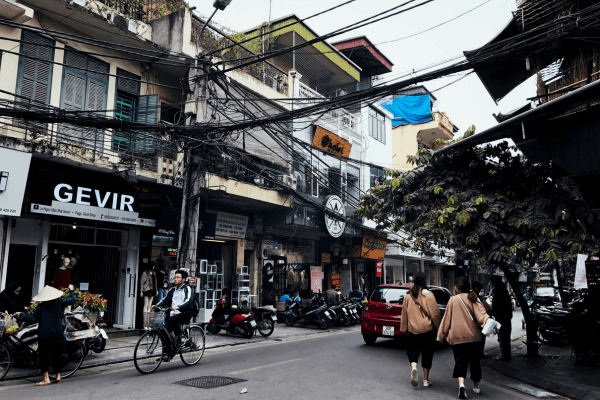
Vietnam’s strongest manufacturing advantage still comes from labor-intensive production.
According to data from JETRO and regional manufacturing surveys, average factory labor costs in Vietnam remain significantly lower than many established manufacturing regions in China, especially in sectors requiring large amounts of manual assembly or repetitive packaging work.
This cost advantage becomes particularly meaningful in categories such as the following:
Product Type | Why Vietnam Often Performs Well |
|---|---|
Flexible packaging assembly | High manual labor ratio |
Garments and textiles | Labor-intensive workflows |
Footwear | Large-scale manual operations |
Basic furniture assembly | Moderate automation dependence |
Manual product kitting | Lower skilled labor requirement |
However, experienced sourcing teams rarely evaluate labor costs using wage data alone.
The more accurate calculation includes the following:
- Overtime structure
- Worker retention
- Training efficiency
- Production consistency
- Rework frequency
- Learning curve duration
A lower hourly wage does not automatically create a lower total labor cost if production efficiency drops or operator turnover becomes unstable.
This becomes especially important in projects requiring skilled technicians, tight tolerances, or highly standardized operating procedures.
For example, several packaging manufacturers we evaluated in Vietnam offered attractive labor pricing initially, but actual productivity varied significantly between shifts because operator training systems were still developing.
In one packaging project, the direct labor rate was approximately 35% lower than the client’s previous China supplier. After including rework and slower startup efficiency, the realized labor savings settled closer to 14–16%.
That result was still positive, but far less dramatic than the original quotation suggested.
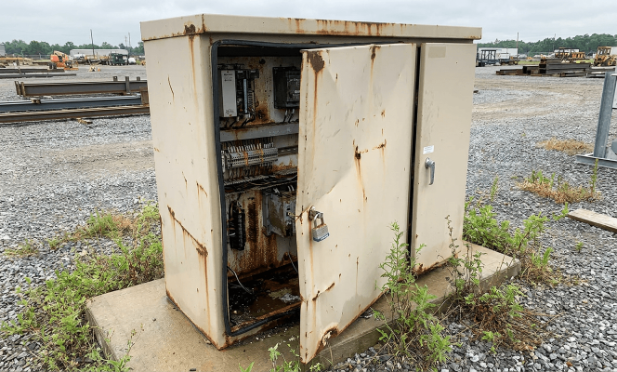
This is also why many buyers underestimate the operational side of manufacturing transitions. We discussed this issue further in our article about why control panel startup problems happen more often than most buyers expect, particularly in situations where process stability and commissioning discipline directly affect production efficiency.
Materials Cost: The Hidden Variable Many Brands Ignore

One of the biggest misconceptions in Southeast Asia sourcing is the assumption that lower factory pricing automatically means lower material costs.
In reality, material sourcing often determines whether Vietnam truly creates savings.
China still possesses one of the world’s most mature industrial ecosystems, particularly in the following:
- Specialty films
- Industrial chemicals
- Electronic components
- Precision tooling
- Packaging substrates
- Machinery parts
Vietnam’s manufacturing infrastructure has grown rapidly, but many factories still depend on imported materials for higher-specification production.
This creates a hidden layer of cost that many first-time buyers overlook.
A Common Supply Chain Structure
In many packaging projects, the actual supply chain looks like this:
Supply Chain Stage | Typical Origin |
|---|---|
Specialty film | China |
Ink systems | China or Korea |
Adhesives | Imported |
Final converting | Vietnam |
Export shipment | Vietnam |
Technically, the final product is manufactured in Vietnam. Operationally, portions of the upstream material chain may still depend heavily on China.
This does not make Vietnam a poor option. It simply means sourcing decisions should be evaluated at the system level rather than through isolated factory quotations.
According to World Bank manufacturing analysis, countries with mature supplier ecosystems typically maintain cost advantages in complex manufacturing because supplier proximity reduces transportation overhead, coordination delays, and inventory risk.
This is particularly important for custom materials or packaging structures with strict technical requirements.
Several clients we worked with initially focused only on conversion pricing. After full landed material analysis, they realized certain low-volume SKUs actually became more expensive in Vietnam because imported substrate costs offset labor savings almost entirely.
The lesson was straightforward:
A lower factory quotation does not always mean lower real manufacturing cost.
Logistics and Lead Time: A Cheaper Factory Does Not Always Mean Lower Landed Cost
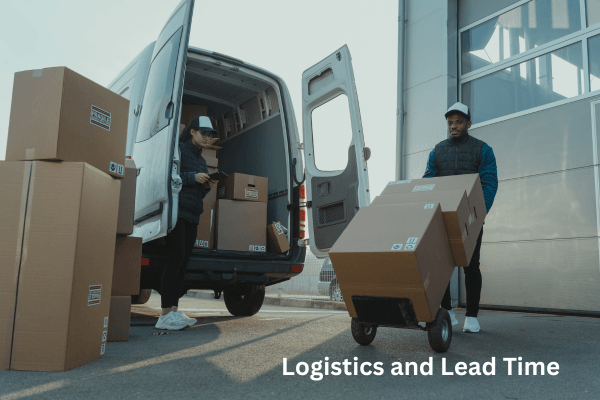
Many sourcing comparisons focus heavily on production pricing while treating logistics as a secondary consideration.
In practice, logistics often becomes one of the largest hidden variables affecting total landed cost.
This includes much more than freight rates alone.
A realistic logistics analysis should also consider:
- Port congestion
- Customs coordination
- Inventory carrying cost
- Lead-time predictability
- Replenishment speed
- Cross-border transportation
- Supplier communication delays
For companies operating on fast inventory cycles, lead-time stability can matter more than small unit-cost differences.
A supplier offering slightly lower pricing becomes far less attractive if delivery inconsistency forces the buyer to carry larger safety stock.
According to Deloitte’s global supply chain research, inventory-related inefficiencies remain one of the most underestimated cost drivers in international manufacturing operations.
This is one reason many companies adopt a “China Plus One” structure instead of fully replacing China.
In several packaging projects, we observed a hybrid sourcing model becoming increasingly common:
Manufacturing Stage | Country |
|---|---|
Raw materials | China |
Intermediate processing | China |
Final assembly or converting | Vietnam |
Export fulfillment | Vietnam |
This structure allows companies to balance the following:
- Material ecosystem strength
- Labor advantages
- Tariff optimization
- Supply chain diversification
The goal is not always to leave China entirely. Often, the objective is to reduce concentration risk while preserving operational efficiency.
Tariffs and Trade Agreements: Why Vietnam Can Lower Total Landed Cost

One of Vietnam’s most important strategic advantages is not labor cost. It is trade positioning.
Vietnam participates in several major trade agreements, including the following:
- CPTPP
- RCEP
- EVFTA
These agreements can significantly affect landed cost depending on product classification and destination market.
For companies exporting into Europe or certain Asia-Pacific regions, tariff reductions alone can materially improve total cost structure.
However, this area is frequently misunderstood.
Tariff savings are not automatic.
Whether a product qualifies depends on:
- Product category
- Country-of-origin rules
- Local value-add percentage
- Documentation quality
- Supply chain traceability
According to WTO trade guidance, incorrect origin declarations or incomplete compliance documentation can eliminate tariff benefits entirely and expose importers to regulatory penalties.
In one packaging project, a client initially expected significant tariff savings after moving conversion work into Vietnam. After reviewing the material sourcing structure, we discovered the local content threshold was not high enough to qualify under the intended trade agreement.
Without restructuring portions of the supply chain, the expected savings would not materialize.
After adjustments to sourcing and production sequencing, the client eventually reduced total landed cost by approximately 11%.
The key point is this:
Trade agreements create opportunities, but only when operational structure aligns correctly with compliance requirements.
Quality Control and Management Cost: The Cost That Often Decides the Real Winner
This is usually the section companies underestimate most during manufacturing transitions.
Factory pricing is visible.
Quality management costs are less obvious.
But over time, quality failures often become more expensive than labor cost differences.
This is particularly true in packaging manufacturing, where small inconsistencies can create the following:
- Retail presentation issues
- Color variation
- Seal failures
- Transit damage
- Customer complaints
- Inventory write-offs
In several supplier transition projects, the most significant cost increases did not come from production itself. They came from weak process control during early scaling phases.
That experience is one reason we structured supplier onboarding around layered QA systems instead of relying only on final inspection.
The QA Structure We Typically Implement
Quality Stage | Operational Purpose |
|---|---|
IQC | Validate incoming materials |
First Article Inspection | Confirm startup consistency |
Inline QA | Detect process drift early |
Final Inspection | Protect shipment integrity |
Shipment Audit | Verify export readiness |
This process reduced defect escalation significantly during Vietnam onboarding projects.
In one food-packaging transition project, implementing resident QA monitoring and structured inline inspection reduced customer return rates from 3.2% to below 0.5% within six months.
That project also revealed something many procurement teams eventually learn:
Cheap production becomes expensive very quickly when supplier management systems are weak.
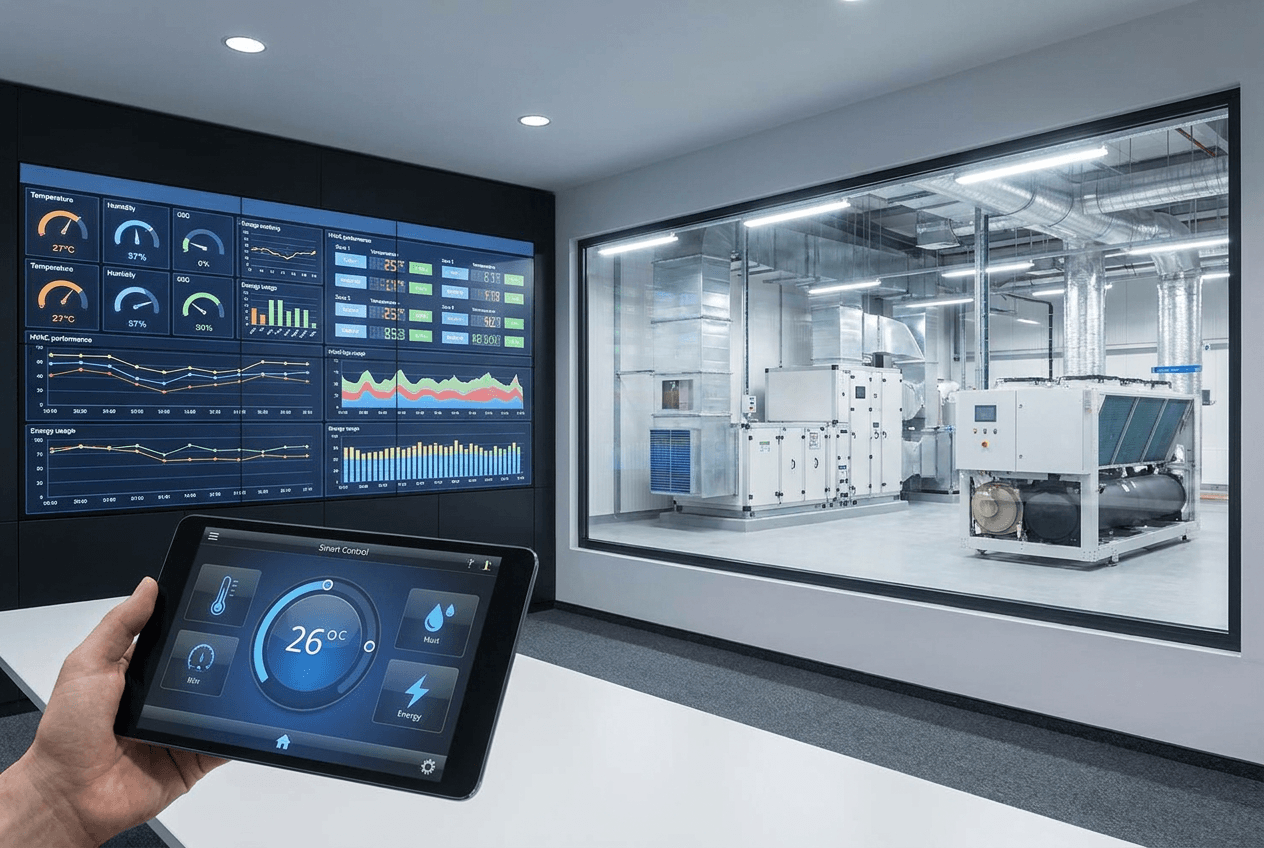
This is also where factory operational maturity matters enormously. We explored this topic further in our guide to modern control panel solutions and industrial automation reliability, especially in relation to process stability and manufacturing consistency.
Which Product Categories Fit Vietnam Best?

One of the most common sourcing mistakes is assuming every product category benefits equally from relocation.
In reality, manufacturing geography works best when matched carefully to product structure.
Categories That Usually Fit Vietnam Well
Product Category | Why Vietnam Often Works Well |
|---|---|
Packaging assembly | Labor-intensive workflows |
Textiles and garments | Mature labor ecosystem |
Footwear | Strong manufacturing base |
Basic furniture | Established export capability |
Manual consumer assembly | Lower labor cost advantage |
Categories That Work in Both Markets
Product Category | Notes |
|---|---|
Standard plastic products | It depends on tooling and materials |
Basic retail packaging | Supplier maturity matters |
Gift boxes and paper products | Volume and finishing complexity affect fit |
Categories Still Better Suited to China
Product Category | Why China Still Leads |
|---|---|
Complex electronics | Supplier ecosystem depth |
Precision industrial components | Advanced engineering infrastructure |
Highly integrated manufacturing | Strong upstream coordination |
Fast-turn customization | Dense supplier networks |
The deciding factor is rarely geography alone.
Usually, the better question is
How dependent is this product on advanced supplier coordination, material maturity, engineering speed, and process consistency?
That question often reveals the better manufacturing fit much more clearly than labor comparisons do.
How to Evaluate Real Manufacturing Cost Before Switching
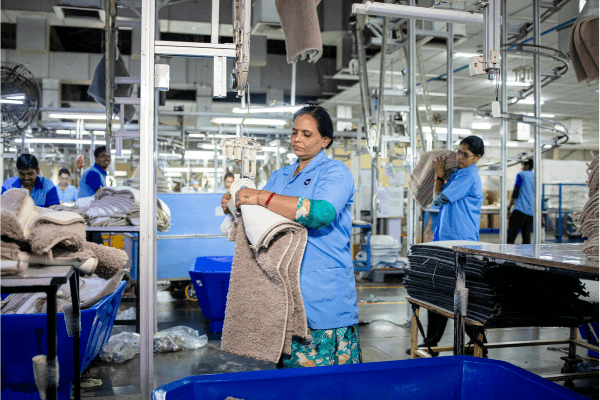
Before moving production, companies should evaluate manufacturing decisions through operational structure rather than quotation comparison alone.
A useful evaluation framework usually includes five questions:
1. Can Materials Be Localized Reliably?
If critical materials still require cross-border sourcing, the cost structure may remain exposed to external risk.
2. How Skilled Is the Production Process?
Highly technical manufacturing often depends more on engineering maturity than labor rates.
3. Will Inventory Pressure Increase?
Longer lead times or inconsistent replenishment may create hidden working-capital costs.
4. Are Tariff Savings Actually Achievable?
Trade benefits depend heavily on compliance structure and origin qualification.
5. Is the Quality System Ready?
Weak QA management can eliminate apparent labor savings very quickly.
Evaluation Area | Why It Matters |
|---|---|
Material localization | Reduces dependency risk |
Skilled labor requirement | Affects process stability |
Logistics consistency | Impacts inventory cost |
Trade compliance | Determines tariff eligibility |
QA capability | Protects long-term margin |
Companies that evaluate sourcing through this broader operational lens usually make much stronger long-term decisions.
The Smartest Move Is Not the Cheapest Quote
Vietnam is not universally cheaper than China.
For some categories, especially labor-intensive manufacturing and selected packaging operations, Vietnam can create meaningful landed-cost advantages and improve supply chain diversification.
For other categories, especially those requiring highly integrated supplier ecosystems or complex engineering support, China may still provide stronger total operational efficiency despite higher direct labor costs.
The companies making the best sourcing decisions today are usually not chasing the lowest quotation. They are building supply chains that balance cost, quality, logistics stability, compliance, and long-term operational resilience.
If your team is currently evaluating whether a product line should remain in China, move partially to Vietnam, or adopt a hybrid sourcing structure, we can help build a detailed cost-breakdown and factory-fit analysis based on your actual product requirements and supply chain priorities.