
Aug 27, 2026Buying Guides
How to Choose an Industrial UPS System
How to Choose an Industrial UPS System — And Avoid the Most Common Industrial Power Mistakes In Industrial Facilities, Power Problems Rarely Start with a total blackout. When people think about UPS sy
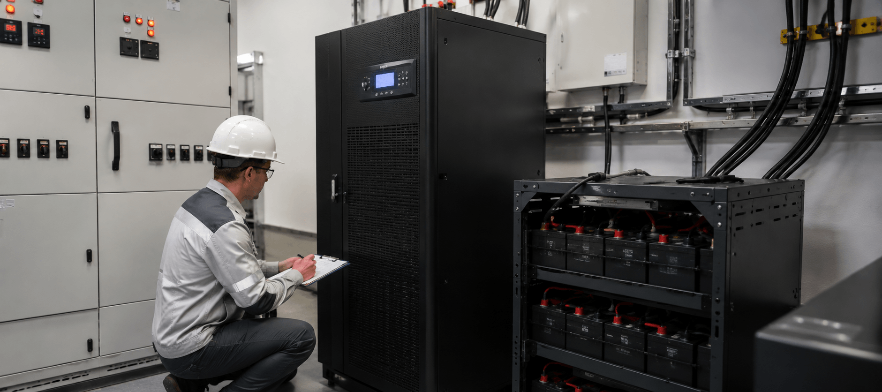
How to Choose an Industrial UPS System—and Avoid the Most Common Industrial Power Mistakes
In industrial facilities, power problems rarely start with a total blackout.
When people think about UPS systems, they usually imagine a complete power failure.
But in real industrial environments, the bigger problem is often something much less dramatic:
- Voltage sags
- Short power interruptions
- Unstable grid conditions
- Harmonic distortion
- Sudden inrush currents
These small electrical events may last only milliseconds.
Yet they can still
- Restart PLC systems
- Freeze HMIs
- Corrupt production data
- Damage sensitive electronics
- Stop entire production lines
In many factories, the cost of a single unexpected shutdown is far higher than the cost of the UPS itself.
Choosing the right industrial UPS system requires more than simply calculating backup time. Buyers must evaluate power quality, startup loads, environmental conditions, battery lifespan, scalability, harmonic compatibility, and long-term system reliability. A properly designed UPS system protects not only against outages but also against the hidden electrical instability that causes downtime in modern industrial automation.
Industrial UPS systems are no longer just “backup batteries.”
They have become a critical layer of operational risk management.
Why Industrial UPS Systems Matter More Than Many Buyers Realize
Modern factories depend heavily on the following:
- PLC systems
- Industrial networks
- Automation software
- Sensors
- VFDs
- Robotics
- Data communication
The problem is that most of these systems are extremely sensitive to unstable power.
According to ABB, poor power quality costs industrial businesses billions of dollars globally every year through:
- Downtime
- Equipment failure
- Restart losses
- Production interruptions
Source:
https://global.abb/
What surprises many buyers is this:
In industrial automation, a “power problem” does not always mean the power completely disappears.
Sometimes a voltage dip lasting less than one second is enough to stop production.
The Hidden Risk Most Buyers Ignore: Voltage Sags
This is one of the most underestimated problems in industrial power systems.
A voltage sag happens when voltage temporarily drops below normal levels.
It may only last
- A few milliseconds
- A few seconds
But that is often enough to
- Reset PLC controllers
- Restart industrial PCs
- Trip VFD systems
- Interrupt communication networks
According to research from the Electric Power Research Institute (EPRI), voltage sags are among the most common power quality disturbances affecting industrial facilities.
Source:
https://www.epri.com/
Many factories experiencing “random automation issues” are actually suffering from unstable incoming power.
This is why industrial UPS systems are not only about backup runtime.
They are also about:
- Voltage stabilization
- Clean power delivery
- Power conditioning
- Protection against transient events
This distinction is extremely important.
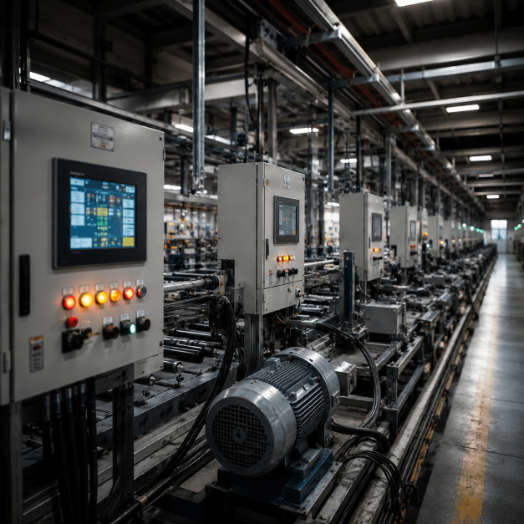
Industrial UPS Systems Are Different from Standard UPS Units
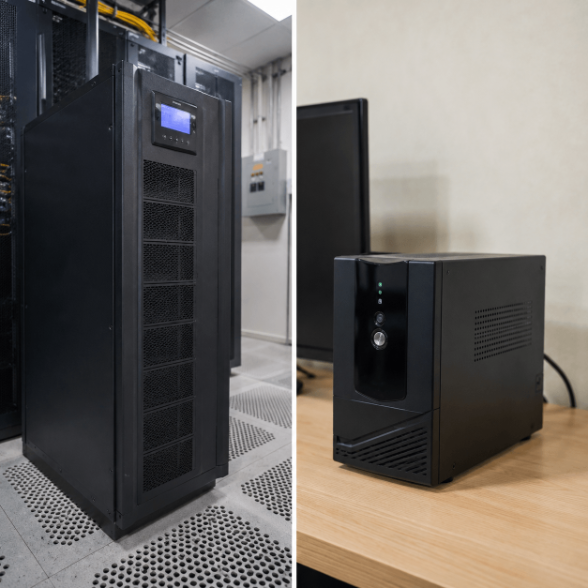
A residential UPS protecting a desktop computer is very different from an industrial UPS supporting a production line.
Industrial UPS systems are designed for:
- Continuous operation
- Heavy electrical loads
- Harsh industrial environments
- High temperatures
- Automation integration
- Mission-critical applications
They often include:
- Industrial-grade batteries
- Advanced bypass systems
- Remote monitoring
- Redundant power architecture
- Network communication protocols
In many industrial projects, the UPS becomes part of the entire control system infrastructure.
Why Many UPS Systems Fail Even When Properly Sized
This is where many industrial projects run into trouble.
A UPS may appear correctly sized on paper.
But after installation:
- Alarms appear
- System restart
- Batteries overheat
- UPS overloads during startup
Why?
Because many UPS calculations ignore real-world industrial conditions.
Startup Current Is Often Much Higher Than Running Current
Industrial equipment such as the following:
- Motors
- Compressors
- Pumps
- VFD systems
can draw significantly higher current during startup.
This is called the
Inrush Current
In some cases, startup current may be
- 3x
- 5x
- even 8x
higher than normal operating current.
If the UPS system is not designed for this surge, it may:
- Overload
- Switch to bypass
- Shut down unexpectedly
This is one of the most common mistakes in industrial UPS sizing.
Harmonics Can Create Hidden UPS Problems
Modern automation systems often generate harmonic distortion.
Sources include:
- VFDs
- Switching power supplies
- Industrial drives
- Non-linear loads
Excessive harmonics can:
- Overheat UPS components
- Reduce efficiency
- Shorten battery life
- Create unstable operation
According to Schneider Electric, harmonics are a major power quality challenge in modern industrial facilities.
This is why industrial UPS systems should be evaluated as part of the entire electrical ecosystem — not as isolated equipment.
Industrial UPS Is Not Just About Backup Time
This is another misunderstanding in many projects.
Buyers often ask:
“How long can the UPS run?”
But runtime is only one part of the equation.
In many industrial environments, the real priority is the following:
- Stable voltage
- Clean sine wave output
- Fast transfer time
- Power conditioning
- Automation continuity
A UPS system that provides poor-quality output power may still damage sensitive equipment.
This becomes especially important for:
- PLC systems
- Industrial servers
- Communication networks
- Automation control systems
Reliable power quality is often more valuable than long backup duration.
How to Calculate the Right UPS Capacity
UPS sizing should never be based on guesswork.
A proper industrial UPS calculation should include:
- Total running load
- Startup current
- Future expansion
- Battery runtime goals
- Redundancy requirements
- Environmental conditions
UPS systems are commonly rated in:
- VA
- kVA
- Watts
But many buyers misunderstand the relationship between them.
For industrial systems, engineers should also consider:
- Power factor
- Load characteristics
- Harmonic content
According to Eaton, incorrect load analysis is one of the leading causes of UPS oversizing or undersizing.
Source:
https://www.eaton.com/
Why Battery Temperature Is Often Ignored
Battery temperature is one of the biggest hidden risks in UPS systems.
Yet many facilities completely overlook it.
We have seen UPS batteries installed:
- Inside poorly ventilated cabinets
- Near heat-generating equipment
- In high-temperature workshops
- Without airflow planning
The result:
- Reduced battery lifespan
- Thermal stress
- Premature failure
According to IEEE battery studies, every significant increase above the recommended operating temperature can dramatically reduce battery service life.
Source:
https://www.ieee.org/
In some industrial environments, batteries are expected to last:
- 5 years
may fail in:
- 2 years or less
simply because of poor thermal management.
Why UPS Cabinet Design Matters More Than Many Buyers Think
This is another area many suppliers underestimate.
The UPS itself may be high-quality.
But poor cabinet design can still create major reliability problems.
A poorly designed UPS cabinet may suffer from the following:
- Heat buildup
- Restricted airflow
- Dust contamination
- Moisture ingress
- Difficult maintenance access
For industrial environments, the enclosure is part of the power protection system itself.
Good UPS cabinet design should consider:
- Airflow management
- Cable routing
- Maintenance space
- IP or NEMA protection
- Corrosion resistance
- Battery accessibility
This becomes especially important in the following:
- Coastal environments
- Mining operations
- Outdoor installations
- High-dust facilities
Online UPS vs. Line-Interactive UPS
For industrial automation, UPS architecture matters.
UPS Type | Best For | Limitations |
|---|---|---|
Offline UPS | Basic office equipment | Limited protection |
Line-Interactive UPS | Small commercial systems | Moderate voltage regulation |
Online Double-Conversion UPS | Industrial automation & critical systems | Higher cost |
According to Eaton, online double-conversion UPS systems provide the highest level of protection for mission-critical applications because they continuously regenerate clean power output.
Source:
https://www.eaton.com/
For industrial control systems, online UPS solutions are usually the safest choice.
Real-World Example: PLC Failures Caused by Power Instability
A manufacturing facility in Southeast Asia experienced repeated production interruptions over several months.
The strange part was
- No major power outages were recorded
- Equipment appeared normal
- No obvious hardware failures existed
Engineers initially suspected:
- PLC software bugs
- Communication issues
- Sensor failures
But after detailed power monitoring, the real problem became clear:
The facility was experiencing repeated short-duration voltage sags from unstable grid conditions.
These brief voltage drops were enough to
- Reset PLC systems
- Interrupt automation sequences
- Cause random shutdowns
The plant later installed the following:
- Online industrial UPS systems
- Improved grounding
- Better power conditioning
According to the maintenance team, unplanned automation interruptions dropped significantly afterward.
This is a common example of why industrial power protection is about much more than blackout protection.
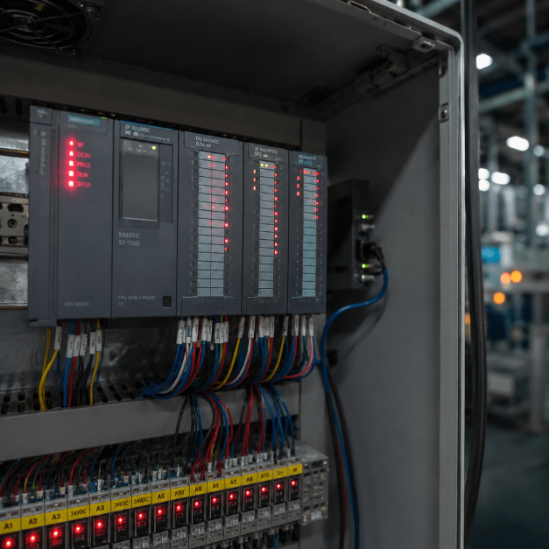
Common Mistakes Buyers Make When Choosing Industrial UPS Systems
Choosing Based Only on Initial Price
Lower-cost systems may fail quickly in harsh industrial environments.
Ignoring Future Expansion
Production systems rarely stay the same forever.
A UPS with no expansion capacity can quickly become a bottleneck.
Underestimating Environmental Conditions
Dust, heat, humidity, and corrosion all affect UPS reliability.
Forgetting Maintenance Accessibility
Battery replacement and servicing should be considered during cabinet design.
Treating UPS as Standalone Equipment
UPS systems should be integrated into the overall electrical and automation architecture.
Questions Buyers Should Ask Before Purchasing an Industrial UPS
Before selecting a UPS system, buyers should ask:
- What is the actual startup current of the equipment?
- Are voltage sags a known issue at the facility?
- Does the UPS support harmonic-heavy loads?
- What environmental conditions will the system face?
- How is battery temperature managed?
- Is future expansion expected?
- Is online double-conversion necessary?
- Does the UPS cabinet provide proper airflow?
- Are remote monitoring features available?
- What happens if the UPS enters bypass mode?
These questions help uncover risks that are often missed during early project planning.
Final Thoughts
In industrial environments, power problems are rarely simple.
The biggest threats are often invisible:
- Voltage instability
- Harmonics
- Heat
- Poor grounding
- Inadequate system integration
A reliable industrial UPS system does far more than provide backup power.
It protects:
- Automation stability
- Equipment lifespan
- Production continuity
- Operational confidence
Most of the time, nobody notices the UPS working quietly in the background.
But when unstable power hits a production line at the wrong moment, the value of a properly designed UPS system becomes impossible to ignore.
And in many industrial facilities, those few seconds of stable power can protect far more than equipment.
They protect the entire operation.