
Aug 27, 2026Buying Guides
How Long Does a Custom Control Panel Take to Build?
How Long Does a Custom Control Panel Take to Build? A production line can survive many things. 1. Operator mistakes. 2. Night shifts. 3. Even coffee spilled on the HMI screen. But one thing factories
How Long Does a Custom Control Panel Take to Build?
A production line can survive many things.
1. Operator mistakes.
2. Night shifts.
3. Even coffee spilled on the HMI screen.
But one thing factories absolutely hate is waiting for a control panel that was promised “next week” three weeks ago. I have seen entire automation projects delayed because one supplier underestimated engineering time or failed to secure critical PLC components in advance. And unfortunately, this happens more often than most buyers expect.
In reality, building a custom control panel usually takes anywhere from 2 to 12 weeks. Smaller PLC panels may only need a couple of weeks, while larger integrated automation systems can easily stretch beyond two months. The timeline depends on engineering complexity, component availability, compliance requirements, testing procedures, and—this part nobody likes to admit—how quickly decisions are made during the project. At UniRegal, we always tell customers the same thing: a fast panel is great, but a reliable panel is what keeps your factory running.
And honestly, nobody remembers who delivered the fastest panel if the wiring fails during startup.
Why Does Build Time Vary So Much?
This is the question buyers ask me the most.
“Why can one panel be finished in two weeks while another takes two months?”
Because not all control panels are created equal.
A simple motor starter cabinet is relatively straightforward.
But once you start adding the following:
- PLC systems
- HMIs
- Variable Frequency Drives (VFDs)
- Safety relays
- Remote I/O
- Ethernet communication
- Servo motion control
…the project changes completely.
It becomes less like assembling a box and more like building the nervous system of an entire machine.
According to the National Electrical Manufacturers Association (NEMA), increasing system integration significantly raises engineering and testing requirements in industrial control systems.
How Long Does the Engineering Design Phase Take?
Usually between 3 and 10 business days.
Sometimes faster.
Sometimes painfully slower.
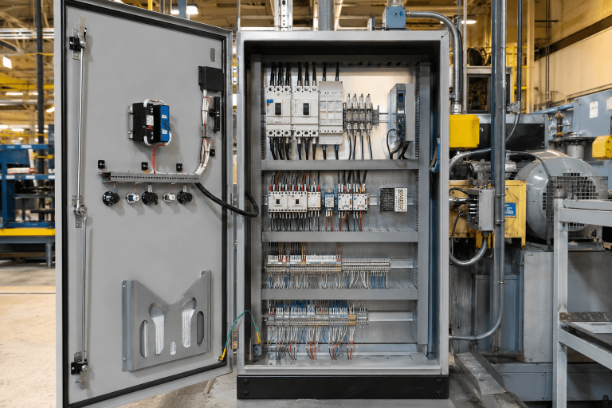
The engineering phase includes:
- Electrical schematic design
- PLC I/O planning
- Bill of Materials (BOM) creation
- Panel layout drawings
- Safety circuit design
- Customer review and approval
And here is something many people outside automation do not realize:
A delayed approval can freeze the entire project.
I once had a customer approve a 40-page drawing package in 20 minutes.
Another customer spent nine days debating terminal block colors.
Industrial automation is a fascinating industry.
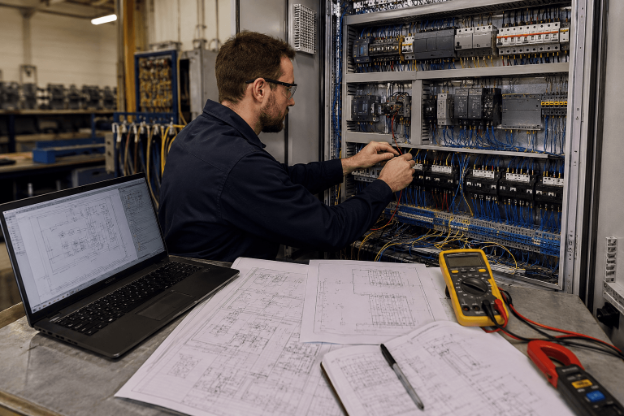
According to IEC 61439 standards, proper low-voltage switchgear and controlgear assembly design is critical for operational safety and long-term reliability.
Why Are Components Taking Longer to Source Today?
Because the global automation supply chain is still recovering.
Even in 2026, certain industrial components continue facing unstable lead times.
Popular brands like
- Siemens
- Allen-Bradley
- Mitsubishi
- Schneider Electric
occasionally experience shortages on specific PLC CPUs, communication modules, and drives.
The semiconductor crisis changed the automation industry more than most people expected.
According to a report from Deloitte, industrial manufacturers worldwide continue experiencing electronic component bottlenecks due to ongoing chip demand and geopolitical supply chain shifts.

At UniRegal, we reduce delays by maintaining inventory on commonly used automation products. That is one advantage of working with a distributor instead of waiting directly through factory allocation queues.
Because sometimes the difference between a four-week project and a twelve-week project is simply one missing module.
How Long Does Panel Assembly Actually Take?
Normally between 3 and 15 working days.
This stage is where the cabinet finally starts looking alive.
Our technicians handle:
- Component mounting
- DIN rail installation
- Cable routing
- Ferrule crimping
- Terminal labeling
- Power distribution wiring
Good wiring matters more than many buyers realize.
A clean panel is easier to troubleshoot.
Safer to maintain.
And far less likely to become a future headache for maintenance engineers.
I always joke that messy wiring is like bad handwriting from doctors—eventually someone suffers.
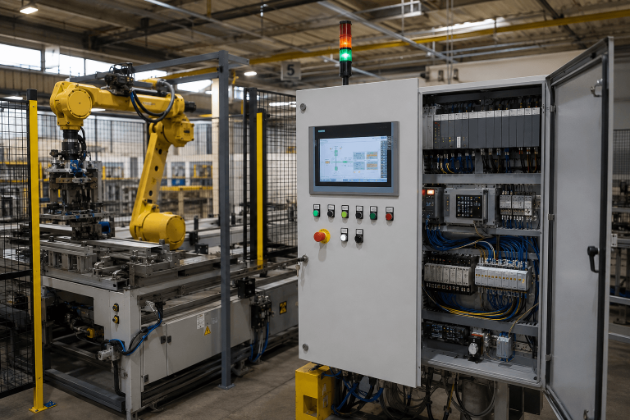
The International Society of Automation (ISA) emphasizes that organized panel wiring improves both safety and maintenance efficiency.
How Important Is Testing Before Shipment?
Extremely important.
In my opinion, testing is where professional suppliers separate themselves from traders who simply “assemble and ship.”
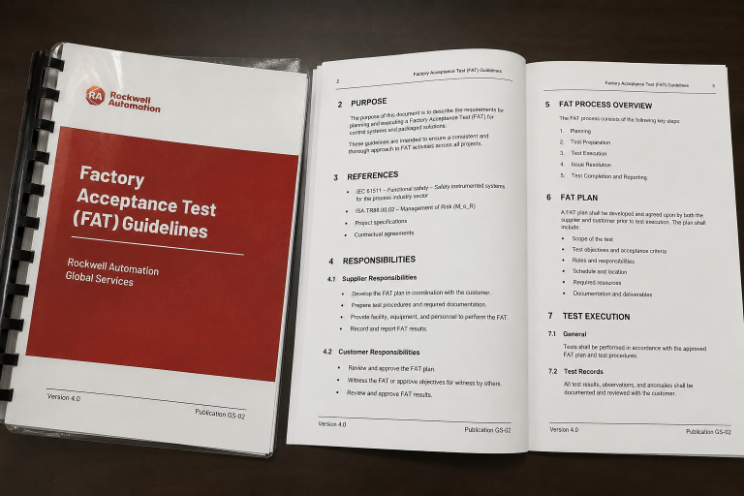
A proper Factory Acceptance Test (FAT) may include the following:
- PLC simulation testing
- I/O verification
- Communication testing
- Safety circuit validation
- Voltage inspection
- Alarm testing
Testing usually takes 1 to 5 days, depending on complexity.
And no, this is not optional.
Skipping testing to save time is like skipping engine inspection before flying an airplane. Technically possible. Emotionally terrifying.
According to Rockwell Automation, commissioning failures are frequently linked to insufficient pre-shipment testing and incomplete validation procedures.
Can You Speed Up a Custom Control Panel Project?
Yes. Absolutely.
Here are the methods that actually work in real projects.
1. Finalize Specifications Early
Last-minute engineering changes are timeline killers.
Especially when customers suddenly decide to add extra sensors halfway through production.
2. Use Standard Components
Exotic or uncommon parts often create unnecessary delays.
Standard PLCs and breakers are much easier to source globally.
3. Work With Suppliers Who Keep Inventory
This matters more than price sometimes.
A cheaper supplier without stock can become very expensive once downtime enters the equation.
4. Avoid Overengineering
Not every machine needs twenty future expansion ports “just in case.”
Engineers love flexibility.
Procurement departments usually prefer invoices with smaller numbers.
What Is a Realistic Timeline for Most Projects?
Based on what I see in the market every day, here is the realistic picture:
Project Type | Estimated Lead Time |
|---|---|
Small relay control box | 1–2 weeks |
Standard PLC panel | 2–4 weeks |
Medium automation cabinet | 4–8 weeks |
Large integrated control system | 8–12+ weeks |
Of course, every project has its own surprises.
That is industrial automation.
If everything goes perfectly, everyone becomes suspicious.
More Related Questions
Why are Siemens and Allen-Bradley parts sometimes delayed?
High global demand and semiconductor supply constraints continue affecting production schedules.
Does UL certification increase production time?
Yes. UL-certified panels require additional compliance reviews and documentation.
Can panels be pre-built for faster delivery?
Yes. Standardized designs can significantly reduce engineering time.
Is factory acceptance testing really necessary?
Absolutely. FAT helps identify issues before shipment and startup.
Can air freight reduce delivery time?
Yes, although shipping costs increase substantially for larger cabinets.
What causes the biggest delays in automation projects?
Late engineering revisions and unavailable components are usually the biggest factors.
Conclusion
Building a custom control panel is not just about assembling electrical components into a metal cabinet. It is a process that combines engineering, procurement, craftsmanship, testing, and experience. In my experience, the fastest projects happen when communication is clear, specifications are stable, and suppliers truly understand industrial automation—not just product catalogs.